
Viperidae
Golden Lancehead
VenomousBothrops insularis
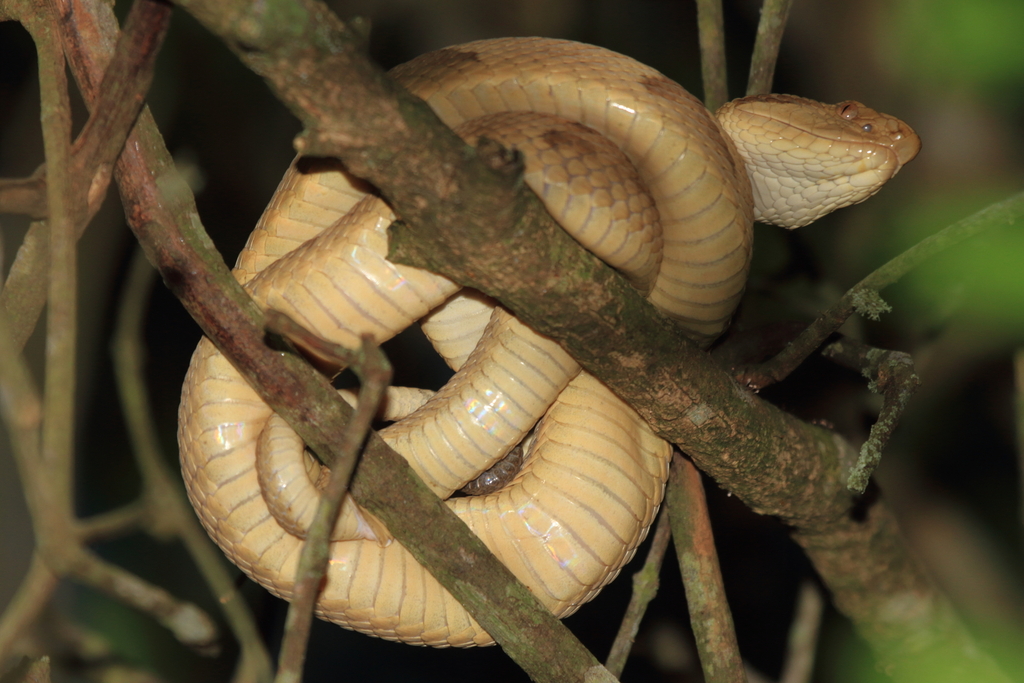
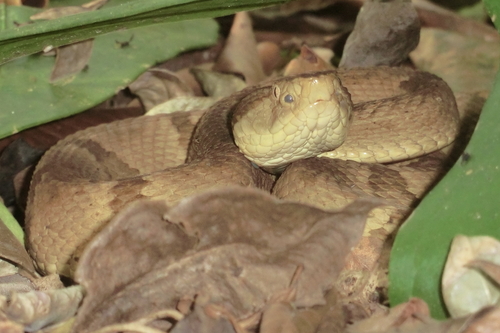
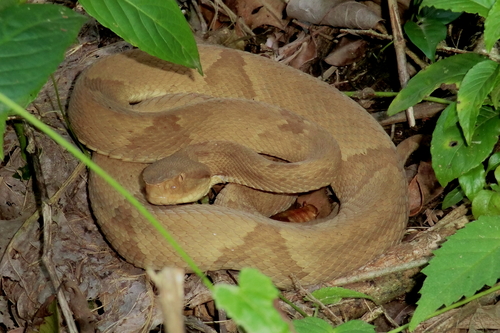
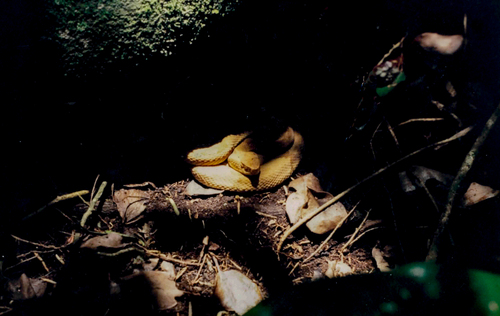
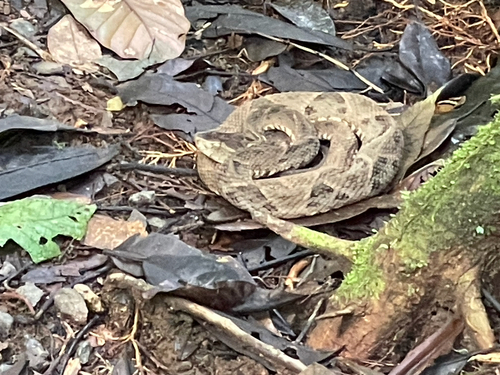
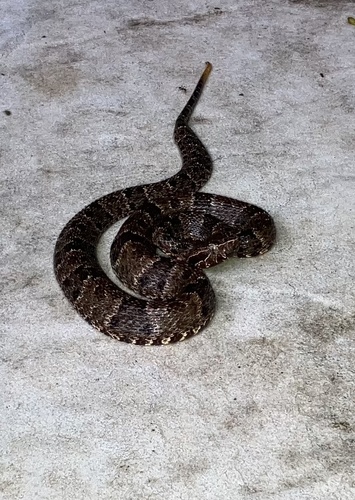
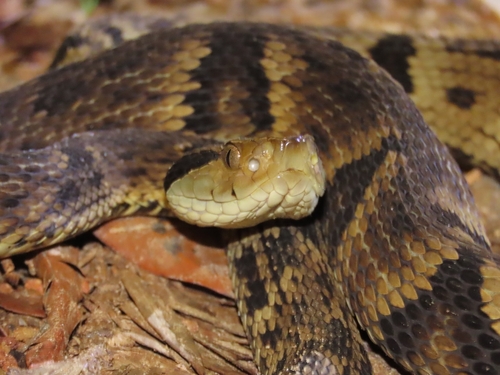
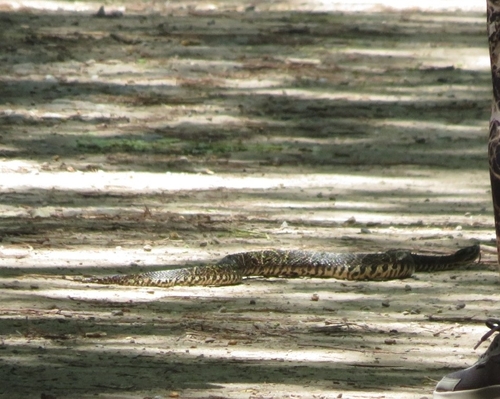
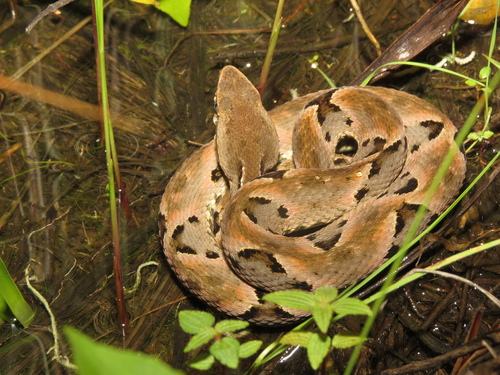
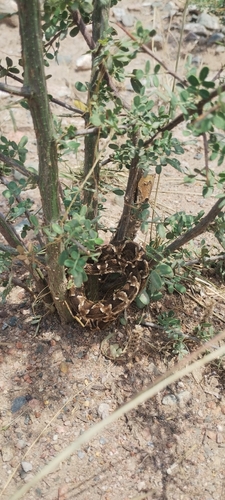
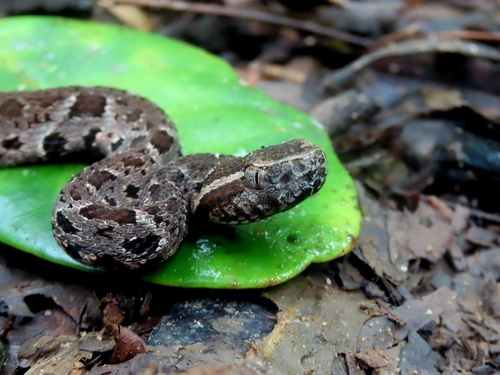
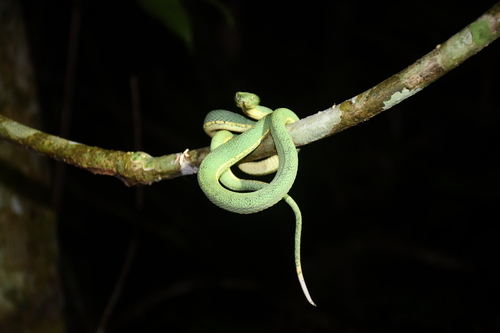
4 photographs of the Golden Lancehead. © Fábio Olmos.
The Golden Lancehead (Bothrops insularis) is a venomous snake in the Viperidae family, recorded in 1 country.
If you are bitten
This is a venomous snake. Treat any bite as a medical emergency: stay calm, keep the bitten limb still and roughly level with the heart, remove rings and tight clothing, and get to emergency care immediately. Do not apply a tourniquet, cut the wound, apply ice, or try to suck out venom. Call your local emergency number or poison center.
- Family
- Viperidae
- Danger
- high
About the Golden Lancehead
The golden lancehead (Bothrops insularis) is an extremely venomous pit viper species in the subfamily Crotalinae of the family Viperidae. The species is found exclusively on the island of Ilha da Queimada Grande, off the coast of São Paulo state, in Brazil. The common name of the species refers to the light yellowish-brown color of its underside and for its lance-like head shape that is characteristic of the genus Bothrops. No subspecies of B. insularis are recognized as being valid. It is one of the most venomous snakes in Latin America.
Physical morphology
Size and appearance
Usually, B. insularis grows to a total length (including tail) of 70 to 90 cm (28 to 35 in), but it is known to reach a total length of 118 cm (46 in). Its color pattern consists of a pale yellowish-brown ground color, overlaid with a series of dorsal blotches that may be triangular or quadrangular, broad or narrow, and alternating or opposite along the dorsal median. In captivity, this yellowish color often becomes darker, which may be the result of poor circulation caused by ineffective thermoregulation. A banded pattern results when the pattern is opposite. The head lacks a well-defined postorbital stripe. The belly is a uniform pale yellow or cream.
The name "lancehead" refers to the distinctive head shape of all snakes in the genus Bothrops, which is somewhat elongated and comes to a point at the nose. B. insularis also has a longer tail than its closest relative, B. jararaca, which is most likely an adaptation to help the snake maneuver through the trees, and to eat larger prey, such as birds, from a younger age.
Venom
Because of the isolated habitat of B. insularis, and the lack of mammal prey species, the venom of B. insularis has evolved to be adapted to the prey species of the island, primarily native ectotherms, arthropods, and migrating birds. As a result, its venom is more potent towards these groups than mammals, and becomes more potent as the snake matures. Chemical analysis of the venom of B. insularis suggests that it is five times as potent as that of B. jararaca and is the fastest-acting venom in the genus Bothrops.
Because B. insularis is only found in an area uninhabited by humans, an official report of a human being bitten by one has not been made, but other lanceheads are responsible for more human mortality than any other group of snakes in either North or South America. Ludwig Trutnau reports four human envenomations, three of which were fatal. The mortality rate for lancehead envenomations is 0.5–3.0% if the patient receives treatment and 7.0% if the patient does not receive treatment. The effects of envenomations by golden lanceheads include swelling, local pain, nausea and vomiting, blood blisters, bruising, blood in the vomit and urine, intestinal bleeding, kidney failure, hemorrhage in the brain, and severe necrosis of muscular tissue.
Reproduction
Adapted from Wikipedia, available under CC BY-SA.
Local and regional names
The Golden Lancehead is known by these names across the regions where it lives:
- Chinese
- 海島矛頭蝮
- Czech
- křovinář ostrovní
- English
- Queimada Island Bothrops
- German
- Insel-Lanzenotter, Insellanzenotter
- Hungarian
- arany lándzsakígyó
- Portuguese
- Jararaca-Ilhoa, Jararaca-ilhôa
- Russian
- Островной ботропс
- Spanish
- Serpiente de la Isla Quemada
Frequently asked: Golden Lancehead
- Is the Golden Lancehead venomous?
- Yes. The Golden Lancehead (Bothrops insularis) is venomous and belongs to the Viperidae family (viper). Its bite is considered high risk to people. Treat any bite as a medical emergency.
- Is the Golden Lancehead poisonous?
- Snakes are venomous, not poisonous. "Poisonous" means harmful to eat or touch; "venomous" means injecting toxins through a bite. The Golden Lancehead is venomous, delivering venom through a bite.
- Is the Golden Lancehead dangerous?
- This is a venomous snake. Treat any bite as a medical emergency: stay calm, keep the bitten limb still and roughly level with the heart, remove rings and tight clothing, and get to emergency care immediately. Do not apply a tourniquet, cut the wound, apply ice, or try to suck out venom. Call your local emergency number or poison center.
- Where does the Golden Lancehead live?
- The Golden Lancehead has verified records in 1 country, including Brazil. See the distribution section below for its full range.
- What does the Golden Lancehead eat?
- The golden lancehead's diet consists mostly of perching birds. It has been reported to eat lizards, though, and may even resort to cannibalism. Newborn and juvenile golden lanceheads prey primarily upon invertebrates. Adults of B. insularis are able to survive on only one or two birds species per year of the more than 40 that visit the island.
If you are bitten by the Golden Lancehead
Do
- Get away from the snake and stay calm. Most bites worsen when people panic or try again to handle the snake.
- Call 911 or Poison Control (1-800-222-1222) right away. Antivenom works best when given early.
- Note the time of the bite and, from a safe distance, the snake's color and pattern, a phone photo is enough. Do not chase it.
- Keep the bitten limb still and at roughly heart level. Sit or lie down and limit movement.
- Remove rings, watches, and tight clothing near the bite before swelling starts.
- Gently wash the bite with soap and water and cover it with a clean, dry dressing.
Do not
- Do not cut the wound or try to suck out the venom.
- Do not apply a tourniquet or ice.
- Do not drink alcohol or caffeine.
- Do not take aspirin or ibuprofen, they can worsen bleeding. Acetaminophen is safer for pain.
- Do not try to catch or kill the snake. A dead snake can still bite by reflex.
First-aid guidance adapted from the U.S. Centers for Disease Control and Prevention (CDC NIOSH), Venomous Snakes. Educational only; always follow the instructions of emergency responders.
Where it is found
More Viperidae snakes
Classification
How scientists group this snake, from the broadest category down to the exact species. Each step narrows to its closest relatives.
Keep learning
- Are Snakes Dangerous? The Real Risk, in PerspectiveMost snakes are harmless and avoid people. Here is the honest picture of snakebite risk worldwide and how to lower your own.
- Snakebite First Aid: What to Do (and What Never to Do)A clear, CDC-based guide to snakebite first aid: the steps that help, the popular myths that hurt, and how to tell a serious bite from a minor one.
- Venomous vs Nonvenomous: How to Tell the DifferenceThe folk rules for telling venomous snakes apart, where each one fails, and why location-based identification beats guessing by sight.
- What to Do If You Find a SnakeFound a snake at home or on a trail? Here is how to stay calm, give it space, identify it safely, and know when to call a professional.
Distribution from GBIF & iNaturalist. Venom status per CDC. Background: Wikipedia. Informational only. Never handle a snake to identify it.