
Colubridae
Dumeril's Diadem Snake
HarmlessPhalotris lemniscatus
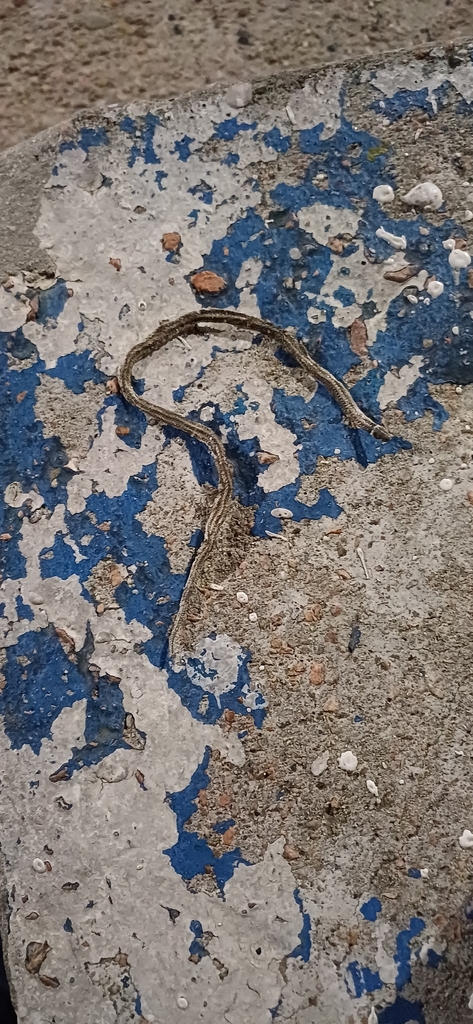
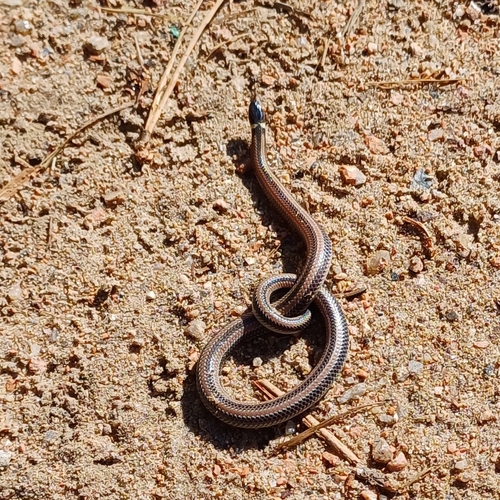
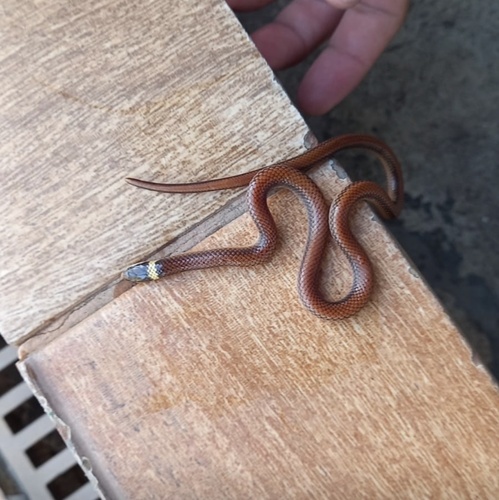
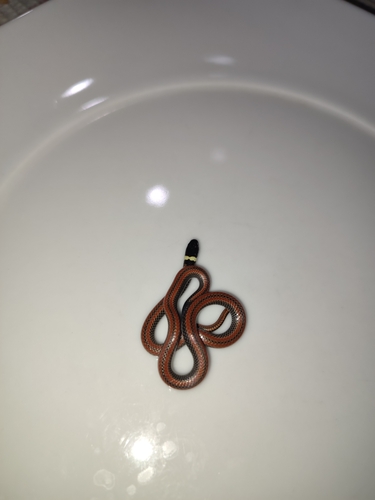
2 photographs of the Dumeril's Diadem Snake. © Agustina Medina.
The Dumeril's Diadem Snake (Phalotris lemniscatus) is a rear-fanged, mildly venomous snake in the Colubridae family, recorded in 4 countries.
- Family
- Colubridae
About the Dumeril's Diadem Snake
Phalotris lemniscatus is a species of venomous snake found in South America. It is usually known as Pampeana black headed snake or Duméril's diadem snake.
Description and behavior
The fossorial habits certainly favor its adaptation, giving it less visibility in Anthropized areas. On the other hand, it is important to note that this species has a slender body, with a relatively reduced head, short tail, and size that generally does not exceed 50 cm in total length, although specimens of up to 68 cm have been reported. It feeds on small reptiles such as amphisbaenians, other snakes and lizards. Usually makes a defensive demonstration in the presence of a human, behaving in a shy and never aggressive way.
The color pattern and design allow an easy identification between the different snake species found in Uruguay. Dorsal coloration is reddish or orange with black longitudinal lines, and the vertebral region line may be absent or reduced. The head is mostly black and has a white collar, the central area is black.
Distribution and habitat
This species has a wide distribution that includes Rio Grande do Sul in Brazil, northern Argentina, extending to the border areas of Bolivia and Paraguay, and in Uruguay, it is found throughout its territory. It is often found in open areas, adapting well to the urban and suburban areas.
Venom
The venom of P. lemniscatus is composed of protein families typically present in snake venom, such as metalloproteinase and serine proteases, L-amino acid oxidases, Phospholipases A2s, C type lectines-like, Kunitz-type proteins, and three finger toxins. Activity assays demonstrated a highly Gelatinolytic component, as well as a potent capability to induce blood coagulation.
Bites
Although bites by this species are rare, two important cases were recorded in Uruguay: a healthy 13-year-old patient was admitted to the emergency room for gingival bleeding after being bitten 12 hours earlier. The patient was playing with a snake, and was bitten on the left finger, the snake measured 20 cm in length and bit him for a long period of time. 30 minutes after the bite, there was ecchymosis in the area, without pain. The patient had mild, localized edema, and about 8 hours later, gingival bleeding began. Laboratory tests revealed changes in coagulation. Hospitalization was decided for observation and administration of antivenom.
In another case, a 61-year-old woman was admitted to the hospital after 12 hours. She had local pain, and mild headache, local hemorrhage, and genhivorrhagia. The patient presented bloody urine, epistaxis and hemoptysis, the hematuria was confirmed in the urinalysis. Due to coagulopathy, she was admitted to intensive care, requiring non-invasive ventilation, received 4 vials of anti-ophidic serum, preceded by corticosteroids, after treatment, the patient reached normal clotting values within 36 hours.
Adapted from Wikipedia, available under CC BY-SA.
Frequently asked: Dumeril's Diadem Snake
- Is the Dumeril's Diadem Snake venomous?
- The Dumeril's Diadem Snake (Phalotris lemniscatus) is rear-fanged and only mildly venomous. It is not considered dangerous to humans (its venom is weak and its fangs sit at the back of the mouth) but a bite can cause local swelling or irritation, so it should not be handled.
- Is the Dumeril's Diadem Snake poisonous?
- Snakes are venomous, not poisonous. "Poisonous" means harmful to eat or touch; "venomous" means injecting toxins through a bite. The Dumeril's Diadem Snake is neither poisonous nor venomous.
- Is the Dumeril's Diadem Snake dangerous?
- The Dumeril's Diadem Snake is not dangerous to humans. It has no medically significant venom and bites only defensively if cornered or handled.
- Where does the Dumeril's Diadem Snake live?
- The Dumeril's Diadem Snake has verified records in 4 countries, including Brazil, Argentina, Uruguay. See the distribution section below for its full range.
Where it is found
More Colubridae snakes
 Phalotris mertensiPhalotris mertensi
 Mato Grosso Burrowing SnakePhalotris matogrossensis
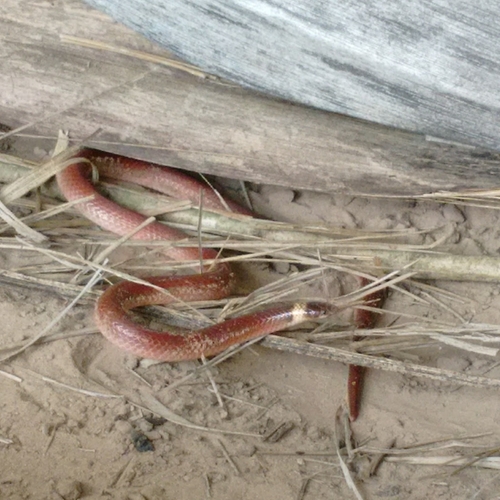 Phalotris nasutusPhalotris nasutus
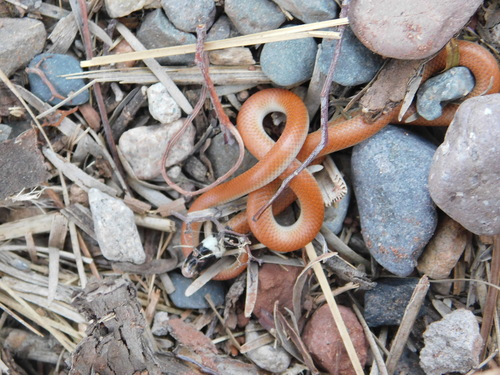 Mendoza Collared SnakePhalotris cuyanus
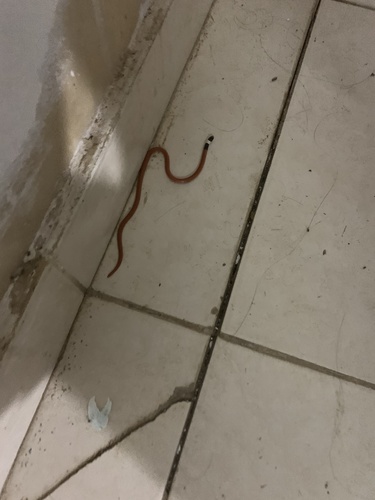 Tricolored Burrowing SnakePhalotris tricolor
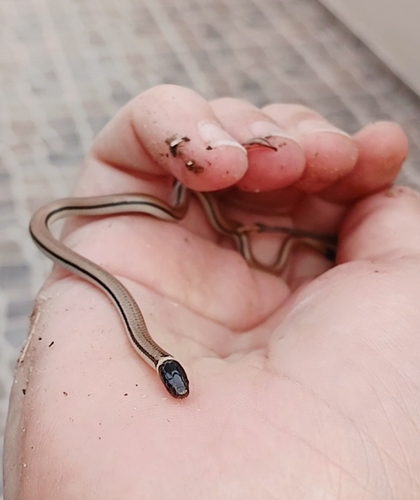 Phalotris suspectusPhalotris suspectus
 Phalotris lativittatusPhalotris lativittatus
 Phalotris reticulatusPhalotris reticulatus
Classification
How scientists group this snake, from the broadest category down to the exact species. Each step narrows to its closest relatives.
- OrderThe broad group of scaled reptiles: all snakes and lizards
- Squamata
- FamilyA group of related snakes that share key traits
- Colubridae
- GenusA close-knit group of very similar species
- Phalotris
- SpeciesThis exact snake, named in the two-part scientific name
- Phalotris lemniscatus
Keep learning
- What to Do If You Find a SnakeFound a snake at home or on a trail? Here is how to stay calm, give it space, identify it safely, and know when to call a professional.
- Venomous vs Nonvenomous: How to Tell the DifferenceThe folk rules for telling venomous snakes apart, where each one fails, and why location-based identification beats guessing by sight.
- What Is a Snake? Anatomy and the BasicsA clear overview of what makes a snake a snake: limbless body plan, anatomy, evolution from lizards, species diversity, and why they are ectothermic.
- How to Keep Snakes Out of Your Yard and HomeA practical guide to keeping snakes out of your yard and home using habitat changes that work, plus what to skip and what to do if one shows up.
Distribution from GBIF & iNaturalist. Venom status per CDC. Background: Wikipedia. Informational only. Never handle a snake to identify it.