
Colubridae
Baker's Cat-eyed Snake
HarmlessLeptodeira bakeri
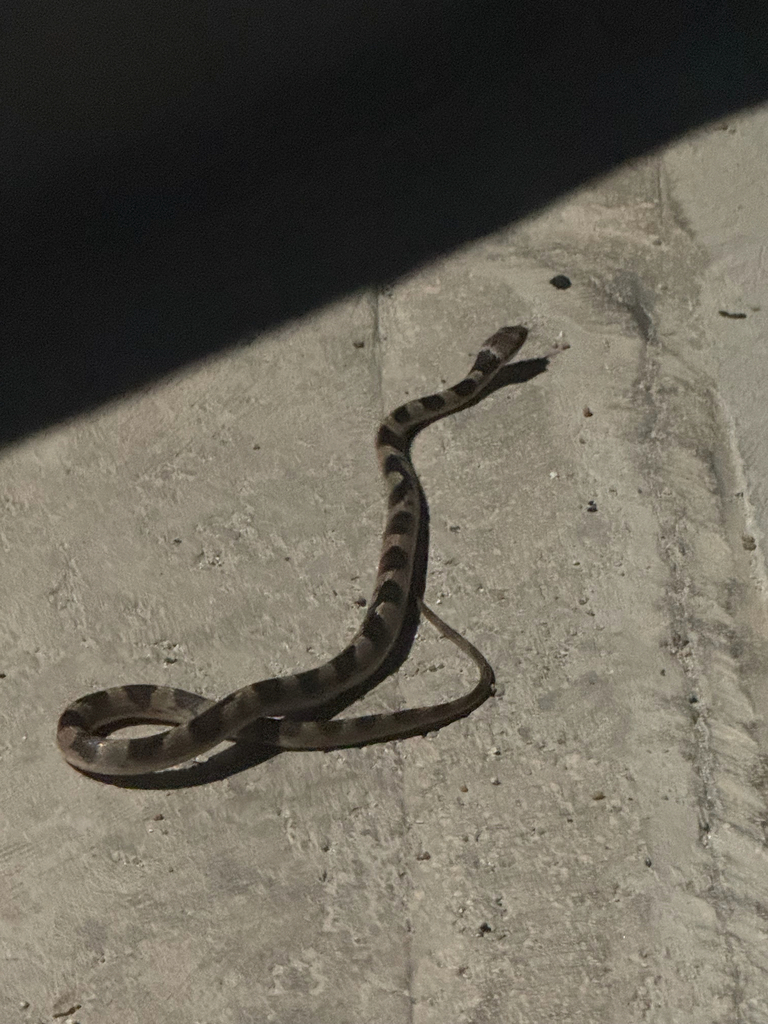
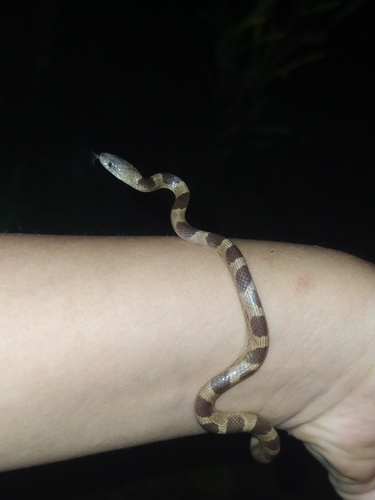
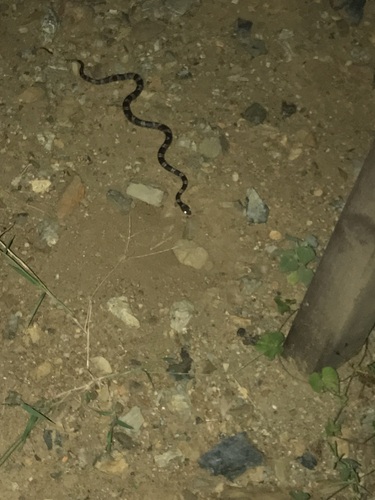
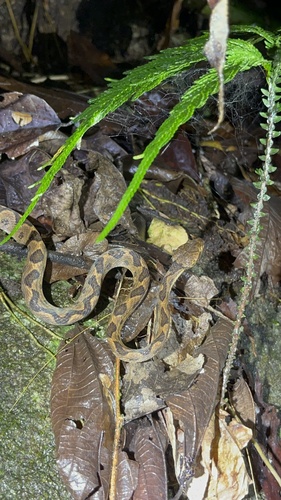
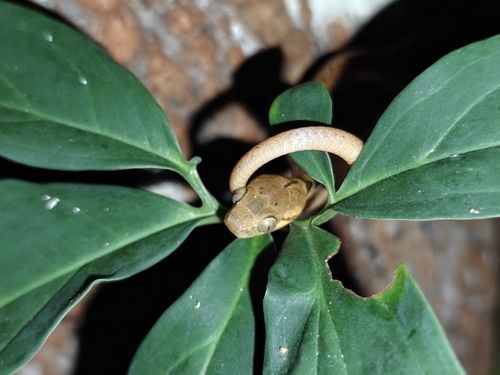
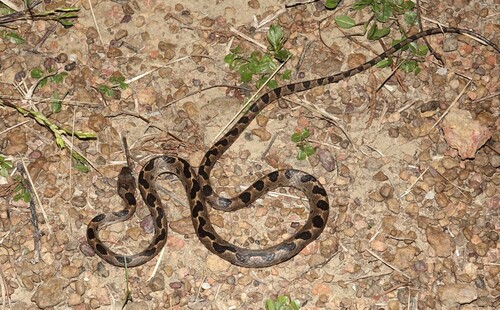
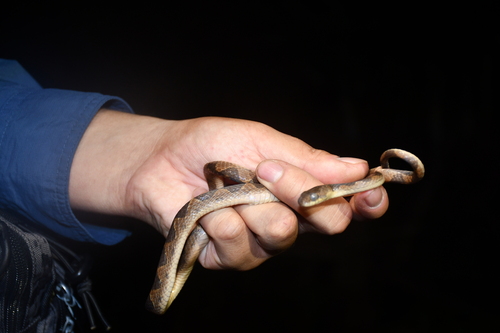
3 photographs of the Baker's Cat-eyed Snake. (c) barthelemeus, some rights reserved (CC BY-NC).
The Baker's Cat-eyed Snake (Leptodeira bakeri) is a rear-fanged, mildly venomous snake in the Colubridae family, recorded in 3 countries.
- Family
- Colubridae
About the Baker's Cat-eyed Snake
Leptodeira bakeri, known commonly as Baker's cat-eyed snake or Aruban cat-eyed snake, is a species of reptile in the subfamily Dipsadinae of the family Colubridae. The species is found in Aruba and in Venezuela.
Taxonomy and etymology
The specific name, bakeri, is in honor of American zoologist Horace Burrington Baker, who collected the holotype on 6 August 1922, with the type locality being Bubali, Aruba. In 1923, after Baker had brought back with him the series of specimens that contained the eventual holotype to Museum of Zoology at the University of Michigan's, Alexander G. Ruthven examined and recorded it as a member of Leptodeira annulata. It would not be until later, after he investigated the eventual holotype and other snake specimens from its region that he concluded that it constituted a separate species, the first description of which he published in 1936.
Description and behaviour
The dorsal scales of L.bakeri are arranged in 19 rows on the neck, 17 rows at midbody, and 15 rows near the cloaca. The ventral scales number 170–175.
L.bakeri is terrestrial and partly arboreal, and preys upon frogs.
Distribution and habitat
L. bakeri can be found on the Dutch Caribbean island of Aruba, the Paraguaná Peninsula of Falcón, Venezuela, and in Zulia, Venezuela, in an area to the southwest of the state capital Maracaibo. In total, its range spans an area of about 11,000 km2 (4,200 sq mi).
The natural habitats of Leptodeira bakeri are forest and shrubland, where it lives at altitudes from sea level to 150 m (490 ft), but its also known to inhabit habitats that have been degraded by human activity, such as gardens and pastures.
Adapted from Wikipedia, available under CC BY-SA.
Frequently asked: Baker's Cat-eyed Snake
- Is the Baker's Cat-eyed Snake venomous?
- The Baker's Cat-eyed Snake (Leptodeira bakeri) is rear-fanged and only mildly venomous. It is not considered dangerous to humans (its venom is weak and its fangs sit at the back of the mouth) but a bite can cause local swelling or irritation, so it should not be handled.
- Is the Baker's Cat-eyed Snake poisonous?
- Snakes are venomous, not poisonous. "Poisonous" means harmful to eat or touch; "venomous" means injecting toxins through a bite. The Baker's Cat-eyed Snake is neither poisonous nor venomous.
- Is the Baker's Cat-eyed Snake dangerous?
- The Baker's Cat-eyed Snake is not dangerous to humans. It has no medically significant venom and bites only defensively if cornered or handled.
- Where does the Baker's Cat-eyed Snake live?
- The Baker's Cat-eyed Snake has verified records in 3 countries, including Aruba, Colombia, Venezuela (Bolivarian Republic of). See the distribution section below for its full range.
- Why is it called the Baker's Cat-eyed Snake?
- The specific name, bakeri, is in honor of American zoologist Horace Burrington Baker, who collected the holotype on 6 August 1922, with the type locality being Bubali, Aruba. In 1923, after Baker had brought back with him the series of specimens that contained the eventual holotype to Museum of Zoology at the University of Michigan's, Alexander G. Ruthven examined and recorded it as a member of Leptodeira annulata.
Where it is found
More Colubridae snakes
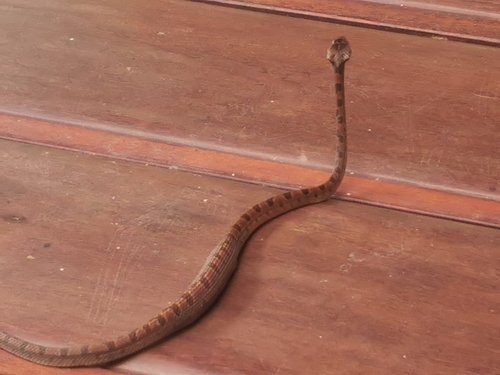 Ornate Cat-eyed SnakeLeptodeira ornata
 Rhombic Cat-eyed SnakeLeptodeira rhombifera
 Northern Cat-eyed SnakeLeptodeira septentrionalis
 Venezuelan Cat-eyed SnakeLeptodeira ashmeadii
 South American Banded Cat-eyed SnakeLeptodeira annulata
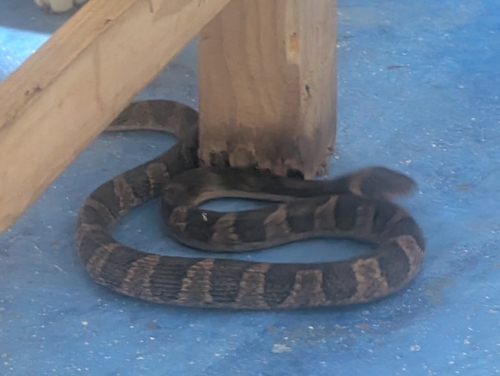 Southwestern Cat-eyed SnakeLeptodeira maculata
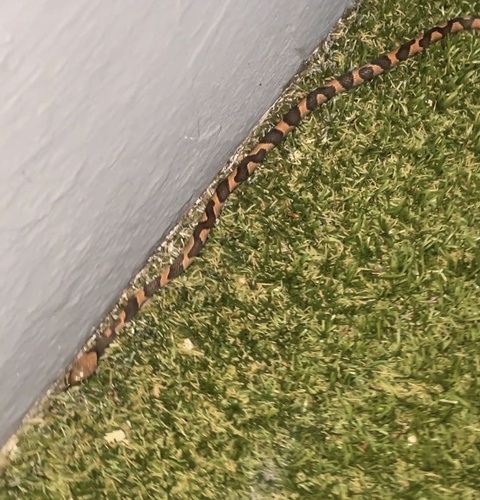 Rainforest Cat-eyed SnakeLeptodeira frenata
 Black-banded Cat-eyed SnakeLeptodeira nigrofasciata
Classification
How scientists group this snake, from the broadest category down to the exact species. Each step narrows to its closest relatives.
- OrderThe broad group of scaled reptiles: all snakes and lizards
- Squamata
- FamilyA group of related snakes that share key traits
- Colubridae
- GenusA close-knit group of very similar species
- Leptodeira
- SpeciesThis exact snake, named in the two-part scientific name
- Leptodeira bakeri
Keep learning
- What to Do If You Find a SnakeFound a snake at home or on a trail? Here is how to stay calm, give it space, identify it safely, and know when to call a professional.
- Venomous vs Nonvenomous: How to Tell the DifferenceThe folk rules for telling venomous snakes apart, where each one fails, and why location-based identification beats guessing by sight.
- What Is a Snake? Anatomy and the BasicsA clear overview of what makes a snake a snake: limbless body plan, anatomy, evolution from lizards, species diversity, and why they are ectothermic.
- How to Keep Snakes Out of Your Yard and HomeA practical guide to keeping snakes out of your yard and home using habitat changes that work, plus what to skip and what to do if one shows up.
Distribution from GBIF & iNaturalist. Venom status per CDC. Background: Wikipedia. Informational only. Never handle a snake to identify it.