
Regional field guide
Snakes in Michigan
20+ snake species have verified records in Michigan, including 1 venomous. Pick your county below to see exactly which snakes live near you.
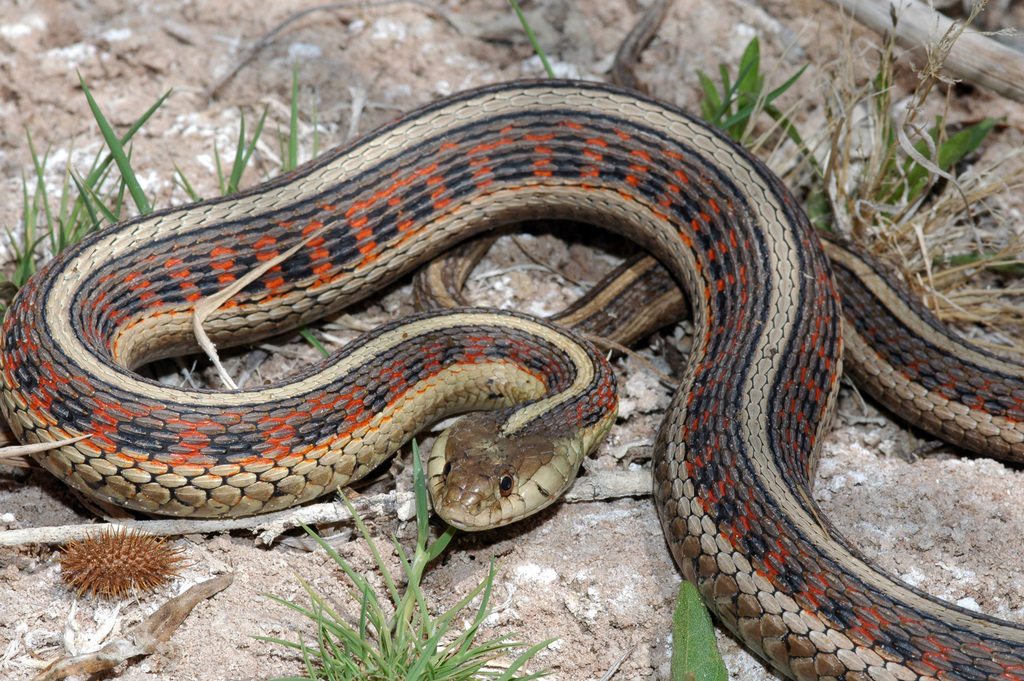
Snakes of Michigan
Michigan has about 20+ species of snakes, and just 1 of them is venomous. The odds are overwhelming that any snake you see in Michigan is harmless. Snakes here are spread across two peninsulas of forest, lakeshore, and farmland, and most are quiet rodent and insect hunters that keep to themselves.
Michigan's geography is dominated by water and woods. Glaciers carved out the Great Lakes and left a landscape of inland lakes, bogs, fens, and wet meadows, especially across the Lower Peninsula. There are oak and pine woodlands, river valleys, and dune systems along the shore. This abundance of wetlands and lake edges favors snakes that like damp ground, while the drier sandy uplands and forests hold others.
The state's single venomous species is the Eastern Massasauga, a small, thick-bodied rattlesnake that lives in wetlands such as fens, sedge meadows, and the edges of bogs. It is secretive, sluggish, and badly declined across its range, which is why it is protected as a federally threatened species. A massasauga would rather hide or stay still than confront a person, and bites are very rare.
Most snakes Michiganders see are entirely harmless. Eastern garter snakes are the most common, turning up in gardens and along trails. Northern watersnakes patrol lakes and streams and are often killed by mistake because people think they are dangerous, when Michigan has no cottonmouths. Eastern fox snakes and milk snakes hunt rodents and will buzz their tails in dead leaves to mimic a rattlesnake when scared. Bites are uncommon and rarely fatal thanks to antivenom, and most happen when people try to catch or kill a snake. Never assume a wild snake is safe to handle, and if a bite happens, call Poison Control at 1-800-222-1222 or 911.
Venomous snakes in Michigan
Most commonly seen
- Common Garter SnakeCommonly seen
- Common WatersnakeCommonly seen
- DeKay's BrownsnakeCommonly seen
- Eastern Hognose SnakeCommonly seen
- Eastern MilksnakeCommonly seen
- Red-bellied SnakeCommonly seen
- Common Ribbon SnakeCommonly seen
- Butler's Garter SnakeCommonly seen
- Eastern MassasaugaCommonly seen
- North American RacerCommonly seen
- Smooth GreensnakeCommonly seen
- Eastern FoxsnakeCommonly seen
Counties in Michigan
87 listed- Alcona6
- Alger6
- Allegan11
- Alpena10
- Antrim8
- Arenac3
- Baraga4
- Barry8
- Bay4
- Benzie8
- Berrien11
- Branch3
- Calhoun8
- Cass10
- Charlevoix9
- Cheboygan12
- Chippewa6
- Clare9
- Clinton8
- Crawford9
- Delta7
- Dickinson4
- Eaton11
- Emmet8
- Genesee9
- Gladwin5
- Gogebic4
- Grand Traverse9
- Gratiot3
- Hillsdale7
- Houghton4
- Huron10
- Ingham8
- Ionia4
- Iosco9
- Iron5
- Isabella9
- Jackson8
- Kalamazoo8
- Kalkaska10
- Kent10
- Keweenaw3
- Lake8
- Lake Hurron10
- Lake Michigan13
- Lake St. Clair5
- Lake Superior4
- Lapeer6
- Leelanau8
- Lenawee7
- Livingston9
- Luce4
- Mackinac9
- Macomb8
- Manistee8
- Marquette6
- Mason9
- Mecosta9
- Menominee7
- Midland8
- Missaukee7
- Monroe8
- Montcalm7
- Montmorency9
- Muskegon6
- Newaygo7
- Oakland12
- Oceana8
- Ogemaw7
- Ontonagon4
- Osceola8
- Oscoda7
- Otsego9
- Ottawa8
- Presque Isle9
- Roscommon8
- Saginaw6
- Saint Clair7
- Saint Joseph6
- Sanilac4
- Schoolcraft7
- Shiawassee6
- Tuscola5
- Van Buren10
- Washtenaw15
- Wayne13
- Wexford10
Snakes in Michigan: FAQ
- Are there venomous snakes in Michigan?
- Yes. 1 venomous snake species has verified records in Michigan, including Eastern Massasauga. Most snakes in Michigan, however, are harmless.
- How many snake species live in Michigan?
- 20+ snake species have verified records in Michigan, of which 1 is venomous.
- What is the most commonly seen snake in Michigan?
- The Common Garter Snake is the most frequently reported snake in Michigan, based on verified wildlife observations.
- What should I do if I see a venomous snake in Michigan?
- Keep your distance and do not try to catch or kill it. Most bites happen when people handle or corner a snake. If someone is bitten, contact local emergency services or poison control immediately.