
Viperidae
Sri Lankan Green Pit Viper
VenomousCraspedocephalus trigonocephalus
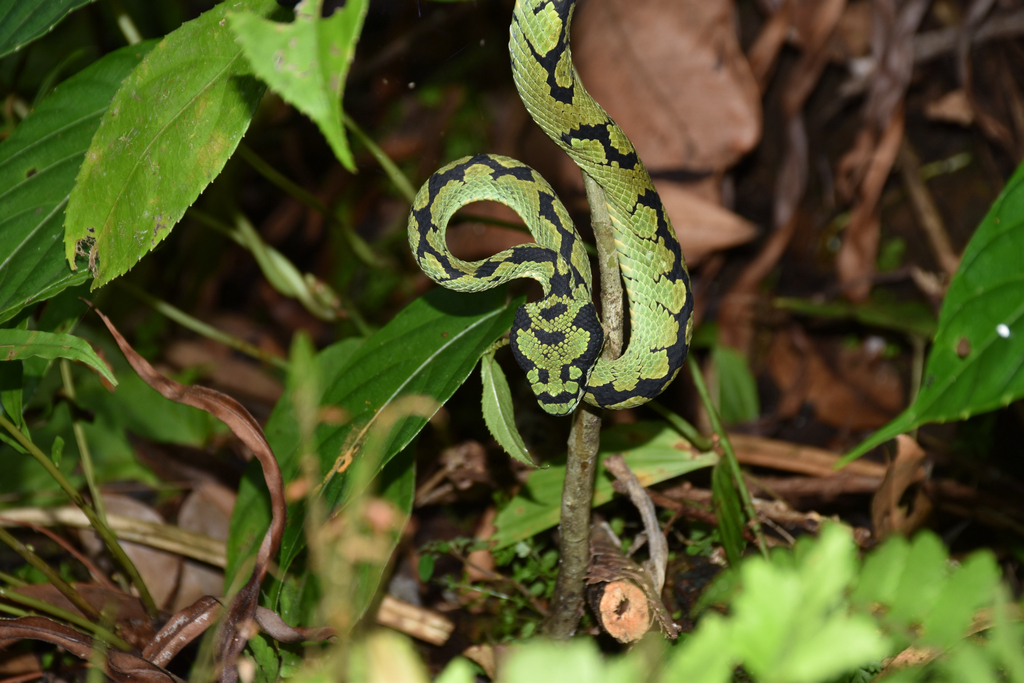
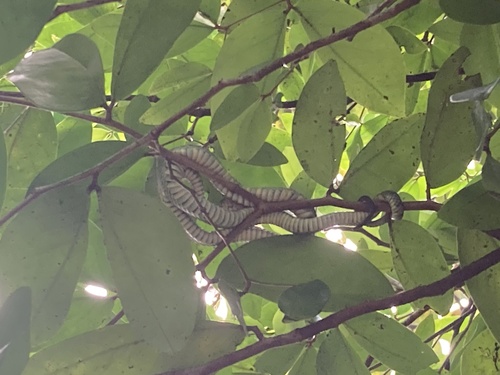
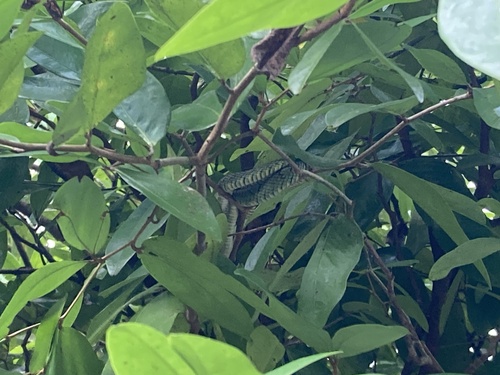
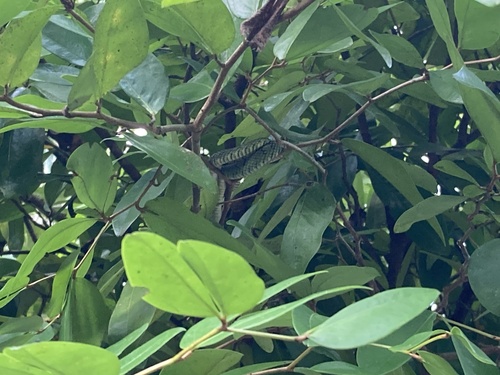
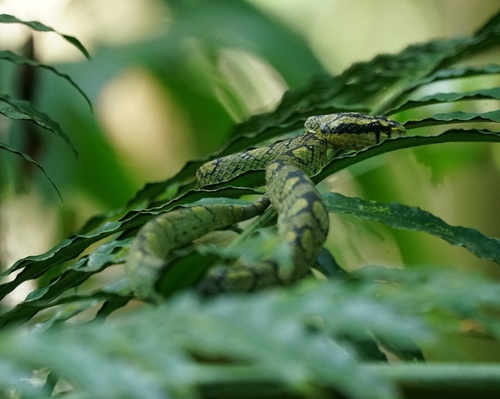
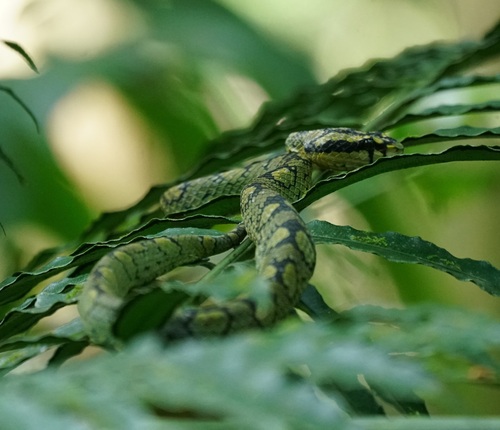
6 photographs of the Sri Lankan Green Pit Viper. © Aleksandr Gromov.
The Sri Lankan Green Pit Viper (Craspedocephalus trigonocephalus) is a venomous snake in the Viperidae family, recorded in 2 countries.
If you are bitten
This is a venomous snake. Treat any bite as a medical emergency: stay calm, keep the bitten limb still and roughly level with the heart, remove rings and tight clothing, and get to emergency care immediately. Do not apply a tourniquet, cut the wound, apply ice, or try to suck out venom. Call your local emergency number or poison center.
- Family
- Viperidae
- Danger
- high
About the Sri Lankan Green Pit Viper
Craspedocephalus trigonocephalus, the Sri Lankan pit viper, Ceylon pit viper, Sri Lankan green pitviper or locally, pala polonga, (Sinhala: පළා පොළඟා) is a venomous pit viper species endemic to Sri Lanka. No subspecies are currently recognized.
Description
Craspedocephalus trigonocephalus is a sexually dimorphic, mid-sized, cylindrical species. These snakes measure 20–25 cm (7.9–9.8 in) at birth, and males grow to a maximum total length of 60–75 cm (24–30 in). The neck is distinct from the flattened, triangular head. There is a loreal pit on each side of the head. Mid-sized eyes and a short, rounded, broad snout are present. The males are considerably smaller than females, which can grow up to 130 cm (51 in) in total length. The ground color of the snake is variable and cryptic. Typically, it is a green snake with a black variegated pattern, and a black temporal line is usually present. The wet zone snakes have these black patterns more clearly marked. The vertebral area has a tinge of yellow. The tail is black. The ventral scales are light greenish-yellow or may even be grey. Some snakes have only the black temporal line and the black tail, with the rest of the body being green. In addition, males tend to have a blue coloration, whereas the females are predominantly green. These are bulky snakes with prehensile, short tails, suiting their arboreal lifestyle.
Reproduction
These are viviparous snakes. About five to 25 young are produced at once.
Scales
These snakes have two or three large supraocular scales, and their nasal scales are partially divided into two or may not be divided. They have three preoculars, two or three postoculars, 9–10 supralabial scales, three or four infralabials, and 142–160 ventrals; The anal scale is not divided; their 53–69 subcaudals are divided. At midbody, the 17–19 rows of dorsal scales may or may not have keels. Most head shields are small and smooth.
Common names
Common names include: Sri Lankan green pit viper, Sri Lankan pit viper, pala polonga (පළා පොළඟා), and green pit viper.
Geographic range
It is an endemic species to Sri Lanka and widely distributed in all three climatic zones of the island, except higher hills and arid zones, while relatively more common in wet zone grasslands and rain forest areas and occasionally in plantations of cardamom, cocoa, coffee, and tea, from the lower altitudes from 153 to 1,800 m (502 to 5,906 ft). The type locality given is "l'île S.-Eustache" (Sri Lanka). Populations in the dry zone are being investigated as a possible separate species, and there are no populations on the Jaffna peninsula.
Behavior
It is arboreal and nocturnal, occasionally descending to the ground in search of food such as lizards, frogs, small mammals, and birds. This sluggish pit viper is usually encountered on low shrubs during morning hours, but it mostly occupies in grasslands and rain forests. In mornings, it is seen to stay on top of trees to obtain sun rays to heat its body. It uses its tail to hold on to a tree branch. This is not a particularly defensive species, but if agitated, it will vibrate its tail tip, form a sinuous loop with the fore body, and lash and attempt to bite, seldom with a hissing sound. It produces live young mostly during June and July.
Venom
Adapted from Wikipedia, available under CC BY-SA.
Local and regional names
The Sri Lankan Green Pit Viper is known by these names across the regions where it lives:
- Catalan
- Cròtal Verd d'Sri Lanka
- Chinese
- 斯里蘭卡綠蝮蛇
- Czech
- chřestýšovec cejlonský
- Danish
- Srilankansk Grøn Træhugorm
- English
- Ceylon Pit Viper, Sri Lankan Green pitviper
- French
- Crotale de Ceylan, Crotale du Sri Lanka
- German
- Ceylon-Lanzenotter
- Polish
- trwożnica cejlońska
- Russian
- Цейлонская куфия
- Sinhala
- පළා පොළඟා
Frequently asked: Sri Lankan Green Pit Viper
- Is the Sri Lankan Green Pit Viper venomous?
- Yes. The Sri Lankan Green Pit Viper (Craspedocephalus trigonocephalus) is venomous and belongs to the Viperidae family (viper). Its bite is considered high risk to people. Treat any bite as a medical emergency.
- Is the Sri Lankan Green Pit Viper poisonous?
- Snakes are venomous, not poisonous. "Poisonous" means harmful to eat or touch; "venomous" means injecting toxins through a bite. The Sri Lankan Green Pit Viper is venomous, delivering venom through a bite.
- Is the Sri Lankan Green Pit Viper dangerous?
- This is a venomous snake. Treat any bite as a medical emergency: stay calm, keep the bitten limb still and roughly level with the heart, remove rings and tight clothing, and get to emergency care immediately. Do not apply a tourniquet, cut the wound, apply ice, or try to suck out venom. Call your local emergency number or poison center.
- Where does the Sri Lankan Green Pit Viper live?
- The Sri Lankan Green Pit Viper has verified records in 2 countries, including Sri Lanka, Philippines. See the distribution section below for its full range.
- Why is it called the Sri Lankan Green Pit Viper?
- Common names include: Sri Lankan green pit viper, Sri Lankan pit viper, pala polonga (පළා පොළඟා), and green pit viper.
If you are bitten by the Sri Lankan Green Pit Viper
Do
- Get away from the snake and stay calm. Most bites worsen when people panic or try again to handle the snake.
- Call 911 or Poison Control (1-800-222-1222) right away. Antivenom works best when given early.
- Note the time of the bite and, from a safe distance, the snake's color and pattern, a phone photo is enough. Do not chase it.
- Keep the bitten limb still and at roughly heart level. Sit or lie down and limit movement.
- Remove rings, watches, and tight clothing near the bite before swelling starts.
- Gently wash the bite with soap and water and cover it with a clean, dry dressing.
Do not
- Do not cut the wound or try to suck out the venom.
- Do not apply a tourniquet or ice.
- Do not drink alcohol or caffeine.
- Do not take aspirin or ibuprofen, they can worsen bleeding. Acetaminophen is safer for pain.
- Do not try to catch or kill the snake. A dead snake can still bite by reflex.
First-aid guidance adapted from the U.S. Centers for Disease Control and Prevention (CDC NIOSH), Venomous Snakes. Educational only; always follow the instructions of emergency responders.
Where it is found
More Viperidae snakes
 Malabarian Pit ViperCraspedocephalus malabaricus
 Common Bamboo ViperCraspedocephalus gramineus
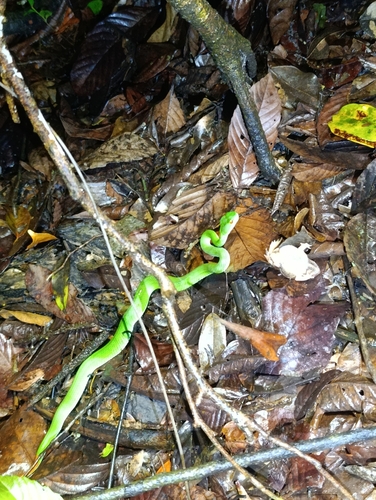 Ruby-eyed Green PitviperTrimeresurus rubeus
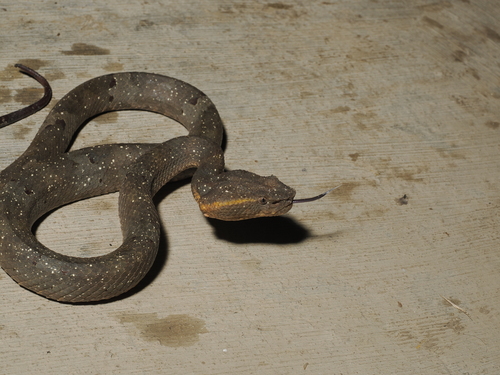 Ashy Pit ViperCraspedocephalus puniceus
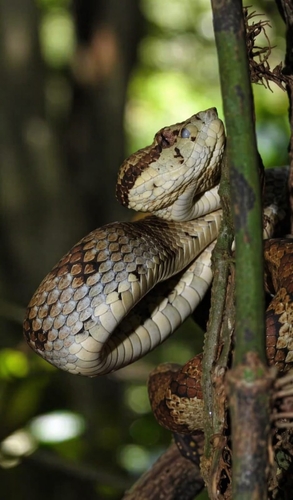 Anamala Pit ViperCraspedocephalus anamallensis
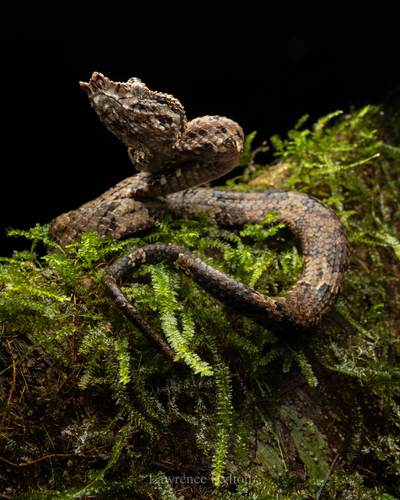 Borneo Pit ViperCraspedocephalus borneensis
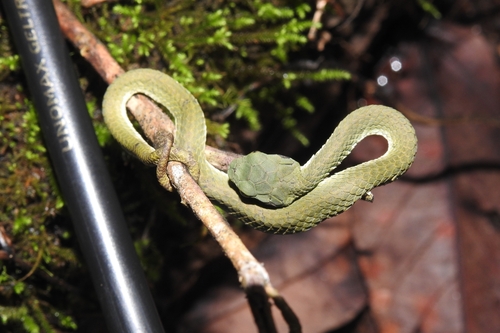 Large-scaled Pit ViperCraspedocephalus macrolepis
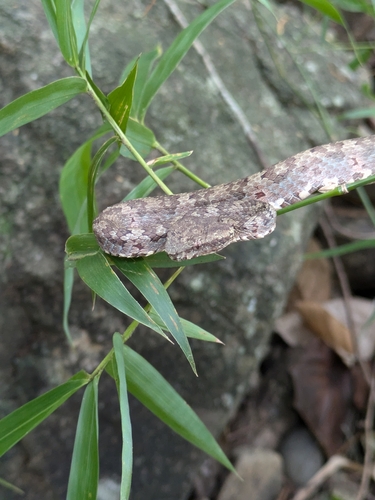 Travancore Pit ViperCraspedocephalus travancoricus
Classification
How scientists group this snake, from the broadest category down to the exact species. Each step narrows to its closest relatives.
- OrderThe broad group of scaled reptiles: all snakes and lizards
- Squamata
- FamilyA group of related snakes that share key traits
- Viperidae
- GenusA close-knit group of very similar species
- Craspedocephalus
- SpeciesThis exact snake, named in the two-part scientific name
- Craspedocephalus trigonocephalus
Keep learning
- Are Snakes Dangerous? The Real Risk, in PerspectiveMost snakes are harmless and avoid people. Here is the honest picture of snakebite risk worldwide and how to lower your own.
- Snakebite First Aid: What to Do (and What Never to Do)A clear, CDC-based guide to snakebite first aid: the steps that help, the popular myths that hurt, and how to tell a serious bite from a minor one.
- Venomous vs Nonvenomous: How to Tell the DifferenceThe folk rules for telling venomous snakes apart, where each one fails, and why location-based identification beats guessing by sight.
- What to Do If You Find a SnakeFound a snake at home or on a trail? Here is how to stay calm, give it space, identify it safely, and know when to call a professional.
Distribution from GBIF & iNaturalist. Venom status per CDC. Background: Wikipedia. Informational only. Never handle a snake to identify it.