
Genus · Viperidae
Types of vipers
10+ species make up the genus Craspedocephalus, the snakes commonly called vipers. All of them are venomous.
About Asian green pit vipers
Tree-dwelling Asian pit vipers, many of them vivid green, that hunt by ambush and deliver a serious venomous bite.
Craspedocephalus is a genus of pit vipers in the family Viperidae, the same family as rattlesnakes, true vipers, and other pit vipers. Most of its species were once placed in the large genus Trimeresurus and were split out as researchers reorganized the Asian arboreal pit vipers using anatomy and DNA. Because the genus is still being revised, species counts and names shift between sources, so treat the boundaries here as a working group rather than a fixed list. In our database it holds 10+ species.
These snakes live in South and Southeast Asia, with a notable concentration in the wet forests of the Western Ghats of India and in Sri Lanka. Typical habitat is humid evergreen and montane forest, plantation edges, and bamboo thickets, often near streams. Many species are arboreal, spending the day coiled on branches and foliage and becoming active at night.
Members are generally small to mid-sized snakes with the build typical of arboreal pit vipers: a broad, triangular head clearly wider than the slender neck, vertical cat-like pupils, and a slim body that often ends in a prehensile tail used to grip branches. Like all pit vipers they carry a heat-sensing pit between the eye and nostril that detects warm prey. Color varies widely, from the bright greens that give the group its common name to brown and mottled forms; the green coloring is camouflage in leafy canopy, so color alone is not a reliable field identifier. Several species, such as the Malabarian pit viper, the common bamboo viper (also called the bamboo pit viper), the Sri Lankan green pit viper, and the ruby-eyed green pitviper, sit within this genus.
Craspedocephalus is venomous and front-fanged, with hinged fangs that fold against the roof of the mouth and swing forward to inject venom. A bite is a genuine medical emergency that can cause intense pain, swelling, and tissue and bleeding effects, and some species are responsible for human envenomations in their range. Never handle, catch, or closely approach a wild pit viper, and never rely on color or size to judge whether a snake is dangerous. If a bite occurs, keep the person calm and still, do not cut, suck, or apply a tourniquet, and get to emergency medical care immediately. In the United States contact Poison Control at 1-800-222-1222; elsewhere call local emergency services and seek the nearest facility with antivenom.
Ecologically these are sit-and-wait ambush predators. They feed mostly on small vertebrates such as frogs, lizards, small birds, and rodents, striking from a coiled position and using venom to subdue prey. Many species are viviparous, giving birth to live young rather than laying eggs, an adaptation common among pit vipers in cooler or wetter montane settings. Their behavior is generally to stay motionless and rely on camouflage, biting defensively only when threatened or handled, which is why leaving them undisturbed is both the safest and the most effective response.
Craspedocephalus belongs to the Viperidae family (Vipers & pit vipers). Heavy-bodied venomous snakes with long, hinged, hollow fangs. Broad, triangular head distinct from a narrow neck, heavy body, and (usually) vertical, cat-like pupils. Pit vipers also have a heat-sensing pit; true vipers do not.
Danger: Every viper is venomous, and the family includes some of the world's most medically important snakes. Venom is typically hemotoxic, causing pain, swelling, tissue damage, and bleeding. Treat any viper bite as a medical emergency.
All species (15)
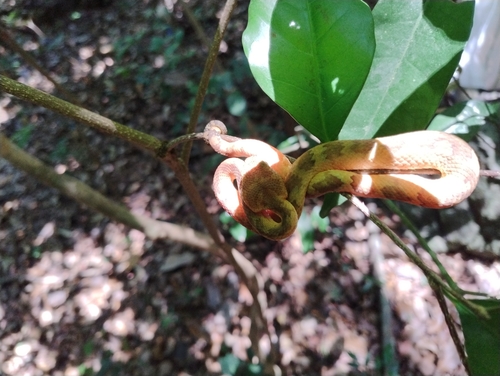 Malabarian Pit ViperCraspedocephalus malabaricusVenomous
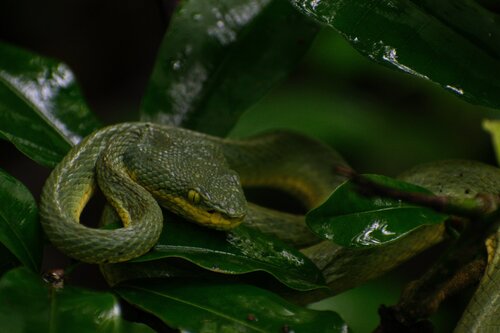 Common Bamboo ViperCraspedocephalus gramineusVenomous
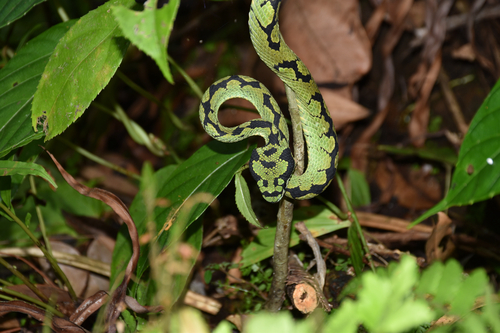 Sri Lankan Green Pit ViperCraspedocephalus trigonocephalusVenomous
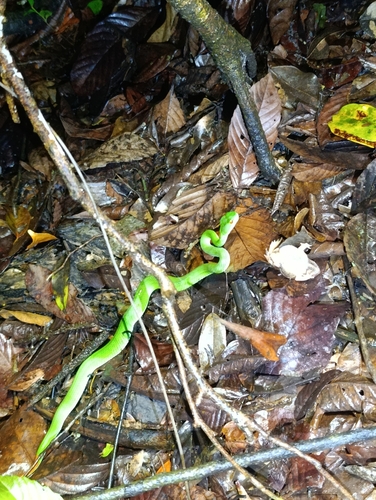 Ruby-eyed Green PitviperTrimeresurus rubeusVenomous
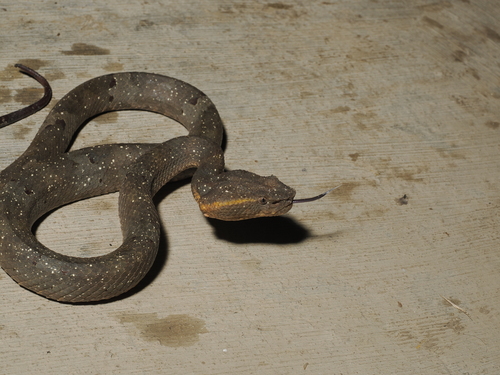 Ashy Pit ViperCraspedocephalus puniceusVenomous
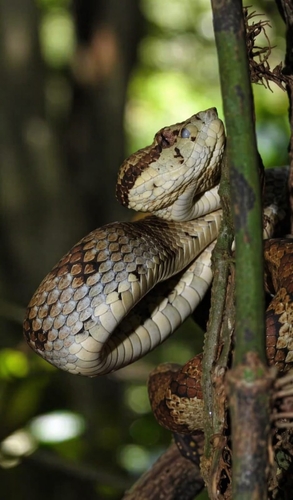 Anamala Pit ViperCraspedocephalus anamallensisVenomous
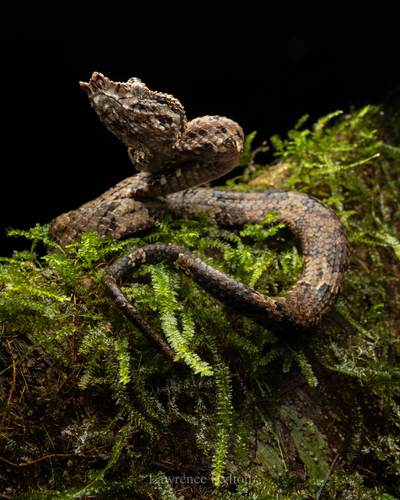 Borneo Pit ViperCraspedocephalus borneensisVenomous
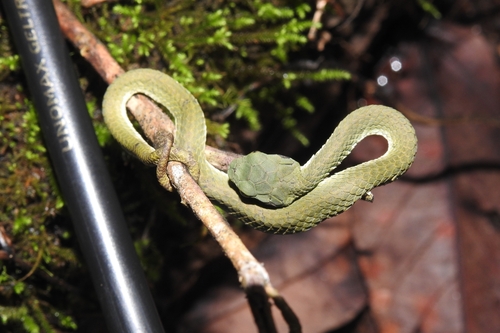 Large-scaled Pit ViperCraspedocephalus macrolepisVenomous
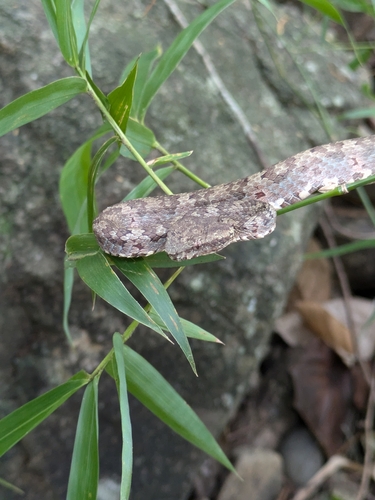 Travancore Pit ViperCraspedocephalus travancoricusVenomous
 Sumatran Palm Pit ViperCraspedocephalus andalasensisVenomous
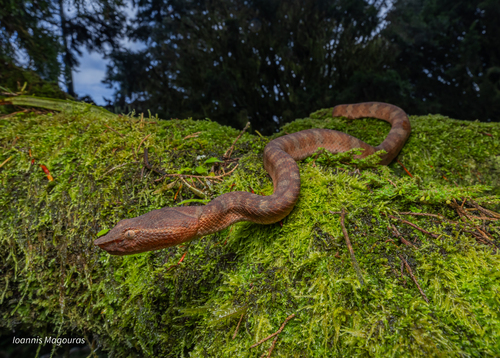 Wirot’s Pit ViperCraspedocephalus wirotiVenomous
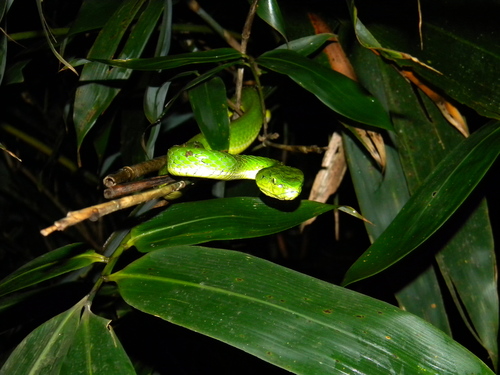 Southern Large-scaled pit viperCraspedocephalus peltopelorVenomous
 Horseshoe PitviperCraspedocephalus strigatusVenomous
 Brongersma's Pit ViperCraspedocephalus brongersmaiVenomous
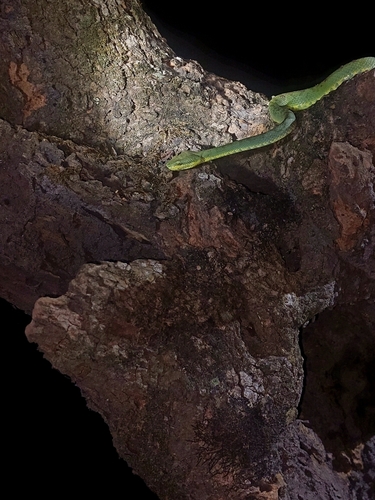 Western bamboo pit viperCraspedocephalus occidentalisVenomous
Keep learning
- Venomous vs Nonvenomous: How to Tell the DifferenceThe folk rules for telling venomous snakes apart, where each one fails, and why location-based identification beats guessing by sight.
- Are Snakes Dangerous? The Real Risk, in PerspectiveMost snakes are harmless and avoid people. Here is the honest picture of snakebite risk worldwide and how to lower your own.
- Snake Venom Explained: How It Works and WhyWhat snake venom actually is, why it evolved, the main venom types, fang delivery, how antivenom works, and why ranking the most venomous snake is hard.
- How Snakes Move, Hunt, and EatHow snakes move without legs, hunt as ambushers or active foragers, kill by constriction or venom, and swallow prey wider than their head.