
Colubridae
Black-headed snake
HarmlessSibynophis subpunctatus
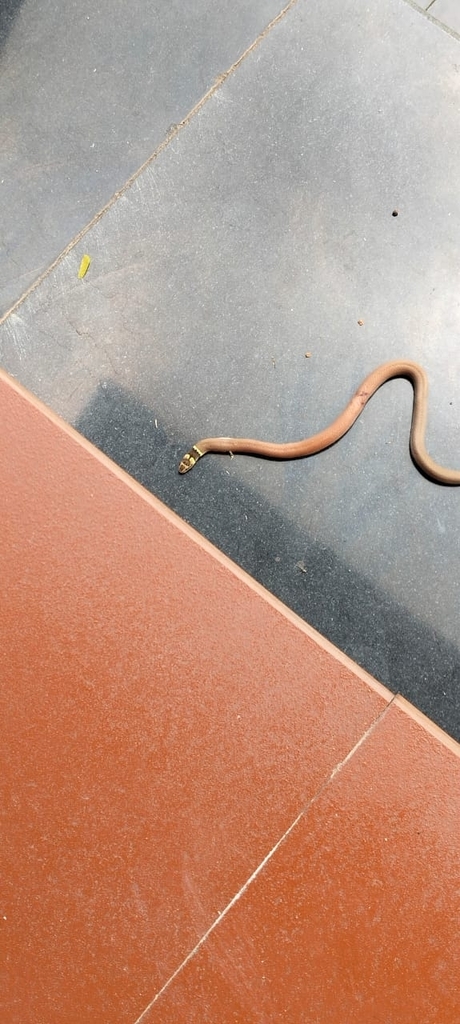
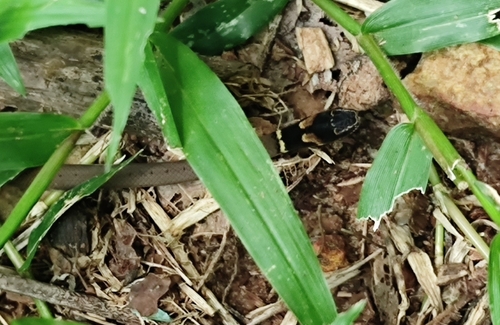
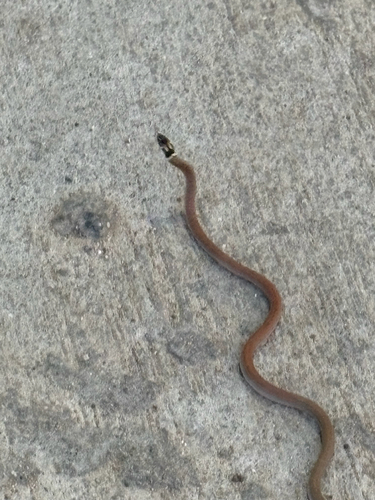
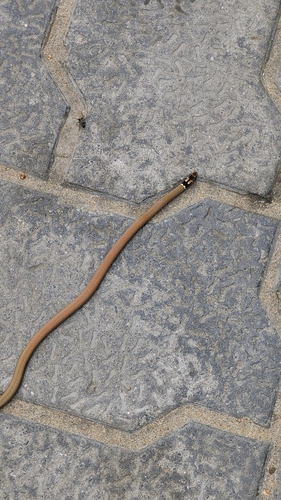
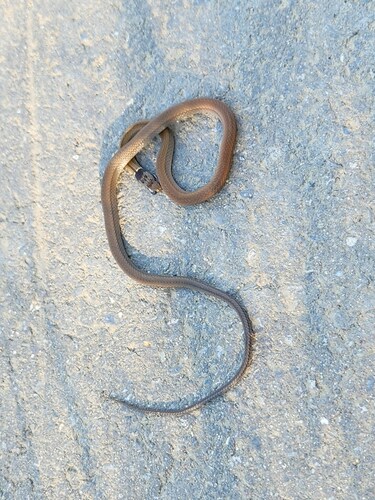
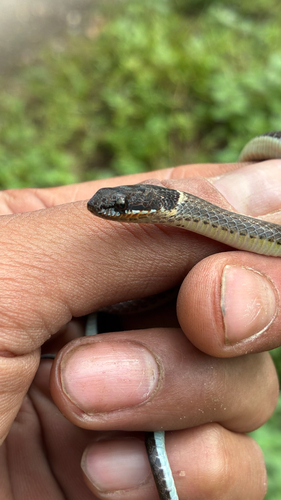
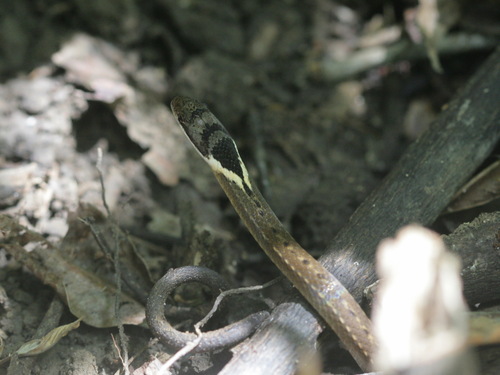
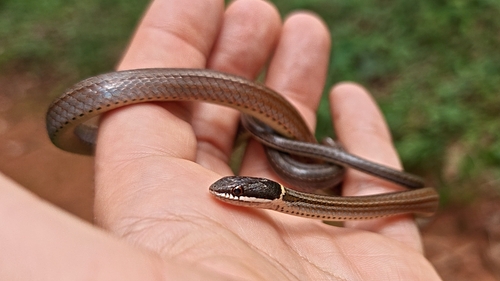
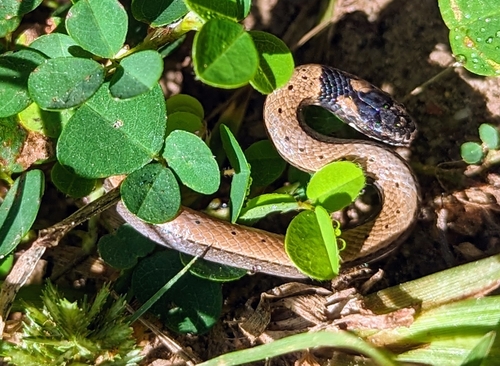
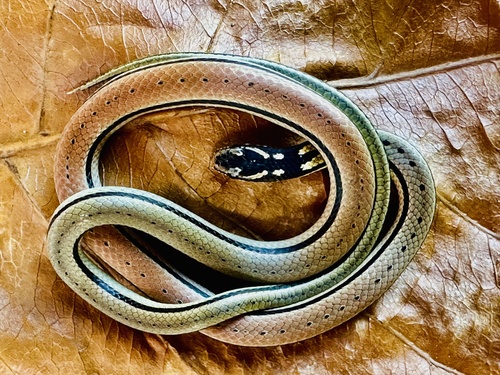
4 photographs of the Black-headed snake. (c) Hopeland, some rights reserved (CC BY).
The Black-headed snake (Sibynophis subpunctatus) is a non-venomous snake in the Colubridae family, recorded in 3 countries.
- Family
- Colubridae
About the Black-headed snake
Sibynophis subpunctatus, commonly known as Duméril's black-headed snake or Jerdon's many-toothed snake, is a species of nonvenomous colubrid snake endemic to Bangladesh, India, Sri Lanka, and Nepal.
Behavior
Sibynophis subpunctatus is active by day as well as at night. It lives in leaf litter, preying on geckos, skinks, and smaller snakes.
Description
Maximum size is 18 inches (46 cm).
Rostral scale nearly twice as broad as deep; suture between the internasals a little shorter than that between the prefrontals; frontal longer than its distance from the end of the snout, as long as the parietals or a little shorter; loreal longer than deep; one preocular; two postoculars, both in contact with the parietal; temporals 1 (or 2) + 2; 9 or 10 upper labials, fifth and sixth, or fourth, fifth, and sixth, entering the eye; eighth upper labial usually excluded from the labial margin, simulating a lower anterior temporal; 4 lower labials in contact with the anterior chin shields, the first lower labial usually separated from its fellow by the mental; posterior chin shields a little longer than the anterior chin shields.
Dorsal scales in 17 rows. Ventrals 151-220 (240 according to Blanford); anal divided; subcaudals 47-76.
Pale brown above, with a vertebral series of small round black spots; usually a more or less distinct dark lateral line or series of dots; head and nape dark brown or black; lips, canthus rostralis, a transverse line between the eyes, and two broad cross-bands, one in front and one behind the nape, all yellow; the dark colour often extending along the median line, bisecting the yellow collar; lower surfaces yellow, each shield with a black dot near its outer border.
Sri Lankan specimens have 157 to 176 ventrals and 52-64 subcaudals.
Geographic range
Sibynophis subpunctatus occurs in Bangladesh, through most of India including the Western Ghats, Eastern Ghats and pockets of Central India as well as in Sri Lanka. Specimens from the Northeast of India are probably those of Sibynophis sagittarius.
In Sri Lanka it is found mostly towards the west coast from Puttalam to Kalutara.
Adapted from Wikipedia, available under CC BY-SA.
Frequently asked: Black-headed snake
- Is the Black-headed snake venomous?
- No. The Black-headed snake (Sibynophis subpunctatus) is non-venomous and is not considered dangerous to humans. Like most snakes, it will retreat rather than bite when given the chance.
- Is the Black-headed snake poisonous?
- Snakes are venomous, not poisonous. "Poisonous" means harmful to eat or touch; "venomous" means injecting toxins through a bite. The Black-headed snake is neither poisonous nor venomous.
- Is the Black-headed snake dangerous?
- The Black-headed snake is not dangerous to humans. It has no medically significant venom and bites only defensively if cornered or handled.
- Where does the Black-headed snake live?
- The Black-headed snake has verified records in 3 countries, including India, Sri Lanka, Viet Nam. See the distribution section below for its full range.
Where it is found
More Colubridae snakes
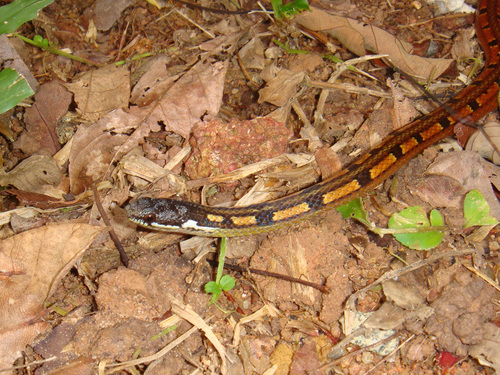
 Chinese Many-tooth SnakeSibynophis chinensis
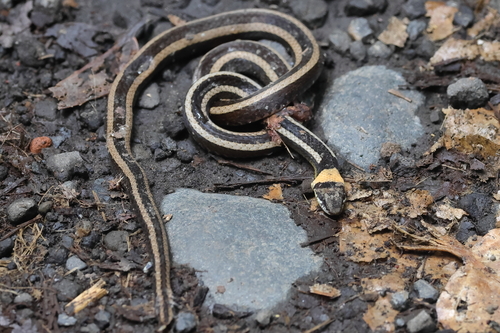
 Collared Black-headed SnakeSibynophis collaris
 Black-headed Collared SnakeSibynophis melanocephalus
 Boie's Many-tooth SnakeSibynophis geminatus
 Triangle Many-tooth SnakeSibynophis triangularis
 Sibynophis grahamiSibynophis grahami
 Cantor’s black-headed snakeSibynophis sagittarius
 Günther's Many-tooth SnakeSibynophis bistrigatus
Classification
How scientists group this snake, from the broadest category down to the exact species. Each step narrows to its closest relatives.
- OrderThe broad group of scaled reptiles: all snakes and lizards
- Squamata
- FamilyA group of related snakes that share key traits
- Colubridae
- GenusA close-knit group of very similar species
- Sibynophis
- SpeciesThis exact snake, named in the two-part scientific name
- Sibynophis subpunctatus
Keep learning
- What to Do If You Find a SnakeFound a snake at home or on a trail? Here is how to stay calm, give it space, identify it safely, and know when to call a professional.
- Venomous vs Nonvenomous: How to Tell the DifferenceThe folk rules for telling venomous snakes apart, where each one fails, and why location-based identification beats guessing by sight.
- What Is a Snake? Anatomy and the BasicsA clear overview of what makes a snake a snake: limbless body plan, anatomy, evolution from lizards, species diversity, and why they are ectothermic.
- How to Keep Snakes Out of Your Yard and HomeA practical guide to keeping snakes out of your yard and home using habitat changes that work, plus what to skip and what to do if one shows up.
Distribution from GBIF & iNaturalist. Venom status per CDC. Background: Wikipedia. Informational only. Never handle a snake to identify it.