
Atractaspididae
Natal Black Snake
VenomousMacrelaps microlepidotus
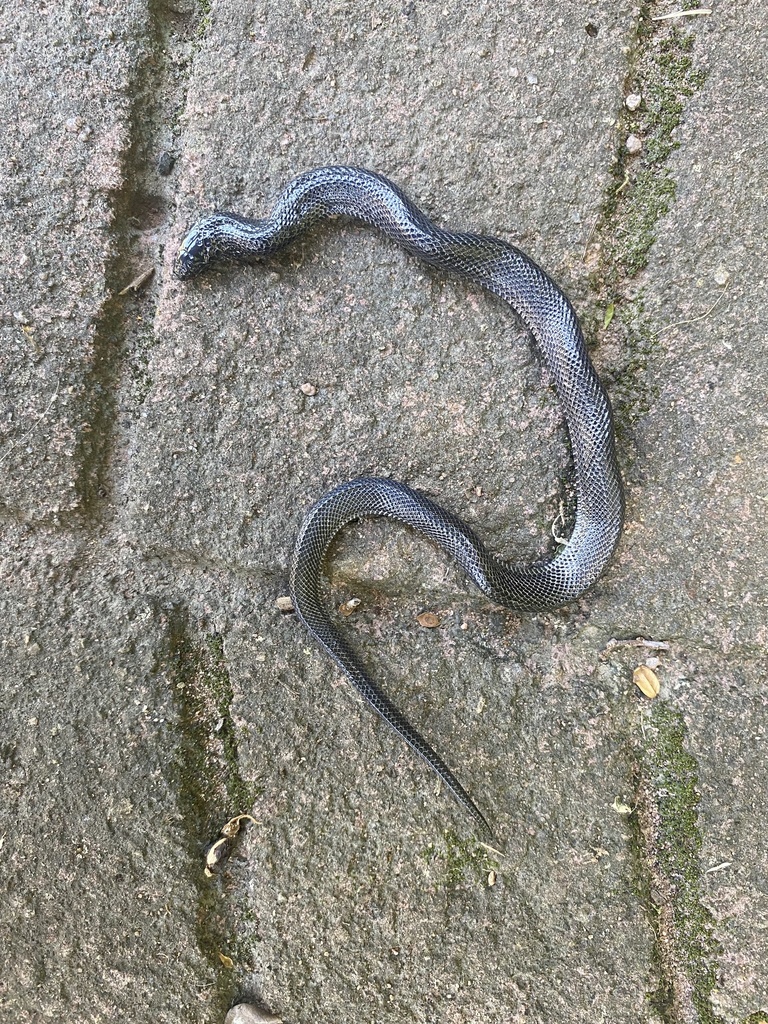
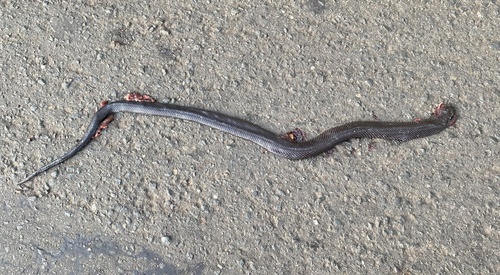
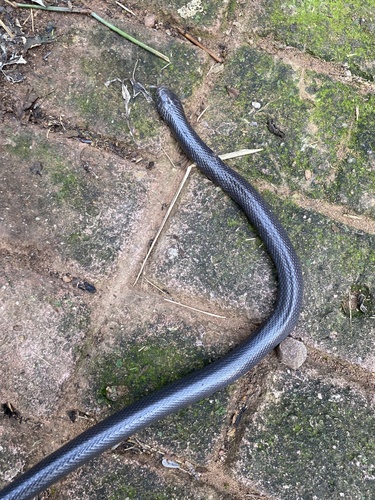
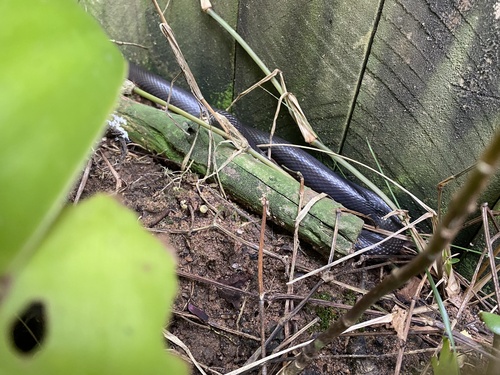
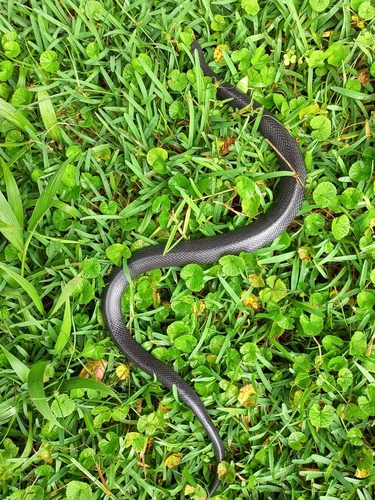
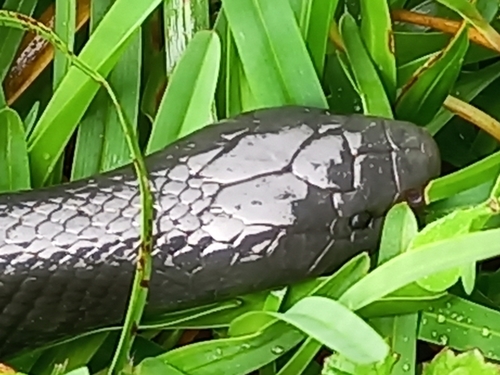
6 photographs of the Natal Black Snake. © Sunčana Bradley.
The Natal Black Snake (Macrelaps microlepidotus) is a venomous snake in the Atractaspididae family, recorded in 1 country.
If you are bitten
This is a venomous snake. Treat any bite as a medical emergency: stay calm, keep the bitten limb still and roughly level with the heart, remove rings and tight clothing, and get to emergency care immediately. Do not apply a tourniquet, cut the wound, apply ice, or try to suck out venom. Call your local emergency number or poison center.
- Family
- Atractaspididae
- Danger
- high
About the Natal Black Snake
Macrelaps (or KwaZulu-Natal black snake) is a monotypic genus created for the rear-fanged (opisthoglyphous) venomous snake species, M. microlepidotus, endemic to South Africa. No subspecies are currently recognised.
Description (diagnosis) of genus
Maxillary short, with four moderately large teeth, followed by a very large grooved fang situated below the eye. Anterior mandibular teeth enlarged, third to fifth longest. Head small, not distinct from neck. Eye minute, with round pupil. Nasal divided. No loreal. No preocular. Prefrontal entering the eye. Body cylindrical; tail short. Dorsal scales smooth, without pits, in 25 or 27 rows. Ventrals rounded; subcaudals single.
Description of species
Macrelaps microlepidotus is completely black dorsally and ventrally.
It may attain 85 cm (33+1⁄2 in) in total length, with a tail 10.5 cm (4+1⁄8 in) long.
Smooth dorsal scales arranged in 25 or 27 rows. Ventrals 163–166; anal plate entire; subcaudals 37–48, also entire.
Portion of rostral visible from above nearly half as long as its distance from the frontal. Internasals shorter than the prefrontals. Frontal as long as broad, as long as its distance from the end of the snout, much shorter than the parietals. One small postocular. Temporals 1+2. Seven upper labials, third and fourth entering the eye, fifth largest. Three or four lower labials in contact with the anterior chin shield. Anterior chin shields a little longer than the posterior chin shields.
Adapted from Wikipedia, available under CC BY-SA.
Local and regional names
The Natal Black Snake is known by these names across the regions where it lives:
- Afrikaans
- Natalse Swartslang
- Czech
- makrelaps drobnošupinný
- English
- Kwazulu-Natal Black Snake
- German
- Natal-Schwarzschlange
- Russian
- Мелкочешуйный макроэляпс
Frequently asked: Natal Black Snake
- Is the Natal Black Snake venomous?
- Yes. The Natal Black Snake (Macrelaps microlepidotus) is venomous and belongs to the Atractaspididae family (stiletto snake (burrowing asp)). Its bite is considered high risk to people. Treat any bite as a medical emergency.
- Is the Natal Black Snake poisonous?
- Snakes are venomous, not poisonous. "Poisonous" means harmful to eat or touch; "venomous" means injecting toxins through a bite. The Natal Black Snake is venomous, delivering venom through a bite.
- Is the Natal Black Snake dangerous?
- This is a venomous snake. Treat any bite as a medical emergency: stay calm, keep the bitten limb still and roughly level with the heart, remove rings and tight clothing, and get to emergency care immediately. Do not apply a tourniquet, cut the wound, apply ice, or try to suck out venom. Call your local emergency number or poison center.
- Where does the Natal Black Snake live?
- The Natal Black Snake has verified records in 1 country, including South Africa. See the distribution section below for its full range.
If you are bitten by the Natal Black Snake
Do
- Get away from the snake and stay calm. Most bites worsen when people panic or try again to handle the snake.
- Call 911 or Poison Control (1-800-222-1222) right away. Antivenom works best when given early.
- Note the time of the bite and, from a safe distance, the snake's color and pattern, a phone photo is enough. Do not chase it.
- Keep the bitten limb still and at roughly heart level. Sit or lie down and limit movement.
- Remove rings, watches, and tight clothing near the bite before swelling starts.
- Gently wash the bite with soap and water and cover it with a clean, dry dressing.
Do not
- Do not cut the wound or try to suck out the venom.
- Do not apply a tourniquet or ice.
- Do not drink alcohol or caffeine.
- Do not take aspirin or ibuprofen, they can worsen bleeding. Acetaminophen is safer for pain.
- Do not try to catch or kill the snake. A dead snake can still bite by reflex.
First-aid guidance adapted from the U.S. Centers for Disease Control and Prevention (CDC NIOSH), Venomous Snakes. Educational only; always follow the instructions of emergency responders.
Where it is found
More Atractaspididae snakes
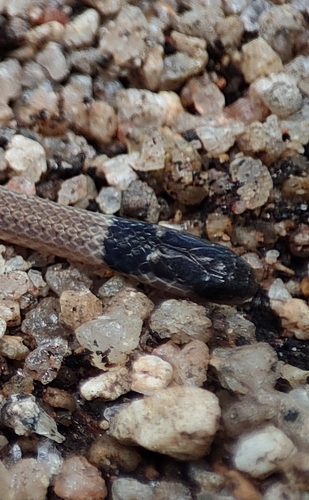 Cape Centipede-EaterAparallactus capensis
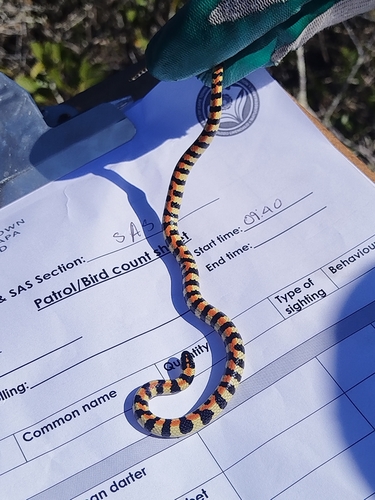 Spotted Harlequin SnakeHomoroselaps lacteus
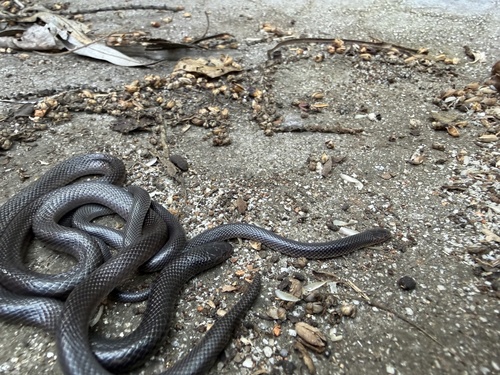 Southern Stiletto SnakeAtractaspis bibronii
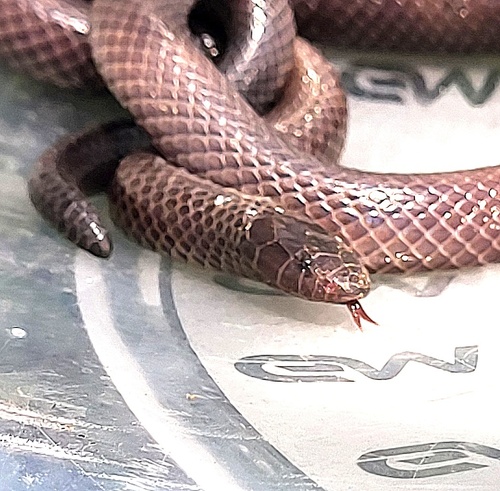 Common Purple-glossed SnakeAmblyodipsas polylepis
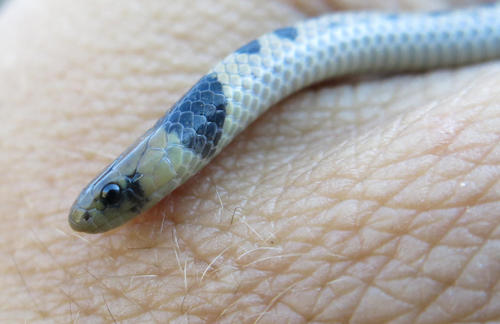 Reticulated Centipede-EaterAparallactus lunulatus
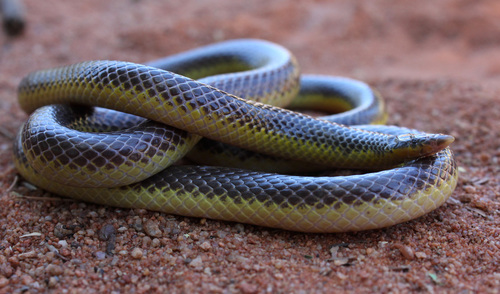 Slender Quill-snouted SnakeXenocalamus bicolor
 Müller's SnakeMicrelaps muelleri
 Israeli Mole ViperAtractaspis engaddensis
Classification
How scientists group this snake, from the broadest category down to the exact species. Each step narrows to its closest relatives.
- OrderThe broad group of scaled reptiles: all snakes and lizards
- Squamata
- FamilyA group of related snakes that share key traits
- Atractaspididae
- GenusA close-knit group of very similar species
- Macrelaps
- SpeciesThis exact snake, named in the two-part scientific name
- Macrelaps microlepidotus
Keep learning
- Are Snakes Dangerous? The Real Risk, in PerspectiveMost snakes are harmless and avoid people. Here is the honest picture of snakebite risk worldwide and how to lower your own.
- Snakebite First Aid: What to Do (and What Never to Do)A clear, CDC-based guide to snakebite first aid: the steps that help, the popular myths that hurt, and how to tell a serious bite from a minor one.
- Venomous vs Nonvenomous: How to Tell the DifferenceThe folk rules for telling venomous snakes apart, where each one fails, and why location-based identification beats guessing by sight.
- What to Do If You Find a SnakeFound a snake at home or on a trail? Here is how to stay calm, give it space, identify it safely, and know when to call a professional.
Distribution from GBIF & iNaturalist. Venom status per CDC. Background: Wikipedia. Informational only. Never handle a snake to identify it.