
Genus · Atractaspididae
Macrelaps
The genus Macrelaps contains a single species. It is venomous.
About Natal black snakes
A stout, glossy-black burrowing snake of southern Africa that belongs to the same family as the notorious stiletto snakes.
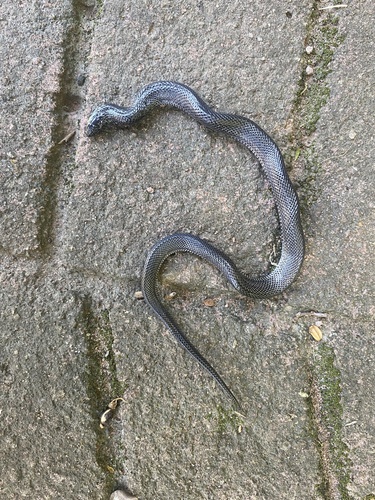
Macrelaps is a small genus in the family Atractaspididae, the African burrowing asps and their relatives. The family is best known for the stiletto snakes of the genus Atractaspis, which strike sideways with fangs that fold out of the corner of the mouth. Macrelaps sits in this same lineage of secretive, fossorial snakes, but it is represented in our database by a single well-known species, the Natal black snake (Macrelaps microlepidotus). It is a heavily built, uniformly dark snake with smooth, glossy scales and small eyes suited to a life spent largely underground and in leaf litter.
The genus is endemic to southern Africa, where the Natal black snake occurs in the moist eastern parts of South Africa, including coastal and forested regions of KwaZulu-Natal and the Eastern Cape. It favors damp habitats such as forest margins, well watered grassland, gardens, and the banks of streams, often sheltering under logs, stones, leaf litter, and loose soil. Members are recognized in general terms by their robust, cylindrical body, deep black to blackish-brown coloration, reduced eyes, and small smooth scales, all features that reflect a burrowing way of life rather than the patterns and large eyes of active surface hunters.
Macrelaps is a rear-fanged snake with enlarged grooved teeth toward the back of the jaw and a venom that is not well studied. Bites from the Natal black snake are uncommon because of its retiring, mostly underground habits, but the species should be treated with respect rather than handled. There are records of bites causing notable local effects and, in at least some cases, more serious symptoms, so a wild snake of this genus should never be considered safe to pick up. If anyone is bitten, keep the person calm and still and seek emergency medical care immediately. In the United States contact Poison Control at 1-800-222-1222, and elsewhere call local emergency services. In terms of ecology these snakes are nocturnal and crepuscular foragers that feed on other small animals such as frogs, lizards, smaller snakes, and other soft-bodied prey encountered in soil and litter, and like many atractaspidids they are believed to be egg-laying, secretive, and rarely seen even where they are locally common.
Macrelaps belongs to the Atractaspididae family (Stiletto snakes (burrowing asps)). Burrowing venomous snakes that stab sideways, and cannot be safely held. Small, glossy, uniformly dark, with tiny eyes and a blunt head no wider than the neck. The side-stabbing strike is unique.
Danger: Venomous. Bites cause intense local pain and tissue damage; most are not life-threatening but require medical care. Never attempt to pick one up.
All species (1)
Keep learning
- Venomous vs Nonvenomous: How to Tell the DifferenceThe folk rules for telling venomous snakes apart, where each one fails, and why location-based identification beats guessing by sight.
- Are Snakes Dangerous? The Real Risk, in PerspectiveMost snakes are harmless and avoid people. Here is the honest picture of snakebite risk worldwide and how to lower your own.
- Snake Venom Explained: How It Works and WhyWhat snake venom actually is, why it evolved, the main venom types, fang delivery, how antivenom works, and why ranking the most venomous snake is hard.
- How Snakes Move, Hunt, and EatHow snakes move without legs, hunt as ambushers or active foragers, kill by constriction or venom, and swallow prey wider than their head.