
Elapidae
Mulga Snake
VenomousPseudechis australis
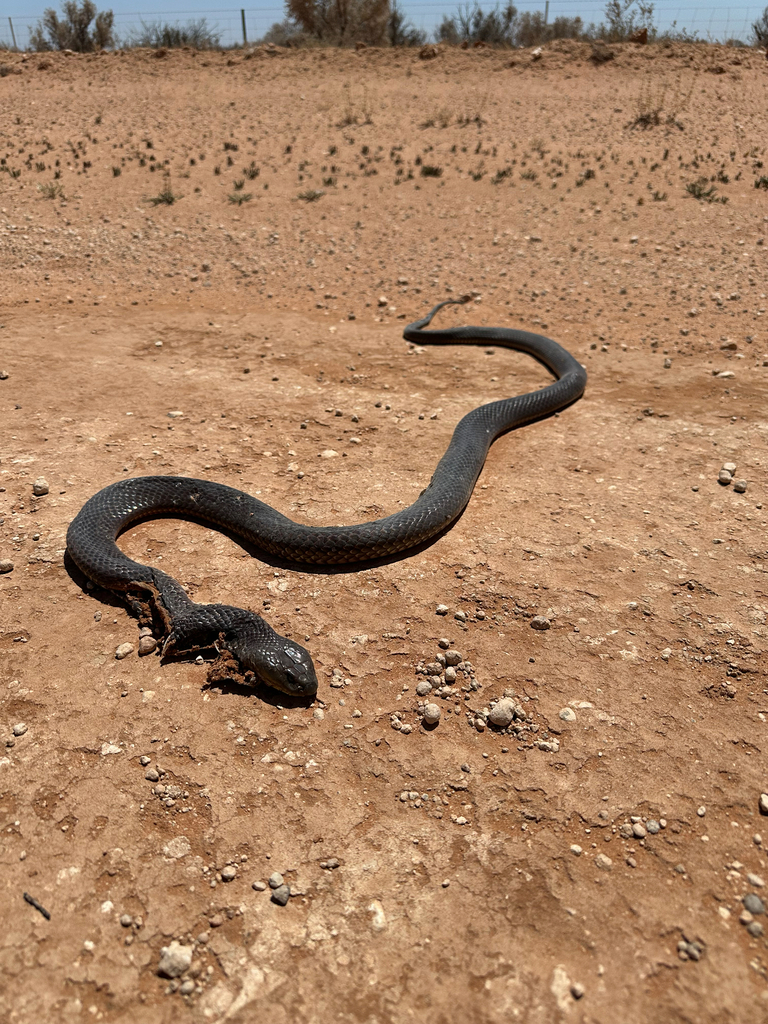
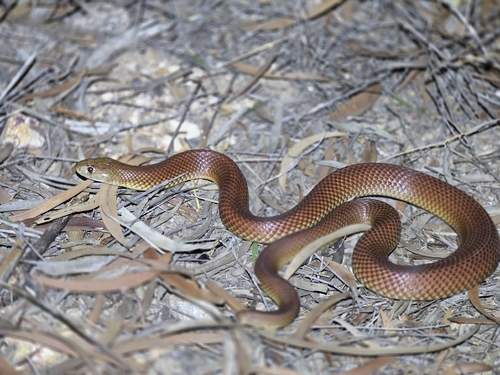
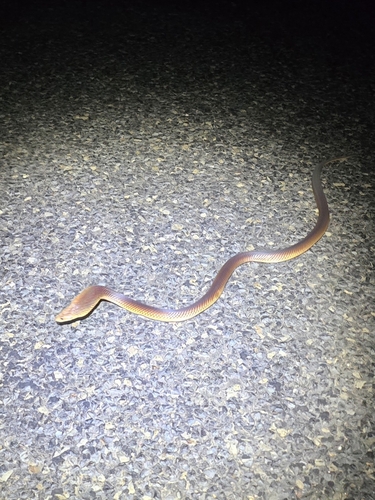
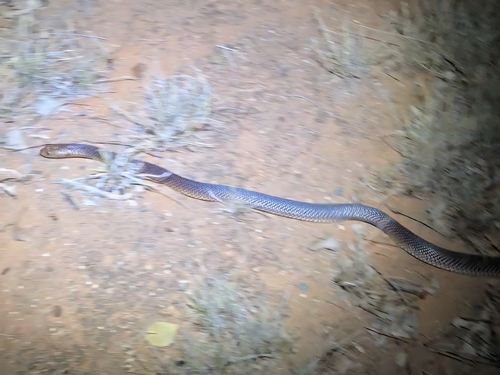
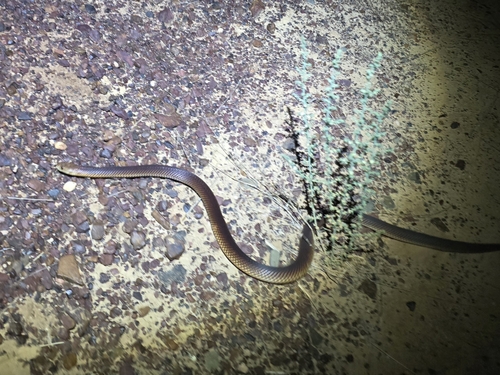
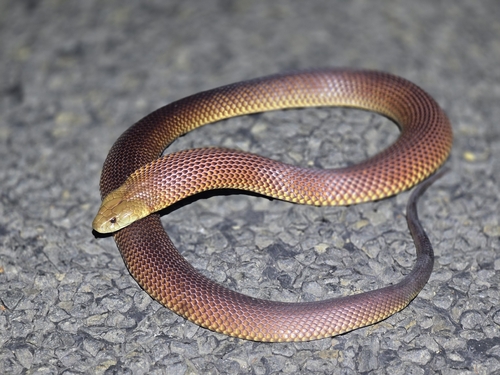
6 photographs of the Mulga Snake. © Mike Youdale.
The Mulga Snake (Pseudechis australis) is a venomous snake in the Elapidae family, recorded in 2 countries.
If you are bitten
This is a venomous snake. Treat any bite as a medical emergency: stay calm, keep the bitten limb still and roughly level with the heart, remove rings and tight clothing, and get to emergency care immediately. Do not apply a tourniquet, cut the wound, apply ice, or try to suck out venom. Call your local emergency number or poison center.
- Family
- Elapidae
- Danger
- high
About the Mulga Snake
The king brown snake (Pseudechis australis) is a species of highly venomous snake of the family Elapidae, native to northern, western, and Central Australia. The king brown snake is the largest terrestrial venomous snake in Australia. Despite its common name, it is a member of the genus Pseudechis (black snakes) and only distantly related to true brown snakes. Its alternative common name is the mulga snake, although it lives in many habitats apart from mulga. First described by English zoologist John Edward Gray in 1842, it is a robust snake up to 3.3 m (11 ft) long. It is variable in appearance, with individuals from northern Australia having tan upper parts, while those from southern Australia are dark brown to blackish. Sometimes, it is seen in a reddish-green texture. The dorsal scales are two-toned, sometimes giving the snake a patterned appearance. Its underside is cream or white, often with orange splotches. The species is oviparous. The snake is considered to be a least-concern species according to the International Union for Conservation of Nature, though may have declined with the spread of the cane toad.
Its venom is not as potent as those of Australia's other dangerous snakes, but can still cause severe effects if delivered in large enough quantities. Its main effect is on striated muscle tissue, causing paralysis from muscle damage, and also commonly affects blood clotting (coagulopathy). Often, extensive pain and swelling occur, rarely with necrosis, at the bite site. Deaths from its bites have been recorded, with the most recent being in 1969. Its victims are treated with black snake (not brown snake) antivenom.
Taxonomy
The species was first described by English zoologist John Edward Gray in 1842 from a specimen collected at Port Essington in the Northern Territory. Gray saw little distinction from the Egyptian cobra (Naja haje) in his single preserved specimen—excepting the variation in ocular plates—and assigned the name Naja australis. On obtaining a second specimen from the College of Surgeons, Albert Günther of the British Museum recognised an affinity with the Australian species described as Pseudechis porphyriacus, resulting in the current combination as Pseudechis australis in the black snake genus Pseudechis. Scottish-Australian naturalist William Macleay described Pseudechis darwiniensis in 1878, from a more slender specimen that he thought was distinct from P. australis. Belgian-British zoologist George Albert Boulenger described P. cupreus in 1896 from a specimen collected from the Murray River, distinguishing P. darwiniensis from P. australis by the shape of the frontal scale. Austrian zoologist Franz Werner described Pseudechis denisonioides from Eradu, Western Australia in 1909. Australian naturalist Donald Thomson obtained a skull of a large specimen with a wide head collected from East Alligator River in Arnhem Land in 1914, naming it Pseudechis platycephalus in 1933. He distinguished it from P. australis on the basis of it having anteriorly grooved palatine and pterygoid teeth, and having blunt ridges and keels on the dorsal scales.
Adapted from Wikipedia, available under CC BY-SA.
Local and regional names
The Mulga Snake is known by these names across the regions where it lives:
- Chinese
- 棕伊澳蛇
- Czech
- pakobra australská
- Danish
- Kongebrunslange
- Dutch
- Mulgaslang
- English
- King Brown, King brown snake, Pilbara Snake
- French
- Serpent de la Mulga, Serpent royal brun
- German
- Mulgaschlange
- Hungarian
- barna ausztrálsikló
- Italian
- Serpente bruno reale, Serpente nero reale
- Russian
- Мулга
- Spanish
- Serpiente de Mulga
- Swedish
- Mulga
Frequently asked: Mulga Snake
- Is the Mulga Snake venomous?
- Yes. The Mulga Snake (Pseudechis australis) is venomous and belongs to the Elapidae family (cobra, mamba, coral or sea snake). Its bite is considered high risk to people. Treat any bite as a medical emergency.
- Is the Mulga Snake poisonous?
- Snakes are venomous, not poisonous. "Poisonous" means harmful to eat or touch; "venomous" means injecting toxins through a bite. The Mulga Snake is venomous, delivering venom through a bite.
- Is the Mulga Snake dangerous?
- This is a venomous snake. Treat any bite as a medical emergency: stay calm, keep the bitten limb still and roughly level with the heart, remove rings and tight clothing, and get to emergency care immediately. Do not apply a tourniquet, cut the wound, apply ice, or try to suck out venom. Call your local emergency number or poison center.
- Where does the Mulga Snake live?
- The Mulga Snake has verified records in 2 countries, including Australia, Northern Mariana Islands. See the distribution section below for its full range.
If you are bitten by the Mulga Snake
Do
- Get away from the snake and stay calm. Most bites worsen when people panic or try again to handle the snake.
- Call 911 or Poison Control (1-800-222-1222) right away. Antivenom works best when given early.
- Note the time of the bite and, from a safe distance, the snake's color and pattern, a phone photo is enough. Do not chase it.
- Keep the bitten limb still and at roughly heart level. Sit or lie down and limit movement.
- Remove rings, watches, and tight clothing near the bite before swelling starts.
- Gently wash the bite with soap and water and cover it with a clean, dry dressing.
Do not
- Do not cut the wound or try to suck out the venom.
- Do not apply a tourniquet or ice.
- Do not drink alcohol or caffeine.
- Do not take aspirin or ibuprofen, they can worsen bleeding. Acetaminophen is safer for pain.
- Do not try to catch or kill the snake. A dead snake can still bite by reflex.
First-aid guidance adapted from the U.S. Centers for Disease Control and Prevention (CDC NIOSH), Venomous Snakes. Educational only; always follow the instructions of emergency responders.
Where it is found
More Elapidae snakes
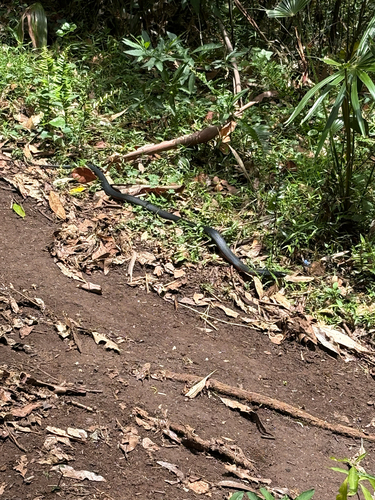 Red-bellied Black SnakePseudechis porphyriacus
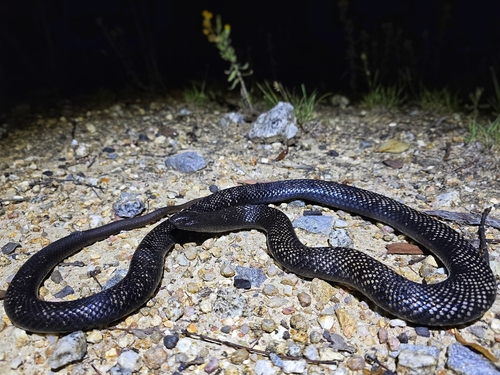 Blue-bellied Black SnakePseudechis guttatus
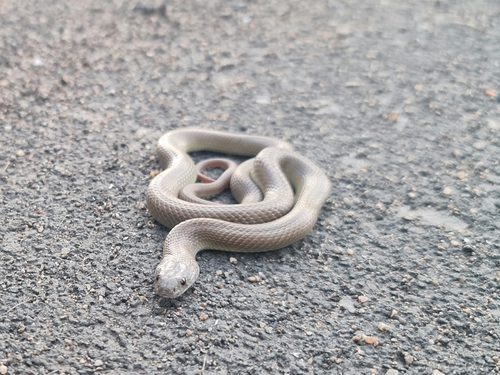 Pygmy Mulga SnakePseudechis weigeli
 Collett's Black SnakePseudechis colletti
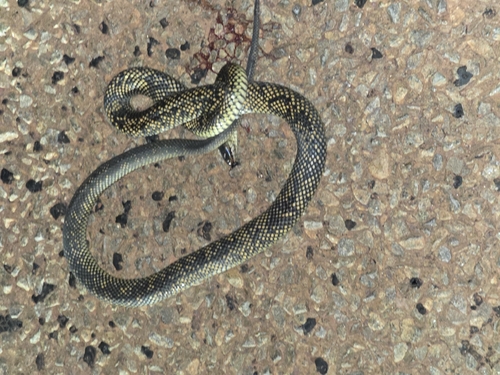 Spotted Mulga SnakePseudechis butleri
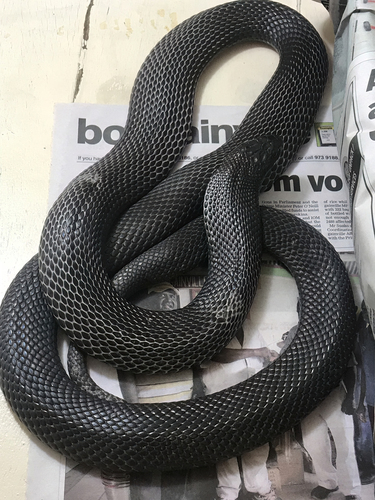 Papuan Black SnakePseudechis papuanus
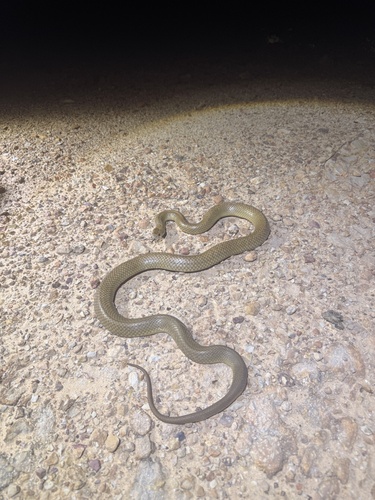 Dwarf Mulga SnakePseudechis pailsei
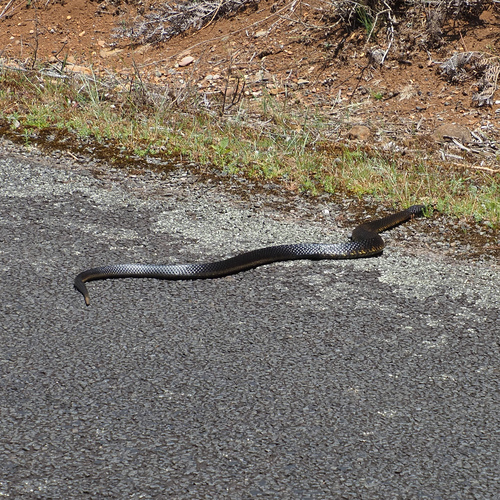 Tiger SnakeNotechis scutatus
Classification
How scientists group this snake, from the broadest category down to the exact species. Each step narrows to its closest relatives.
- OrderThe broad group of scaled reptiles: all snakes and lizards
- Squamata
- FamilyA group of related snakes that share key traits
- Elapidae
- GenusA close-knit group of very similar species
- Pseudechis
- SpeciesThis exact snake, named in the two-part scientific name
- Pseudechis australis
Keep learning
- Are Snakes Dangerous? The Real Risk, in PerspectiveMost snakes are harmless and avoid people. Here is the honest picture of snakebite risk worldwide and how to lower your own.
- Snakebite First Aid: What to Do (and What Never to Do)A clear, CDC-based guide to snakebite first aid: the steps that help, the popular myths that hurt, and how to tell a serious bite from a minor one.
- Venomous vs Nonvenomous: How to Tell the DifferenceThe folk rules for telling venomous snakes apart, where each one fails, and why location-based identification beats guessing by sight.
- What to Do If You Find a SnakeFound a snake at home or on a trail? Here is how to stay calm, give it space, identify it safely, and know when to call a professional.
Distribution from GBIF & iNaturalist. Venom status per CDC. Background: Wikipedia. Informational only. Never handle a snake to identify it.