
Genus · Elapidae
Types of black snakes
8 species make up the genus Pseudechis, the snakes commonly called black snakes. All of them are venomous.
About black snakes
Pseudechis are Australia's black snakes, a group of large, dangerously venomous elapids despite some members being neither black nor restricted to one body color.
Pseudechis is a genus of front-fanged venomous snakes in the family Elapidae, the same family that includes cobras, mambas, taipans, and sea snakes. Elapids share a set of fixed, hollow fangs near the front of the upper jaw that deliver venom efficiently, and Pseudechis fits this pattern fully. The genus is endemic to Australasia, centered on Australia with some species reaching New Guinea. The common name black snakes comes from the dark, often glossy coloration of several members, though the group as a whole is more varied than the name suggests.
Our database holds 8 species in this genus. Well known members include the Red-bellied Black Snake, the Mulga Snake (also called the King Brown despite being a Pseudechis and not a true brown snake), the Blue-bellied Black Snake, and the Pygmy Mulga Snake. The Mulga Snake is one of the largest venomous snakes in Australia and is notable for the very high volume of venom it can deliver, while the Red-bellied Black Snake is among the most frequently encountered large venomous snakes along the eastern seaboard.
Members of Pseudechis are typically robust, medium to large snakes with smooth scales and a relatively uniform build. Color ranges from the deep glossy black with red or pink flanks of the Red-bellied Black Snake to the coppery, brown, or olive tones of the Mulga Snake. Because color and pattern vary widely between and even within species, reliable identification depends on scale counts, geography, and expert examination rather than color alone. They should never be identified by sight for the purpose of deciding whether an encounter is safe.
These snakes are venomous and capable of causing serious harm to humans. As elapids they carry potent venom, and several Pseudechis species are responsible for medically significant bites in Australia. Venom effects can include tissue damage, muscle breakdown, and disruption of blood clotting depending on the species. Do not attempt to handle, capture, or kill a wild black snake. If a bite occurs, treat it as a medical emergency, keep the person calm and still, and seek professional care immediately. In the United States contact Poison Control at 1-800-222-1222, and anywhere call local emergency services without delay.
Ecologically, Pseudechis snakes are active predators that feed on frogs, lizards, small mammals, birds, and other snakes, with some species readily eating other snakes including their own kind. They occupy a broad range of habitats, from wetland margins and river edges favored by the Red-bellied Black Snake to the arid interior inhabited by the Mulga Snake. Reproduction differs across the genus, with some species laying eggs and others, such as the Red-bellied Black Snake, giving live birth. Most are not aggressive toward people and will retreat if given the chance, but they will defend themselves if cornered or handled.
Pseudechis belongs to the Elapidae family (Cobras, mambas, coral & sea snakes). Front-fanged venomous snakes, many with potent neurotoxic venom. Usually slender with a head barely wider than the neck and fixed front fangs (not the folding fangs of vipers). Coral snakes are boldly ringed; sea snakes have a flattened, paddle-like tail.
Danger: All elapids are venomous and the family is responsible for a large share of fatal snakebites worldwide. Many are shy, but bites can be life-threatening. Treat any bite as a medical emergency.
All species (8)
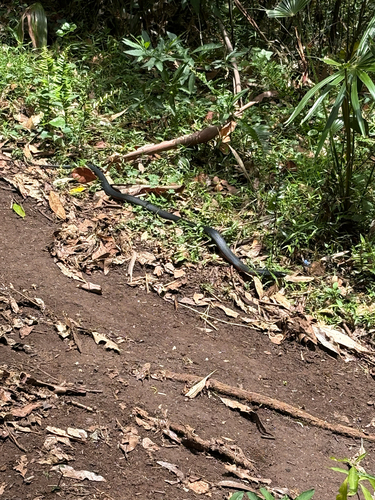 Red-bellied Black SnakePseudechis porphyriacusVenomous
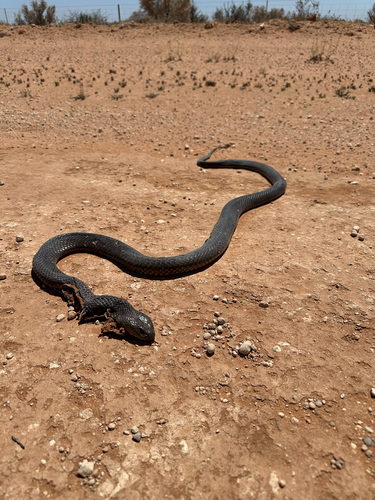 Mulga SnakePseudechis australisVenomous
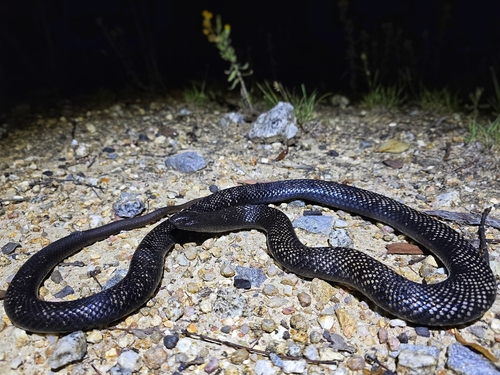 Blue-bellied Black SnakePseudechis guttatusVenomous
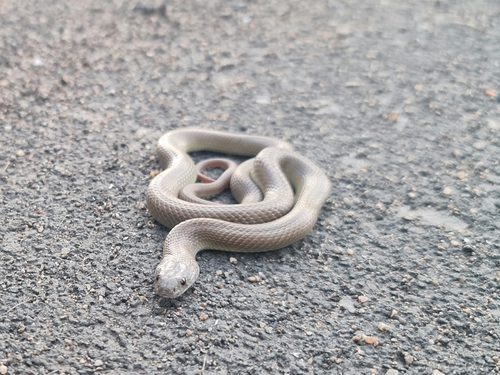 Pygmy Mulga SnakePseudechis weigeliVenomous
 Collett's Black SnakePseudechis collettiVenomous
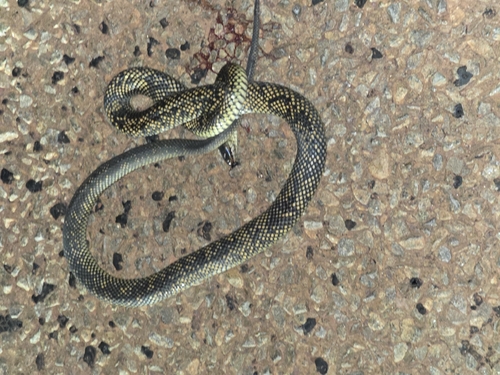 Spotted Mulga SnakePseudechis butleriVenomous
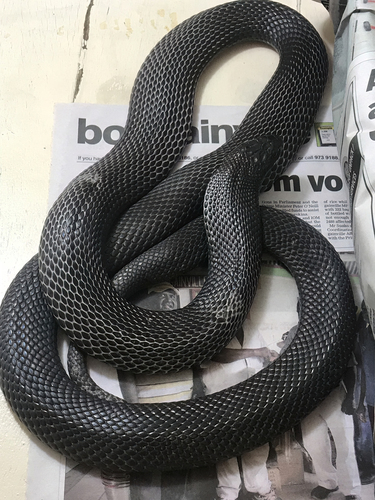 Papuan Black SnakePseudechis papuanusVenomous
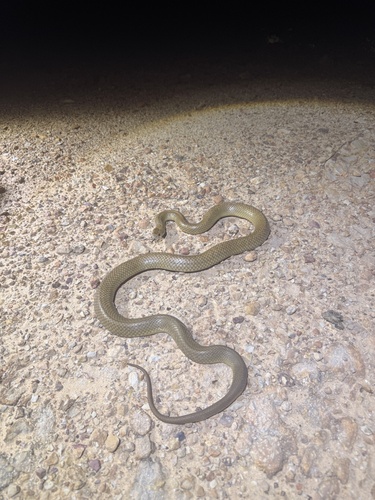 Dwarf Mulga SnakePseudechis pailseiVenomous
Keep learning
- Venomous vs Nonvenomous: How to Tell the DifferenceThe folk rules for telling venomous snakes apart, where each one fails, and why location-based identification beats guessing by sight.
- Are Snakes Dangerous? The Real Risk, in PerspectiveMost snakes are harmless and avoid people. Here is the honest picture of snakebite risk worldwide and how to lower your own.
- Snake Venom Explained: How It Works and WhyWhat snake venom actually is, why it evolved, the main venom types, fang delivery, how antivenom works, and why ranking the most venomous snake is hard.
- How Snakes Move, Hunt, and EatHow snakes move without legs, hunt as ambushers or active foragers, kill by constriction or venom, and swallow prey wider than their head.