
Nightsnake
Islas Revillagigedo Nightsnake
HarmlessHypsiglena unaocularus
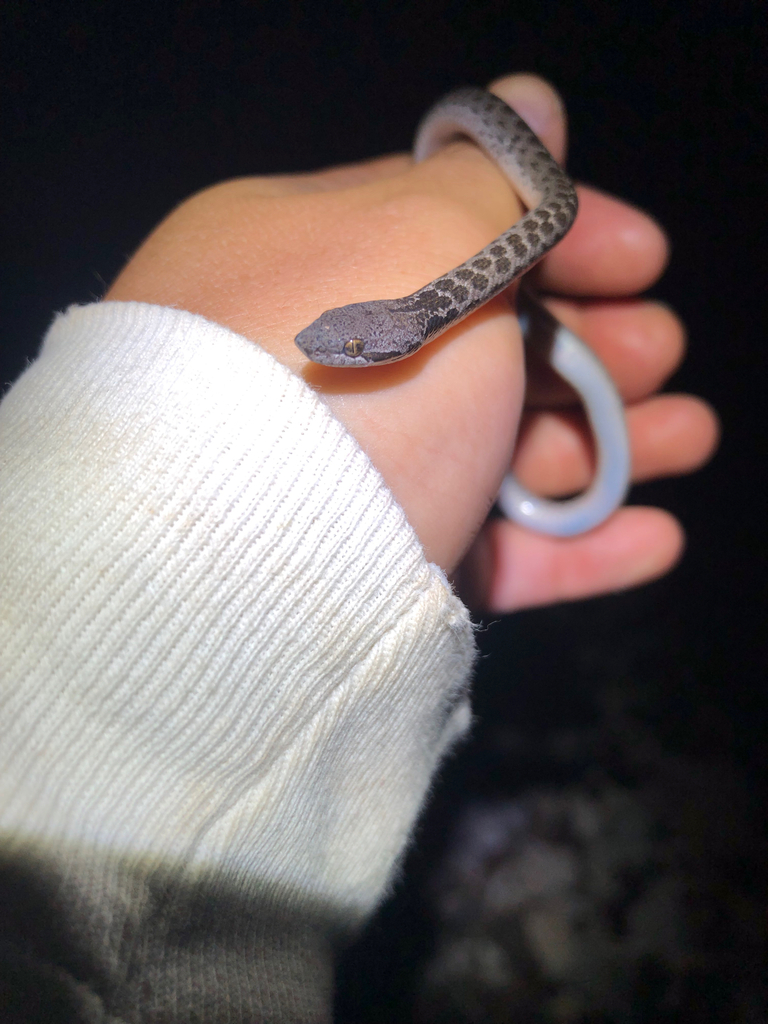
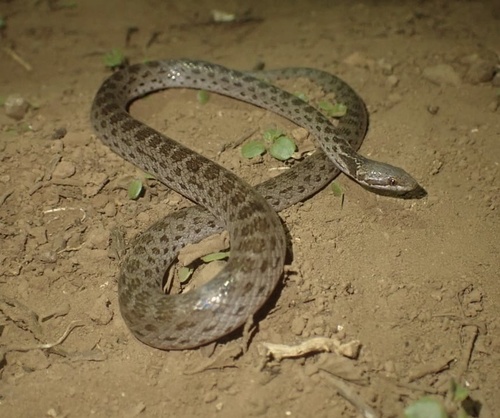
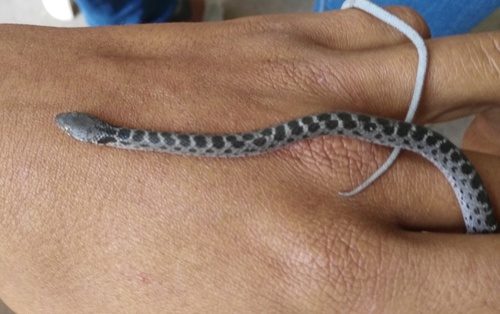
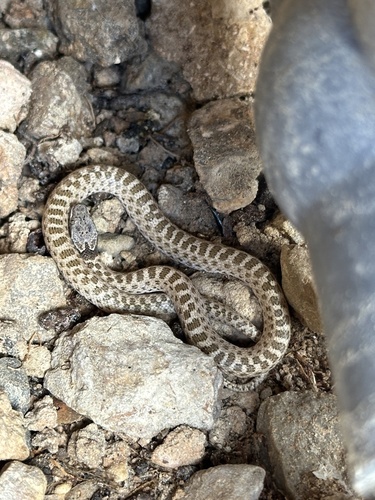
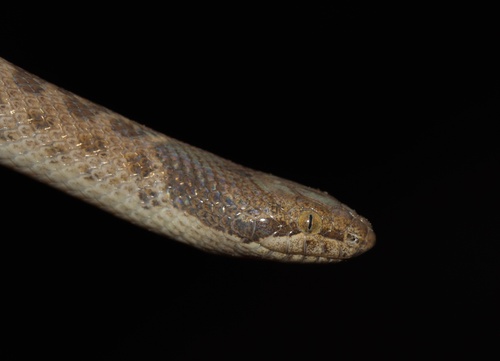
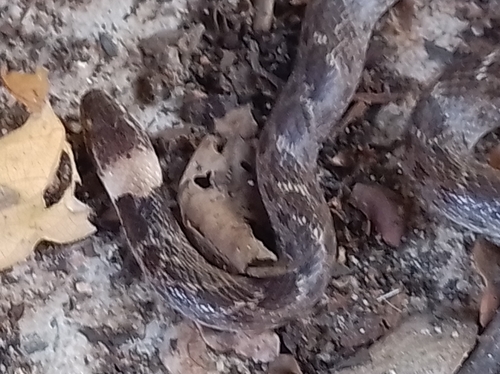
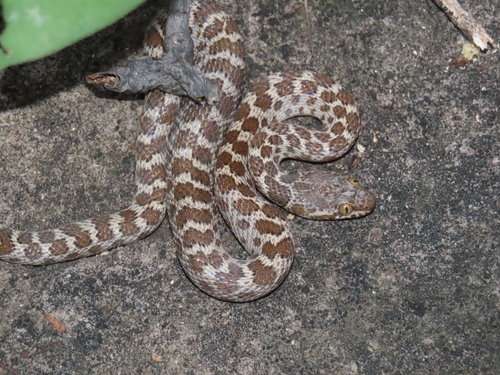
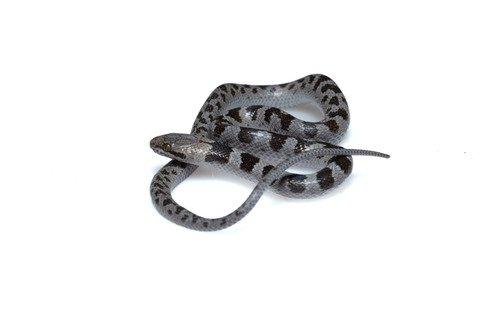
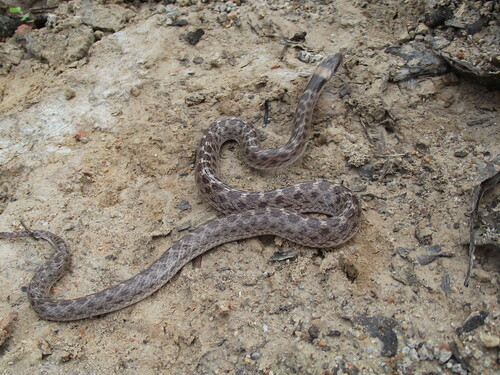
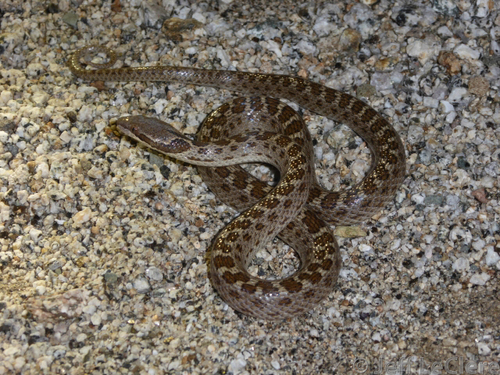
3 photographs of the Islas Revillagigedo Nightsnake. (c) rafa escalante ley, some rights reserved (CC BY-NC).
The Islas Revillagigedo Nightsnake (Hypsiglena unaocularus) is a rear-fanged, mildly venomous snake in the Colubridae family, recorded in 1 country.
- Also called
- Nightsnake
- Family
- Colubridae
- Size
- Small, 12–26 in.
- Habitat
- Arid and semi-arid rocky areas.
- Behavior
- Nocturnal; rear-fanged but harmless to humans.
- Identify
- Pale gray with dark blotches, vertical pupils, and dark neck blotches.
About the Islas Revillagigedo Nightsnake
Hypsiglena unaocularus, commonly known as the Islas Revillagigedo night snake or Clarión night snake, is a species of small colubrid snake endemic to Clarion Island, initially described from a single specimen collected by William Beebe in 1936. During the next several decades, scientists were unable to detect any trace of the snake in their field studies. After an intensive search in 2013, a team of scientist identified 11 snakes that matched the original description of the species. They conducted a series of DNA tests to confirm that the Islas Revillagigedo nightsnake, formerly viewed as the subspecies Hypsiglena torquata unaocularis, is genetically distinct from related mainland snakes and should be recognized as a full species. While never formally declared extinct, this species remained absent from scientific literature due to two main factors: its home on Clarion is extremely remote and only accessible by military escort, significantly restricting the number of biologists who can access this area, and the snake's secretive, nocturnal behavior and dark coloration make it difficult to detect in the field. Because of the lack of follow-up sightings, scientists long presumed that Beebe had provided an incorrect locality for his specimen.
Description
The snakes are brownish black in color and have a characteristic series of darker spots on their head and neck and grows to be approximately 18 inches long.
Geographic range
The species is only found on the Mexican island of Clarion in the Revillagigedo Islands.
Habitat
It lives on black lava rock habitat near the waters of Sulphur Bay.
Origins
The Islas Revillagigedo nightsnake is believed to be most closely related to populations of snakes from in the Sonora-Sinaloa state border area of mainland Mexico and Isla Santa Catalina in the Gulf of California. The Clarion nightsnake likely originated from the dispersal of an ancestor that traveled by sea from a river basin in Sonora to Clarion.
Conservation status
While current populations of this species appear to be viable, Clarion's fragile ecosystem is threatened by invasive species such as feral cats on neighboring islands. These cats prey on lizards, which are likely a main food source for the Clarion nightsnake.
Adapted from Wikipedia, available under CC BY-SA.
Frequently asked: Islas Revillagigedo Nightsnake
- Is the Islas Revillagigedo Nightsnake venomous?
- The Islas Revillagigedo Nightsnake (Hypsiglena unaocularus) is rear-fanged and only mildly venomous. It is not considered dangerous to humans (its venom is weak and its fangs sit at the back of the mouth) but a bite can cause local swelling or irritation, so it should not be handled.
- Is the Islas Revillagigedo Nightsnake poisonous?
- Snakes are venomous, not poisonous. "Poisonous" means harmful to eat or touch; "venomous" means injecting toxins through a bite. The Islas Revillagigedo Nightsnake is neither poisonous nor venomous.
- Is the Islas Revillagigedo Nightsnake dangerous?
- The Islas Revillagigedo Nightsnake is not dangerous to humans. It has no medically significant venom and bites only defensively if cornered or handled.
- Where does the Islas Revillagigedo Nightsnake live?
- The Islas Revillagigedo Nightsnake has verified records in 1 country, including Mexico. See the distribution section below for its full range.
- How do I identify the Islas Revillagigedo Nightsnake?
- Pale gray with dark blotches, vertical pupils, and dark neck blotches.
- How big does the Islas Revillagigedo Nightsnake get?
- Small, 12–26 in.
Where it is found
More Colubridae snakes
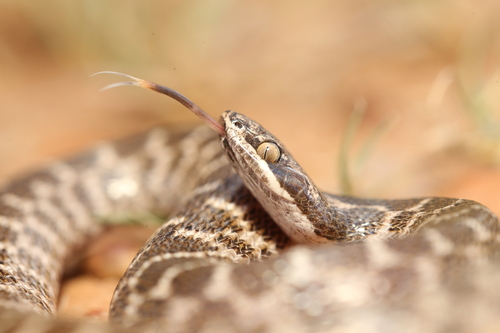 Chihuahuan NightsnakeHypsiglena jani
 Desert NightsnakeHypsiglena chlorophaea
 Coast Night SnakeHypsiglena ochrorhynchus
 Sinaloan NightsnakeHypsiglena torquata
 Baja California Night SnakeHypsiglena slevini
 Tanzer’s Night SnakeHypsiglena tanzeri
 Rio Grande de Santiago NightsnakeHypsiglena affinis
 Isla Santa Catalina NightsnakeHypsiglena catalinae
Classification
How scientists group this snake, from the broadest category down to the exact species. Each step narrows to its closest relatives.
- OrderThe broad group of scaled reptiles: all snakes and lizards
- Squamata
- FamilyA group of related snakes that share key traits
- Colubridae
- GenusA close-knit group of very similar species
- Hypsiglena
- SpeciesThis exact snake, named in the two-part scientific name
- Hypsiglena unaocularus
Keep learning
- What to Do If You Find a SnakeFound a snake at home or on a trail? Here is how to stay calm, give it space, identify it safely, and know when to call a professional.
- Venomous vs Nonvenomous: How to Tell the DifferenceThe folk rules for telling venomous snakes apart, where each one fails, and why location-based identification beats guessing by sight.
- What Is a Snake? Anatomy and the BasicsA clear overview of what makes a snake a snake: limbless body plan, anatomy, evolution from lizards, species diversity, and why they are ectothermic.
- How to Keep Snakes Out of Your Yard and HomeA practical guide to keeping snakes out of your yard and home using habitat changes that work, plus what to skip and what to do if one shows up.
Distribution from GBIF & iNaturalist. Venom status per CDC. Background: Wikipedia. Informational only. Never handle a snake to identify it.