
Genus · Colubridae
Types of nightsnakes
9 species make up the genus Hypsiglena, the snakes commonly called nightsnakes. None are considered dangerous to humans.
About nightsnakes
Hypsiglena is a genus of small, secretive, mildly venomous nightsnakes from western North America that hunt after dark and pose essentially no danger to people.
Hypsiglena belongs to Colubridae, the largest snake family, which holds most of the world's snake species and the majority of the harmless ones. Within that family these are the nightsnakes, named for their nocturnal habits. Our database lists 9 species. They are small, slender, and easy to overlook, and they are classed as rear-fanged: they carry mild venom delivered through enlarged grooved teeth set toward the back of the upper jaw rather than long hollow fangs at the front. That arrangement, combined with a weak venom suited to subduing small cold-blooded prey, makes them harmless to humans in normal circumstances.
The genus is centered in western North America. Nightsnakes range across the western United States and northern Mexico, with species reaching from the Pacific coast inland through the Great Basin, deserts, and dry foothills. They favor arid and semi-arid country: rocky slopes, sagebrush flats, grassland, chaparral, and desert scrub, often where there is loose soil, rock, or debris to hide under by day. Because they are nocturnal and spend daylight hours concealed, they are seen far less often than their actual numbers would suggest, and people frequently encounter them only when one crosses a road at night or turns up under a board or stone.
In general terms, a nightsnake is a small snake, often under two feet, with a somewhat flattened head that is a little wider than the neck and vertical, cat-like pupils that suit a night-active animal. The ground color is usually pale gray, tan, or light brown, marked with darker blotches down the back and a pair of dark blotches behind the head. These traits are useful clues rather than a guarantee, because color and pattern vary, lighting changes how a snake looks, and harmless and venomous snakes can resemble one another. The vertical pupil in particular is shared with some genuinely dangerous snakes, so it is not by itself proof that a snake is safe. Treat identification as something that takes care and expertise.
On the question of danger, Hypsiglena is rear-fanged and only mildly venomous, and it is widely considered harmless to people. The venom is adapted for small prey, the fangs sit far back in the mouth, and these snakes are small and not inclined to bite humans, so envenomation of a person is rare and effects are minor when they occur. Even so, no wild snake should be handled. Picking up a snake to identify it risks a bite, risks misidentifying a dangerous look-alike, and stresses the animal. If anyone is bitten by a snake and there is uncertainty about the species, or if concerning symptoms develop, treat it as a medical matter and seek care. In the United States, Poison Control can be reached at 1-800-222-1222, or contact local emergency services.
Ecologically, nightsnakes are nocturnal hunters that feed largely on small cold-blooded prey such as lizards, lizard eggs, frogs, and other small animals, using their mild rear-fanged venom to subdue these targets. Unlike the live-bearing pit vipers, Hypsiglena species lay eggs. They are quiet, low-profile predators that help keep populations of small reptiles and amphibians in check, and they spend most of the daylight hours hidden, emerging in the cooler dark to forage. Their secretive, harmless nature means the best response on meeting one is simply to leave it alone and let it go on its way.
Hypsiglena belongs to the Colubridae family (Colubrids). The largest snake family, and the one most snakes you meet belong to. Typically round pupils, a head only slightly wider than the neck, and no heat-sensing facial pit or rattle. Scales may be smooth and glossy or keeled and matte depending on the species.
Danger: Almost all colubrids are harmless. A small number are rear-fanged with medically significant venom, the boomslang and the twig (vine) snakes of Africa being the dangerous exceptions. Most colubrids will flee or bluff rather than bite.
All species (9)
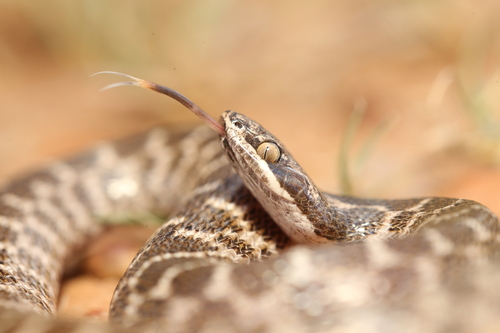 Chihuahuan NightsnakeHypsiglena janiHarmless
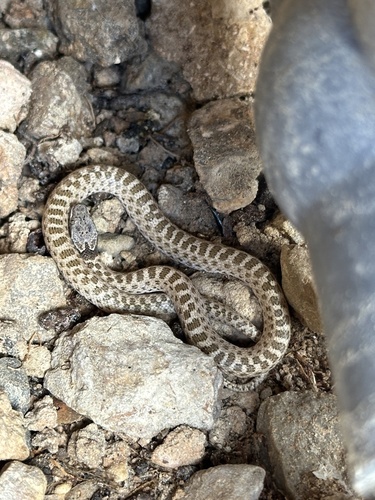 Desert NightsnakeHypsiglena chlorophaeaHarmless
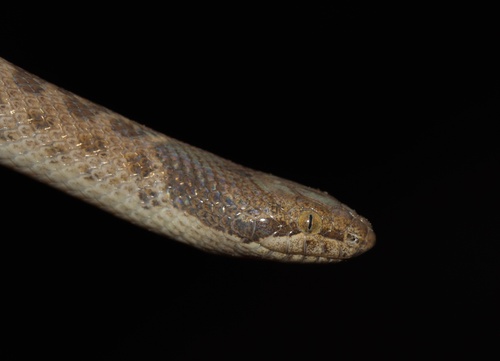 Coast Night SnakeHypsiglena ochrorhynchusHarmless
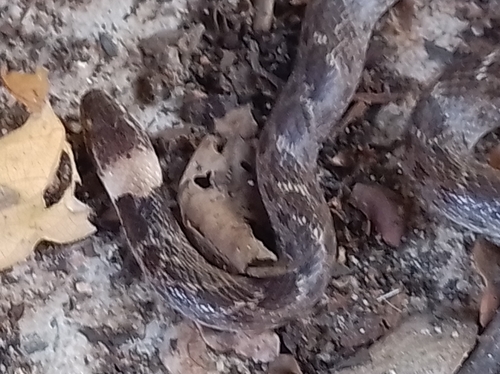 Sinaloan NightsnakeHypsiglena torquataHarmless
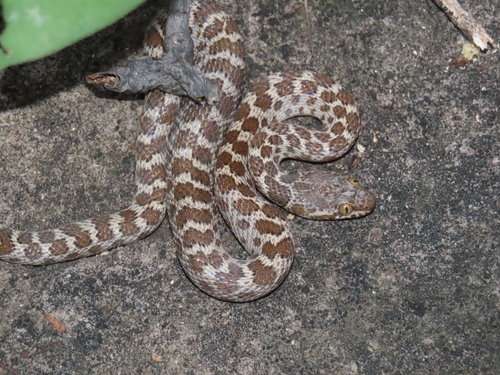 Baja California Night SnakeHypsiglena sleviniHarmless
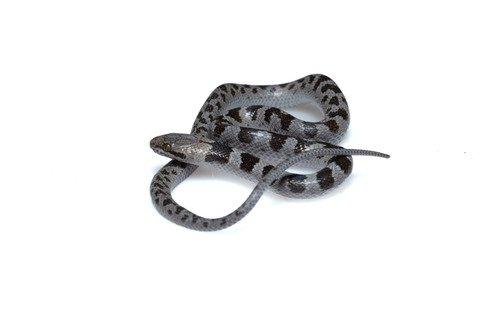 Tanzer’s Night SnakeHypsiglena tanzeriHarmless
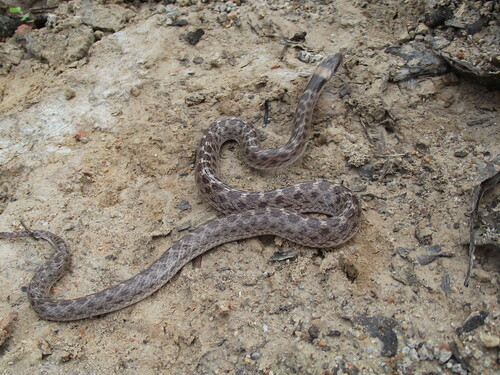 Rio Grande de Santiago NightsnakeHypsiglena affinisHarmless
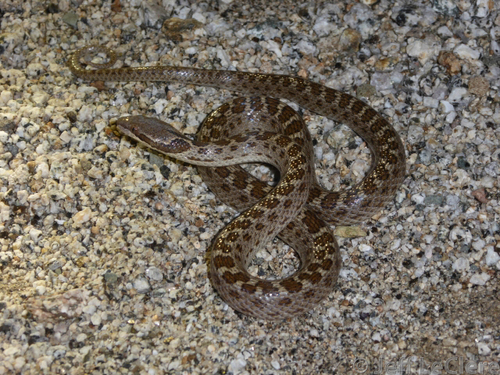 Isla Santa Catalina NightsnakeHypsiglena catalinaeHarmless
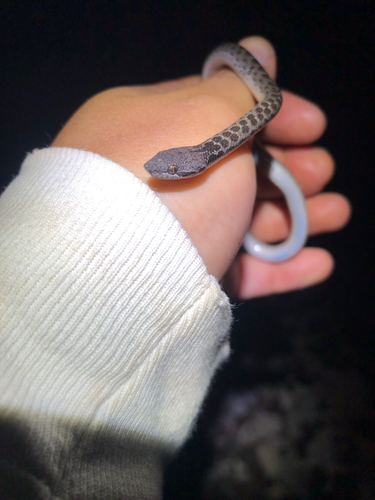 Islas Revillagigedo NightsnakeHypsiglena unaocularusHarmless
Keep learning
- What Is a Snake? Anatomy and the BasicsA clear overview of what makes a snake a snake: limbless body plan, anatomy, evolution from lizards, species diversity, and why they are ectothermic.
- How Snakes Move, Hunt, and EatHow snakes move without legs, hunt as ambushers or active foragers, kill by constriction or venom, and swallow prey wider than their head.
- What Do Snakes Eat?All snakes are carnivores. Learn what snakes eat, how diet changes with size and age, how often they feed, and how they hunt and swallow prey.
- Venomous vs Nonvenomous: How to Tell the DifferenceThe folk rules for telling venomous snakes apart, where each one fails, and why location-based identification beats guessing by sight.