
Genus · Colubridae
Types of ground snakes
10+ species make up the genus Sonora, the snakes commonly called ground snakes. None are considered dangerous to humans.
About ground snakes and shovelnose snakes
Sonora is a small group of secretive, burrowing North American colubrids built for life in sandy, rocky soil.
Sonora is a genus in the family Colubridae, the largest and most diverse snake family in the world. Colubrids are the typical, mostly harmless snakes that make up the bulk of snake species globally, and Sonora fits that mold as a group of small, slender, ground-dwelling species native to the United States and Mexico. In our database the genus holds 10+ species, including the Great Plains Ground Snake, the Ground Snake, the Colorado Desert Shovelnose Snake, and the Mojave Shovelnose Snake.
These are small snakes, most measuring well under 20 inches and many staying closer to 8 to 15 inches as adults. They are adapted to dry, open country: deserts, semi-arid grasslands, rocky hillsides, washes, and sandy flats across the southwestern United States and northern Mexico. The shovelnose snakes in particular have a flattened, countersunk snout and a smooth, polished body that lets them move through loose sand almost like swimming, a trait tied directly to their fossorial, sand-dwelling lifestyle.
Recognizing Sonora in general terms comes down to size and proportion rather than a single marking. They are small and smooth-scaled with a slender build, and color is highly variable. The Ground Snake is famous for this variation, appearing plain, banded with dark crossbands, or marked with an orange or reddish stripe, sometimes even within the same population. Shovelnose snakes tend toward a pale cream or yellow ground color crossed by dark bands, occasionally with red saddles, a pattern that can superficially suggest more dangerous snakes but on a much smaller, gentler animal.
Sonora snakes are not dangerous to people. They are non-venomous colubrids with no medically significant venom and no inclination or ability to harm a human. Their small mouths and mild disposition mean a bite, which is uncommon, would amount to little more than a scratch. As with any wild animal, the responsible approach is to observe rather than capture, and to leave wild snakes undisturbed. If anyone is ever bitten by a snake they cannot confidently identify, do not attempt home treatment; contact US Poison Control at 1-800-222-1222 or local emergency services right away.
Ecologically these are small predators of the soil and leaf litter. Their diet centers on invertebrates such as spiders, scorpions, centipedes, insects, and insect larvae, which they hunt at night or in the cooler hours, spending the heat of the day buried in sand or sheltered under rocks and debris. Like most colubrids in this group they are egg-laying, producing small clutches in summer. They are shy, nocturnal, and rarely seen in the open, which is why even common species like the Ground Snake go unnoticed by most people who share their range.
Sonora belongs to the Colubridae family (Colubrids). The largest snake family, and the one most snakes you meet belong to. Typically round pupils, a head only slightly wider than the neck, and no heat-sensing facial pit or rattle. Scales may be smooth and glossy or keeled and matte depending on the species.
Danger: Almost all colubrids are harmless. A small number are rear-fanged with medically significant venom, the boomslang and the twig (vine) snakes of Africa being the dangerous exceptions. Most colubrids will flee or bluff rather than bite.
All species (14)
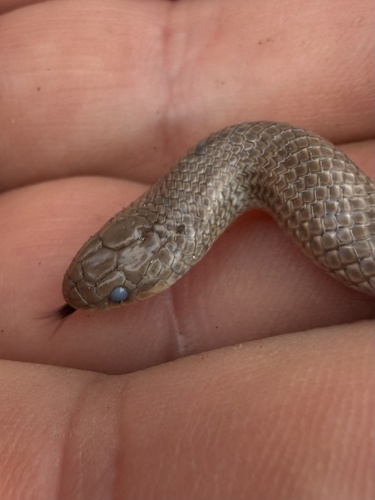 Great Plains Ground SnakeSonora episcopaHarmless
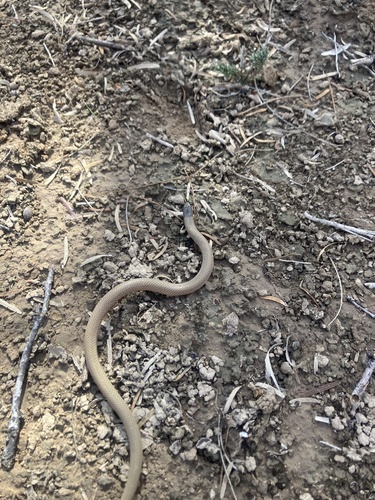 Ground SnakeSonora semiannulataHarmless
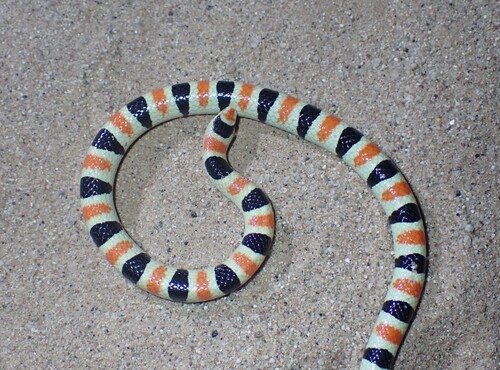 Colorado Desert Shovelnose SnakeSonora annulataHarmless
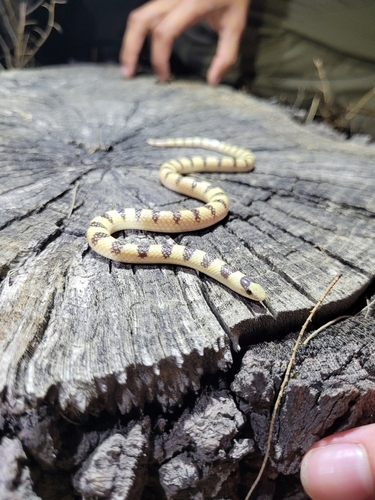 Mojave Shovelnose SnakeSonora occipitalisHarmless
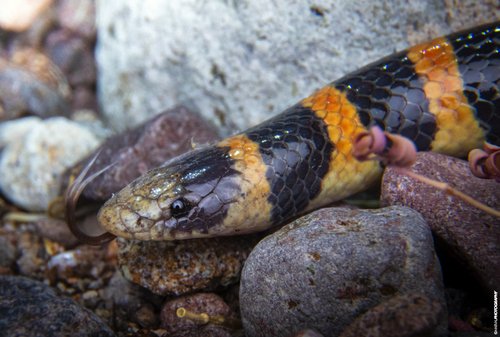 Banded Sand SnakeSonora cinctaHarmless
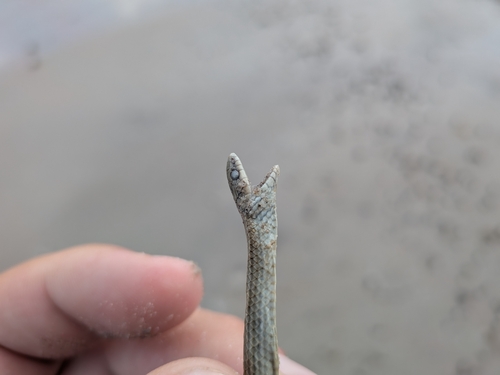 Taylor’s Ground SnakeSonora tayloriHarmless
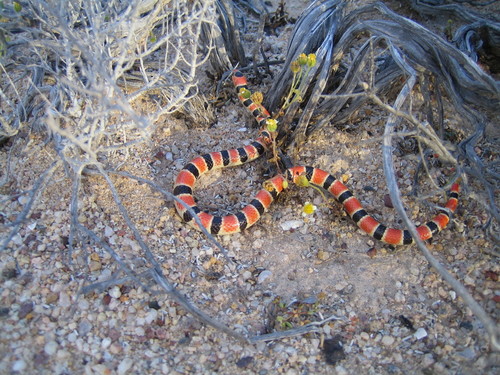 Sonoran Shovel-nosed SnakeSonora palarostrisHarmless
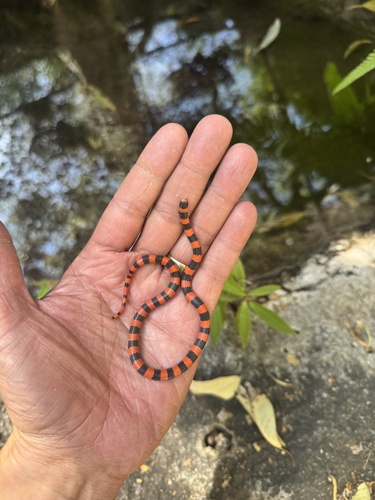 Mexican GroundsnakeSonora mutabilisHarmless
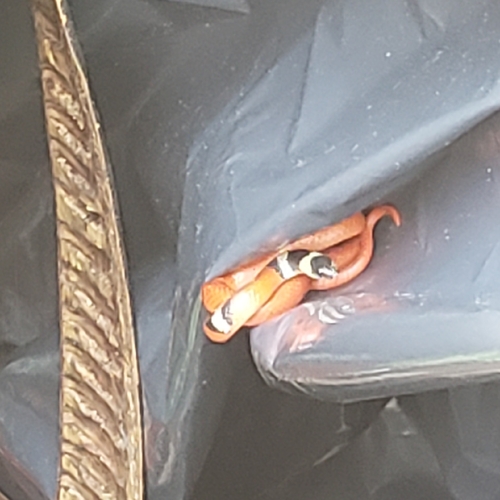 Michoacán Ground SnakeSonora michoacanensisHarmless
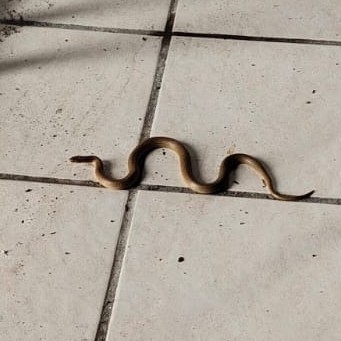 Mosauer’s Ground SnakeSonora mosaueriHarmless
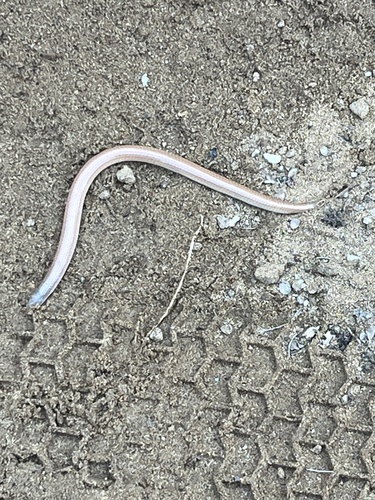 Sonora stramineaHarmless
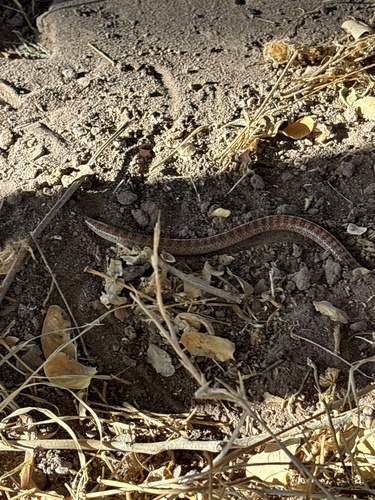 Sonora fasciataHarmless
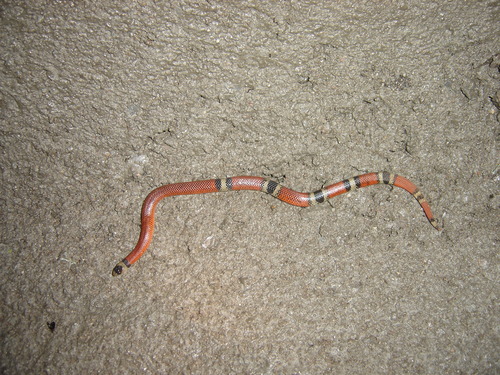 Filetail Ground SnakeSonora aemulaHarmless
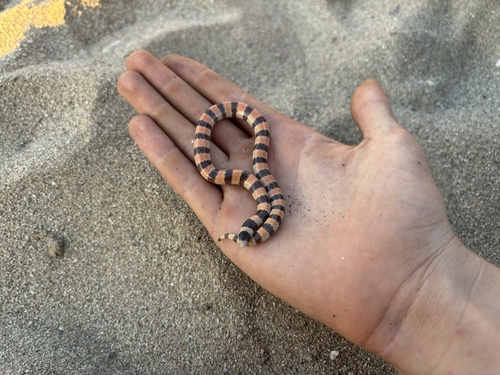 Savage's Sand SnakeSonora savageiHarmless
Keep learning
- What Is a Snake? Anatomy and the BasicsA clear overview of what makes a snake a snake: limbless body plan, anatomy, evolution from lizards, species diversity, and why they are ectothermic.
- How Snakes Move, Hunt, and EatHow snakes move without legs, hunt as ambushers or active foragers, kill by constriction or venom, and swallow prey wider than their head.
- What Do Snakes Eat?All snakes are carnivores. Learn what snakes eat, how diet changes with size and age, how often they feed, and how they hunt and swallow prey.
- Venomous vs Nonvenomous: How to Tell the DifferenceThe folk rules for telling venomous snakes apart, where each one fails, and why location-based identification beats guessing by sight.