
Groundsnake
Banded Sand Snake
HarmlessSonora cincta
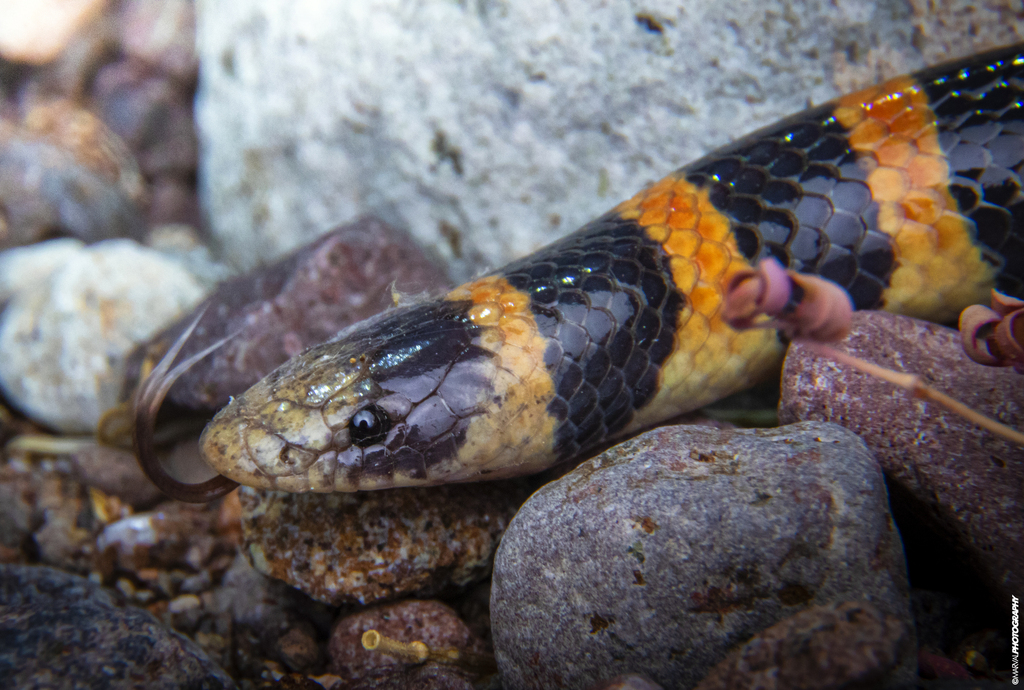
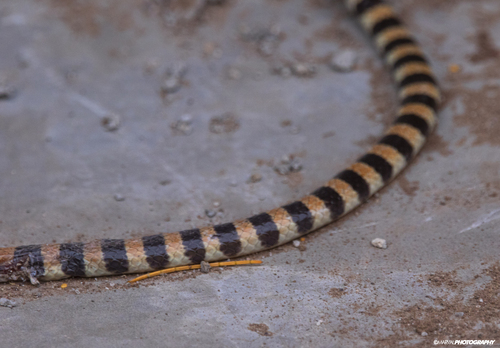
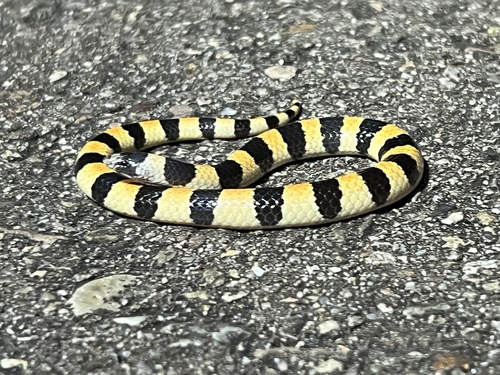
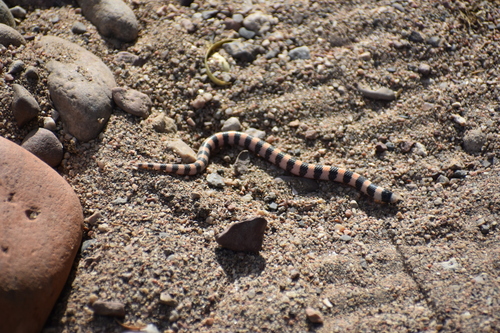
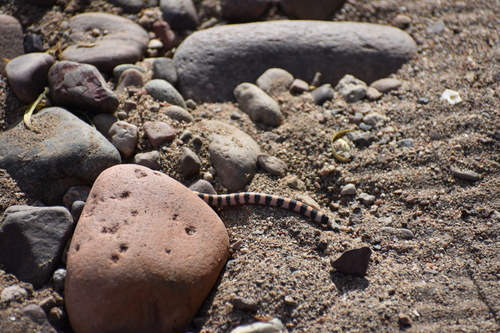
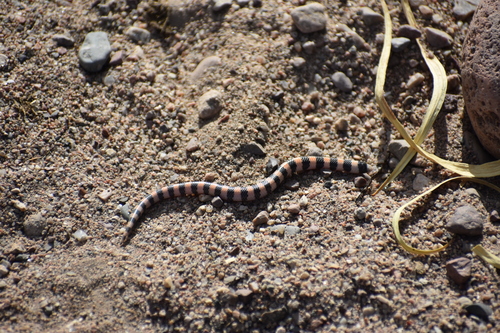
6 photographs of the Banded Sand Snake. © MarvalPhotography19.
The Banded Sand Snake (Sonora cincta) is a non-venomous snake in the Colubridae family, recorded in 2 countries.
The Banded Sand Snake (Sonora cincta) is a tiny, smooth-scaled burrowing snake with dark crossbands, found in deserts and arid grasslands of the southwestern United States and Mexico. It is not venomous and poses no meaningful danger to people, but it shares its habitat with the venomous Sonoran Coral Snake, so check carefully before deciding which one you are looking at.
- Also called
- Groundsnake
- Family
- Colubridae
- Size
- Small, 8 to 18 in.
- Habitat
- Deserts and arid grasslands with sandy or rocky soils.
- Behavior
- Nocturnal burrowers that feed on invertebrates.
- Identify
- Small and smooth-scaled; highly variable, banded, striped, or plain.
How to identify the Banded Sand Snake
Look for a very small, glossy snake with regular dark crossbands or saddles on a pale to orange-red body and a pale, flattened, shovel-shaped snout. Always check for the coral snake pattern: wide red and black rings separated by narrow yellow or white rings with a black snout means a venomous coral snake, and if you cannot tell, keep your distance and treat it as venomous.
- Pattern
- Consistent dark crossbands or saddles on a pale, cream, or orange-red background.
- Snout
- The snout is pale, flattened, and shovel-shaped for pushing through loose sand.
- Head
- The head is small and barely wider than the neck, with small eyes.
- Scales
- Scales are smooth and glossy, giving the body a polished look.
- Size
- Very small, usually about 7 to 10 inches long and rarely over 11 inches.
- Habitat clue
- Usually found in or on sandy or rocky desert soil, often at night.
Have a photo? Identify it from your photo and location.
Is the Banded Sand Snake dangerous?
Not venomous
This snake is non-venomous and is not a medical concern for people. The real risk is mistaking a venomous Sonoran Coral Snake for this species, so treat any small banded desert snake you cannot identify as venomous.
If you find one
- Keep your distance and let it burrow or move away on its own.
- Check for red, yellow or white, and black rings and a black snout, and treat it as venomous if you are unsure.
- Keep pets and children back and wear gloves when moving rocks or digging in sandy soil.
Habitat and behavior
- Habitat
- Deserts and arid grasslands with sandy or rocky soils in the southwestern United States and Mexico. It spends much of its time below the surface, moving through loose sand. Venomous species, including the Sonoran Coral Snake and several rattlesnakes, live in the same habitats.
- Behavior
- A nocturnal burrower that spends most of its life underground and is seldom seen in the open. When uncovered it typically tries to burrow back into the sand or escape rather than bite, but this behavior does not rule out a venomous snake, so do not handle it.
- Diet
- Feeds on invertebrates.
- When active
- Active mainly at night, often near the surface of loose sand.
Further reading: Banded Sand Snake on Wikipedia.
Frequently asked: Banded Sand Snake
- Is the Banded Sand Snake venomous?
- No. The Banded Sand Snake is non-venomous and is not considered dangerous to people. Do not handle any wild snake, especially since this species can be confused with the venomous Sonoran Coral Snake.
- How do I tell a Banded Sand Snake from a coral snake?
- The Sonoran Coral Snake has a black snout and wide red and black rings separated by narrow yellow or white rings. The Banded Sand Snake has a pale, shovel-shaped snout and dark crossbands on a pale to orange-red body. If you cannot tell for certain, keep your distance and treat the snake as venomous.
- How big does a Banded Sand Snake get?
- It is a very small snake, usually about 7 to 10 inches long and rarely over 11 inches. Its slender, glossy body is built for burrowing through sand.
- Where do Banded Sand Snakes live?
- They live in deserts and arid grasslands with sandy or rocky soils in the southwestern United States and Mexico. Because they burrow and are active at night, they are rarely seen.
- Is the Banded Sand Snake poisonous?
- Snakes are venomous, not poisonous. "Poisonous" means harmful to eat or touch; "venomous" means injecting toxins through a bite. The Banded Sand Snake is neither poisonous nor venomous.
- Is the Banded Sand Snake dangerous?
- The Banded Sand Snake is not dangerous to humans. It has no medically significant venom and bites only defensively if cornered or handled.
- Where does the Banded Sand Snake live?
- The Banded Sand Snake has verified records in 2 countries, including United States of America, Mexico. See the distribution section below for its full range.
Where it is found
By U.S. state
More Colubridae snakes
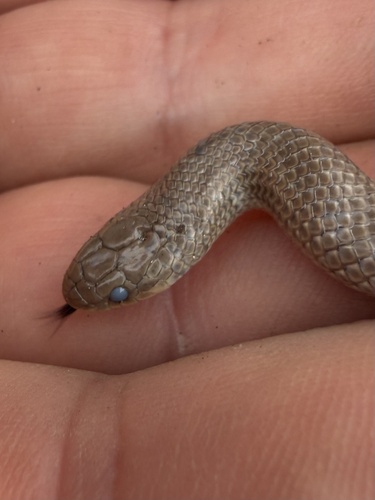 Great Plains Ground SnakeSonora episcopa
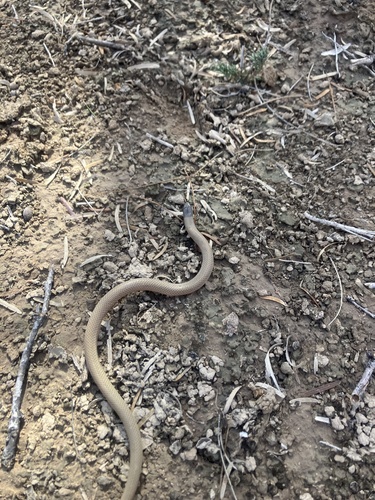 Ground SnakeSonora semiannulata
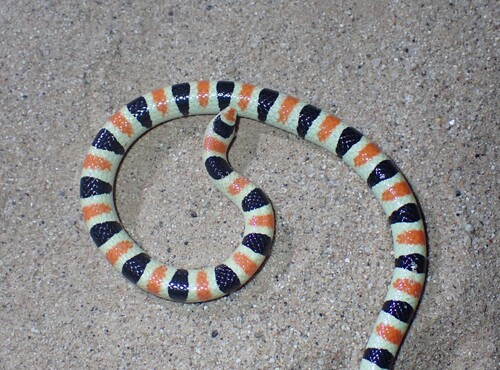 Colorado Desert Shovelnose SnakeSonora annulata
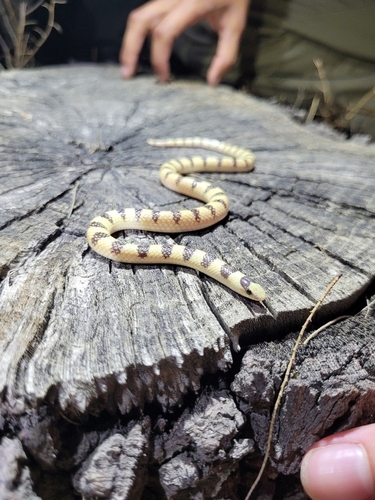 Mojave Shovelnose SnakeSonora occipitalis
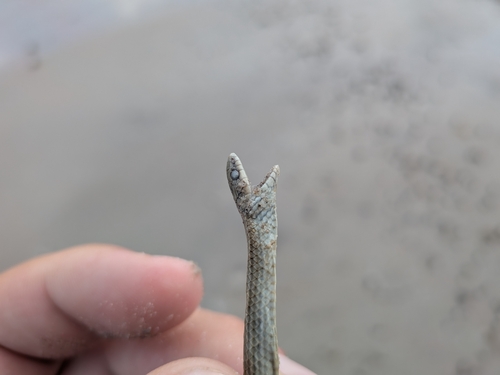 Taylor’s Ground SnakeSonora taylori
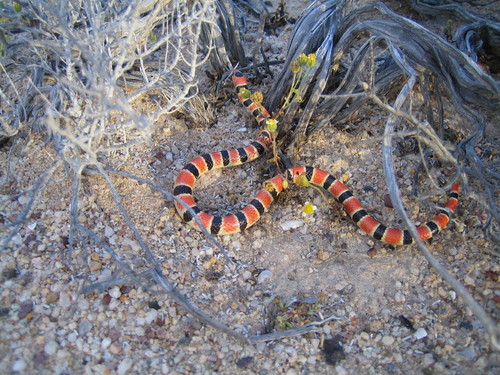 Sonoran Shovel-nosed SnakeSonora palarostris
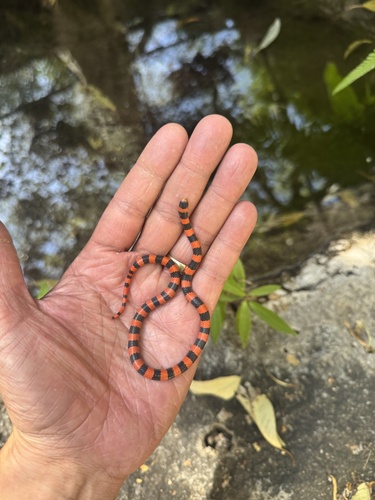 Mexican GroundsnakeSonora mutabilis
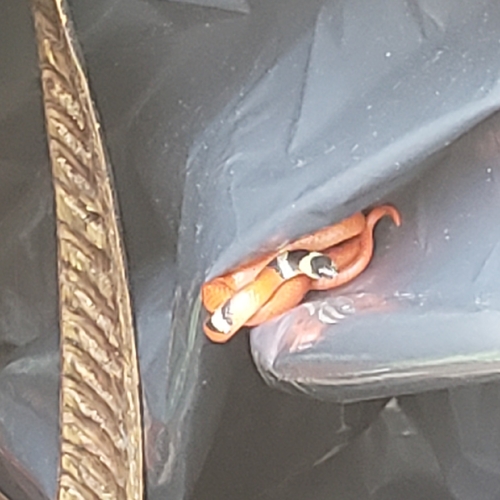 Michoacán Ground SnakeSonora michoacanensis
Classification
How scientists group this snake, from the broadest category down to the exact species. Each step narrows to its closest relatives.
- OrderThe broad group of scaled reptiles: all snakes and lizards
- Squamata
- FamilyA group of related snakes that share key traits
- Colubridae
- GenusA close-knit group of very similar species
- Sonora
- SpeciesThis exact snake, named in the two-part scientific name
- Sonora cincta
Keep learning
- What to Do If You Find a SnakeFound a snake at home or on a trail? Here is how to stay calm, give it space, identify it safely, and know when to call a professional.
- Venomous vs Nonvenomous: How to Tell the DifferenceThe folk rules for telling venomous snakes apart, where each one fails, and why location-based identification beats guessing by sight.
- What Is a Snake? Snake Facts, Body Plan and How They Differ From LizardsA clear overview of what makes a snake a snake: limbless body plan, anatomy, evolution from lizards, species diversity, and why they are ectothermic.
- How to Keep Snakes Out of Your Yard and HomeA practical guide to keeping snakes out of your yard and home using habitat changes that work, plus what to skip and what to do if one shows up.
Distribution from GBIF & iNaturalist. Venom status per CDC. Background: Wikipedia. Informational only. Never handle a snake to identify it.