
Elapidae
Dugite
VenomousPseudonaja affinis
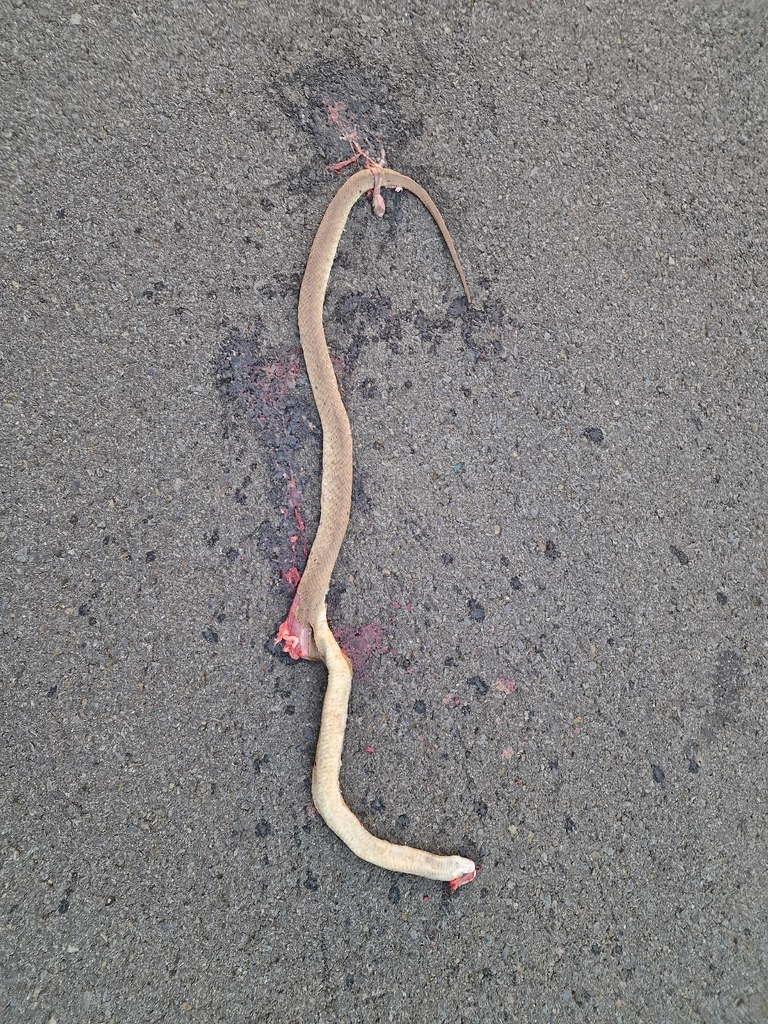
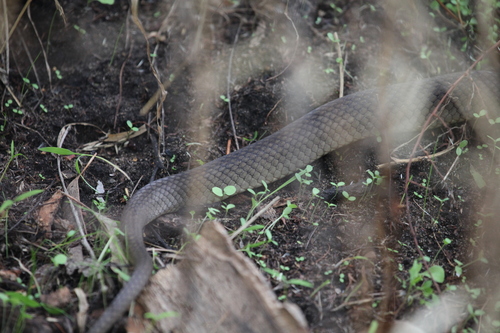
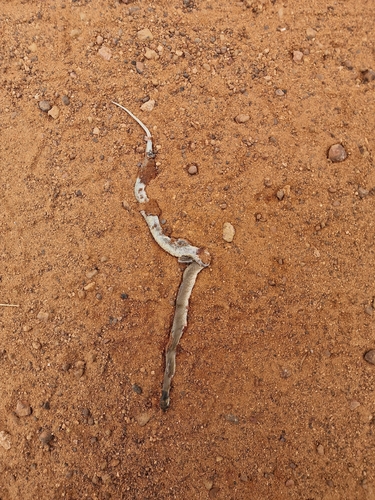
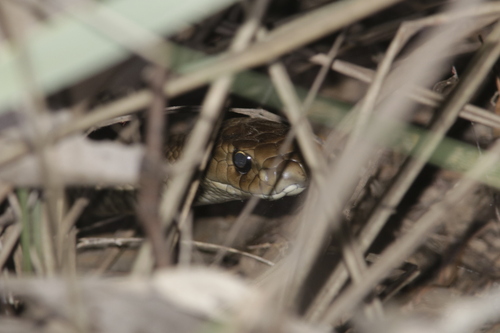
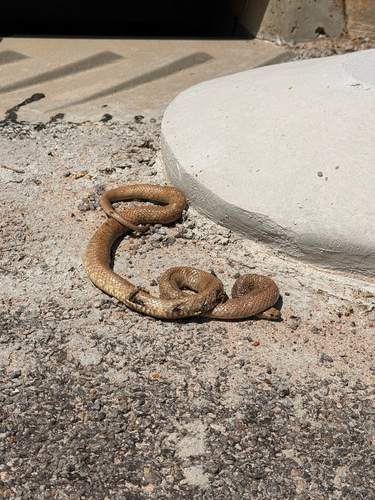
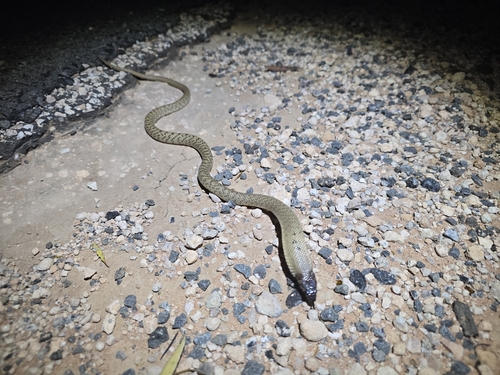
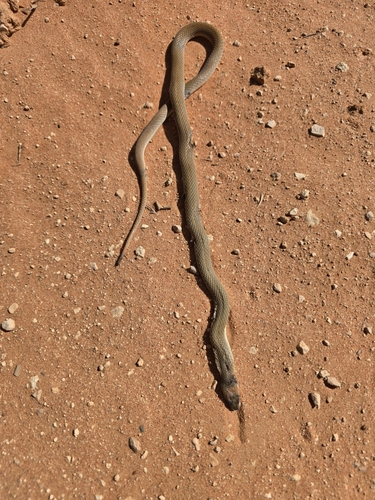
4 photographs of the Dugite. no rights reserved.
The Dugite (Pseudonaja affinis) is a venomous snake in the Elapidae family, recorded in 1 country.
If you are bitten
This is a venomous snake. Treat any bite as a medical emergency: stay calm, keep the bitten limb still and roughly level with the heart, remove rings and tight clothing, and get to emergency care immediately. Do not apply a tourniquet, cut the wound, apply ice, or try to suck out venom. Call your local emergency number or poison center.
- Family
- Elapidae
- Danger
- high
About the Dugite
The dugite (; Pseudonaja affinis) is a species of highly venomous, potentially lethal snake endemic to Western Australia, a member of the family Elapidae.
The word dugite is an anglicisation of names for the snake in some dialects of the Nyungar language, including toogitj, dukayj and dukitj. However, another, probably cognate name, dobitj, has become the common name for dugites in Nyungar (a potential source of confusion, as dobitj is also used in some dialects to refer to other kinds of venomous snakes).
Description
The dugite is a venomous snake, considered dangerous. It is coloured grey, green, or brown. The colours vary widely between individuals and are an unreliable means of identifying the species. Black scales can be scattered over the body; their scales are relatively large with a semi-glossy appearance. The most distinguishing characteristic is the head that can be rather small and indistinct from the neck. A dugite's body is long and slender in build and can grow up to 2 metres (6 ft 7 in) in total length (including tail), but the typical size is roughly 1.5 metres (4 ft 11 in).
Distribution and habitat
P. affinis is found in southern parts of Western Australia and in remote coastal parts of western South Australia.
The dugite occupies a wide variety of habitats ranging from coastal dunes and heathlands to shrub lands and woodlands. It also appears to thrive in heavily degraded habitats such as golf courses, industrial areas, and open agricultural farmlands.
The dugite has increased in population since the opening up of its natural habitats and introduction of the house mouse due to the mouse being a main food source for it. In the Perth metropolitan area, the dugite is one of the most common snakes found next to buildings. In areas of human population, the snake will take temporary shelter under concrete slabs, fibro sheeting, roofing tin, and such, although in more natural habitats, it will shelter under rocks and in abandoned termite mounds. It also burrows during the winter.
Behaviour
In the wild, dugites may be sheltering beneath logs and rocks. When disturbed, they are very shy and often slither away, but they will defend themselves if cornered. The species is diurnal. On hot days, activity occurs mainly in the morning, and to a lesser extent in the afternoon.
Diet
Like all snakes, P. affinis is carnivorous, eating lizards, other snakes, mice and rats.
Reproduction
As with all brown snakes, mating normally occurs between early September and late November. The dugite is an egg-laying (oviparous) snake, and typically deposits around 30 eggs and abandons them to self-incubate. The eggs hatch after about 65 days. Under optimal environmental conditions, the dugite has been known to lay two clutches during the same season.
Envenomation
Adapted from Wikipedia, available under CC BY-SA.
Local and regional names
The Dugite is known by these names across the regions where it lives:
- German
- Gefleckte Braunschlange
- Japanese
- ドゥーガイト
- Russian
- Родственная псевдонайя
Frequently asked: Dugite
- Is the Dugite venomous?
- Yes. The Dugite (Pseudonaja affinis) is venomous and belongs to the Elapidae family (cobra, mamba, coral or sea snake). Its bite is considered high risk to people. Treat any bite as a medical emergency.
- Is the Dugite poisonous?
- Snakes are venomous, not poisonous. "Poisonous" means harmful to eat or touch; "venomous" means injecting toxins through a bite. The Dugite is venomous, delivering venom through a bite.
- Is the Dugite dangerous?
- This is a venomous snake. Treat any bite as a medical emergency: stay calm, keep the bitten limb still and roughly level with the heart, remove rings and tight clothing, and get to emergency care immediately. Do not apply a tourniquet, cut the wound, apply ice, or try to suck out venom. Call your local emergency number or poison center.
- Where does the Dugite live?
- The Dugite has verified records in 1 country, including Australia. See the distribution section below for its full range.
- What does the Dugite eat?
- Like all snakes, P. affinis is carnivorous, eating lizards, other snakes, mice and rats.
If you are bitten by the Dugite
Do
- Get away from the snake and stay calm. Most bites worsen when people panic or try again to handle the snake.
- Call 911 or Poison Control (1-800-222-1222) right away. Antivenom works best when given early.
- Note the time of the bite and, from a safe distance, the snake's color and pattern, a phone photo is enough. Do not chase it.
- Keep the bitten limb still and at roughly heart level. Sit or lie down and limit movement.
- Remove rings, watches, and tight clothing near the bite before swelling starts.
- Gently wash the bite with soap and water and cover it with a clean, dry dressing.
Do not
- Do not cut the wound or try to suck out the venom.
- Do not apply a tourniquet or ice.
- Do not drink alcohol or caffeine.
- Do not take aspirin or ibuprofen, they can worsen bleeding. Acetaminophen is safer for pain.
- Do not try to catch or kill the snake. A dead snake can still bite by reflex.
First-aid guidance adapted from the U.S. Centers for Disease Control and Prevention (CDC NIOSH), Venomous Snakes. Educational only; always follow the instructions of emergency responders.
Where it is found
More Elapidae snakes
 Eastern Brown SnakePseudonaja textilis
 Western Brown SnakePseudonaja mengdeni
 Strap-Snouted Brown SnakePseudonaja aspidorhyncha
 Ringed Brown SnakePseudonaja modesta
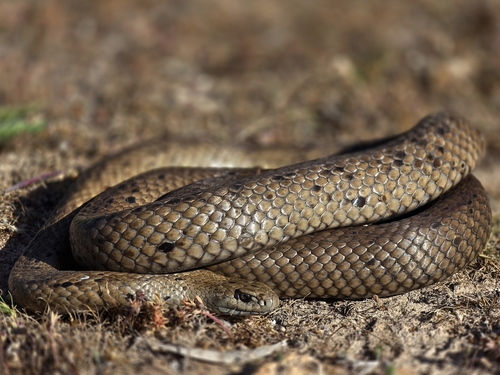 Peninsula Brown SnakePseudonaja inframacula
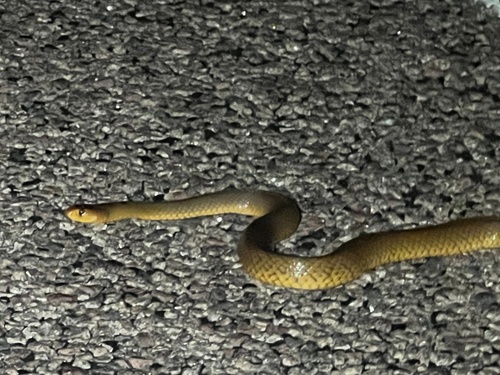 Northern Brown SnakePseudonaja nuchalis
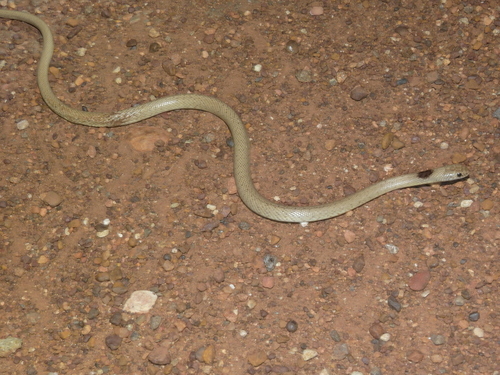 Speckled Brown SnakePseudonaja guttata
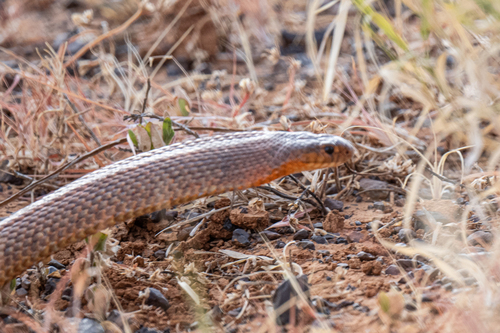 Ingram's Brown SnakePseudonaja ingrami
Classification
How scientists group this snake, from the broadest category down to the exact species. Each step narrows to its closest relatives.
- OrderThe broad group of scaled reptiles: all snakes and lizards
- Squamata
- FamilyA group of related snakes that share key traits
- Elapidae
- GenusA close-knit group of very similar species
- Pseudonaja
- SpeciesThis exact snake, named in the two-part scientific name
- Pseudonaja affinis
Keep learning
- Are Snakes Dangerous? The Real Risk, in PerspectiveMost snakes are harmless and avoid people. Here is the honest picture of snakebite risk worldwide and how to lower your own.
- Snakebite First Aid: What to Do (and What Never to Do)A clear, CDC-based guide to snakebite first aid: the steps that help, the popular myths that hurt, and how to tell a serious bite from a minor one.
- Venomous vs Nonvenomous: How to Tell the DifferenceThe folk rules for telling venomous snakes apart, where each one fails, and why location-based identification beats guessing by sight.
- What to Do If You Find a SnakeFound a snake at home or on a trail? Here is how to stay calm, give it space, identify it safely, and know when to call a professional.
Distribution from GBIF & iNaturalist. Venom status per CDC. Background: Wikipedia. Informational only. Never handle a snake to identify it.