
Elapidae
Northern Brown Snake
VenomousPseudonaja nuchalis
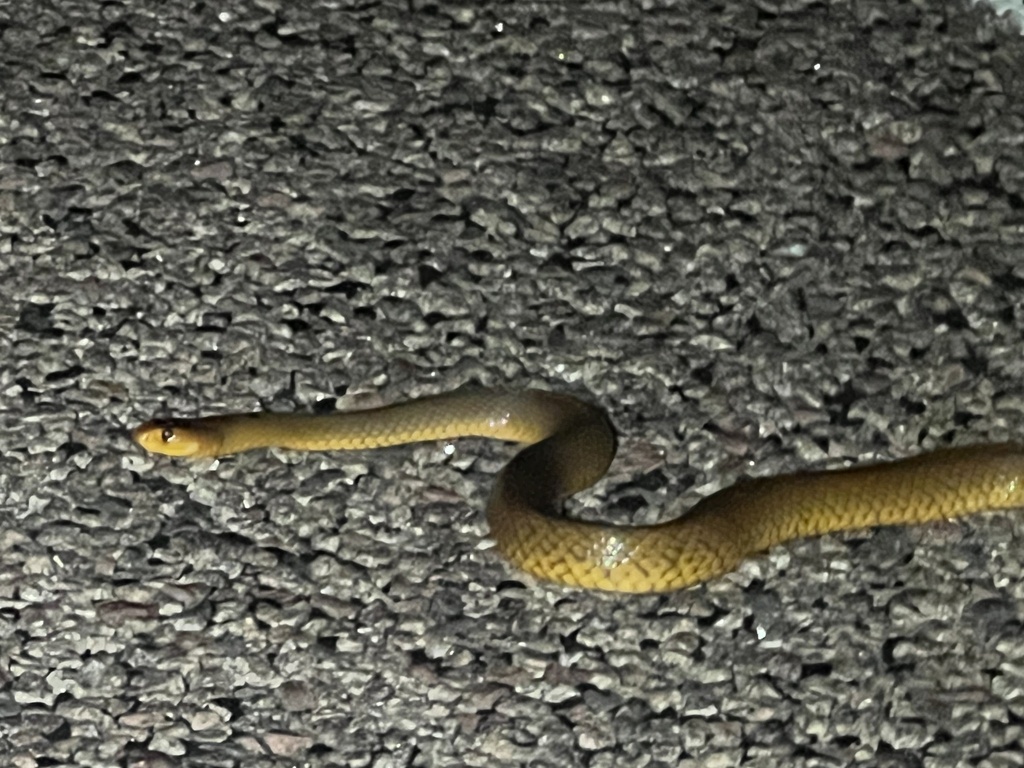
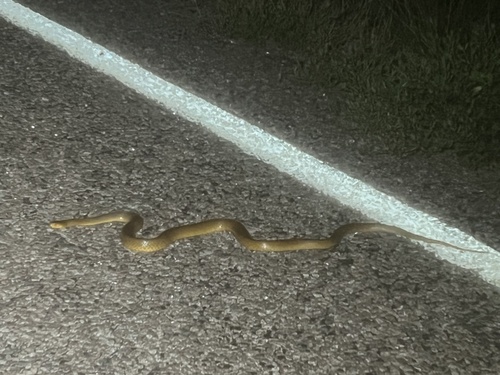
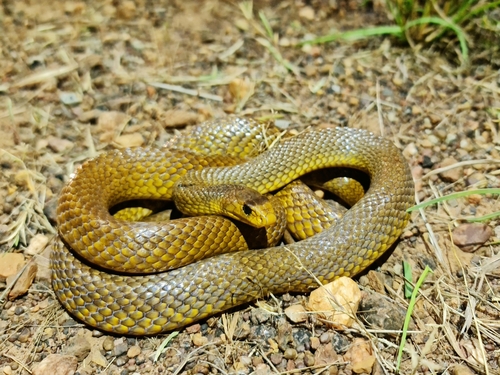
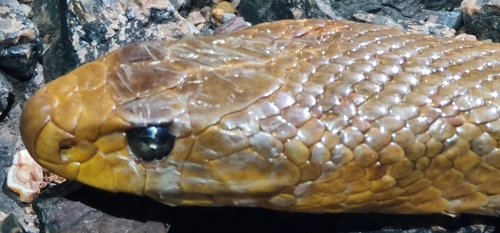
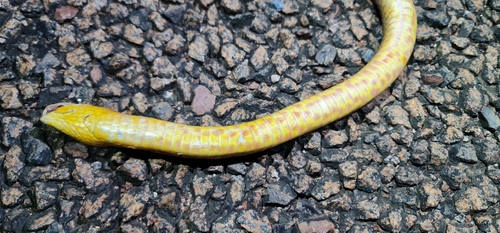
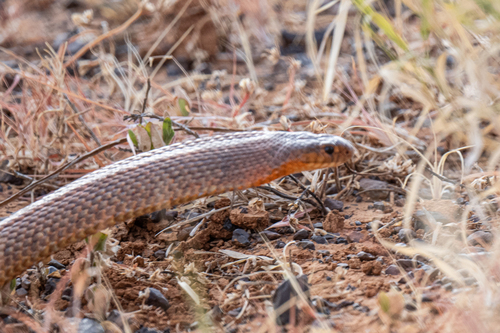
5 photographs of the Northern Brown Snake. © Brandon Bourassa.
The Northern Brown Snake (Pseudonaja nuchalis) is a venomous snake in the Elapidae family.
If you are bitten
This is a venomous snake. Treat any bite as a medical emergency: stay calm, keep the bitten limb still and roughly level with the heart, remove rings and tight clothing, and get to emergency care immediately. Do not apply a tourniquet, cut the wound, apply ice, or try to suck out venom. Call your local emergency number or poison center.
- Family
- Elapidae
- Danger
- high
About the Northern Brown Snake
Pseudonaja nuchalis, the northern brown snake or gwardar, is a species of very fast, highly venomous elapid snake native to Australia. Its colour and pattern are rather variable, depending largely on its location.
The name gwardar is a word meaning "go the long way around" in an Aboriginal language . This may be regarded as advice for people who come across the species in the wild: that is, while P. nuchalis is generally cautious, shy, and inclined to retreat rather than attack, it will defend itself if cornered.
Description
The northern brown snake grows up to 1.8 m (5 ft 10.87 in) in total length (including tail). Its back can feature shades of orange-brown with flecks and bands, or appear plain. Its belly is cream to orange with pink blotches. Some individuals have jet black heads (this can cause it to be confused with the black-headed python), while others feature a black 'V' shape on the back of their neck, below their head.
Distribution and habitat
The northern brown snake has a wide distribution and is found across the north of the Australian continent, including the Northern Territory, Queensland and Western Australia.
The northern brown snake is a ground-dwelling snake that prefers drier habitats, but is also found in coastal eucalypt forests, woodlands, and grasslands. Although the northern brown is not an arboreal species, it is not uncommon for it to climb small shrubs or trees. It also hides in crevices and under rocks, and in urban areas can be found under rubbish or tin piles.
Diet
Pseudonaja nuchalis preys upon small mammals and reptiles, including lizards and mice.
Lifespan and reproduction
Little is known about the northern brown snake's lifespan. Mating season is roughly from September to November and the female usually produces around 11-14 eggs, but may produce up to 38.
Venom and symptoms
Although the northern brown snake's venom is not the most toxic in the brown snake genus, its average delivery contains a relatively high quantity of venom; thus the northern brown snake has high potential to deliver a deadly bite. Its venom contains neurotoxins, nephrotoxins, and a procoagulant, although humans are not usually affected by the neurotoxins. The bite is usually painless and difficult to see due to their small fangs. Human symptoms of a northern brown snake bite are headache, nausea/vomiting, abdominal pain, severe coagulopathy, and sometimes kidney damage. In dogs and cats, paralysis is also likely to occur.
Behaviour
The northern brown snake is known to be very aggressive when disturbed or threatened, but like most snakes, usually prefers to retreat from danger. It may develop nocturnal habits during the warmer months, but is otherwise active during the day and enjoys sunlight. The snake has also been known to practise cannibalism, although this is not common. Northern brown snakes kill their prey with a combination of venom and constriction.
Adapted from Wikipedia, available under CC BY-SA.
Local and regional names
The Northern Brown Snake is known by these names across the regions where it lives:
- Chinese
- 西部擬眼鏡蛇
- Czech
- pakobra ozdobná
- English
- Gwardar, Western Brown Snake
- German
- Westliche Braunotter, Westliche Braunschlange
- Hungarian
- nyugati barnakígyó
- Italian
- Serpente bruno settentrionale
Frequently asked: Northern Brown Snake
- Is the Northern Brown Snake venomous?
- Yes. The Northern Brown Snake (Pseudonaja nuchalis) is venomous and belongs to the Elapidae family (cobra, mamba, coral or sea snake). Its bite is considered high risk to people. Treat any bite as a medical emergency.
- Is the Northern Brown Snake poisonous?
- Snakes are venomous, not poisonous. "Poisonous" means harmful to eat or touch; "venomous" means injecting toxins through a bite. The Northern Brown Snake is venomous, delivering venom through a bite.
- Is the Northern Brown Snake dangerous?
- This is a venomous snake. Treat any bite as a medical emergency: stay calm, keep the bitten limb still and roughly level with the heart, remove rings and tight clothing, and get to emergency care immediately. Do not apply a tourniquet, cut the wound, apply ice, or try to suck out venom. Call your local emergency number or poison center.
- What does the Northern Brown Snake eat?
- Pseudonaja nuchalis preys upon small mammals and reptiles, including lizards and mice.
If you are bitten by the Northern Brown Snake
Do
- Get away from the snake and stay calm. Most bites worsen when people panic or try again to handle the snake.
- Call 911 or Poison Control (1-800-222-1222) right away. Antivenom works best when given early.
- Note the time of the bite and, from a safe distance, the snake's color and pattern, a phone photo is enough. Do not chase it.
- Keep the bitten limb still and at roughly heart level. Sit or lie down and limit movement.
- Remove rings, watches, and tight clothing near the bite before swelling starts.
- Gently wash the bite with soap and water and cover it with a clean, dry dressing.
Do not
- Do not cut the wound or try to suck out the venom.
- Do not apply a tourniquet or ice.
- Do not drink alcohol or caffeine.
- Do not take aspirin or ibuprofen, they can worsen bleeding. Acetaminophen is safer for pain.
- Do not try to catch or kill the snake. A dead snake can still bite by reflex.
First-aid guidance adapted from the U.S. Centers for Disease Control and Prevention (CDC NIOSH), Venomous Snakes. Educational only; always follow the instructions of emergency responders.
More Elapidae snakes
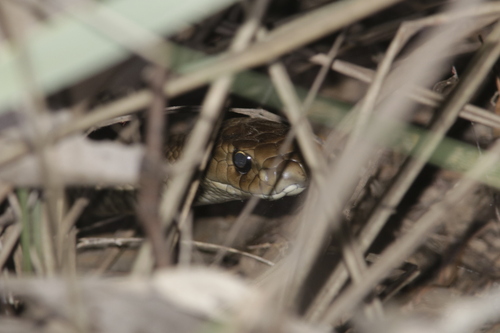 Eastern Brown SnakePseudonaja textilis
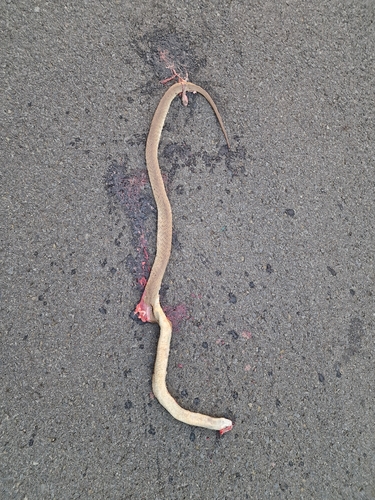 DugitePseudonaja affinis
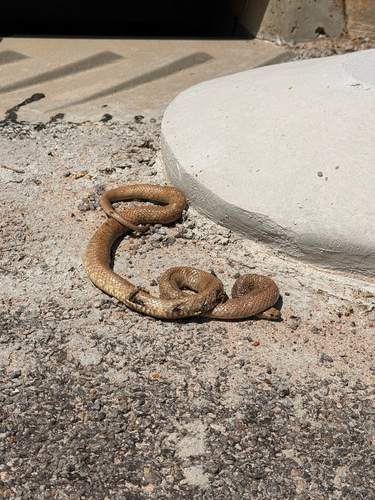 Western Brown SnakePseudonaja mengdeni
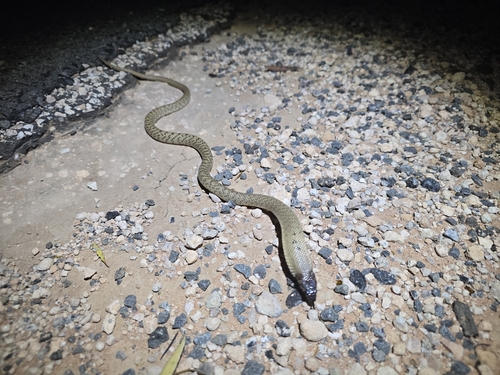 Strap-Snouted Brown SnakePseudonaja aspidorhyncha
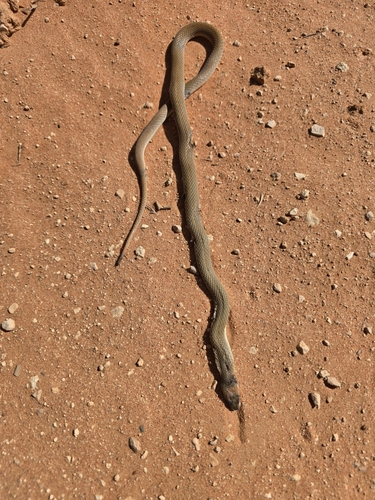 Ringed Brown SnakePseudonaja modesta
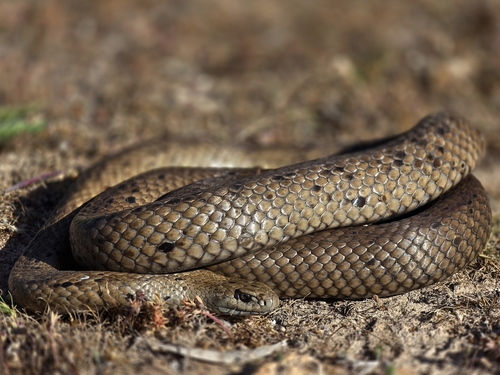 Peninsula Brown SnakePseudonaja inframacula
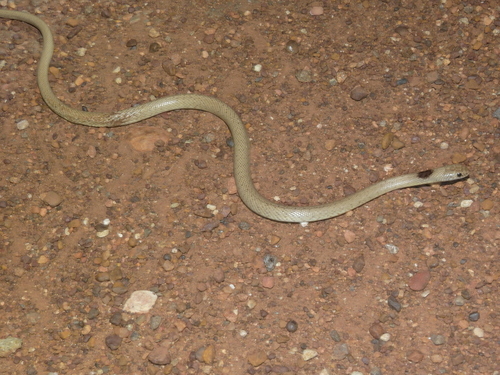 Speckled Brown SnakePseudonaja guttata
 Ingram's Brown SnakePseudonaja ingrami
Classification
How scientists group this snake, from the broadest category down to the exact species. Each step narrows to its closest relatives.
- OrderThe broad group of scaled reptiles: all snakes and lizards
- Squamata
- FamilyA group of related snakes that share key traits
- Elapidae
- GenusA close-knit group of very similar species
- Pseudonaja
- SpeciesThis exact snake, named in the two-part scientific name
- Pseudonaja nuchalis
Keep learning
- Are Snakes Dangerous? The Real Risk, in PerspectiveMost snakes are harmless and avoid people. Here is the honest picture of snakebite risk worldwide and how to lower your own.
- Snakebite First Aid: What to Do (and What Never to Do)A clear, CDC-based guide to snakebite first aid: the steps that help, the popular myths that hurt, and how to tell a serious bite from a minor one.
- Venomous vs Nonvenomous: How to Tell the DifferenceThe folk rules for telling venomous snakes apart, where each one fails, and why location-based identification beats guessing by sight.
- What to Do If You Find a SnakeFound a snake at home or on a trail? Here is how to stay calm, give it space, identify it safely, and know when to call a professional.
Distribution from GBIF & iNaturalist. Venom status per CDC. Background: Wikipedia. Informational only. Never handle a snake to identify it.