
Genus · Elapidae
Types of brown snakes
9 species make up the genus Pseudonaja, the snakes commonly called brown snakes. All of them are venomous.
About brown snakes
Pseudonaja, the Australian brown snakes, are slender, fast, alert elapids found across much of the continent, and the genus includes the eastern brown snake, responsible for more snakebite deaths than any other snake in Australia.
Pseudonaja is a genus of venomous snakes in the family Elapidae, the same family as cobras, mambas, and sea snakes. Our database lists 9 species, and all 9 are venomous. Despite being called brown snakes, they are not closely related to the various unrelated snakes called brown snakes in other parts of the world. The name describes their typical color, not a shared lineage, so the common name can be misleading outside Australia.
These are slim, agile, alert snakes built for speed. Color is highly variable, ranging from pale tan through reddish and grey to nearly black, sometimes with bands or speckling, which is one reason the common name is an unreliable guide. When defensive they often raise the forebody well off the ground into a distinctive S-shape. These general traits help describe the group, but they are not enough to identify a snake with confidence. Reliable identification of any wild snake should be left to a qualified expert, and you should never approach a snake to get a closer look.
The genus is best known for a serious public-health reason. The eastern brown snake, Pseudonaja textilis, is responsible for the most snakebite deaths in Australia and carries one of the most potent venoms of any land snake in the world. The venom can cause failure of normal blood clotting and, in serious cases, sudden collapse. Adding to the danger, the amount of venom delivered in a bite is often small and the bite itself can be nearly painless, which means a dangerous envenomation can be easy to underestimate.
Brown snakes range across much of mainland Australia and occupy many habitat types. They do particularly well in farmland and around the edges of towns, where introduced mice are abundant. That food supply draws the snakes into the same places people live and work, which is the main reason human encounters are common. They are fast-moving, day-active hunters that feed largely on mice and lizards, and they reproduce by laying eggs.
Brown snakes would generally rather flee than fight, but they can become defensive if cornered or threatened, and a bite from any species in this genus must be treated as a medical emergency. Australia has an endorsed first-aid method for venomous snakebite, and the standard guidance is to call for emergency help immediately on 000. Do not attempt to handle, capture, or kill any wild venomous snake under any circumstances. If a bite occurs, keep the person calm and still and rely on emergency medical professionals and current official first-aid guidance rather than improvised treatment.
Pseudonaja belongs to the Elapidae family (Cobras, mambas, coral & sea snakes). Front-fanged venomous snakes, many with potent neurotoxic venom. Usually slender with a head barely wider than the neck and fixed front fangs (not the folding fangs of vipers). Coral snakes are boldly ringed; sea snakes have a flattened, paddle-like tail.
Danger: All elapids are venomous and the family is responsible for a large share of fatal snakebites worldwide. Many are shy, but bites can be life-threatening. Treat any bite as a medical emergency.
All species (9)
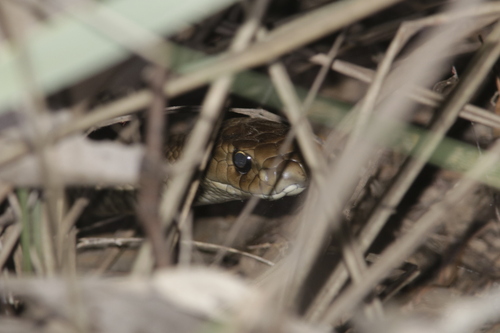 Eastern Brown SnakePseudonaja textilisVenomous
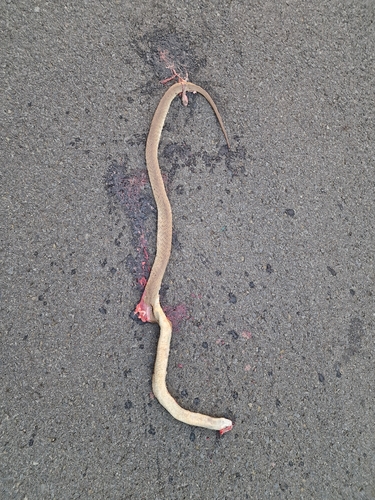 DugitePseudonaja affinisVenomous
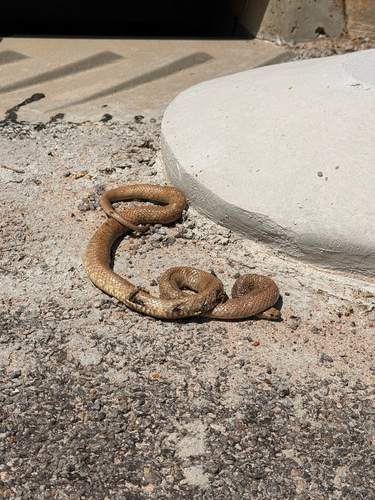 Western Brown SnakePseudonaja mengdeniVenomous
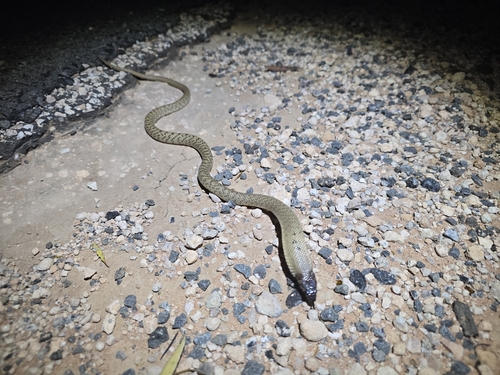 Strap-Snouted Brown SnakePseudonaja aspidorhynchaVenomous
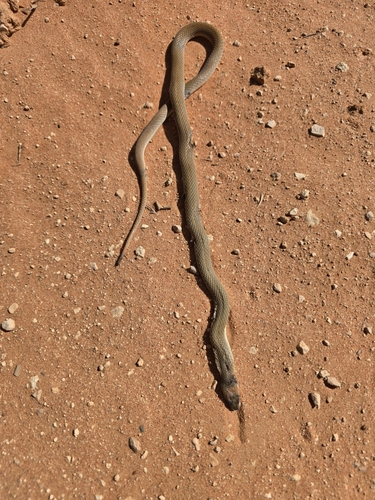 Ringed Brown SnakePseudonaja modestaVenomous
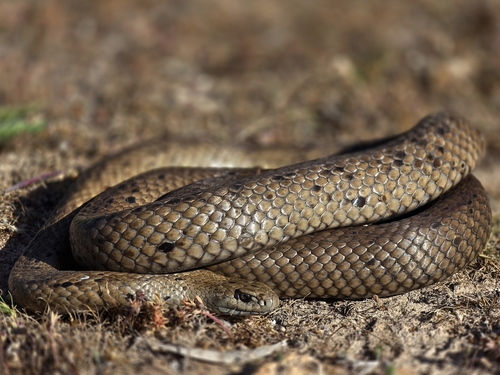 Peninsula Brown SnakePseudonaja inframaculaVenomous
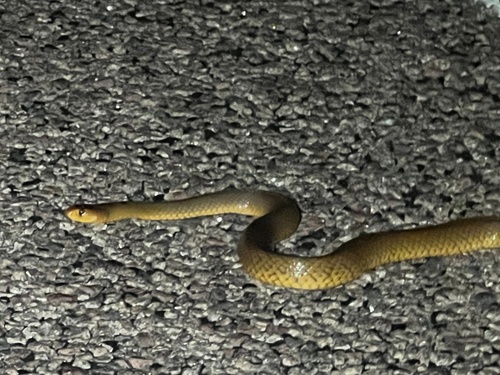 Northern Brown SnakePseudonaja nuchalisVenomous
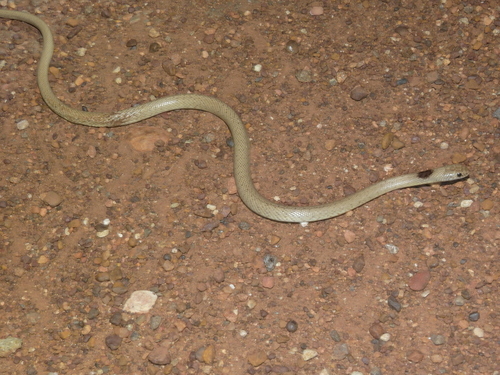 Speckled Brown SnakePseudonaja guttataVenomous
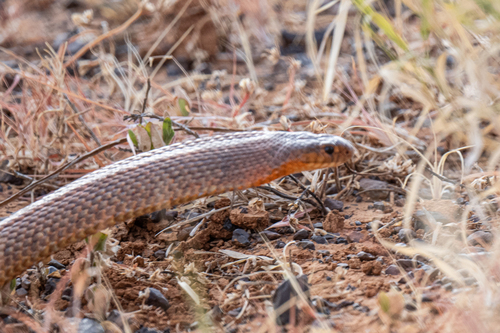 Ingram's Brown SnakePseudonaja ingramiVenomous
Keep learning
- Venomous vs Nonvenomous: How to Tell the DifferenceThe folk rules for telling venomous snakes apart, where each one fails, and why location-based identification beats guessing by sight.
- Are Snakes Dangerous? The Real Risk, in PerspectiveMost snakes are harmless and avoid people. Here is the honest picture of snakebite risk worldwide and how to lower your own.
- Snake Venom Explained: How It Works and WhyWhat snake venom actually is, why it evolved, the main venom types, fang delivery, how antivenom works, and why ranking the most venomous snake is hard.
- How Snakes Move, Hunt, and EatHow snakes move without legs, hunt as ambushers or active foragers, kill by constriction or venom, and swallow prey wider than their head.