
Elapidae
Curl Snake
VenomousSuta suta
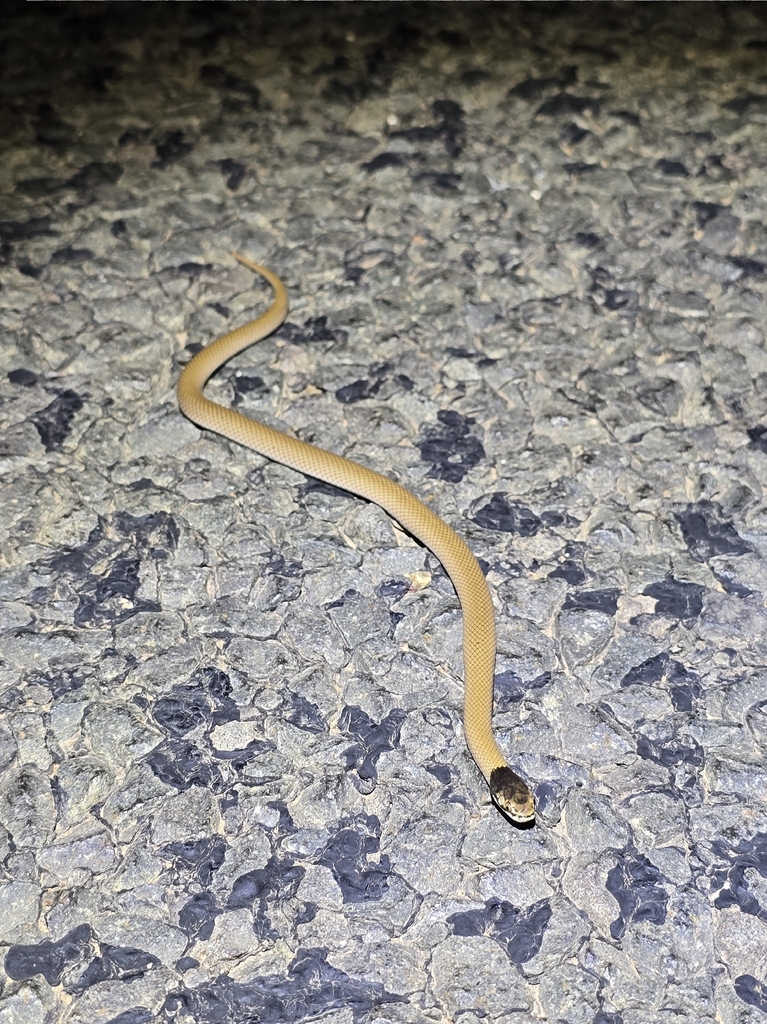
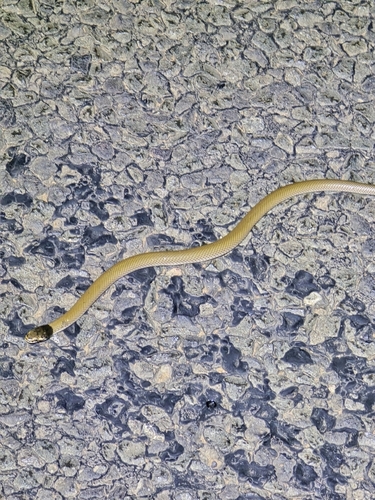
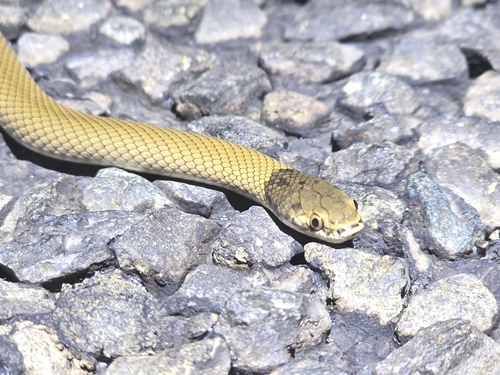
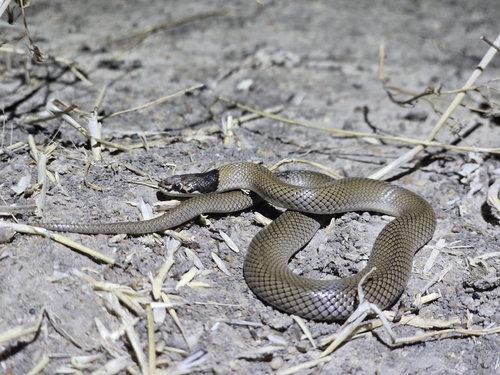
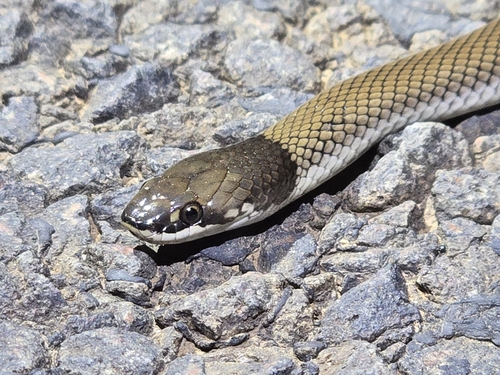
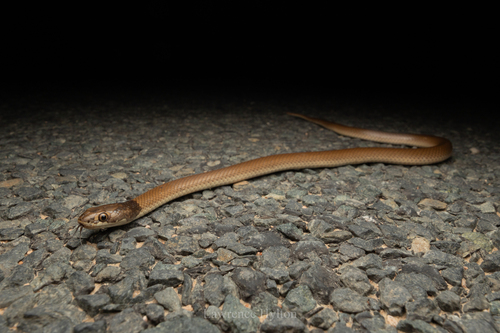
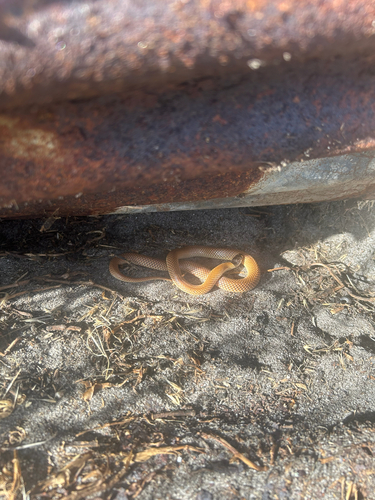
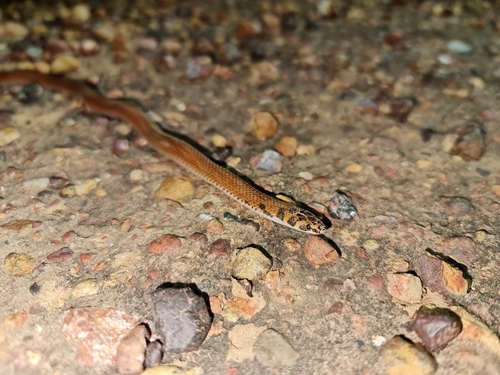
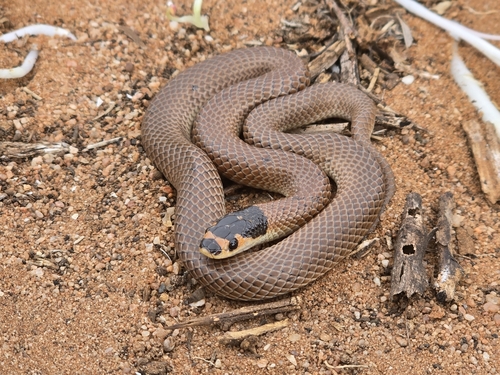
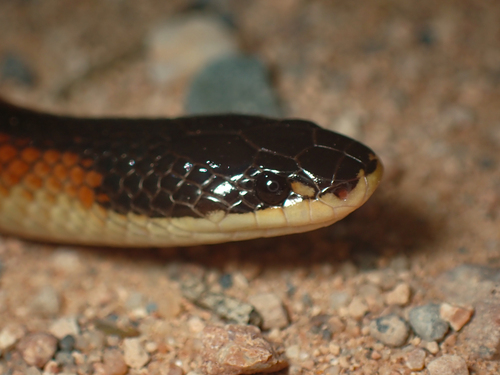
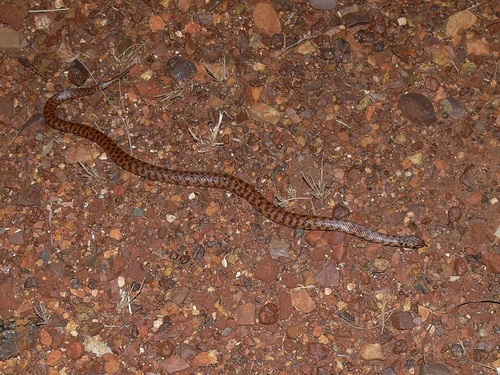
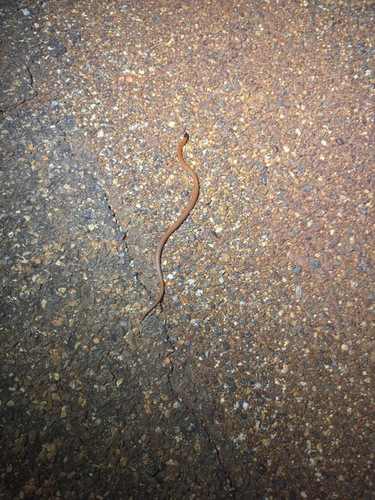
6 photographs of the Curl Snake. © Max Tibby.
The Curl Snake (Suta suta) is a venomous snake in the Elapidae family, recorded in 1 country.
If you are bitten
This is a venomous snake. Treat any bite as a medical emergency: stay calm, keep the bitten limb still and roughly level with the heart, remove rings and tight clothing, and get to emergency care immediately. Do not apply a tourniquet, cut the wound, apply ice, or try to suck out venom. Call your local emergency number or poison center.
- Family
- Elapidae
- Danger
- high
About the Curl Snake
The curl snake (Suta suta) is a species of venomous, heavily built snake in the family Elapidae. The species, which is native to Australia, is also known more commonly in Western Australia as the myall snake. The curl snake is often confused with a similar species named the Ord curl snake (Suta ordensis).
Description
The typical length of the curl snake is 40 cm (16 in), although it has been known to reach lengths of 60 cm (24 in) or more. It has a wide head and is dark brown or reddish brown in colour, with a distinctively darker head and paler under the flanks. The light-coloured iris and small pupil are distinctive features of this species. S. suta also has a temporal dark-edged stripe (typically orange in colour) that extends around from each eye to the snout. Sometimes, the edges of the vertebral scales can be darker, resulting in a reticulated pattern from which the Latin name suta, meaning "stitched", is derived.
Scale count information for identification:
Dorsal scale rows at mid-body – 19 to 21, normally in 19 rows and rarely in 21
Ventrals – 150 to 170 with a single cloacal scale
Subcaudals – 20 to 35 single (undivided) scales
Habitat/ecology and distribution
The curl snake can be found in all states and territories of Australia excluding Tasmania. It typically occurs in arid eastern and central Australia. In Victoria, it occurs only in the north and central regions, and in Western Australia, it is restricted to the far north-eastern boundaries. It most commonly inhabits grasslands, scrublands, and open woodlands, foraging amongst leaf litter and under rocks at night. It can be found occupying old burrows, in soil cracks, under woody debris, and under leaf litter.
The conservation status of this species is considered secure in all states except Victoria, where it is considered to be vulnerable. This species is a nocturnal forager and is threatened by the decline in ground cover across its habitats.
Diet
The curl snake feeds mostly upon other small reptiles such as lizards, but also consumes small mammals and frogs to supplement its diet. Mammals may account for up to 20% of its dietary intake. The most commonly consumed reptiles include geckos, skinks, legless lizards, other snakes and dragons.
Reproduction
S. suta is viviparous rather than oviparous, and bears live young in a typical litter of five. The litter size can range from one to seven. Hatchling length averages 15 cm.
Behavior
The curl snake derives its common name from the characteristic defensive posture it assumes when threatened. It is known to curl up tightly into a spring-like coil, protecting its head. The defensive behaviour proceeding from this is usually a violent thrashing about.
Toxicity
Adapted from Wikipedia, available under CC BY-SA.
Local and regional names
The Curl Snake is known by these names across the regions where it lives:
- Chinese
- 蘇塔蛇
- Czech
- suta zavíjivá
- Danish
- Østlig Krøllegiftsnog
- English
- Myal Snake
- Italian
- Serpente dal cappuccio ricciolato
- Japanese
- カールヘビ
- Russian
- Сута Петерса
Frequently asked: Curl Snake
- Is the Curl Snake venomous?
- Yes. The Curl Snake (Suta suta) is venomous and belongs to the Elapidae family (cobra, mamba, coral or sea snake). Its bite is considered high risk to people. Treat any bite as a medical emergency.
- Is the Curl Snake poisonous?
- Snakes are venomous, not poisonous. "Poisonous" means harmful to eat or touch; "venomous" means injecting toxins through a bite. The Curl Snake is venomous, delivering venom through a bite.
- Is the Curl Snake dangerous?
- This is a venomous snake. Treat any bite as a medical emergency: stay calm, keep the bitten limb still and roughly level with the heart, remove rings and tight clothing, and get to emergency care immediately. Do not apply a tourniquet, cut the wound, apply ice, or try to suck out venom. Call your local emergency number or poison center.
- Where does the Curl Snake live?
- The Curl Snake has verified records in 1 country, including Australia. See the distribution section below for its full range.
- What does the Curl Snake eat?
- The curl snake feeds mostly upon other small reptiles such as lizards, but also consumes small mammals and frogs to supplement its diet. Mammals may account for up to 20% of its dietary intake. The most commonly consumed reptiles include geckos, skinks, legless lizards, other snakes and dragons.
If you are bitten by the Curl Snake
Do
- Get away from the snake and stay calm. Most bites worsen when people panic or try again to handle the snake.
- Call 911 or Poison Control (1-800-222-1222) right away. Antivenom works best when given early.
- Note the time of the bite and, from a safe distance, the snake's color and pattern, a phone photo is enough. Do not chase it.
- Keep the bitten limb still and at roughly heart level. Sit or lie down and limit movement.
- Remove rings, watches, and tight clothing near the bite before swelling starts.
- Gently wash the bite with soap and water and cover it with a clean, dry dressing.
Do not
- Do not cut the wound or try to suck out the venom.
- Do not apply a tourniquet or ice.
- Do not drink alcohol or caffeine.
- Do not take aspirin or ibuprofen, they can worsen bleeding. Acetaminophen is safer for pain.
- Do not try to catch or kill the snake. A dead snake can still bite by reflex.
First-aid guidance adapted from the U.S. Centers for Disease Control and Prevention (CDC NIOSH), Venomous Snakes. Educational only; always follow the instructions of emergency responders.
Where it is found
More Elapidae snakes
Classification
How scientists group this snake, from the broadest category down to the exact species. Each step narrows to its closest relatives.
Keep learning
- Are Snakes Dangerous? The Real Risk, in PerspectiveMost snakes are harmless and avoid people. Here is the honest picture of snakebite risk worldwide and how to lower your own.
- Snakebite First Aid: What to Do (and What Never to Do)A clear, CDC-based guide to snakebite first aid: the steps that help, the popular myths that hurt, and how to tell a serious bite from a minor one.
- Venomous vs Nonvenomous: How to Tell the DifferenceThe folk rules for telling venomous snakes apart, where each one fails, and why location-based identification beats guessing by sight.
- What to Do If You Find a SnakeFound a snake at home or on a trail? Here is how to stay calm, give it space, identify it safely, and know when to call a professional.
Distribution from GBIF & iNaturalist. Venom status per CDC. Background: Wikipedia. Informational only. Never handle a snake to identify it.