
Elapidae
Black-naped Hooded Snake
VenomousSuta dwyeri
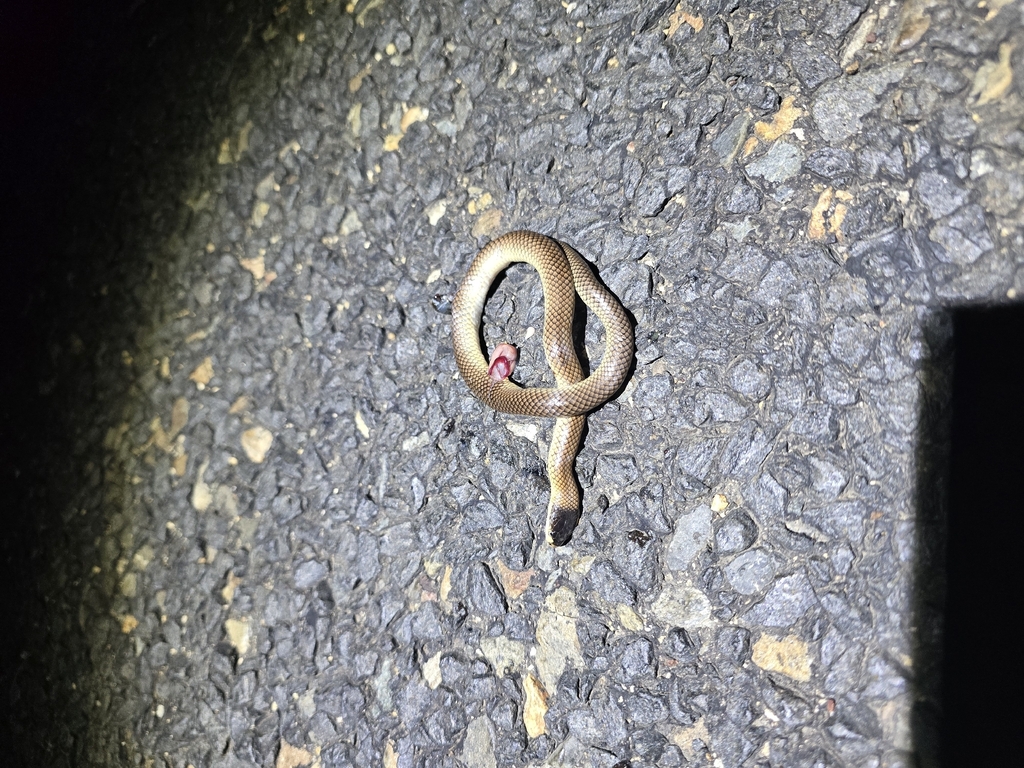
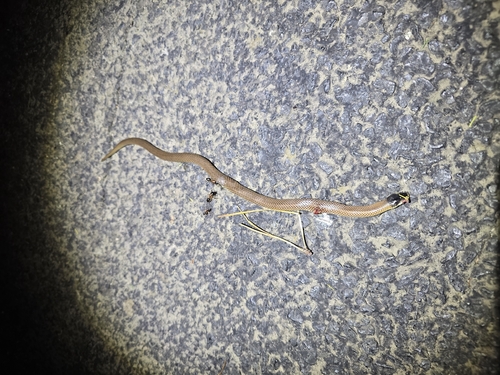
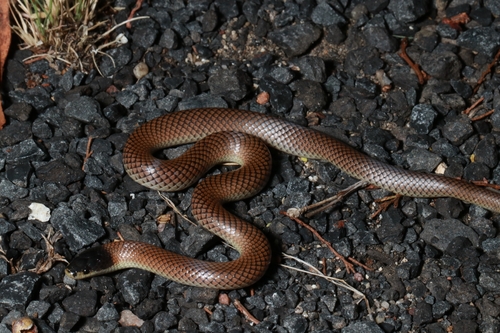
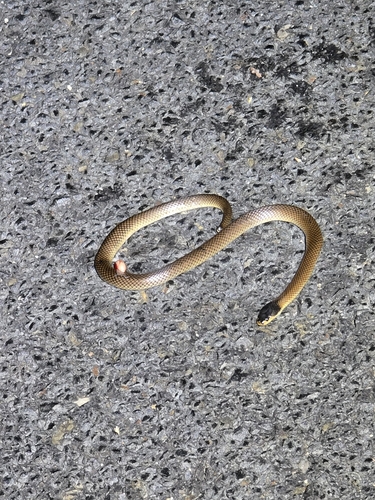
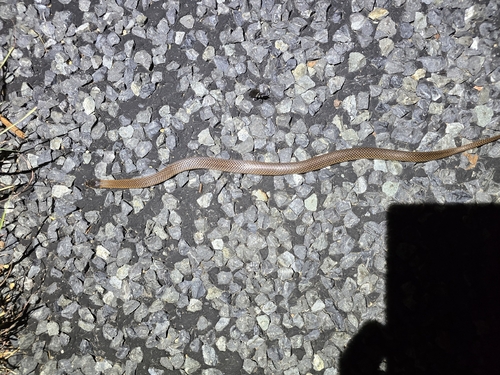
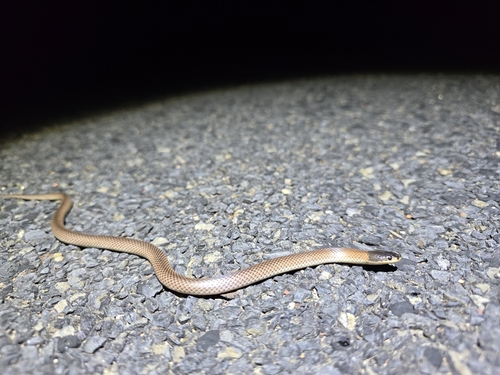
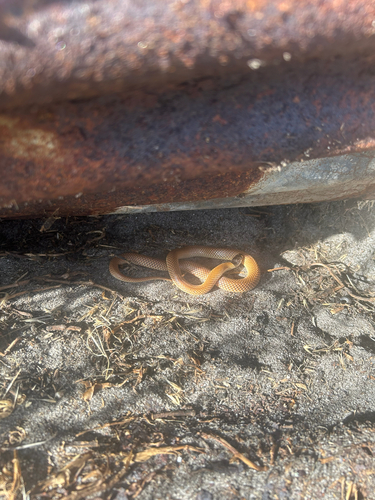
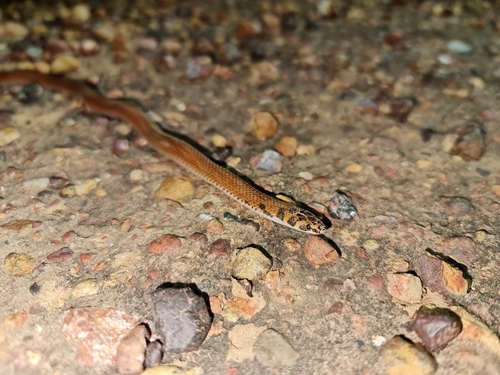
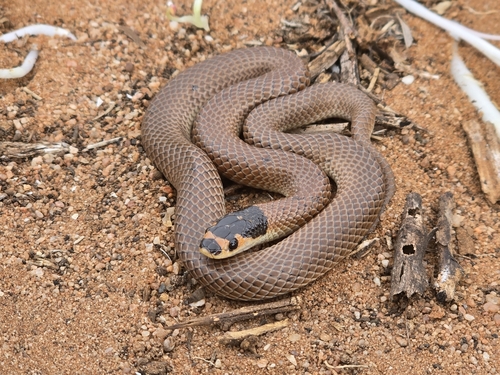
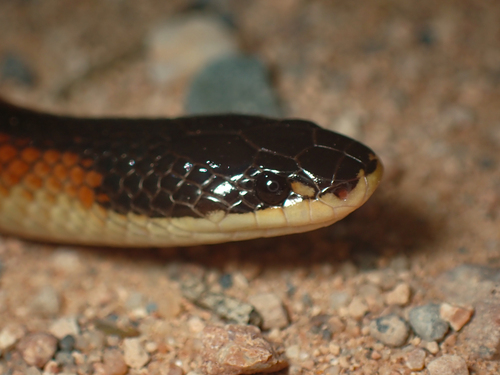
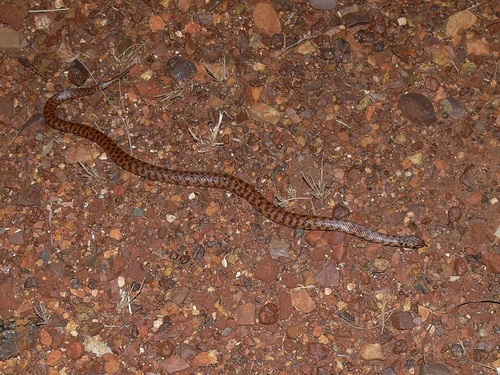
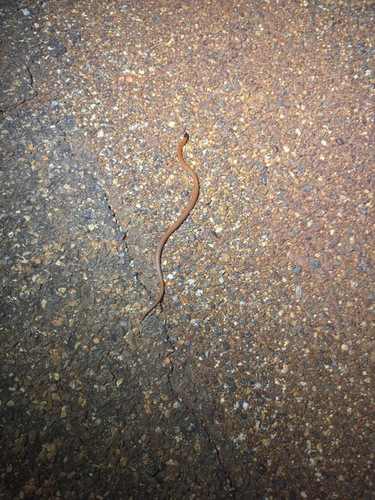
6 photographs of the Black-naped Hooded Snake. © Max Tibby.
The Black-naped Hooded Snake (Suta dwyeri) is a venomous snake in the Elapidae family, recorded in 1 country.
If you are bitten
This is a venomous snake. Treat any bite as a medical emergency: stay calm, keep the bitten limb still and roughly level with the heart, remove rings and tight clothing, and get to emergency care immediately. Do not apply a tourniquet, cut the wound, apply ice, or try to suck out venom. Call your local emergency number or poison center.
- Family
- Elapidae
- Danger
- high
About the Black-naped Hooded Snake
Dwyer's snake (Suta dwyeri) also known as the variable black-naped snake, is a species of venomous snake in the family Elapidae. The species is endemic to Australia, where it is found from New South Wales to South Queensland. While closely related to Australian sea snakes, S. dwyeri is a terrestrial reptile.
Etymology
The specific name, dwyeri, is in honor of Australian herpetologist John Dwyer.
Taxonomy
There has been a great amount of instability of the nomenclature of many Australian snake taxa, particularly concerning the generic classification of the smaller Elapidae, some of which have been placed in several different genera in the span of just a few decades.
Accordingly, Dwyer's snake, which was originally named Denisonia dwyeri by Worrell in 1956, has been variously called Unechis dwyeri by Cogger in 1983, Suta dwyeri by Valentic in 1998, Suta spectabilis dwyeri by Cogger in 2000, and Parasuta dwyeri by Greer in 2006.
Description
Adult S. dwyeri males average 31 cm (12 inches) in length from the tip of the snout to the uro-genital vent. Females are slightly smaller at around 29 cm (11 inches) in snout-to-vent length (SVL). S. dwyeri has a cylindrical brown body with a slender to medium build. The head is short and somewhat widened so as to be distinct from the neck. The tail is short as well, and the dorsal scales are smooth. The eye is medium-sized, with a vertically elliptical pupil.
Reproduction
Breeders of exotic reptiles advise letting pairs of S. dwyeri mate when they reach a length of about 23 cm (9.1 in) for males and 22 cm (8.7 in) for females. This species is viviparous rather than egg laying and successfully births about three offspring per brood. Newborn S. dwyeri young are about 13 cm (5.1 in) long.
Defense mechanisms
Like other snakes in the family Elapidae, S. dwyeri is venomous and has hollow fangs fixed at the front of the upper jaw. These fangs are connected via ducts to venom glands near the eyes. Like the majority of Australian elapids, Dwyer's snake is inoffensive and shy. In addition, herpetologists at the Queensland Museum describe Dwyer's snake as "weakly venomous", and do not include it among their list of eight snake species in the Brisbane area considered capable of inflicting potentially fatal bites. A 25-year-old man in Western Sydney mildly describes a snakebite from this species by saying that he was:
... bitten on the finger by a Suta dwyeri once. The bite did not hurt at all. But little did I know he had left his fang in my finger. A couple of days later it got a tiny bit infected and hurt for a couple of days ... nothing major though.
When threatened P. dwyeri prefers to coil into a tight ball as a defense mechanism for protection from larger predators. This enables the snake to protect its head and more vulnerable areas of its body.
Behaviour and habitat
Adapted from Wikipedia, available under CC BY-SA.
Local and regional names
The Black-naped Hooded Snake is known by these names across the regions where it lives:
- Danish
- Østlig Hættegiftsnog
- English
- Variable Black-naped Snake
- Italian
- Serpente dal cappuccio nero, Serpente nuca nera
Frequently asked: Black-naped Hooded Snake
- Is the Black-naped Hooded Snake venomous?
- Yes. The Black-naped Hooded Snake (Suta dwyeri) is venomous and belongs to the Elapidae family (cobra, mamba, coral or sea snake). Its bite is considered high risk to people. Treat any bite as a medical emergency.
- Is the Black-naped Hooded Snake poisonous?
- Snakes are venomous, not poisonous. "Poisonous" means harmful to eat or touch; "venomous" means injecting toxins through a bite. The Black-naped Hooded Snake is venomous, delivering venom through a bite.
- Is the Black-naped Hooded Snake dangerous?
- This is a venomous snake. Treat any bite as a medical emergency: stay calm, keep the bitten limb still and roughly level with the heart, remove rings and tight clothing, and get to emergency care immediately. Do not apply a tourniquet, cut the wound, apply ice, or try to suck out venom. Call your local emergency number or poison center.
- Where does the Black-naped Hooded Snake live?
- The Black-naped Hooded Snake has verified records in 1 country, including Australia. See the distribution section below for its full range.
- What does the Black-naped Hooded Snake eat?
- S. dwyeri feeds mainly on small lizards such as geckos and skinks.
- Why is it called the Black-naped Hooded Snake?
- The specific name, dwyeri, is in honor of Australian herpetologist John Dwyer.
If you are bitten by the Black-naped Hooded Snake
Do
- Get away from the snake and stay calm. Most bites worsen when people panic or try again to handle the snake.
- Call 911 or Poison Control (1-800-222-1222) right away. Antivenom works best when given early.
- Note the time of the bite and, from a safe distance, the snake's color and pattern, a phone photo is enough. Do not chase it.
- Keep the bitten limb still and at roughly heart level. Sit or lie down and limit movement.
- Remove rings, watches, and tight clothing near the bite before swelling starts.
- Gently wash the bite with soap and water and cover it with a clean, dry dressing.
Do not
- Do not cut the wound or try to suck out the venom.
- Do not apply a tourniquet or ice.
- Do not drink alcohol or caffeine.
- Do not take aspirin or ibuprofen, they can worsen bleeding. Acetaminophen is safer for pain.
- Do not try to catch or kill the snake. A dead snake can still bite by reflex.
First-aid guidance adapted from the U.S. Centers for Disease Control and Prevention (CDC NIOSH), Venomous Snakes. Educational only; always follow the instructions of emergency responders.
Where it is found
More Elapidae snakes
Classification
How scientists group this snake, from the broadest category down to the exact species. Each step narrows to its closest relatives.
Keep learning
- Are Snakes Dangerous? The Real Risk, in PerspectiveMost snakes are harmless and avoid people. Here is the honest picture of snakebite risk worldwide and how to lower your own.
- Snakebite First Aid: What to Do (and What Never to Do)A clear, CDC-based guide to snakebite first aid: the steps that help, the popular myths that hurt, and how to tell a serious bite from a minor one.
- Venomous vs Nonvenomous: How to Tell the DifferenceThe folk rules for telling venomous snakes apart, where each one fails, and why location-based identification beats guessing by sight.
- What to Do If You Find a SnakeFound a snake at home or on a trail? Here is how to stay calm, give it space, identify it safely, and know when to call a professional.
Distribution from GBIF & iNaturalist. Venom status per CDC. Background: Wikipedia. Informational only. Never handle a snake to identify it.