
Tropidophiidae
Cuban Dwarf Boa
HarmlessTropidophis melanurus
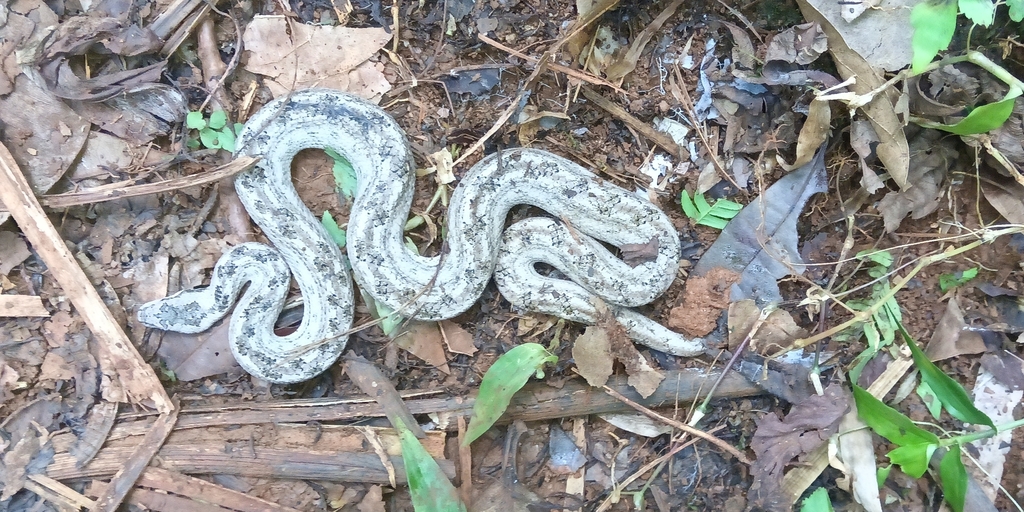
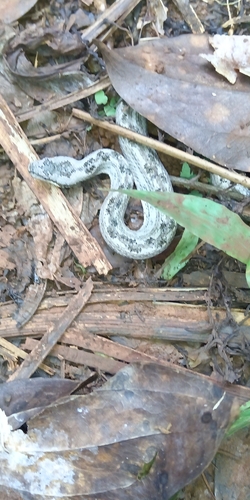
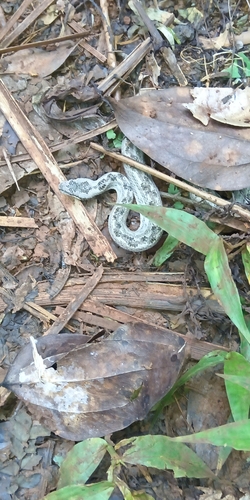
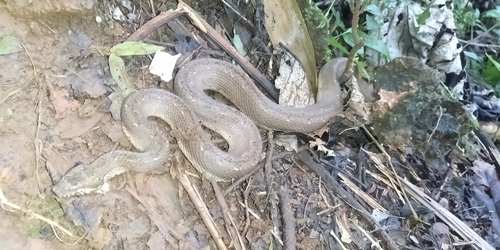
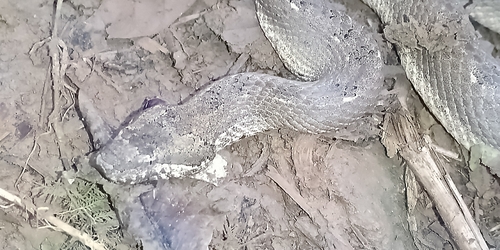
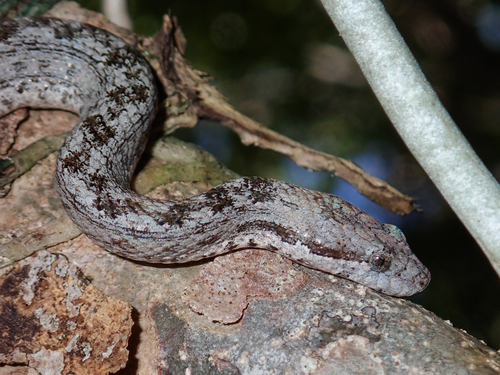
6 photographs of the Cuban Dwarf Boa. © Francesco Cecere.
The Cuban Dwarf Boa (Tropidophis melanurus) is a non-venomous snake in the Tropidophiidae family, recorded in 3 countries.
- Family
- Tropidophiidae
About the Cuban Dwarf Boa
Tropidophis melanurus, commonly known as the dusky dwarf boa, Cuban wood snake, or Cuban giant dwarf boa, is a nonvenomous dwarf boa species endemic to Cuba. There are three subspecies that are recognized as being valid, including the nominate subspecies described here.
Description
Adults of T. melanurus grow to an average of 32 to 39 inches (81 to 99 cm) in total length (including tail).
Geographic range
T. melanurus is found in Cuba, as well as on some nearby islands, Cayos de San Felipe (Cayo Real), and Isla de la Juventud. The type locality given is "l'île de Cuba."
Habitat
The preferred natural habitat of T. melanurus is forest.
Diet
T. melanurus preys upon amphibians (frogs), reptiles (lizards), birds, and mammals (rodents).
Reproduction
The mode of reproduction of T. melanurus is unclear: it has been described as oviparous, and as ovoviviparous.
Subspecies
Etymology
The subspecific name, ericksoni, is in honor of Edwin B. Erickson who assisted Schwartz in fieldwork in 1957.
Adapted from Wikipedia, available under CC BY-SA.
Frequently asked: Cuban Dwarf Boa
- Is the Cuban Dwarf Boa venomous?
- No. The Cuban Dwarf Boa (Tropidophis melanurus) is non-venomous and is not considered dangerous to humans. Like most snakes, it will retreat rather than bite when given the chance.
- Is the Cuban Dwarf Boa poisonous?
- Snakes are venomous, not poisonous. "Poisonous" means harmful to eat or touch; "venomous" means injecting toxins through a bite. The Cuban Dwarf Boa is neither poisonous nor venomous.
- Is the Cuban Dwarf Boa dangerous?
- The Cuban Dwarf Boa is not dangerous to humans. It has no medically significant venom and bites only defensively if cornered or handled.
- Where does the Cuban Dwarf Boa live?
- The Cuban Dwarf Boa has verified records in 3 countries, including Cuba, Cayman Islands, United States of America. See the distribution section below for its full range.
- What does the Cuban Dwarf Boa eat?
- T. melanurus preys upon amphibians (frogs), reptiles (lizards), birds, and mammals (rodents).
- Why is it called the Cuban Dwarf Boa?
- The subspecific name, ericksoni, is in honor of Edwin B. Erickson who assisted Schwartz in fieldwork in 1957.
Where it is found
More Tropidophiidae snakes
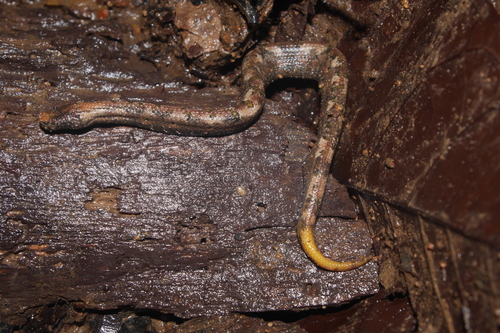 Northern Eyelash BoaTropidophis boulengeri
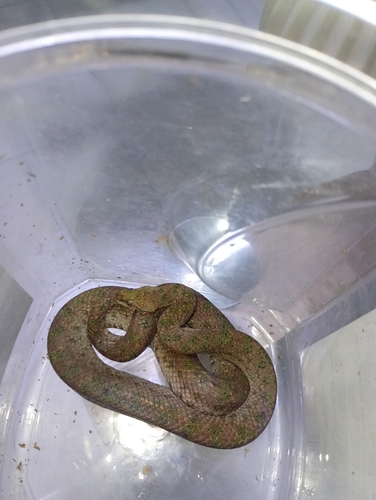 Haitian Dwarf BoaTropidophis haetianus
 Cayman Islands Dwarf BoaTropidophis caymanensis
 Northern Bahamas TropeTropidophis curtus
 Ambergris Cay Dwarf BoaTropidophis greenwayi
 Brazilian Dwarf BoaTropidophis paucisquamis
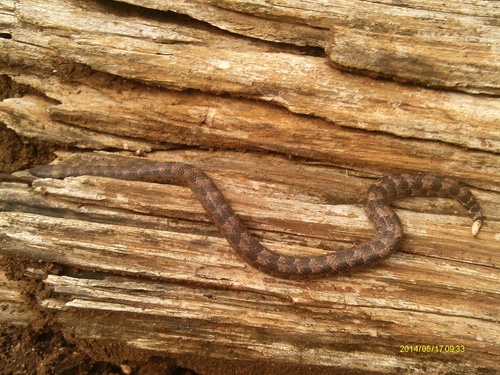 Spotted Brown TropeTropidophis pardalis
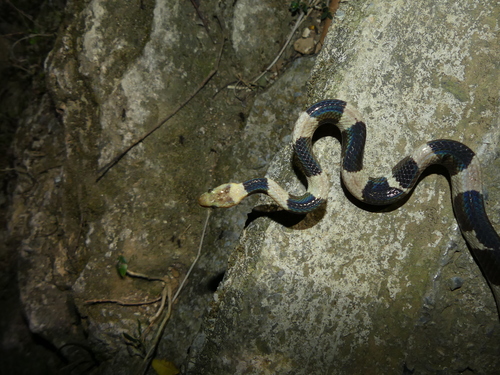 Feick's Dwarf BoaTropidophis feicki
Classification
How scientists group this snake, from the broadest category down to the exact species. Each step narrows to its closest relatives.
- OrderThe broad group of scaled reptiles: all snakes and lizards
- Squamata
- FamilyA group of related snakes that share key traits
- Tropidophiidae
- GenusA close-knit group of very similar species
- Tropidophis
- SpeciesThis exact snake, named in the two-part scientific name
- Tropidophis melanurus
Keep learning
- What to Do If You Find a SnakeFound a snake at home or on a trail? Here is how to stay calm, give it space, identify it safely, and know when to call a professional.
- Venomous vs Nonvenomous: How to Tell the DifferenceThe folk rules for telling venomous snakes apart, where each one fails, and why location-based identification beats guessing by sight.
- What Is a Snake? Anatomy and the BasicsA clear overview of what makes a snake a snake: limbless body plan, anatomy, evolution from lizards, species diversity, and why they are ectothermic.
- How to Keep Snakes Out of Your Yard and HomeA practical guide to keeping snakes out of your yard and home using habitat changes that work, plus what to skip and what to do if one shows up.
Distribution from GBIF & iNaturalist. Venom status per CDC. Background: Wikipedia. Informational only. Never handle a snake to identify it.