
Regional field guide
Snakes in Pennsylvania
20+ snake species have verified records in Pennsylvania, including 3 venomous. Pick your county below to see exactly which snakes live near you.
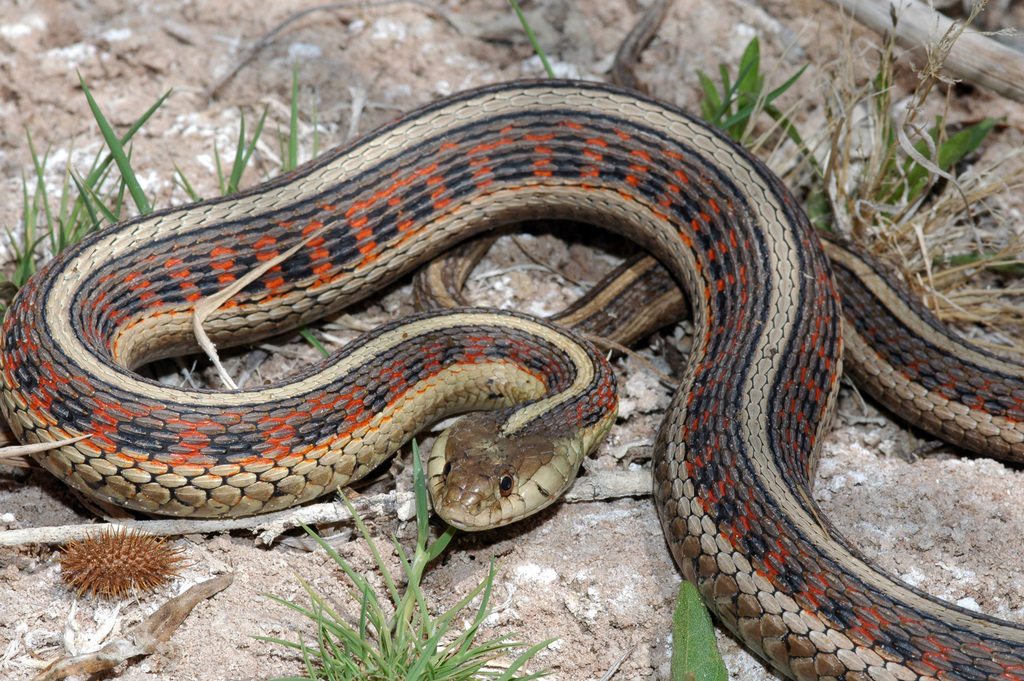
Snakes of Pennsylvania
Pennsylvania is home to about 23 native snake species, of which only 3 are venomous. The great majority of snakes across the Keystone State are harmless and present no danger to people. From farm country to the deep forests of the northern tier, the snakes you are most likely to encounter are shy, non-venomous species that prefer to slip away rather than stand their ground.
Pennsylvania's snake diversity owes a lot to its Appalachian backbone. Long forested ridges, rocky outcrops, and hardwood forests give snakes the dens, basking spots, and prey they need, while river valleys, wetlands, and old fields broaden the mix. The state's range from warmer southeastern lowlands to cooler northern plateaus means species sort themselves across the landscape, with the richest snake life in the warmer, rockier south and center.
The 3 venomous species recorded in Pennsylvania are the Eastern Copperhead, the Timber Rattlesnake, and the Eastern Massasauga. The copperhead is the most widespread, favoring wooded hillsides and rocky slopes. The timber rattlesnake lives on remote forested ridges and is closely managed as a species of concern. The Eastern Massasauga is a small wetland rattlesnake clinging to a few isolated marshy sites in the west and is state-endangered. All three are uncommon and avoid people.
The snakes Pennsylvanians usually see are harmless: common garter snakes in gardens, the eastern ratsnake (black rat snake) in barns and woods, eastern milk snakes in fields and cellars, northern watersnakes along creeks and ponds (regularly mistaken for copperheads or cottonmouths), DeKay's brownsnake in towns, and ring-necked snakes under logs and rocks. Snakebites are very rare in Pennsylvania, and most happen when someone tries to handle or kill a snake. Never assume a wild snake is safe to handle. For any bite, call Poison Control at 1-800-222-1222 or 911.
Venomous snakes in Pennsylvania
Most commonly seen
- Common Garter SnakeCommonly seen
- Common WatersnakeCommonly seen
- Timber RattlesnakeCommonly seen
- Ring-necked SnakeCommonly seen
- DeKay's BrownsnakeCommonly seen
- Eastern MilksnakeCommonly seen
- Gray RatsnakeCommonly seen
- Red-bellied SnakeCommonly seen
- QueensnakeCommonly seen
- Short-headed Garter SnakeCommonly seen
- Eastern RatsnakeCommonly seen
- Eastern CopperheadCommonly seen
Counties in Pennsylvania
67 listed- Adams12
- Allegheny17
- Armstrong12
- Beaver12
- Bedford13
- Berks12
- Blair13
- Bradford9
- Bucks9
- Butler16
- Cambria9
- Cameron10
- Carbon12
- Centre16
- Chester13
- Clarion11
- Clearfield14
- Clinton14
- Columbia11
- Crawford12
- Cumberland15
- Dauphin13
- Delaware9
- Elk10
- Erie13
- Fayette13
- Forest12
- Franklin14
- Fulton10
- Greene10
- Huntingdon15
- Indiana14
- Jefferson12
- Juniata7
- Lackawanna11
- Lancaster14
- Lawrence7
- Lebanon11
- Lehigh9
- Luzerne13
- Lycoming16
- Mc Kean9
- Mercer14
- Mifflin10
- Monroe14
- Montgomery13
- Montour7
- Northampton9
- Northumberland9
- Perry11
- Philadelphia7
- Pike12
- Potter8
- Schuylkill11
- Snyder6
- Somerset15
- Sullivan9
- Susquehanna9
- Tioga10
- Union11
- Venango16
- Warren12
- Washington11
- Wayne11
- Westmoreland14
- Wyoming15
- York10
Snakes in Pennsylvania: FAQ
- Are there venomous snakes in Pennsylvania?
- Yes. 3 venomous snake species have verified records in Pennsylvania, including Timber Rattlesnake, Eastern Copperhead, Eastern Massasauga. Most snakes in Pennsylvania, however, are harmless.
- How many snake species live in Pennsylvania?
- 20+ snake species have verified records in Pennsylvania, of which 3 are venomous.
- What is the most commonly seen snake in Pennsylvania?
- The Common Garter Snake is the most frequently reported snake in Pennsylvania, based on verified wildlife observations.
- What should I do if I see a venomous snake in Pennsylvania?
- Keep your distance and do not try to catch or kill it. Most bites happen when people handle or corner a snake. If someone is bitten, contact local emergency services or poison control immediately.