
Regional field guide
Snakes in New York
20+ snake species have verified records in New York, including 3 venomous. Pick your county below to see exactly which snakes live near you.
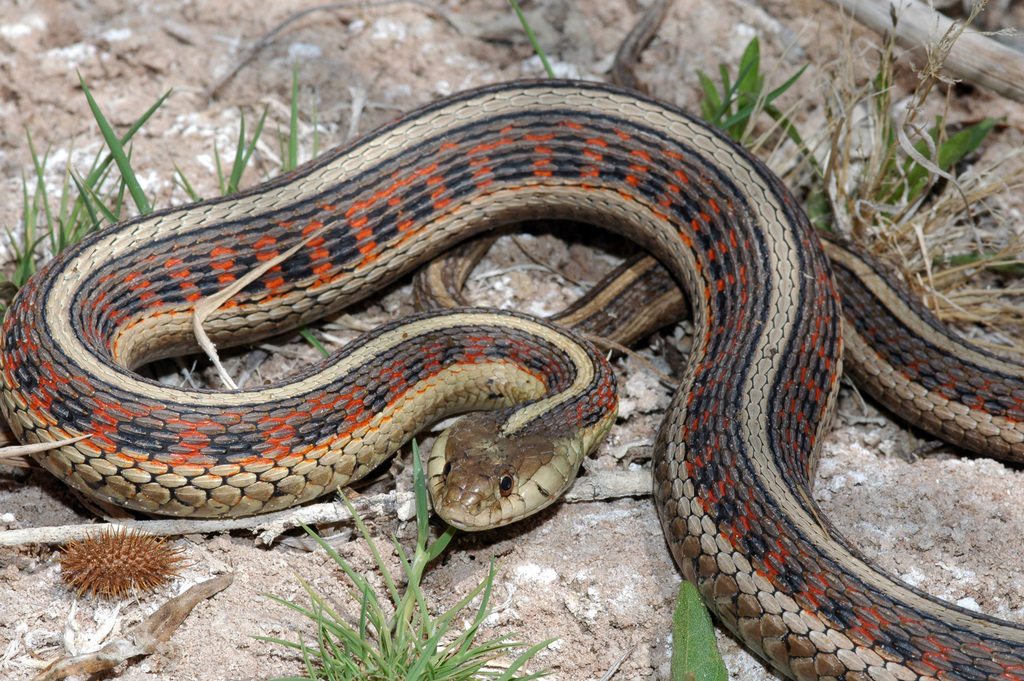
Snakes of New York
New York is home to roughly 24 native snake species, and only 3 of them are venomous. That means the overwhelming majority of snakes you will encounter across the state are completely harmless to people. From the suburbs of Long Island to the Adirondack foothills, most snakes you meet are shy, non-venomous animals that would rather flee than confront you. Knowing the small handful of venomous species, and how rarely they are seen, takes most of the fear out of a chance encounter.
New York's snake diversity is shaped by its varied terrain. The southern tier and Hudson Valley offer warmer, rockier hillsides and hardwood forests that suit more species, while the cooler climate of the Adirondacks and the far north limits how many snakes can survive there. Cold winters cap diversity across much of the state, so snakes concentrate in sun-warmed rock outcrops, old fields, wetland edges, and forest clearings where they can regulate body temperature.
The 3 venomous species recorded in New York are the Eastern Copperhead, the Timber Rattlesnake, and the Eastern Massasauga. The copperhead favors wooded hillsides and rocky slopes in the lower Hudson Valley and southern counties. The timber rattlesnake, once widespread, is now protected and rare, hanging on in scattered rocky, forested ridges. The Eastern Massasauga is a small wetland rattlesnake found in only a couple of protected marsh sites and is state-endangered. All three are uncommon and avoid people.
Far more often, New Yorkers see harmless snakes: common garter snakes in gardens, the eastern ratsnake (black rat snake) climbing trees and barns, eastern milk snakes in fields and basements, northern watersnakes along ponds and rivers (frequently mistaken for copperheads or cottonmouths), DeKay's brownsnake in city lots, and ring-necked snakes under logs. Snakebites are very rare in New York, and most that happen involve someone trying to handle or kill a snake. Never assume a wild snake is safe to handle. If a bite occurs, call Poison Control at 1-800-222-1222 or 911.
Venomous snakes in New York
Most commonly seen
- Common Garter SnakeCommonly seen
- Common WatersnakeCommonly seen
- Eastern MilksnakeCommonly seen
- DeKay's BrownsnakeCommonly seen
- Ring-necked SnakeCommonly seen
- Red-bellied SnakeCommonly seen
- Eastern RatsnakeCommonly seen
- Timber RattlesnakeCommonly seen
- North American RacerCommonly seen
- Western RatsnakeCommonly seen
- Eastern CopperheadCommonly seen
- Common Ribbon SnakeOften seen
Counties in New York
63 listed- Albany10
- Allegany10
- Bronx3
- Broome6
- Cattaraugus9
- Cayuga8
- Chautauqua8
- Chemung11
- Chenango5
- Clinton5
- Columbia9
- Cortland6
- Delaware7
- Dutchess13
- Erie12
- Essex8
- Franklin4
- Fulton4
- Genesee9
- Greene10
- Hamilton4
- Herkimer3
- Jefferson8
- Kings5
- Lake Ontario8
- Lewis6
- Livingston10
- Madison6
- Monroe8
- Montgomery3
- Nassau5
- New York3
- Niagara4
- Oneida6
- Onondaga9
- Ontario12
- Orange14
- Orleans4
- Oswego8
- Otsego4
- Putnam8
- Queens4
- Rensselaer7
- Richmond6
- Rockland13
- Saint Lawrence9
- Saratoga9
- Schenectady5
- Schoharie7
- Schuyler9
- Seneca5
- Steuben9
- Suffolk11
- Sullivan10
- Tioga10
- Tompkins13
- Ulster14
- Warren11
- Washington11
- Wayne4
- Westchester11
- Wyoming11
- Yates6
Snakes in New York: FAQ
- Are there venomous snakes in New York?
- Yes. 3 venomous snake species have verified records in New York, including Timber Rattlesnake, Eastern Copperhead, Eastern Massasauga. Most snakes in New York, however, are harmless.
- How many snake species live in New York?
- 20+ snake species have verified records in New York, of which 3 are venomous.
- What is the most commonly seen snake in New York?
- The Common Garter Snake is the most frequently reported snake in New York, based on verified wildlife observations.
- What should I do if I see a venomous snake in New York?
- Keep your distance and do not try to catch or kill it. Most bites happen when people handle or corner a snake. If someone is bitten, contact local emergency services or poison control immediately.