
Species spotlight
Russell's Viper Facts: A Leading Cause of Snakebite Deaths
Russell's viper is a leading cause of snakebite deaths across South Asia. Where it lives, its chain-link pattern, loud hiss, and why its bite is so dangerous.
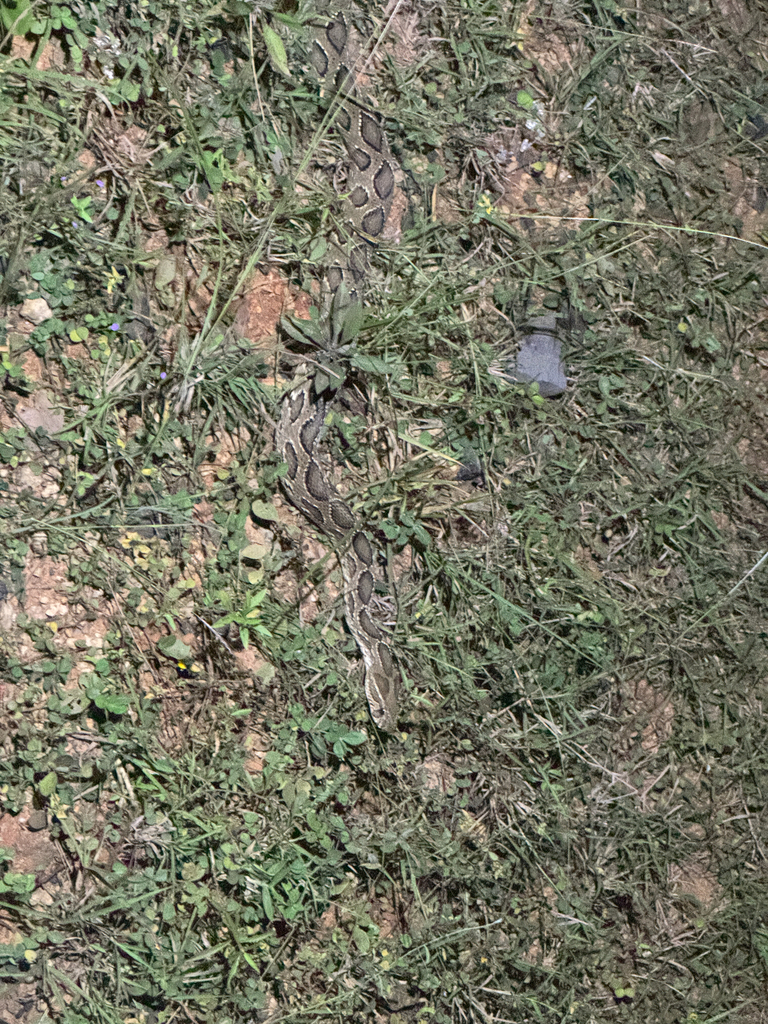
Russell's viper, Daboia russelii, is one of the most medically important snakes in the world. Across South Asia it is a leading cause of snakebite deaths, responsible for a large share of the region's fatal envenomations every year. It is a thick-bodied viper with a bold chain-link pattern, a loud hiss, and venom that attacks the blood and organs. It lives squarely in the farmland and grassland where people work, which is the heart of the problem.
Where Russell's viper lives
Russell's viper ranges across the Indian subcontinent, including India, Sri Lanka, Pakistan, Bangladesh, and Nepal. It favors open country: grassland, scrub, farm fields, and the brushy margins around villages, rather than dense forest. Explore the wider snake fauna of its range on our India snakes page and Sri Lanka snakes page.
Its preference for cultivated land is exactly why it is so dangerous to people. Rodents thrive in farms and grain stores, the rodents draw the vipers, and farm laborers cross paths with them constantly.
Size and appearance
Russell's vipers are stout and muscular, typically around 3 to 4 feet, occasionally larger. The head is broad, flattened, and triangular, clearly set off from the neck, with prominent raised nostrils and large eyes with vertical pupils.
The pattern is distinctive: a row of large dark brown oval blotches down the back, each ringed in black and then white, often joined into a chain-like band, set against a tan or brown ground color. Two more rows of smaller blotches run along the sides.
Venom and danger to people
Russell's viper venom is complex and dangerous. It disrupts blood clotting, damages tissue, and can cause kidney failure, internal bleeding, and a cascade of systemic effects. Bites are common, frequently severe, and a major driver of the snakebite crisis in rural South Asia. Antivenom is the definitive treatment, and early hospital care greatly improves the outcome.
This is a strongly defensive snake. When threatened it coils, inflates, and produces a hiss said to be among the loudest of any snake, then strikes hard and fast. Most bites occur when people step on a hidden snake in fields or grass, or reach blindly into cover. Treat it with maximum caution. See the deadliest snakes and most venomous snakes guides for context.
How to identify Russell's viper
In open country across South Asia, look for these features together:
- A stout, heavy body usually 3 to 4 feet long
- A broad triangular head distinct from the neck, with vertical pupils
- A row of large dark oval blotches ringed in black and white down the back
- A tan to brown base color, often in grassland or farm fields
- A loud, prolonged hiss and a tight defensive coil when threatened
The chain of black-and-white-ringed ovals is the clearest mark. Read the full Russell's viper profile for regional detail, or learn how to tell if a snake is venomous.
Notable facts
- It is among the leading causes of snakebite death in South Asia
- Its hiss is reported to be one of the loudest of any snake
- It is named after the naturalist Patrick Russell, who studied Indian snakes
- Its venom can cause kidney failure as well as bleeding
- It gives birth to live young, sometimes in large litters
Russell's viper is a public health problem as much as a wildlife one. Its danger is not aggression for its own sake but the deadly overlap of potent venom and the fields where people live and work. Awareness, footwear, and a light at night save lives in its range. Keep exploring on the snakes index or the snake venom explained guide.