
Snake basics
The Deadliest Snakes in the World (by Human Deaths)
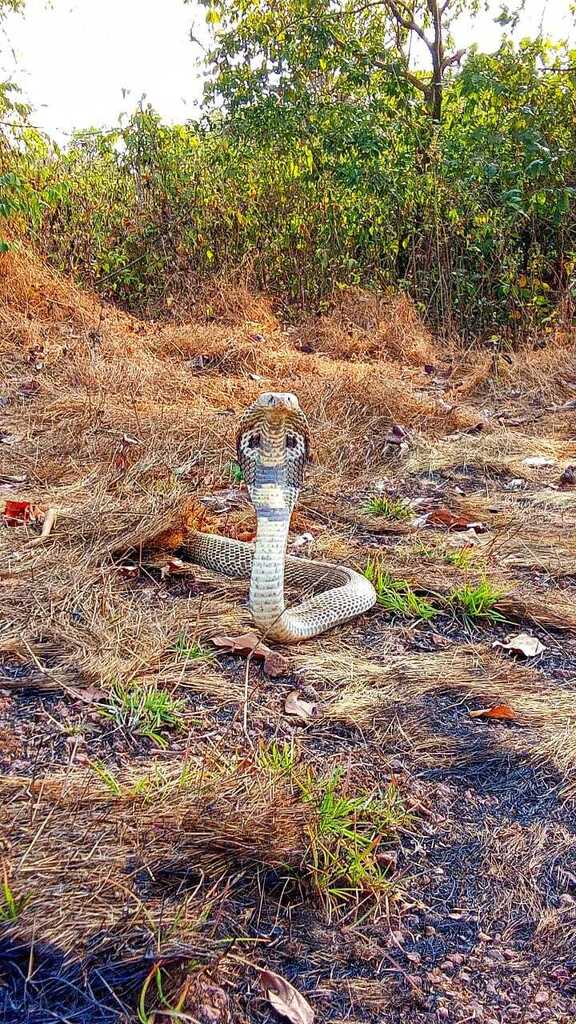
When people ask which snake is deadliest, they usually mean which venom is strongest. But the snakes responsible for the most human deaths are rarely the most toxic. They are ordinary, widespread, often bad-tempered species that share land with millions of farmers who have little access to antivenom. Understanding that gap, between lab toxicity and real-world body count, is the key to understanding which snakes actually matter.
Venom potency is not the same as danger
Lists of the world's most venomous snakes are ranked by something called LD50, a laboratory measure of how little venom it takes to kill in controlled tests. That number tells you about chemistry. It does not tell you how often a species meets people, how willing it is to bite, or whether a victim can reach treatment in time.
Real danger is a product of several things multiplied together: how toxic the venom is, how much the snake delivers, how often it encounters humans, how aggressive it is when disturbed, and how available medical care is. A snake can score extreme on toxicity and near zero on every other factor, which means it kills almost no one. The deadliest snakes win on the factors that have nothing to do with chemistry.
Why a few snakes account for most deaths
Global snakebite deaths run into the tens of thousands every year, and a small handful of species drive the majority of them. The pattern is consistent across continents. The biggest killers live where large numbers of people farm by hand, walk barefoot or in sandals, and sleep on or near the ground.
Three conditions stack up again and again. First, the snake's range overlaps heavily with dense rural and agricultural populations. Second, the species is active at the times and in the places where people are vulnerable, often at night or in fields and grain stores. Third, the region has limited access to antivenom, trained staff, and fast transport to a hospital. Where all three line up, deaths pile up regardless of how the venom ranks in a lab.
India's Big Four
India carries one of the heaviest snakebite burdens in the world, and most of it traces to four species known together as the Big Four: the saw-scaled viper, Russell's viper, the Indian cobra, and the common krait. None of them holds a record for the most potent venom on Earth, yet together they are linked to a large share of the country's deaths.
Their power comes from overlap with people. They live in and around the farmland, villages, and irrigated fields where hundreds of millions work and sleep. They are common, they are encountered constantly, and the medical system in many rural areas cannot always reach victims in time. Indian antivenom is formulated against these four for exactly that reason.
Saw-scaled viper and Russell's viper
The saw-scaled viper is small, but it may kill more people than any other snake. It is widespread across South Asia, the Middle East, and parts of Africa, it thrives in dry scrub and farmland, and it is notoriously irritable. When threatened it rubs its scales together to make a rasping warning and strikes readily. Its small size means people often fail to take it seriously, which makes the encounters worse.
Russell's viper is larger and one of the most feared snakes across South and Southeast Asia. It hides in crops and grassland where farmers reach in by hand, and it delivers a serious dose of venom that can cause severe bleeding, tissue damage, and kidney failure. Like the saw-scaled viper, its danger comes from constant contact with agricultural workers across an enormous range.
Indian cobra and common krait
The Indian cobra is the iconic hooded snake of the region and a major cause of fatal bites. It lives near villages and farms, often near rodents drawn to stored grain, which puts it close to homes and people. Its venom attacks the nervous system and can shut down breathing if a bite goes untreated.
The common krait is arguably the most insidious of the four. It is largely nocturnal and sometimes enters houses at night, and people are bitten while sleeping on the floor. The bite can be nearly painless at first, so victims may not realize how serious it is until paralysis sets in hours later. That delay, combined with night-time bites far from care, makes the krait especially deadly.
Africa's puff adder and carpet vipers
Across sub-Saharan Africa, the puff adder is one of the leading causes of serious and fatal bites. It is widespread, common, and relies on camouflage rather than flight. Instead of fleeing it lies still and well hidden in grass and on paths, so people step on it or right beside it. It is large, delivers a heavy dose of tissue-destroying venom, and lives close to where people walk and farm.
The carpet vipers, close relatives of Asia's saw-scaled viper, are major killers across the dry savanna belt of West and East Africa. They are abundant in farmland, quick to strike, and their venom interferes with blood clotting. In rural regions where antivenom supply is unreliable, carpet viper bites cause heavy losses among agricultural communities.
The lanceheads of Latin America
In Central and South America, the lanceheads of the genus Bothrops cause the bulk of dangerous snakebites. Species such as the fer-de-lance are common in agricultural and forested areas, hunt at night, and are easily disturbed by workers in plantations and fields. Their venom causes severe pain, swelling, bleeding, and tissue death that can lead to amputation or worse without prompt treatment.
Once again the story is overlap, not record-breaking toxicity. Lanceheads dominate the death toll across the region because they are everywhere people work the land, not because their venom outranks every other snake. They are the local version of the same pattern seen in Asia and Africa.
The inland taipan: extreme venom, almost no deaths
The inland taipan of Australia is often called the most venomous snake in the world by LD50. A single bite carries enough toxin to kill many adults on paper, and on chemistry alone it sits at the very top of every potency ranking.
Yet it has caused vanishingly few human deaths. It lives in remote, sparsely populated parts of inland Australia, it is shy and rarely encountered, and Australia has strong medical infrastructure and effective antivenom. Every factor that drives real-world deaths works in humanity's favor here. The inland taipan is the clearest proof that the most venomous snake and the deadliest snake are not the same thing.
Frequently asked
- What is the deadliest snake by human deaths?
- The saw-scaled viper is widely considered to cause more human deaths than any other snake. It is small but extremely common across South Asia, the Middle East, and parts of Africa, it is highly irritable, and it lives right alongside large farming populations with limited access to antivenom.
- Why isn't the most venomous snake the deadliest?
- Venom potency is measured in a lab and only describes the chemistry. Real-world deaths depend on how often a snake meets people, how readily it bites, how much venom it delivers, and whether victims can reach treatment. A snake with the strongest venom can kill almost no one if it lives somewhere remote and people rarely encounter it.
- What is the Big Four?
- The Big Four is the name for the four snakes responsible for most of India's snakebite deaths: the saw-scaled viper, Russell's viper, the Indian cobra, and the common krait. Indian antivenom is formulated to treat bites from all four because together they drive the largest share of the country's burden.
- Why are snakebite deaths concentrated in rural areas?
- The biggest killers live where their range overlaps with dense agricultural populations. People farm by hand, often go barefoot, and sleep near the ground, so encounters are frequent. These same regions tend to have limited antivenom supply and slow access to hospitals, so bites that would be survivable elsewhere become fatal.
- Is the inland taipan dangerous to people?
- By venom toxicity the inland taipan ranks at the very top, but it has caused almost no recorded human deaths. It lives in remote parts of inland Australia, is shy and rarely seen, and Australia has effective antivenom and strong medical care. It shows clearly that extreme venom does not equal a high death toll.
- How many people die from snakebite each year?
- Global snakebite deaths run into the tens of thousands every year, with a far larger number of survivors left with permanent injury or disability. A small group of common species in Asia, Africa, and Latin America accounts for most of those deaths.
Last reviewed June 22, 2026. Informational only, and not a substitute for professional medical or wildlife advice.