
Species spotlight
Green Anaconda Facts: The Heaviest Snake on Earth
The green anaconda is the heaviest snake on Earth, a giant aquatic constrictor of South America. Where it lives, how big it gets, and whether it is dangerous.
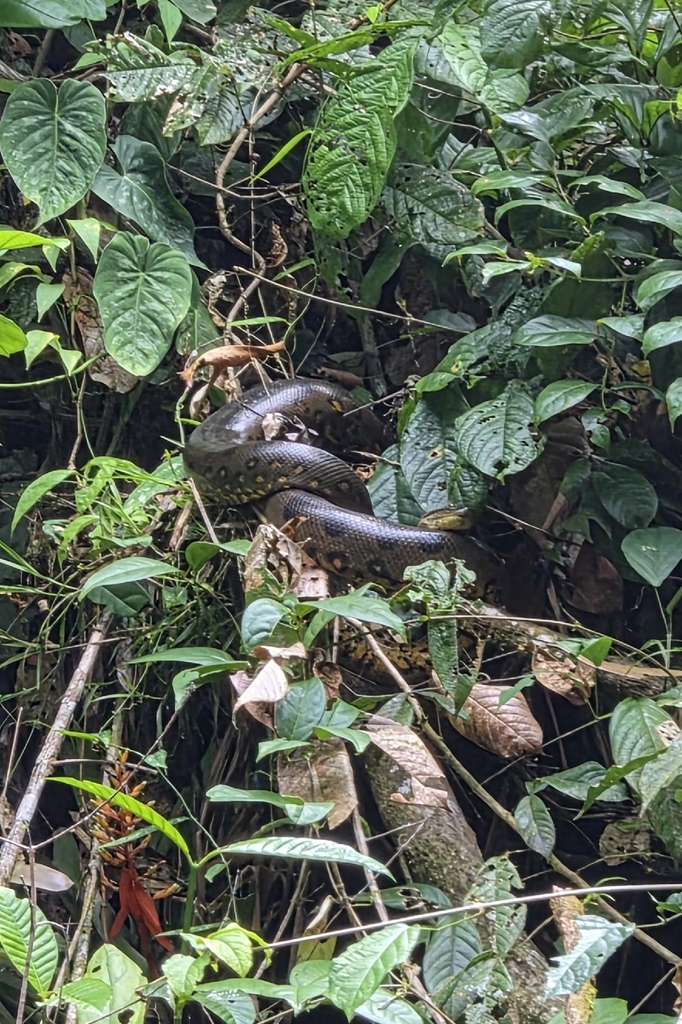
The green anaconda, Eunectes murinus, is the heaviest snake in the world. It does not grow as long as the reticulated python, but a big female is far bulkier, and a large anaconda can weigh more than a person. This is a water snake at heart, spending most of its life in the slow rivers, swamps, and flooded grasslands of tropical South America. It is non-venomous and kills by constriction, and despite its size it is far more shy than the stories suggest.
Where the green anaconda lives
Green anacondas live across the warm, low-lying parts of northern South America, east of the Andes. Their stronghold is the Amazon and Orinoco basins and the seasonal wetlands of the Llanos and Pantanal. You can read more about the snakes of their core range on our Brazil snakes page, Venezuela snakes page, and Colombia snakes page.
This snake is tied to water. It favors sluggish, muddy rivers, oxbow lakes, marshes, and flooded forest, where its weight is supported and it can ambush prey coming to drink. In the dry season it may shelter in mud or move to whatever water remains. On land its great mass makes it slow and awkward, so it rarely strays far from a river or pool.
Size and appearance
Adult green anacondas commonly run from about 10 to 17 feet, and exceptional females can be larger. Females are much bigger than males, one of the widest size gaps between the sexes of any snake. What sets the species apart is girth and mass: a heavy individual can be as thick as a grown person's thigh and weigh well over 150 pounds.
The color is olive to brownish green with two rows of dark, rounded blotches down the back and smaller markings along the sides. The eyes and nostrils sit high on top of the head, so the snake can lie almost completely submerged while still watching and breathing. To compare it with other giants, see our guide to the largest snakes.
Venom and danger to people
Green anacondas are non-venomous. They subdue prey by coiling and constricting, tightening with each breath the animal takes until circulation stops. Their diet is large for a snake: fish, caimans, capybaras, birds, deer, and other sizable animals.
Attacks on people are extremely rare, and the lurid tales of anacondas routinely swallowing humans are not supported by evidence. A large anaconda is still a powerful wild animal that can deliver a serious bite, so the danger is real if one is cornered, harassed, or handled. The sensible response to any large constrictor in the wild is distance, not contact. For how constrictors differ from venomous species, see venomous vs non-venomous snakes.
How to identify a green anaconda
In its range, sheer bulk is the first clue. Look for these features together:
- A very heavy, thick body that looks too big for its length
- Olive to dark green base color with two rows of large dark oval blotches
- Eyes and nostrils set high on top of a relatively small head
- Almost always in or right beside slow water
- Yellow and black markings on the underside of the tail
The most likely confusion is with other large South American snakes, but the anaconda's combination of huge girth, high-set eyes, and aquatic habits is distinctive. Browse the full green anaconda profile for its detailed range and behavior.
Notable facts
- It is the heaviest snake in the world by mass, though not the longest
- Females can be several times heavier than males
- It gives birth to live young rather than laying eggs, sometimes dozens at a time
- It can stay submerged for many minutes while waiting in ambush
- Newborns are already a couple of feet long and fully able to hunt
For all its fearsome reputation, the green anaconda is a secretive ambush predator that wants nothing to do with people. The real story is its scale and its mastery of the water, not the monster of legend. If you want to keep exploring giants and the species that share its rivers, start with the snakes index or the most venomous snakes guide for contrast.