
Snake basics
The Largest Snakes in the World
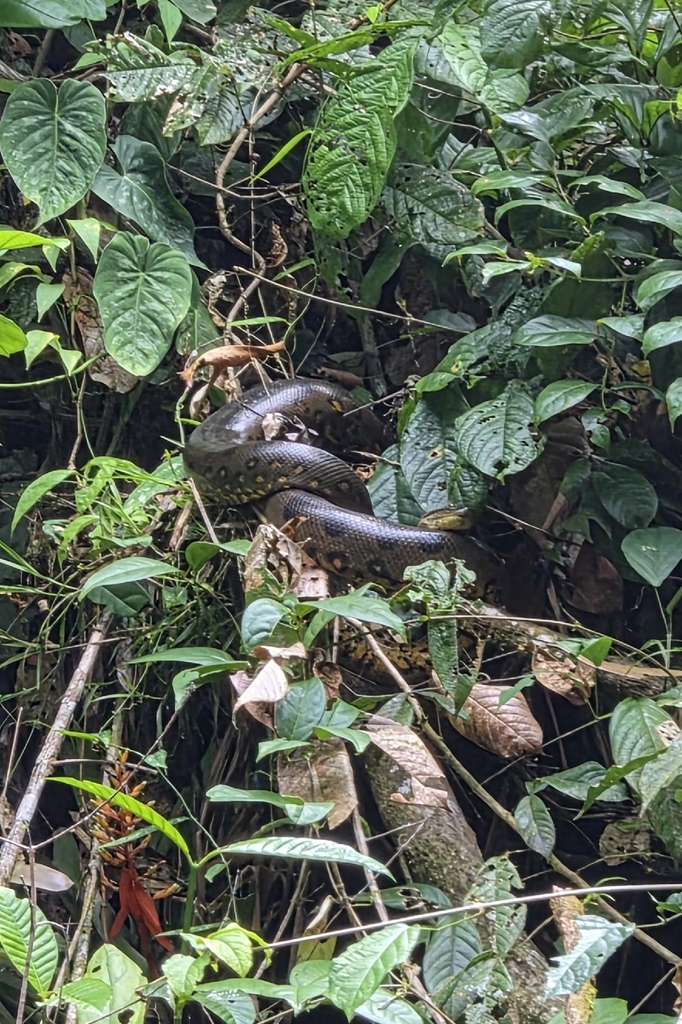
"Largest" means two different things for snakes: longest and heaviest, and the records belong to two different species. This guide covers the true size ranges of the biggest snakes alive today, where they live and what they eat, and why so many reported lengths fall apart under scrutiny. We also look back at Titanoboa, the prehistoric giant that dwarfs everything slithering today.
Longest vs heaviest: two different records
There is no single "biggest" snake, because length and weight peak in different animals. The reticulated python is the longest snake in the world, while the green anaconda is the heaviest and most massively built.
A long snake can still be relatively slender, and a shorter snake can carry far more bulk. The anaconda's thick, muscular body and aquatic lifestyle let it reach weights no reticulated python matches at the same length.
Keeping these two records separate is the key to reading size claims honestly. When a source says a snake is the "largest," the useful question is whether it means longest or heaviest.
Reticulated python: the longest snake
The reticulated python (Malayopython reticulatus) of South and Southeast Asia is the longest snake on Earth. Adults commonly reach 4 to 6 meters (about 13 to 20 feet), and well-documented individuals can exceed 6 to 7 meters.
The most reliable record specimen, a captive snake named Medusa, measured about 7.67 meters (just over 25 feet). Verified wild measurements above 7 meters are rare, and most claims near or beyond 9 meters are unconfirmed or mismeasured.
These pythons are strong swimmers and adaptable, living in rainforest, grassland, and even near human settlements. They are non-venomous constrictors that kill by coiling and cutting off blood flow.
Green anaconda: the heaviest snake
The green anaconda (Eunectes murinus) of South America is the heaviest and bulkiest snake in the world. Large females typically reach 4 to 5 meters (13 to 17 feet) and can weigh 70 to 100 kilograms or more.
Anacondas rarely match the reticulated python for length, but their girth is in another class. A big anaconda can be as thick as a grown person's torso, supported by the buoyancy of the swamps and slow rivers it lives in.
Females are much larger than males, which is normal for giant snakes. The anaconda hunts from the water, ambushing prey at the surface and dragging it under.
Burmese, African rock, and scrub pythons
Several other giants round out the list. The Burmese python (Python bivittatus) of Southeast Asia reaches about 4 to 5 meters and is heavily built, second only to the anaconda in bulk among common giants. It is also the species now established as an invasive predator in the Florida Everglades.
The African rock python (Python sebae) is Africa's largest snake, commonly 4 to 5 meters and occasionally larger, with a reputation for an aggressive temperament.
The amethystine or scrub python (Morelia / Simalia species) of Australia and New Guinea is the longest snake in Australia, typically 3 to 4 meters and sometimes reaching about 5 meters, though it is far more slender than the pythons above.
King cobra: the longest venomous snake
The king cobra (Ophiophagus hannah) of South and Southeast Asia is the longest venomous snake in the world. Adults usually measure 3 to 4 meters (10 to 13 feet), and exceptional individuals approach 5.5 meters (about 18 feet).
It is long but not heavy, and it does not compete with the giant constrictors on mass. Its claim to fame is the combination of size and potent venom delivered in large volume.
The name reflects its diet: it preys mainly on other snakes. Despite its fearsome reputation, the king cobra is generally shy and avoids people when it can.
Titanoboa: the extinct giant
No living snake comes close to Titanoboa cerrejonensis, which lived in what is now Colombia about 58 to 60 million years ago. Estimates from fossil vertebrae put its length at roughly 12 to 13 meters (about 40 to 42 feet) and its weight above 1,000 kilograms.
That makes Titanoboa more than twice the length of a large anaconda and many times its weight. Its size is thought to reflect a warmer climate, since large cold-blooded animals depend on high ambient temperatures.
Titanoboa is a useful benchmark: it shows what a truly enormous snake looks like, and it makes clear how exaggerated some modern "40-foot snake" claims really are.
How big do they really get vs the hype
Reported snake lengths are routinely inflated. Skins stretch during removal and can add a meter or more, photos use forced perspective, and eyewitness estimates of a thrashing snake are notoriously unreliable.
For more than a century, a cash reward has stood for a verified snake over 30 feet (about 9.1 meters), and it has never been claimed. That unclaimed prize is strong evidence that genuine snakes beyond roughly 7 to 8 meters are at best vanishingly rare.
A practical rule: trust measurements taken on a restrained or dead snake with a tape, and treat any figure based on a shed skin, a photo, or a story as likely too high.
Where they live and what they eat
The giant constrictors cluster in warm, wet regions: reticulated and Burmese pythons in Southeast Asia, the green anaconda in tropical South America, and the African rock python across sub-Saharan Africa. Water and warmth support the metabolism a large body needs.
All of the giant constrictors are ambush hunters that kill by constriction, not venom. They eat mammals and birds sized to their own bulk, from rodents and monkeys up to deer, pigs, and caimans for the largest individuals.
Large snakes eat infrequently and can go weeks or months between meals after a big kill. Attacks on humans are extremely rare and usually involve the very largest pythons or anacondas.
Frequently asked
- What is the largest snake in the world?
- It depends on how you measure. The reticulated python is the longest, reliably exceeding 6 to 7 meters, while the green anaconda is the heaviest and bulkiest, weighing 70 to 100 kilograms or more.
- How long can a reticulated python get?
- Adults are commonly 4 to 6 meters, and well-documented individuals exceed 6 to 7 meters. The best-verified record is about 7.67 meters (just over 25 feet). Claims beyond 9 meters are unconfirmed.
- Which snake is heavier, the anaconda or the python?
- The green anaconda is heavier. Even though a reticulated python can be longer, the anaconda's far greater girth makes it the most massive snake alive, often 70 to 100 kilograms or more.
- What was Titanoboa and how big was it?
- Titanoboa was an extinct snake that lived about 58 to 60 million years ago in present-day Colombia. Fossils suggest a length of roughly 12 to 13 meters and a weight over 1,000 kilograms, far larger than any living snake.
- Are reports of 30-foot or 40-foot snakes real?
- Almost never. Lengths are inflated by stretched skins, forced-perspective photos, and unreliable eyewitness estimates. A long-standing cash reward for a verified snake over 30 feet has never been claimed.
- What is the longest venomous snake?
- The king cobra, which usually measures 3 to 4 meters and can approach 5.5 meters. It is long rather than heavy, and it preys mainly on other snakes.
Last reviewed June 22, 2026. Informational only, and not a substitute for professional medical or wildlife advice.