
Species spotlight
Boomslang Facts: Africa's Deadly Tree Snake
The boomslang is a slender African tree snake with potent hemotoxic venom and huge eyes. Where it lives, how to identify it, and why its bite is so dangerous.
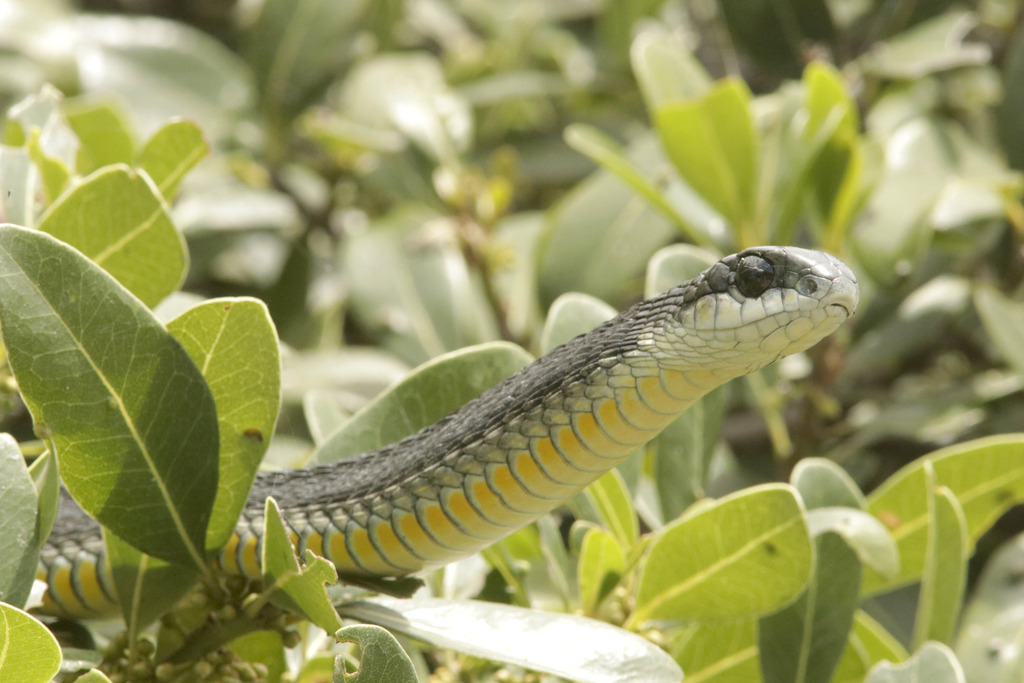
The boomslang, Dispholidus typus, is a slender, large-eyed tree snake of sub-Saharan Africa. For years it was dismissed as harmless because it is rear-fanged and shy, until its venom proved otherwise. The boomslang carries a potent hemotoxin that interferes with blood clotting, and its danger was burned into herpetology when it killed the renowned snake expert Karl Patterson Schmidt in 1957 after a bite he first judged minor.
Where the boomslang lives
Boomslangs range widely across sub-Saharan Africa, from savanna and bushveld to forest edges and wooded suburbs. They are common in much of southern and East Africa. You can explore the wider snake fauna of their range on our South Africa snakes page and Kenya snakes page.
As the Afrikaans name suggests, boomslang means tree snake. These are highly arboreal animals that hunt through canopy and shrubs for chameleons, other lizards, bird eggs, and nestlings. They come to the ground but are most at home above it.
Size and appearance
Boomslangs are long and thin, typically around 3 to 5 feet, occasionally longer. The head is short and almost egg-shaped, and the eyes are unusually large, giving the snake excellent binocular vision for judging distance among branches.
Color is highly variable and tied to sex and region. Adult males are often bright green, sometimes with black-edged scales, while females are commonly brown or olive. The keeled scales give the body a slightly rough, beaded look up close.
Venom and danger to people
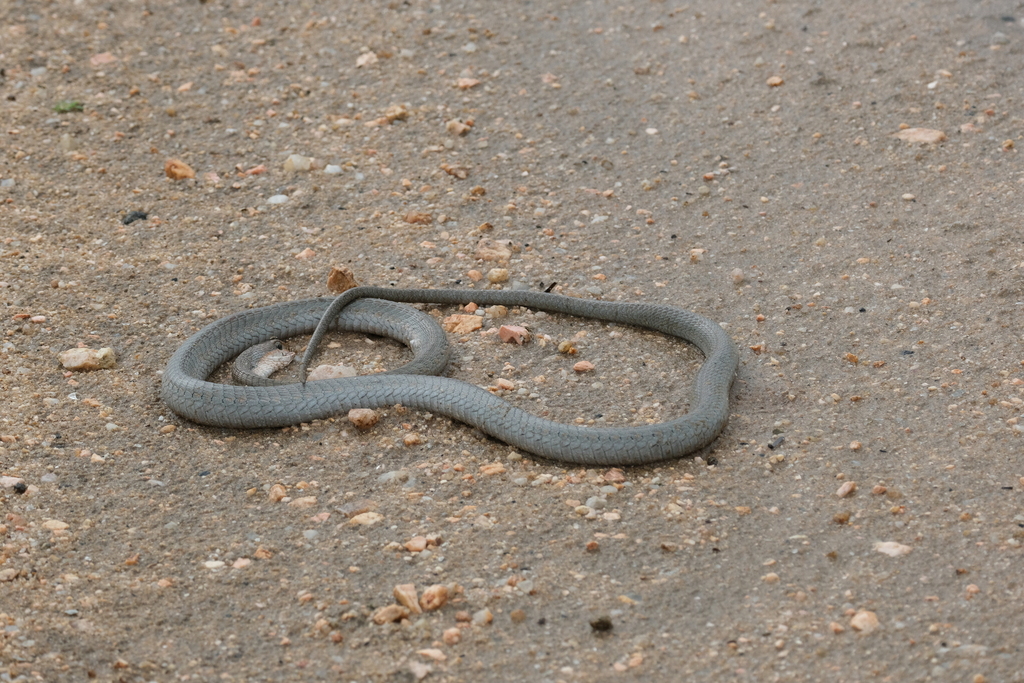
Boomslang venom is a powerful hemotoxin. It disrupts the body's clotting system, and a serious envenomation can cause bleeding from the gums, nose, and into the skin and internal organs, sometimes a day or more after the bite. The slow onset is the deepest danger, because an early-feeling-fine victim can deteriorate badly later, which is what happened to Karl Schmidt.
That said, boomslangs are placid and reluctant to bite. They are rear-fanged, so they must get a good chewing grip to deliver a meaningful dose, and the vast majority of bites happen to people who try to catch or handle them. Treated with respect and given space, a boomslang will flee or freeze, not attack. A specific antivenom exists and is the definitive treatment. See our overview of snake venom and the most venomous snakes for context.
How to identify a boomslang
Up in the branches, look for this combination:
- A long, very slender body that tapers to a thin tail
- A short, blunt head with exceptionally large eyes
- Keeled scales giving a rough, beaded texture
- Green in many males, brown or olive in many females
- Strongly arboreal habits, often draped in shrubs or trees
The big eyes and habitual tree-dwelling are the strongest clues, since few African snakes combine both. Read the detailed boomslang profile for regional color variation, or learn how to tell if a snake is venomous.
Notable facts
- The name boomslang is Afrikaans for tree snake
- It is rear-fanged yet capable of a medically serious, even fatal, bite
- Its venom killed herpetologist Karl Schmidt in 1957
- Symptoms can be dangerously delayed, sometimes by a full day
- Its large eyes give unusually good depth perception for a snake
The boomslang is a lesson in not judging a snake by its temperament. It is calm, beautiful, and important to its ecosystem, and also one of the few rear-fanged snakes whose bite demands real caution. Give it the distance it wants and it remains harmless. For more on Africa's dangerous species, see the deadliest snakes guide or the full snakes index.