
Threadsnake
Western Threadsnake
HarmlessRena humilis
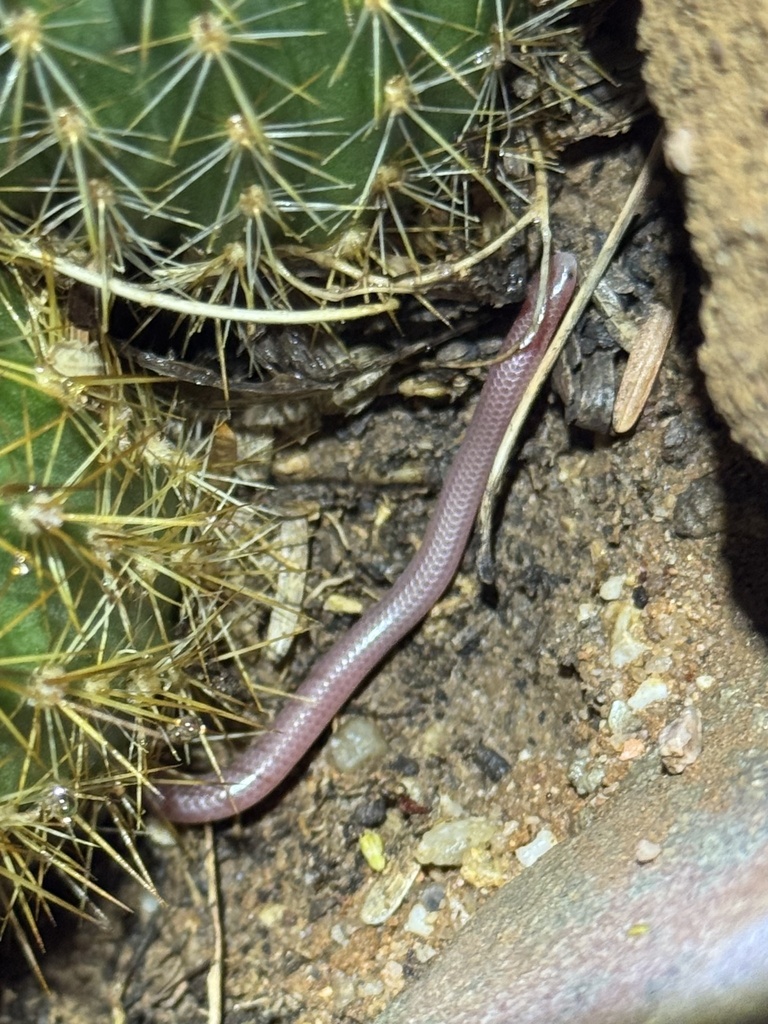
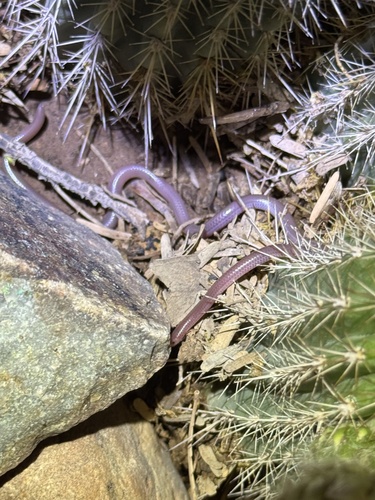
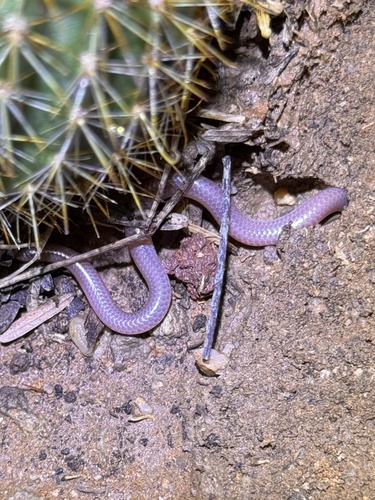
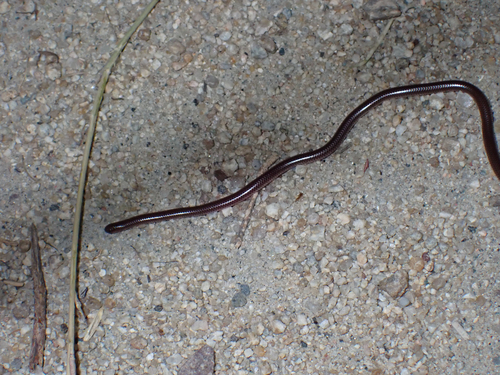
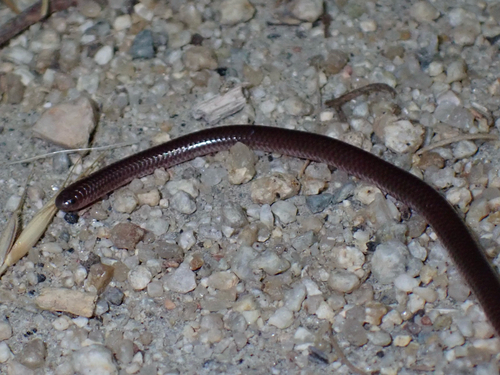
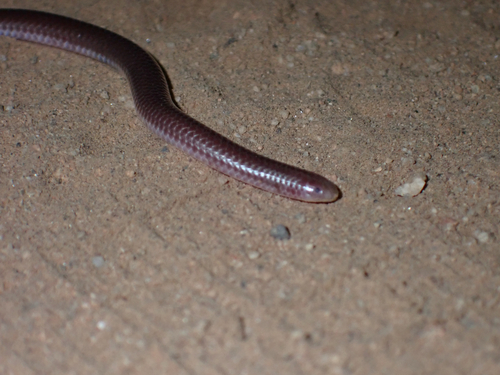
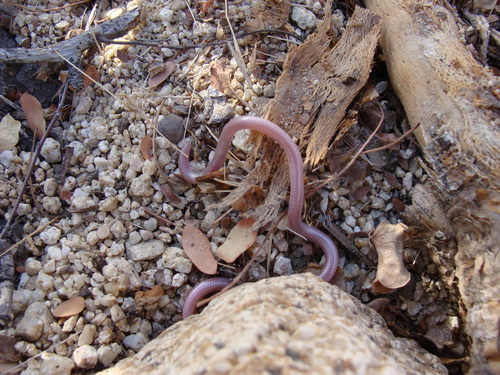
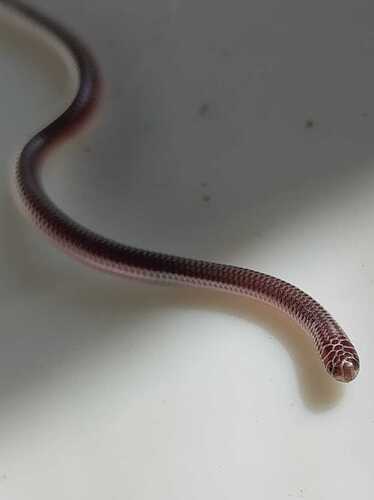
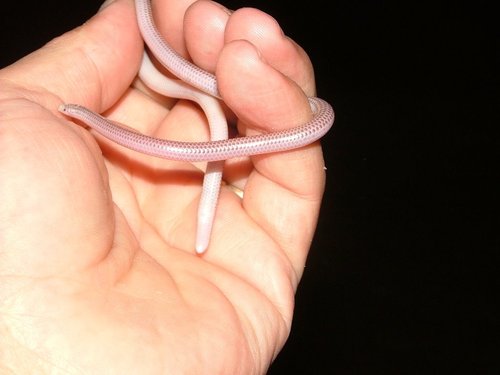
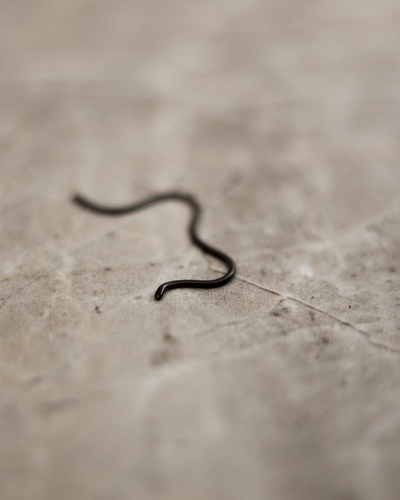
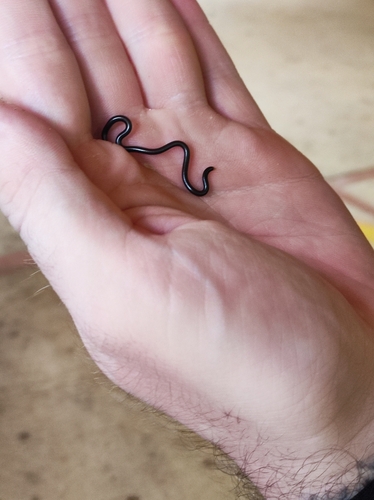
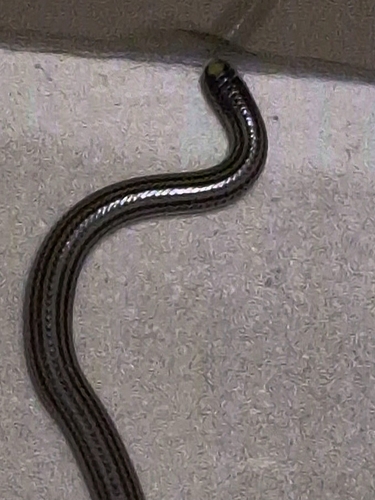
6 photographs of the Western Threadsnake. © Daniel McNair.
The Western Threadsnake (Rena humilis) is a non-venomous snake in the Leptotyphlopidae family, recorded in 2 countries.
- Also called
- Threadsnake
- Family
- Leptotyphlopidae
- Size
- Tiny and worm-like, 6–12 in.
- Habitat
- Underground in sandy or loose soils.
- Behavior
- Burrowers that raid ant and termite nests; almost never seen.
- Identify
- Looks like a shiny earthworm with vestigial eyes.
About the Western Threadsnake
Rena humilis, known commonly as the western blind snake, the western slender blind snake, and the western threadsnake, is a species of snake in the family Leptotyphlopidae. The species is native to the southwestern United States and northern Mexico. Six subspecies are recognized as being valid, including the nominate subspecies described here.
Description
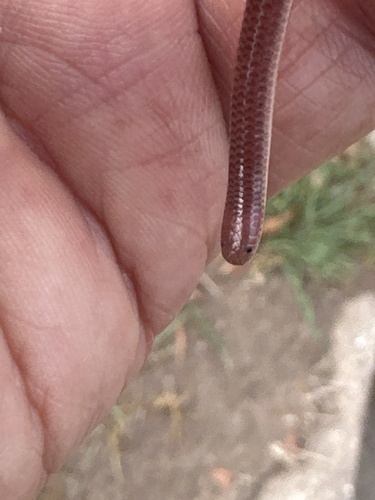
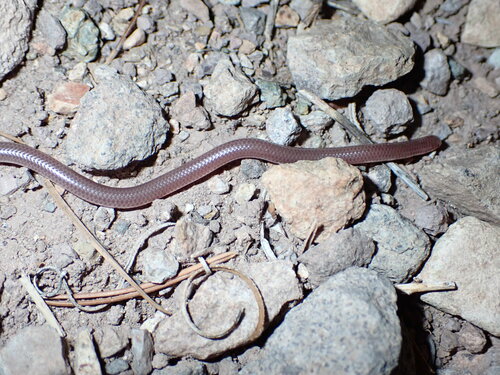
R. humilis, like most species in the family Leptotyphlopidae, resembles a long earthworm. It lives underground in burrows, and since it has no use for vision, its eyes are mostly vestigial. The western blind snake is pink, purple, or silvery-brown in color, shiny, wormlike, cylindrical, blunt at both ends, and has light-detecting black eyespots. The skull is thick to permit burrowing, and it has a spine at the end of its tail that it uses for leverage. It is usually less than 30 cm (12 in) in total length (tail included), and is as thin as an earthworm. This species and other blind snakes are fluorescent under low frequency ultraviolet light (black light).
On the top of the head, between the ocular scales, L. humilis has only one scale (L. dulcis has three scales).
Geographic range
R. humilis is found in the southwestern United States and northern Mexico. In the US it ranges from southwestern and Trans-Pecos Texas west through southern and central Arizona, southern Nevada, southwestern Utah, and southern California. In Mexico its distribution includes the Mexican states of Baja California, Sonora, Sinaloa, Nayarit, Jalisco, Colima, Chihuahua, Durango, Coahuila, Tamaulipas, and San Luis Potosí.
The type locality given is "Valliecitas, Cal." The type locality was restricted by Klauber (1931) to "vicinity of Vallecito, eastern San Diego County, California," and by Brattstrom (1953) to "the Upper Sonoran Life Zone of the Vallecito area".
Habitat and diet
R. humilis lives underground, sometimes as deep as 20 metres (66 ft), and is known to invade ant and termite nests. Its diet is made up mostly of insects and their larvae and eggs. It is found in deserts and scrub where the soil is loose enough for burrowing. The western threadsnake often forages within ant nests, consuming ant larvae and termites. Studies indicate that chemical secretions on its body surface help suppress ant aggression, allowing it to move through colonies unharmed (Bateman et al., 2010).
Subspecies
Adapted from Wikipedia, available under CC BY-SA.
Frequently asked: Western Threadsnake
- Is the Western Threadsnake venomous?
- No. The Western Threadsnake (Rena humilis) is non-venomous and is not considered dangerous to humans. Like most snakes, it will retreat rather than bite when given the chance.
- Is the Western Threadsnake poisonous?
- Snakes are venomous, not poisonous. "Poisonous" means harmful to eat or touch; "venomous" means injecting toxins through a bite. The Western Threadsnake is neither poisonous nor venomous.
- Is the Western Threadsnake dangerous?
- The Western Threadsnake is not dangerous to humans. It has no medically significant venom and bites only defensively if cornered or handled.
- Where does the Western Threadsnake live?
- The Western Threadsnake has verified records in 2 countries, including United States of America, Mexico. See the distribution section below for its full range.
- How do I identify the Western Threadsnake?
- Looks like a shiny earthworm with vestigial eyes.
- How big does the Western Threadsnake get?
- Tiny and worm-like, 6–12 in.
- What does the Western Threadsnake eat?
- R. humilis lives underground, sometimes as deep as 20 metres (66 ft), and is known to invade ant and termite nests. Its diet is made up mostly of insects and their larvae and eggs. It is found in deserts and scrub where the soil is loose enough for burrowing. The western threadsnake often forages within ant nests, consuming ant larvae and termites. Studies indicate that chemical secretions on its body surface help suppress ant aggression, allowing it to move through colonies unharmed (Bateman et al., 2010).
Where it is found
By U.S. state
More Leptotyphlopidae snakes
Classification
How scientists group this snake, from the broadest category down to the exact species. Each step narrows to its closest relatives.
- OrderThe broad group of scaled reptiles: all snakes and lizards
- Squamata
- FamilyA group of related snakes that share key traits
- Leptotyphlopidae
- GenusA close-knit group of very similar species
- Rena
- SpeciesThis exact snake, named in the two-part scientific name
- Rena humilis
Keep learning
- What to Do If You Find a SnakeFound a snake at home or on a trail? Here is how to stay calm, give it space, identify it safely, and know when to call a professional.
- Venomous vs Nonvenomous: How to Tell the DifferenceThe folk rules for telling venomous snakes apart, where each one fails, and why location-based identification beats guessing by sight.
- What Is a Snake? Anatomy and the BasicsA clear overview of what makes a snake a snake: limbless body plan, anatomy, evolution from lizards, species diversity, and why they are ectothermic.
- How to Keep Snakes Out of Your Yard and HomeA practical guide to keeping snakes out of your yard and home using habitat changes that work, plus what to skip and what to do if one shows up.
Distribution from GBIF & iNaturalist. Venom status per CDC. Background: Wikipedia. Informational only. Never handle a snake to identify it.