
Leptotyphlopidae
Vindum's Worm Snake
HarmlessEpictia vindumi
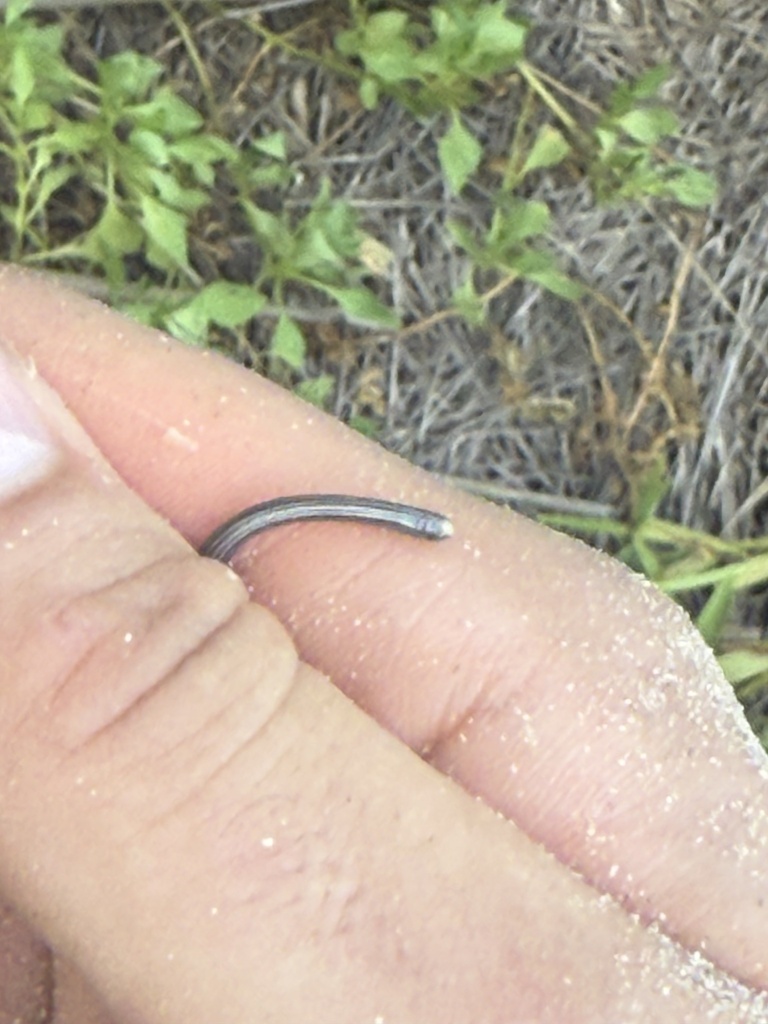
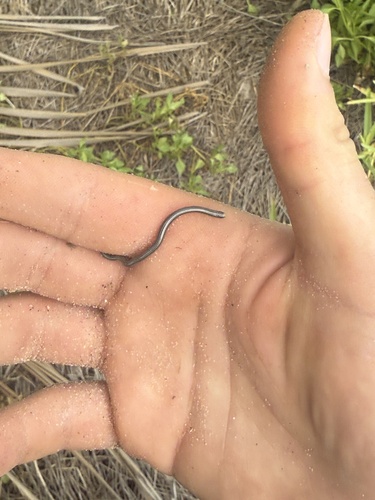
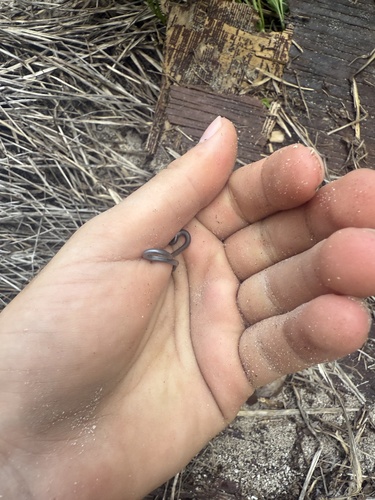
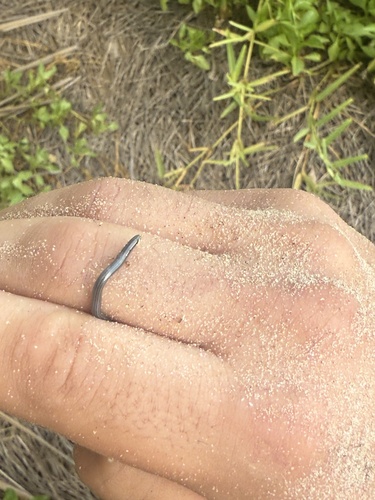
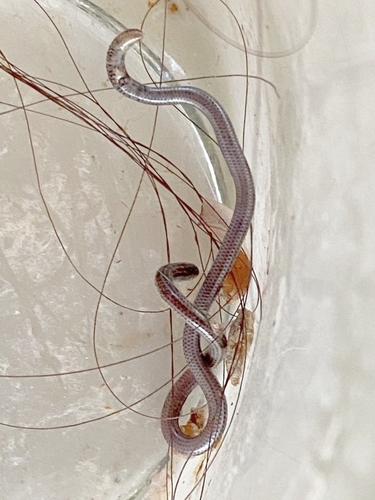
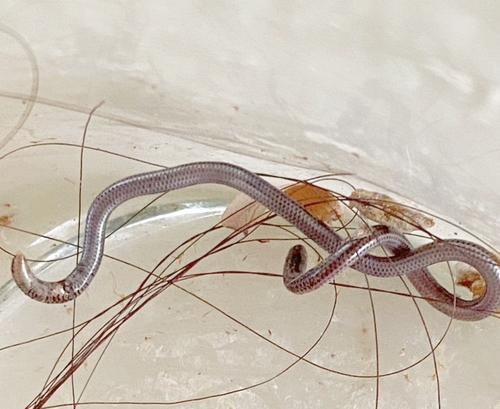
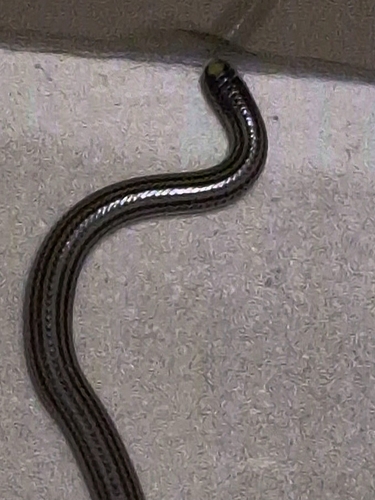
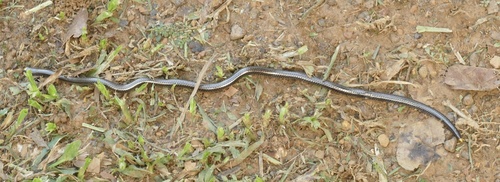
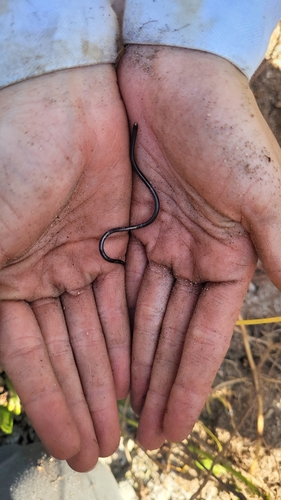
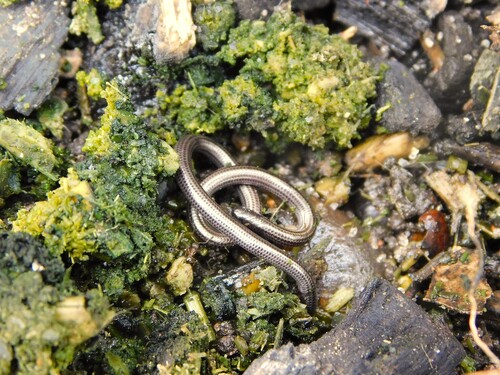
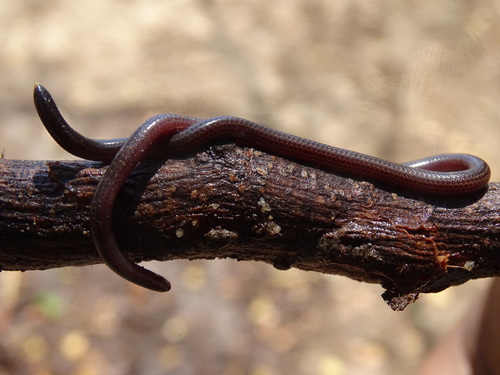
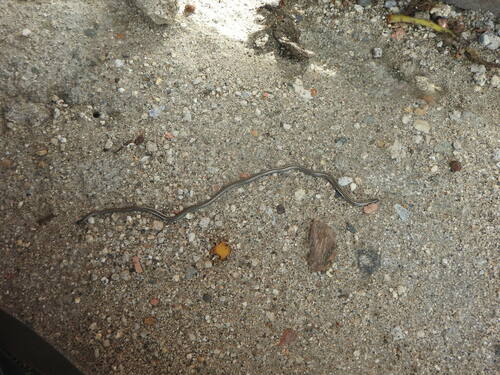
6 photographs of the Vindum's Worm Snake. © Parsa Fard.
The Vindum's Worm Snake (Epictia vindumi) is a non-venomous snake in the Leptotyphlopidae family, recorded in 1 country.
- Family
- Leptotyphlopidae
About the Vindum's Worm Snake
Epictia vindumi, or Vindum's worm snake, is a member of the family Leptotyphlopidae, whose species, as well as worm snakes, often are called slender blind snakes or thread snakes.
Description
As with most Epictia species, Epictia vindumi looks like a worm. The species is brown with yellowish stripes running its length, with a small yellow spot at the body's front end. The head is slightly wider than the neck. The snake's scale arrangement formula, often used by herpetologists to identify species, is 14–14–14, meaning that there are 14 rows of scales at the neck, 14 rows at the body's middle, and 14 rows at the tail area before the cloaca. To distinguish the species from similar ones, much more technical details must be noticed.
Distribution
Epictia vindumi is endemic just to the northern portion of Mexico's Yucatan Peninsula, in the states of Yucatán and Quintana Roo, at elevations of up to about 30 meters (~100 feet).
Habitat
Epictia vindumi is described as occurring in low, scrubby forest dominated by thorny trees belonging to the bean or legume family, the Fabaceae.
The picture on this page is of an individual unearthed by gardeners moving rocks on the grounds of an old hacienda in Yucatán state.
All members of the family Leptotyphlopidae have been described as subterranean and nocturnal. However, a recent study found that Epictia munoai of South America was active under rocks during the hottest periods of the day.
Taxonomy
Snakes of the family Leptotyphlopidae, to which Epictia vindumi belongs, as well as those of four other families, form a clade, or infraorder, known as Scolecophidia. This grouping comprises the most ancient yet highly
specialized of snake species, dating back to the Jurassic Period, of about 155 million years ago.
The holotype of Epictia vindumi is a specimen collected by E. Wyllis Andrews in February, 1959, at the ruins of Chichén Itzá in Yucatán state. However, at that time the specimen wasn't recognized as a new species. In fact, Epictia vindumi is described from very similar specimens earlier given different names, in the genera Epictia, Leptotyphlops, Stenostoma and Glauconia.
Etymology
The genus name Epictia was first published by John Edward Gray in 1845. However, in that publication he doesn't explain the name's origin.
The species name vendumi honors Jens Vindum, Senior Collection Manager, Department of Herpetology, California Academy of Sciences, and commemorates his 35 years of service to the museum.
Adapted from Wikipedia, available under CC BY-SA.
Frequently asked: Vindum's Worm Snake
- Is the Vindum's Worm Snake venomous?
- No. The Vindum's Worm Snake (Epictia vindumi) is non-venomous and is not considered dangerous to humans. Like most snakes, it will retreat rather than bite when given the chance.
- Is the Vindum's Worm Snake poisonous?
- Snakes are venomous, not poisonous. "Poisonous" means harmful to eat or touch; "venomous" means injecting toxins through a bite. The Vindum's Worm Snake is neither poisonous nor venomous.
- Is the Vindum's Worm Snake dangerous?
- The Vindum's Worm Snake is not dangerous to humans. It has no medically significant venom and bites only defensively if cornered or handled.
- Where does the Vindum's Worm Snake live?
- The Vindum's Worm Snake has verified records in 1 country, including Mexico. See the distribution section below for its full range.
- Why is it called the Vindum's Worm Snake?
- The genus name Epictia was first published by John Edward Gray in 1845. However, in that publication he doesn't explain the name's origin. The species name vendumi honors Jens Vindum, Senior Collection Manager, Department of Herpetology, California Academy of Sciences, and commemorates his 35 years of service to the museum.
Where it is found
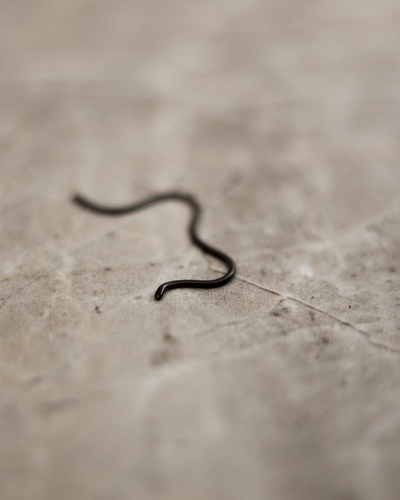
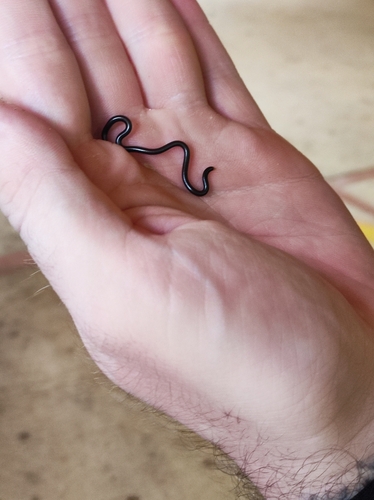
More Leptotyphlopidae snakes
Classification
How scientists group this snake, from the broadest category down to the exact species. Each step narrows to its closest relatives.
- OrderThe broad group of scaled reptiles: all snakes and lizards
- Squamata
- FamilyA group of related snakes that share key traits
- Leptotyphlopidae
- GenusA close-knit group of very similar species
- Epictia
- SpeciesThis exact snake, named in the two-part scientific name
- Epictia vindumi
Keep learning
- What to Do If You Find a SnakeFound a snake at home or on a trail? Here is how to stay calm, give it space, identify it safely, and know when to call a professional.
- Venomous vs Nonvenomous: How to Tell the DifferenceThe folk rules for telling venomous snakes apart, where each one fails, and why location-based identification beats guessing by sight.
- What Is a Snake? Anatomy and the BasicsA clear overview of what makes a snake a snake: limbless body plan, anatomy, evolution from lizards, species diversity, and why they are ectothermic.
- How to Keep Snakes Out of Your Yard and HomeA practical guide to keeping snakes out of your yard and home using habitat changes that work, plus what to skip and what to do if one shows up.
Distribution from GBIF & iNaturalist. Venom status per CDC. Background: Wikipedia. Informational only. Never handle a snake to identify it.