
Rattlesnake
Manantlán Long-tailed Rattlesnake
VenomousCrotalus lannomi
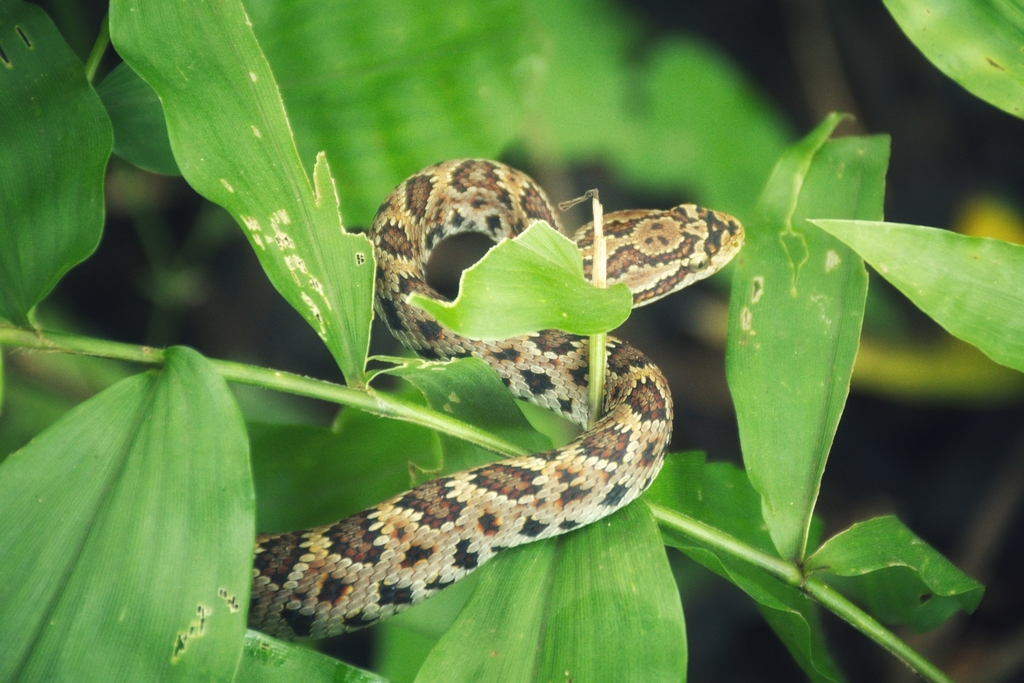
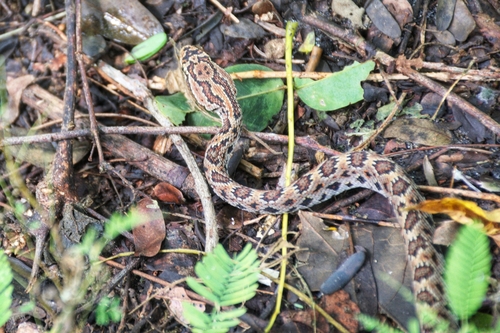
2 photographs of the Manantlán Long-tailed Rattlesnake. no rights reserved, uploaded by adel-fridus.
The Manantlán Long-tailed Rattlesnake (Crotalus lannomi) is a venomous snake in the Viperidae family.
If you are bitten
Rattlesnake bites are medically serious. Expect intense pain, rapid swelling, and bruising. Stay calm, keep the bitten limb still and roughly level with the heart, remove rings and tight clothing, and get to an emergency room immediately. Do NOT apply a tourniquet, cut the wound, apply ice, or try to suck out venom. Call Poison Control at 1-800-222-1222 or 911 in the US, or your local emergency number. (Source: CDC.)
- Also called
- Rattlesnake
- Family
- Viperidae
- Size
- Typically 2–5 ft; some species exceed 6 ft.
- Habitat
- Deserts, rocky outcrops, grasslands, and woodland edges, depending on species.
- Behavior
- Ambush predators that buzz the tail as a warning; mostly active in warm months and often crepuscular in summer heat.
- Identify
- Heavy body, broad triangular head, vertical (cat-like) pupils, and a segmented keratin rattle at the tail tip.
- Danger
- high
About the Manantlán Long-tailed Rattlesnake
Crotalus lannomi, known commonly as the Autlán rattlesnake, is a species of venomous snake, a pit viper in the family Viperidae. The species is endemic to southwestern Mexico. There are no subspecies that are recognized as being valid.
Etymology
The specific name, lannomi, is in honor of Joseph R. Lannom, Jr., who collected the type specimen.
Description
C. lannomi was described from a single specimen, a female 63.8 cm (25.1 in) in total length (including tail), presumed to have been an adult. The presence of some larger scales on top of its head and a longer tail are the traits Tanner (1966) suggested are primitive. Mostly on this basis, his opinion was that this species is most closely related to C. stejnegeri, though its head and body are not as slender as those of C. stejnegeri.
Geographic range
C. lannomi is found in western Mexico in the Mexican states of Colima and Jalisco. The type locality is "1.8 miles west of the pass, Puerto Los Mazos, or 22 miles west by road from the Río Tuxcacuesco, a branch of the Río América on Mexican Highway No. 80, Jalisco, Mexico".
Conservation status
The species C. lannomi is classified as Data Deficient on the IUCN Red List (v3.1, 2001). Species] are listed as such when information is inadequate to make a direct, or indirect, assessment of its risk of extinction based on its distribution and/or population status. It may be well studied, and its biology well known, but appropriate data on abundance and/or distribution are lacking. Data Deficient is therefore not a category of threat. Listing of taxa in this category indicates more information is required and acknowledges the possibility that future research will show a threatened classification is appropriate. It is important to make positive use of whatever data are available. In many cases great care should be exercised in choosing between DD and a threatened status. If the range of a taxon is suspected to be relatively circumscribed, and a considerable period of time has elapsed since the last record of the taxon, threatened status may well be justified. The population trend was unknown when assessed in 2007.
Rediscovery
In July 2008, the Autlán rattlesnake was rediscovered in the foothills of Colima, Mexico.
Adapted from Wikipedia, available under CC BY-SA.
Local and regional names
The Manantlán Long-tailed Rattlesnake is known by these names across the regions where it lives:
- Chinese
- 奧特蘭響尾蛇
- English
- Autlan Rattlesnake
- Italian
- Crotalo di Autlán, Serpente a sonagli di Autlán
- Portuguese
- Cascavel-de-Autlán
- Spanish
- Cascabel Cola-larga de Autlán, Cascabel de Autlán, Víbora-cascabel de Autlán
Frequently asked: Manantlán Long-tailed Rattlesnake
- Is the Manantlán Long-tailed Rattlesnake venomous?
- Yes. The Manantlán Long-tailed Rattlesnake (Crotalus lannomi) is venomous and belongs to the Viperidae family (rattlesnake). Its bite is considered high risk to people. Treat any bite as a medical emergency.
- Is the Manantlán Long-tailed Rattlesnake poisonous?
- Snakes are venomous, not poisonous. "Poisonous" means harmful to eat or touch; "venomous" means injecting toxins through a bite. The Manantlán Long-tailed Rattlesnake is venomous, delivering venom through a bite.
- Is the Manantlán Long-tailed Rattlesnake dangerous?
- Rattlesnake bites are medically serious. Expect intense pain, rapid swelling, and bruising. Stay calm, keep the bitten limb still and roughly level with the heart, remove rings and tight clothing, and get to an emergency room immediately. Do NOT apply a tourniquet, cut the wound, apply ice, or try to suck out venom. Call Poison Control at 1-800-222-1222 or 911 in the US, or your local emergency number. (Source: CDC.)
- How do I identify the Manantlán Long-tailed Rattlesnake?
- Heavy body, broad triangular head, vertical (cat-like) pupils, and a segmented keratin rattle at the tail tip.
- How big does the Manantlán Long-tailed Rattlesnake get?
- Typically 2–5 ft; some species exceed 6 ft.
- Why is it called the Manantlán Long-tailed Rattlesnake?
- The specific name, lannomi, is in honor of Joseph R. Lannom, Jr., who collected the type specimen.
If you are bitten by the Manantlán Long-tailed Rattlesnake
Do
- Get away from the snake and stay calm. Most bites worsen when people panic or try again to handle the snake.
- Call 911 or Poison Control (1-800-222-1222) right away. Antivenom works best when given early.
- Note the time of the bite and, from a safe distance, the snake's color and pattern, a phone photo is enough. Do not chase it.
- Keep the bitten limb still and at roughly heart level. Sit or lie down and limit movement.
- Remove rings, watches, and tight clothing near the bite before swelling starts.
- Gently wash the bite with soap and water and cover it with a clean, dry dressing.
Do not
- Do not cut the wound or try to suck out the venom.
- Do not apply a tourniquet or ice.
- Do not drink alcohol or caffeine.
- Do not take aspirin or ibuprofen, they can worsen bleeding. Acetaminophen is safer for pain.
- Do not try to catch or kill the snake. A dead snake can still bite by reflex.
First-aid guidance adapted from the U.S. Centers for Disease Control and Prevention (CDC NIOSH), Venomous Snakes. Educational only; always follow the instructions of emergency responders.
More Viperidae snakes
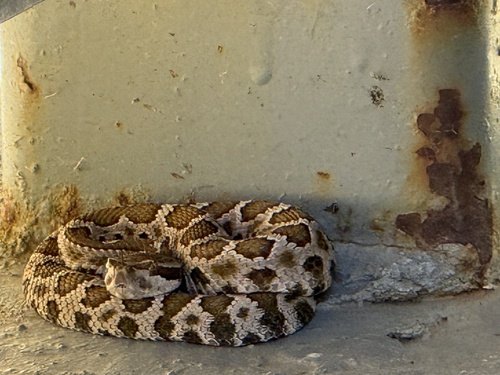 Western RattlesnakeCrotalus oreganus
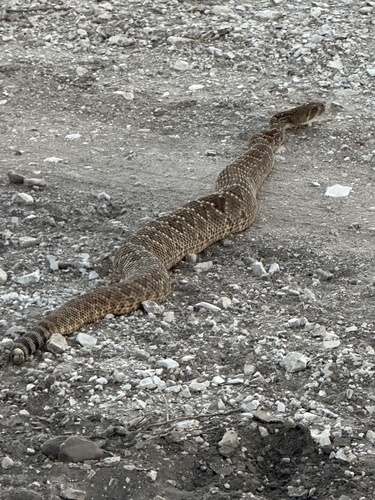 Western Diamond-backed RattlesnakeCrotalus atrox
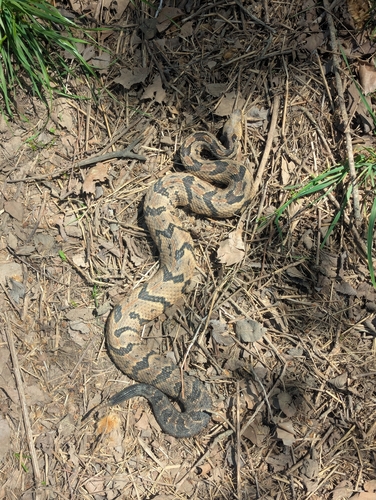 Timber RattlesnakeCrotalus horridus
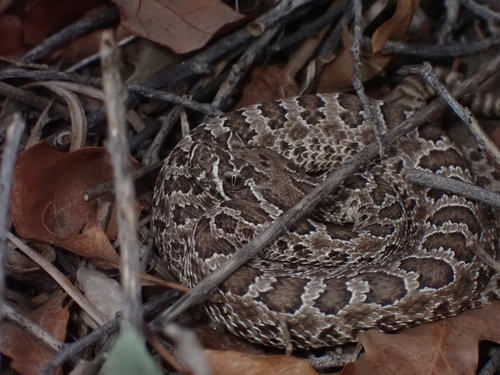 Prairie RattlesnakeCrotalus viridis
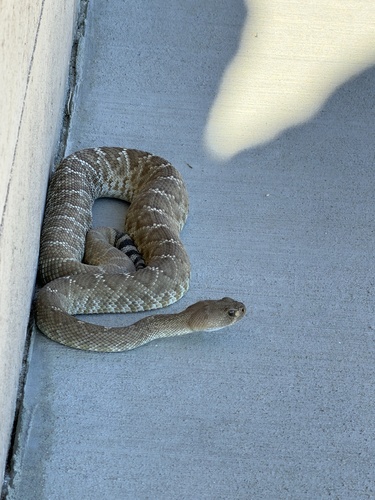 Red Diamond RattlesnakeCrotalus ruber
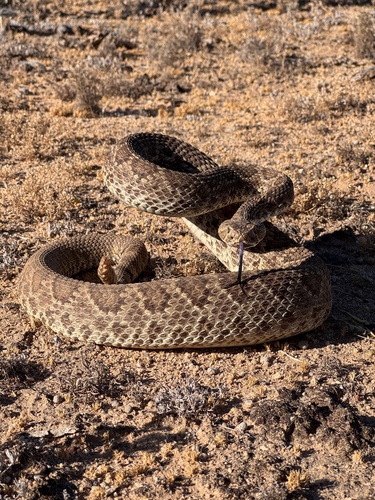 Mojave RattlesnakeCrotalus scutulatus
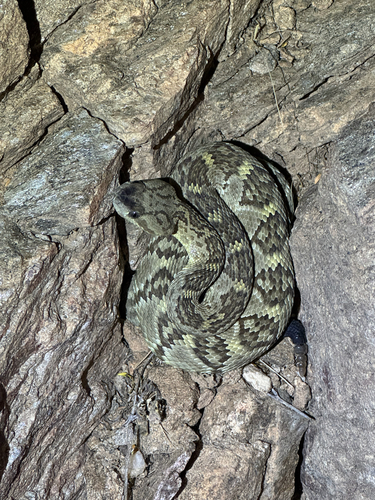 Western Black-tailed RattlesnakeCrotalus molossus
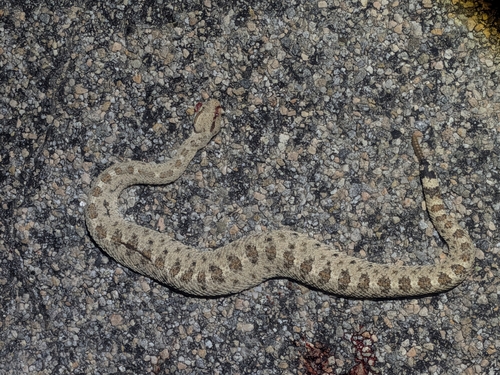 SidewinderCrotalus cerastes
Classification
How scientists group this snake, from the broadest category down to the exact species. Each step narrows to its closest relatives.
Keep learning
- Are Snakes Dangerous? The Real Risk, in PerspectiveMost snakes are harmless and avoid people. Here is the honest picture of snakebite risk worldwide and how to lower your own.
- Snakebite First Aid: What to Do (and What Never to Do)A clear, CDC-based guide to snakebite first aid: the steps that help, the popular myths that hurt, and how to tell a serious bite from a minor one.
- Venomous vs Nonvenomous: How to Tell the DifferenceThe folk rules for telling venomous snakes apart, where each one fails, and why location-based identification beats guessing by sight.
- What to Do If You Find a SnakeFound a snake at home or on a trail? Here is how to stay calm, give it space, identify it safely, and know when to call a professional.
Distribution from GBIF & iNaturalist. Venom status per CDC. Background: Wikipedia. Informational only. Never handle a snake to identify it.