
Colubridae
Julia's Ground Snake
HarmlessErythrolamprus juliae
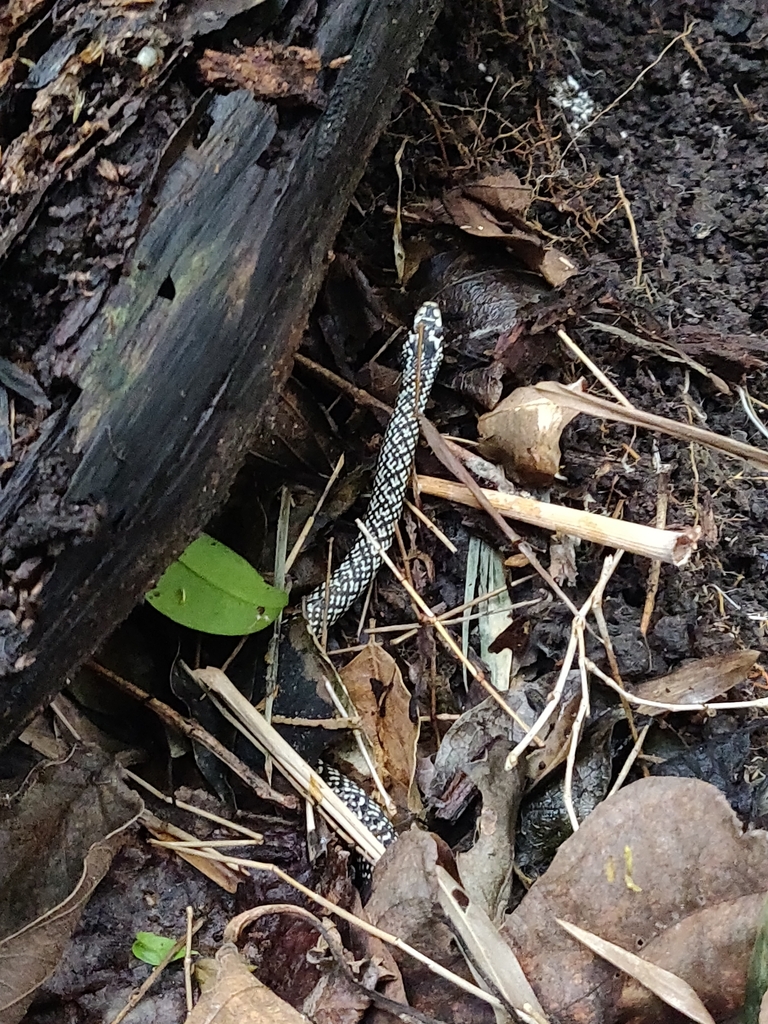
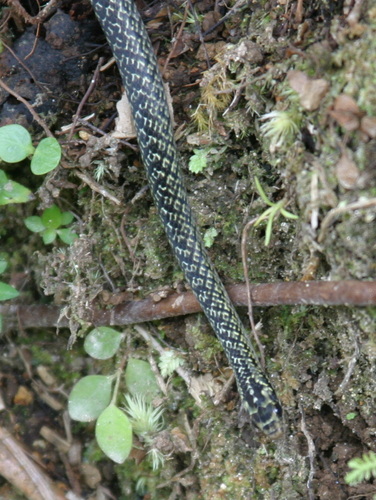
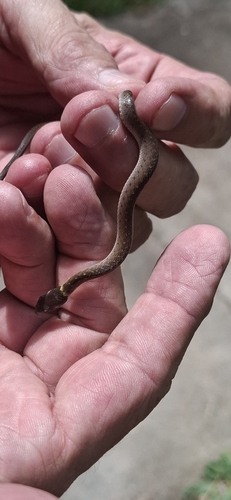
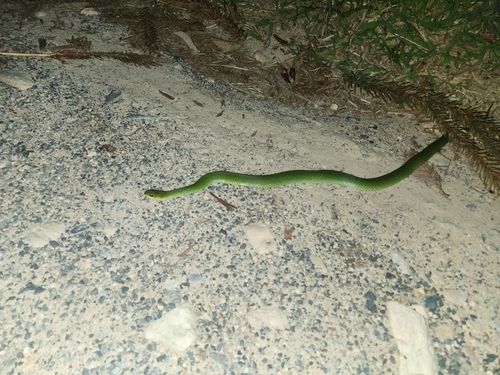
2 photographs of the Julia's Ground Snake. © Loïc Chalmandrier.
The Julia's Ground Snake (Erythrolamprus juliae) is a non-venomous snake in the Colubridae family, recorded in 4 countries.
- Family
- Colubridae
About the Julia's Ground Snake
Julia's ground snake (Erythrolamprus juliae) is a species of snake in the subfamily Dipsadinae of the family Colubridae. The species is found in the Caribbean, on the Lesser Antilles islands of Dominica and Guadeloupe. There are three subspecies.
Etymology
The specific name, juliae, is in honor of Julia Cope Collins (1866–1959), who was the only child of American herpetologist Edward Drinker Cope, the describer of this species.
Classification
Erythrolamprus juliae belongs to the genus Erythrolamprus, which contains over 50 species. The genus Erythrolamprus belongs to the subfamily Dipsadinae, which is sometimes referred to as the family Dipsadidae. The relationships of Erythrolamprus species located in northern South America can be shown in the cladogram below, based on molecular DNA analysis:
Subspecies
The following three subspecies have been described.
Erythrolamprus juliae copeae (Parker, 1936)
Erythrolamprus juliae juliae (Cope, 1879)
Erythrolamprus juliae mariae (Barbour, 1914)
The nominate subspecies, E. j. juliae, is endemic to Dominica, where it may be found everywhere but the highest elevations. E. j. copeae is found on numerous islands in the Guadeloupean archipelago, while E. j. mariae is restricted to the Guadeloupean island of Marie-Galante.
The relative rareness of this species in Guadeloupe is attributed to the presence of the mongoose, which is absent from Dominica.
Nota bene: A trinomial authority in parentheses indicates that the subspecies was originally described in a genus other than Erythrolamprus.
Description
E. juliae can reach half a meter (20 inches) in total length (including tail). Its coloration is typically white or yellowish flecks on a glossy dark ground color, but some individuals are uniformly dark.
Diet
Julia's ground snake preys upon insects, frogs, and lizards.
Defensive behavior
E. juliae is harmless to humans, but may release a foul-smelling cloacal secretion if provoked.
Adapted from Wikipedia, available under CC BY-SA.
Frequently asked: Julia's Ground Snake
- Is the Julia's Ground Snake venomous?
- No. The Julia's Ground Snake (Erythrolamprus juliae) is non-venomous and is not considered dangerous to humans. Like most snakes, it will retreat rather than bite when given the chance.
- Is the Julia's Ground Snake poisonous?
- Snakes are venomous, not poisonous. "Poisonous" means harmful to eat or touch; "venomous" means injecting toxins through a bite. The Julia's Ground Snake is neither poisonous nor venomous.
- Is the Julia's Ground Snake dangerous?
- The Julia's Ground Snake is not dangerous to humans. It has no medically significant venom and bites only defensively if cornered or handled.
- Where does the Julia's Ground Snake live?
- The Julia's Ground Snake has verified records in 4 countries, including Dominica, Guadeloupe, Guyana. See the distribution section below for its full range.
- What does the Julia's Ground Snake eat?
- Julia's ground snake preys upon insects, frogs, and lizards.
- Why is it called the Julia's Ground Snake?
- The specific name, juliae, is in honor of Julia Cope Collins (1866–1959), who was the only child of American herpetologist Edward Drinker Cope, the describer of this species.
Where it is found
More Colubridae snakes
 Yellow-bellied LiophisErythrolamprus poecilogyrus
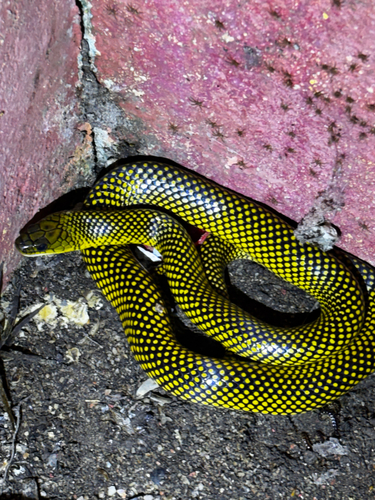 Military Ground SnakeErythrolamprus miliaris
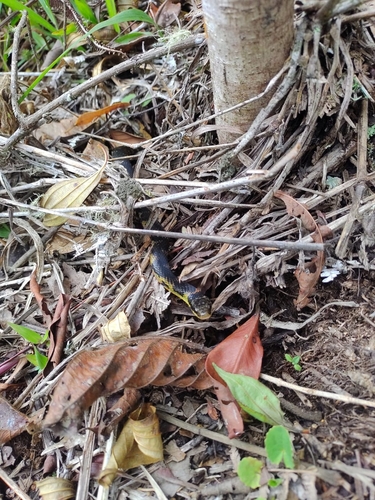 Fire-bellied SnakeErythrolamprus epinephalus
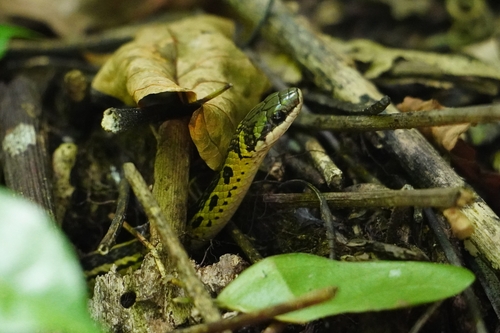 Black-backed SnakeErythrolamprus melanotus
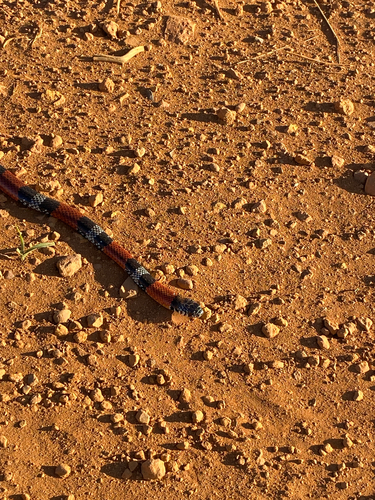 Aesculapian False Coral SnakeErythrolamprus aesculapii
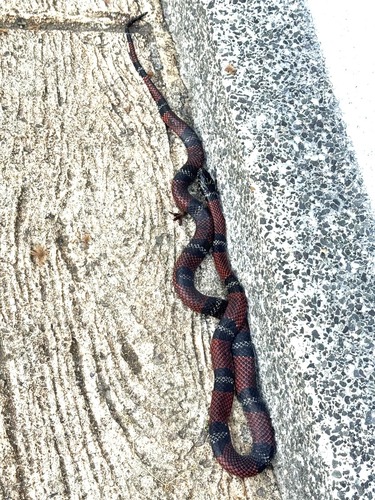 Double-banded Coral Snake MimicErythrolamprus bizona
 Royal Ground SnakeErythrolamprus reginae
 Velvet SwampsnakeErythrolamprus typhlus
Classification
How scientists group this snake, from the broadest category down to the exact species. Each step narrows to its closest relatives.
- OrderThe broad group of scaled reptiles: all snakes and lizards
- Squamata
- FamilyA group of related snakes that share key traits
- Colubridae
- GenusA close-knit group of very similar species
- Erythrolamprus
- SpeciesThis exact snake, named in the two-part scientific name
- Erythrolamprus juliae
Keep learning
- What to Do If You Find a SnakeFound a snake at home or on a trail? Here is how to stay calm, give it space, identify it safely, and know when to call a professional.
- Venomous vs Nonvenomous: How to Tell the DifferenceThe folk rules for telling venomous snakes apart, where each one fails, and why location-based identification beats guessing by sight.
- What Is a Snake? Anatomy and the BasicsA clear overview of what makes a snake a snake: limbless body plan, anatomy, evolution from lizards, species diversity, and why they are ectothermic.
- How to Keep Snakes Out of Your Yard and HomeA practical guide to keeping snakes out of your yard and home using habitat changes that work, plus what to skip and what to do if one shows up.
Distribution from GBIF & iNaturalist. Venom status per CDC. Background: Wikipedia. Informational only. Never handle a snake to identify it.