
Xenodermidae
Javan Tubercle Snake
HarmlessXenodermus javanicus
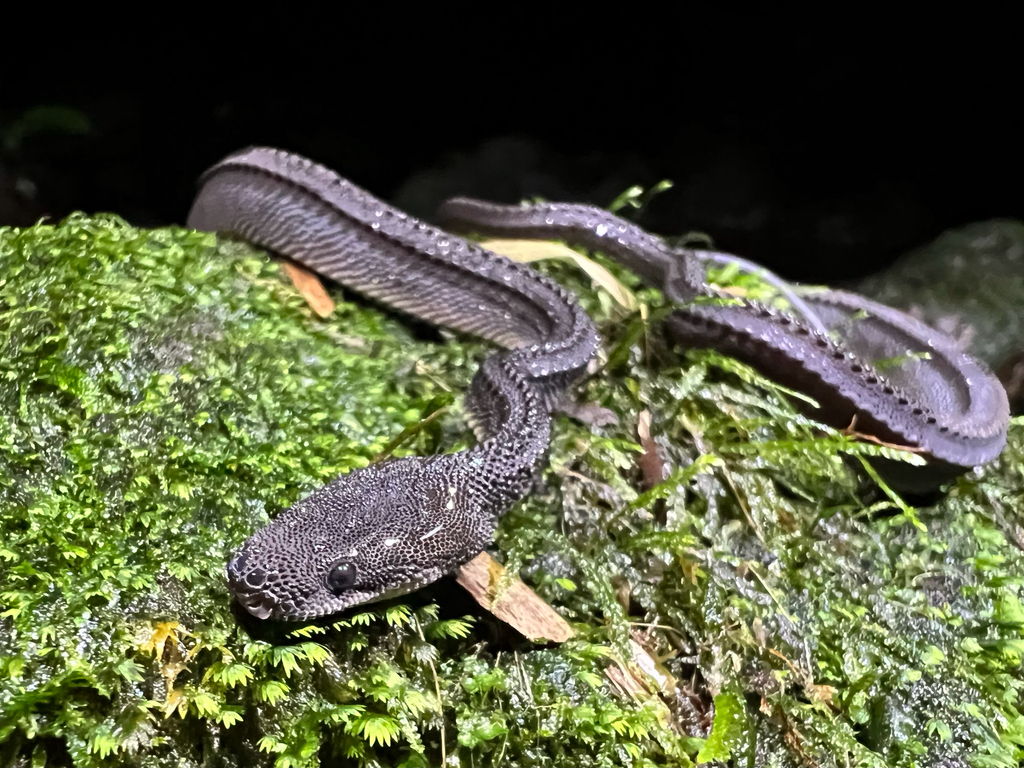
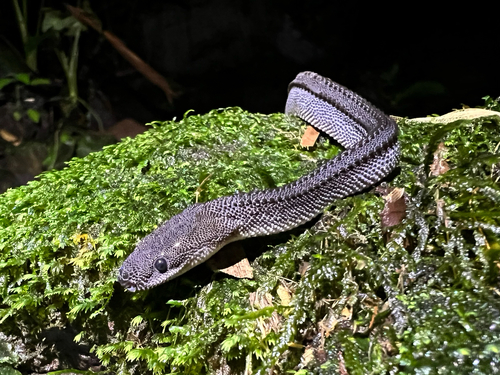
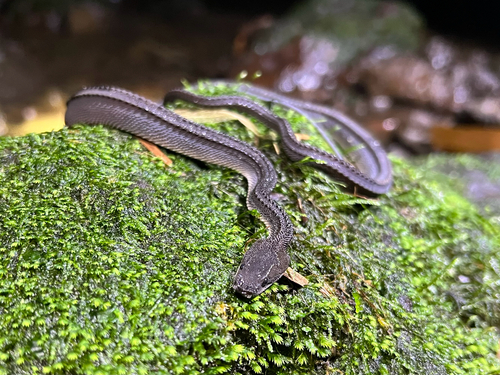
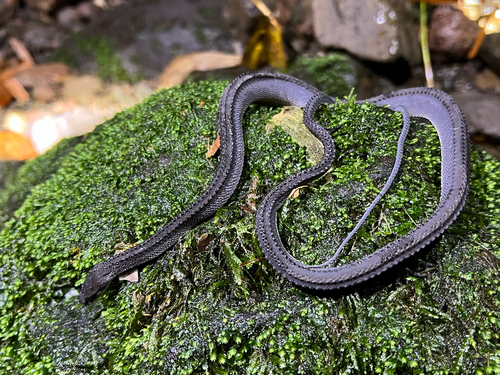
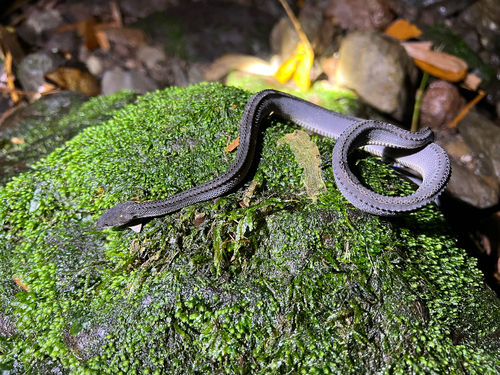
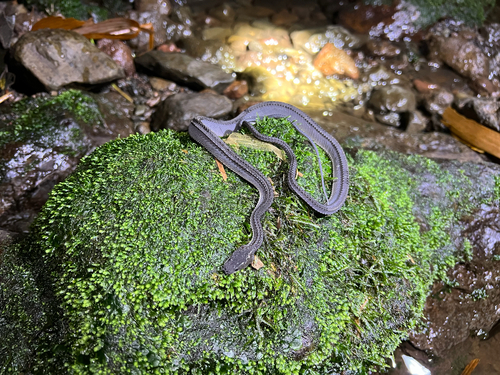
6 photographs of the Javan Tubercle Snake. © Jason Alexander.
The Javan Tubercle Snake (Xenodermus javanicus) is a non-venomous snake in the Xenodermidae family, recorded in 4 countries.
- Family
- Xenodermidae
About the Javan Tubercle Snake
Xenodermus javanicus, also known as the dragon snake, Javan tubercle snake, Javan mudsnake, or rough-backed litter snake, is a small non-venomous, semi-fossorial snake species belonging to the monotypic genus Xenodermus. This species is best known for their characteristic dorsal scales and interesting defense mechanism in which they stiffen their entire bodies when threatened. X. javanicus is nocturnal and subsists on a diet of frogs, tadpoles and small fish.
They most often perish once placed into captivity; only a few herpetoculturists have been successful in keeping them.
Distribution and habitat
Xenodermus javanicus is found in the Malay Peninsula (Malaysia, Thailand, and one old record from the southernmost tip of Myanmar) and parts of the Greater Sunda Islands (Sumatra, Java, and Borneo, as well as some smaller islands). It inhabits damp areas near water, including forests, swamps, marshes, and rice fields, at elevations below 1,300 m (4,300 ft), but most commonly between 500–1,100 m (1,600–3,600 ft) above sea level.
Description
Xenodermus javanicus has a distinct head and long tail. The body is slender and compressed. The total length is about 50 cm (20 in).
Males can be distinguished from females by examining the overall size, tail thickness, tail length, and cloacal vent for the presence of a hemipenial bulge: Females will be larger than males; have thinner, shorter tails, and lack a hemipenial bulge. Conversely, males will be smaller in comparison, have thicker, longer tails and exhibit a hemipenial bulge.
Differentiation of sex chromosomes and karyotype characterization
Xenodermus javanicus has an unusual chromosomal number of 2n = 32 , contrasting with the most typical snake karyotype with a stable chromosomal number of 2 n = 36 . The karyotype includes heteromorphic ZZ/ZW sex chromosomes with a heterochromatic W.
Behavior
Breeding
Xenodermus javanicus undergo reproduction by egg and have low fecundity (2–4 eggs).
Activity pattern
Xenodermus javanicus are nocturnal.
Diet
Xenodermus javanicus subsist mainly on frogs, tadpoles, and small fish.
Behaviors
Xenodermus javanicus exhibit a peculiar property when encountering perceived threats in which they stiffen their entire body to defend themselves. They may also emit a foul-smelling odour called a musk.
Conservation status
Xenodermus javanicus are rare in the northern parts of their range, but are common in Java. There seem to be no major threats to them, and they can persist in wet agricultural lands such as rice fields. They could be potentially threatened by agricultural pollutants.
Adapted from Wikipedia, available under CC BY-SA.
Frequently asked: Javan Tubercle Snake
- Is the Javan Tubercle Snake venomous?
- No. The Javan Tubercle Snake (Xenodermus javanicus) is non-venomous and is not considered dangerous to humans. Like most snakes, it will retreat rather than bite when given the chance.
- Is the Javan Tubercle Snake poisonous?
- Snakes are venomous, not poisonous. "Poisonous" means harmful to eat or touch; "venomous" means injecting toxins through a bite. The Javan Tubercle Snake is neither poisonous nor venomous.
- Is the Javan Tubercle Snake dangerous?
- The Javan Tubercle Snake is not dangerous to humans. It has no medically significant venom and bites only defensively if cornered or handled.
- Where does the Javan Tubercle Snake live?
- The Javan Tubercle Snake has verified records in 4 countries, including Indonesia, Malaysia, Thailand. See the distribution section below for its full range.
- What does the Javan Tubercle Snake eat?
- Xenodermus javanicus subsist mainly on frogs, tadpoles, and small fish.
Where it is found
More Xenodermidae snakes
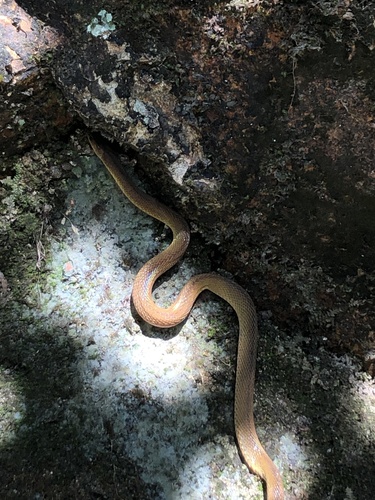 Boulenger's Odd-scaled SnakeAchalinus rufescens
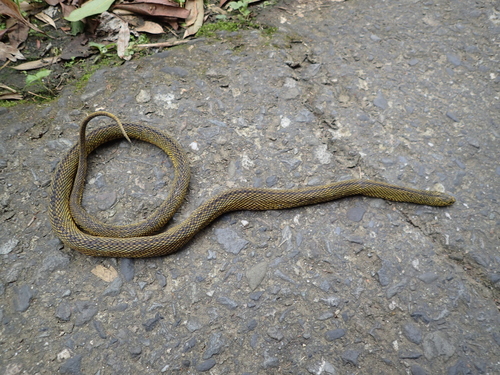 Black Odd-scaled SnakeAchalinus niger
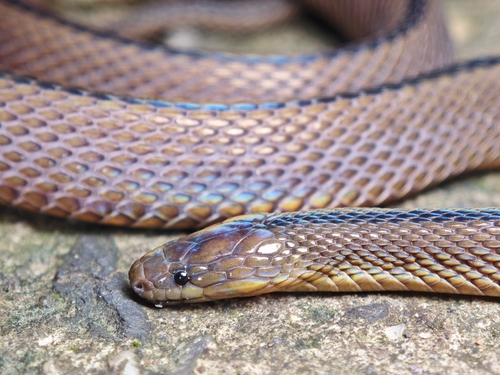 Huang's odd-scaled snakeAchalinus huangjietangi
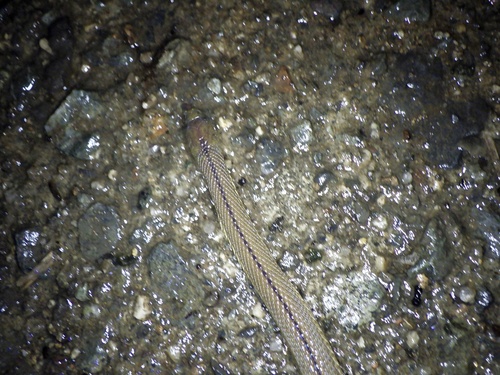 Peters' Odd-scaled SnakeAchalinus spinalis
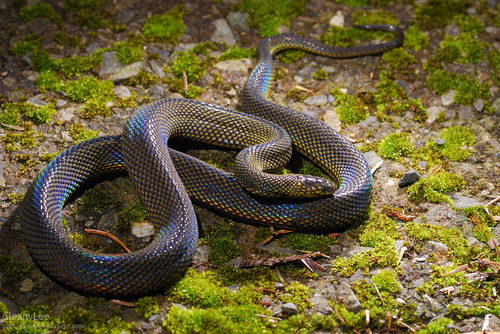 Formosa Odd-scaled SnakeAchalinus formosanus
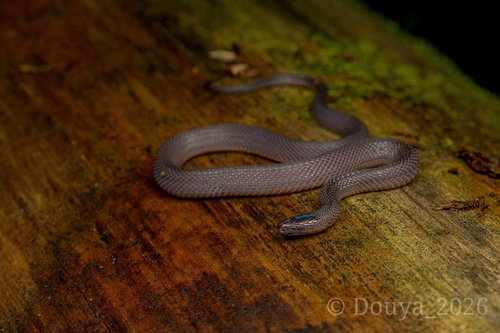 Achalinus ningshanensisAchalinus ningshanensis
 Amami Takachiho SnakeAchalinus werneri
 Achalinus dehuaensisAchalinus dehuaensis
Classification
How scientists group this snake, from the broadest category down to the exact species. Each step narrows to its closest relatives.
- OrderThe broad group of scaled reptiles: all snakes and lizards
- Squamata
- FamilyA group of related snakes that share key traits
- Xenodermidae
- GenusA close-knit group of very similar species
- Xenodermus
- SpeciesThis exact snake, named in the two-part scientific name
- Xenodermus javanicus
Keep learning
- What to Do If You Find a SnakeFound a snake at home or on a trail? Here is how to stay calm, give it space, identify it safely, and know when to call a professional.
- Venomous vs Nonvenomous: How to Tell the DifferenceThe folk rules for telling venomous snakes apart, where each one fails, and why location-based identification beats guessing by sight.
- What Is a Snake? Anatomy and the BasicsA clear overview of what makes a snake a snake: limbless body plan, anatomy, evolution from lizards, species diversity, and why they are ectothermic.
- How to Keep Snakes Out of Your Yard and HomeA practical guide to keeping snakes out of your yard and home using habitat changes that work, plus what to skip and what to do if one shows up.
Distribution from GBIF & iNaturalist. Venom status per CDC. Background: Wikipedia. Informational only. Never handle a snake to identify it.