
Viperidae
Honduras Jumping Pit Viper
VenomousMetlapilcoatlus indomitus
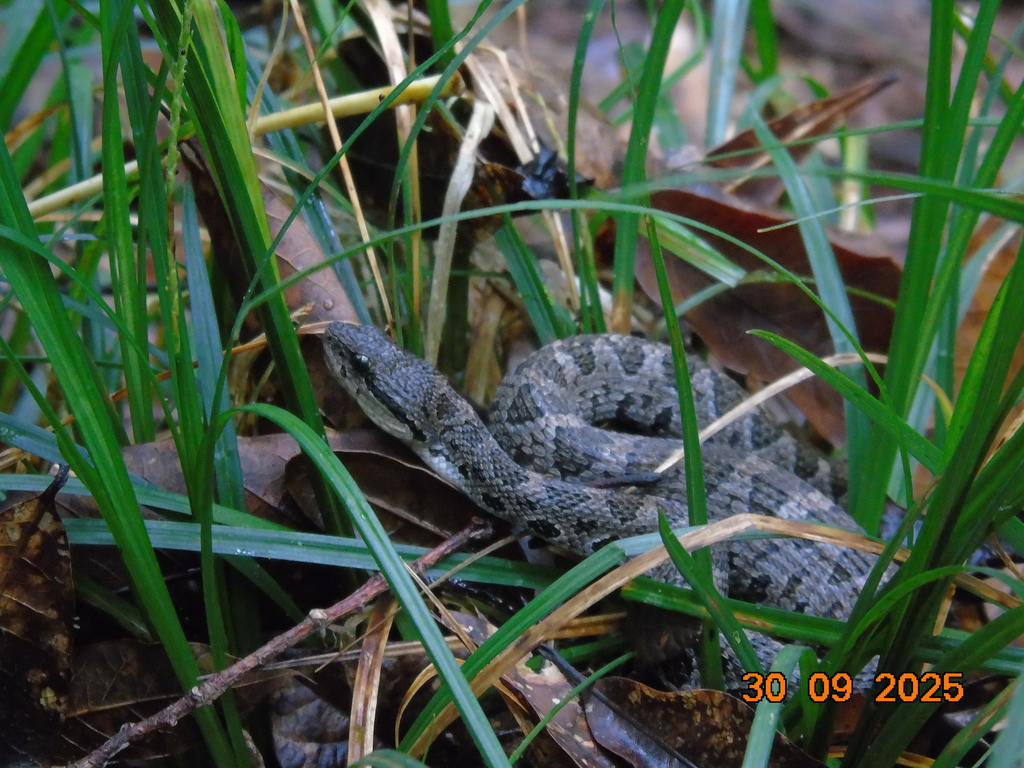
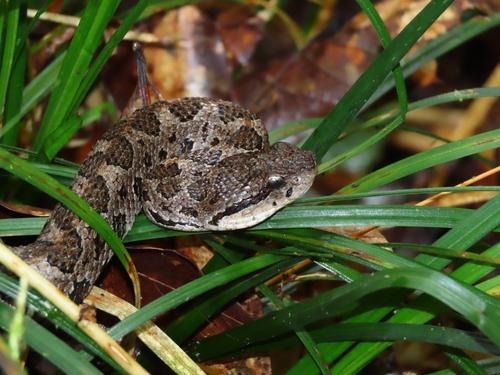
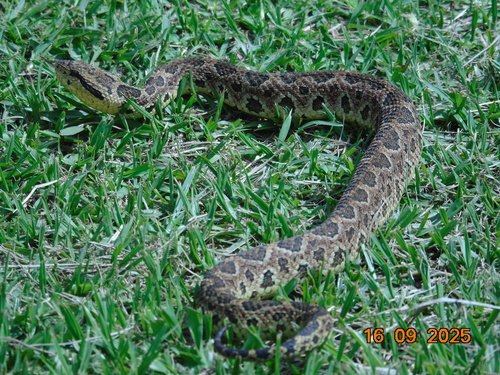
3 photographs of the Honduras Jumping Pit Viper. (c) Andrea Mayen, some rights reserved (CC BY-NC).
The Honduras Jumping Pit Viper (Metlapilcoatlus indomitus) is a venomous snake in the Viperidae family, recorded in 2 countries.
If you are bitten
This is a venomous snake. Treat any bite as a medical emergency: stay calm, keep the bitten limb still and roughly level with the heart, remove rings and tight clothing, and get to emergency care immediately. Do not apply a tourniquet, cut the wound, apply ice, or try to suck out venom. Call your local emergency number or poison center.
- Family
- Viperidae
- Danger
- high
About the Honduras Jumping Pit Viper
Metlapilcoatus indomitus is an endangered species of jumping pit viper endemic to Central America. Like all pit vipers, it is venomous. It is named in honour of Hondurans and the project Honduras Indomita, with "indomitus" meaning "that which will not be conquered" in Latin.
Description
Metlapilcoatlus indomitus is a medium-sized snake, reaching around 64 cm in length, with females slightly longer. A third of its body, at the end of its tail, is darker on the underside and it displays a postorbital stripe. These make it easy to distinguish from other Metlapicoatlus species, but not Atripoides picadoi, which shares these markings. It can be distinguished from A. picadoi by its lighter markings which are slightly smaller. They can also be distinguished by their unusual lack of hemipenal spines, which most pitvipers possess.
Neonates may show a light tip to their tail, which may be used to distract prey.
For specific scale counts, scales of M. indomitus can vary. Nasorostral scales are known to vary from none to two.
Habitat
Preferring elevations of 670-1200m, M. indomitus is found in tropical rainforests. It is classified as endangered by the IUCN Red List as its habitat spans a total of 500 km
2
{\displaystyle ^{2}}
and falling as it continues to be deforested.
Diet
Metlapilcoatlus indomitus is known to eat field mice.
Life cycle
Reproduction
As with many viperids, M. indomitus reproduction begins with courtship where a male will use his jaw to lightly tap on the dorsal side of a female to get her to uncoil. This tapping continues throughout copulation which typically lasts around 20 minutes. Males may then attempt to initiate once more by jaw tapping again, but this has not been observed as successful. Likely due to low population and so low male-female encounters, M. indomitus is known to be an opportunistic mater, reported to have mated 24 hours before giving birth, likely to store the sperm. M. indomitus is ovoviviparous and known to give birth in June, coinciding with the rainy season in Honduras, typically birthing clutches of 14–26 neonates measuring around 20–25 cm.
Early life
Parent snakes do not appear to raise their young past birth. Neonates experience their first moult within 24 hours after birth. When threatened neonates will shake their tail against the ground, take defensive positions and show their fangs. Neonates in the wild will disperse from each other quickly and if they are kept together in captivity they may attack each other.
Adapted from Wikipedia, available under CC BY-SA.
Frequently asked: Honduras Jumping Pit Viper
- Is the Honduras Jumping Pit Viper venomous?
- Yes. The Honduras Jumping Pit Viper (Metlapilcoatlus indomitus) is venomous and belongs to the Viperidae family (viper). Its bite is considered high risk to people. Treat any bite as a medical emergency.
- Is the Honduras Jumping Pit Viper poisonous?
- Snakes are venomous, not poisonous. "Poisonous" means harmful to eat or touch; "venomous" means injecting toxins through a bite. The Honduras Jumping Pit Viper is venomous, delivering venom through a bite.
- Is the Honduras Jumping Pit Viper dangerous?
- This is a venomous snake. Treat any bite as a medical emergency: stay calm, keep the bitten limb still and roughly level with the heart, remove rings and tight clothing, and get to emergency care immediately. Do not apply a tourniquet, cut the wound, apply ice, or try to suck out venom. Call your local emergency number or poison center.
- Where does the Honduras Jumping Pit Viper live?
- The Honduras Jumping Pit Viper has verified records in 2 countries, including Honduras, Nicaragua. See the distribution section below for its full range.
- What does the Honduras Jumping Pit Viper eat?
- Metlapilcoatlus indomitus is known to eat field mice.
If you are bitten by the Honduras Jumping Pit Viper
Do
- Get away from the snake and stay calm. Most bites worsen when people panic or try again to handle the snake.
- Call 911 or Poison Control (1-800-222-1222) right away. Antivenom works best when given early.
- Note the time of the bite and, from a safe distance, the snake's color and pattern, a phone photo is enough. Do not chase it.
- Keep the bitten limb still and at roughly heart level. Sit or lie down and limit movement.
- Remove rings, watches, and tight clothing near the bite before swelling starts.
- Gently wash the bite with soap and water and cover it with a clean, dry dressing.
Do not
- Do not cut the wound or try to suck out the venom.
- Do not apply a tourniquet or ice.
- Do not drink alcohol or caffeine.
- Do not take aspirin or ibuprofen, they can worsen bleeding. Acetaminophen is safer for pain.
- Do not try to catch or kill the snake. A dead snake can still bite by reflex.
First-aid guidance adapted from the U.S. Centers for Disease Control and Prevention (CDC NIOSH), Venomous Snakes. Educational only; always follow the instructions of emergency responders.
Where it is found
More Viperidae snakes
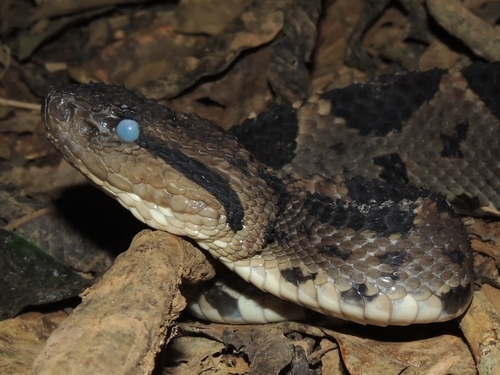 Central American Jumping Pit ViperMetlapilcoatlus mexicanus
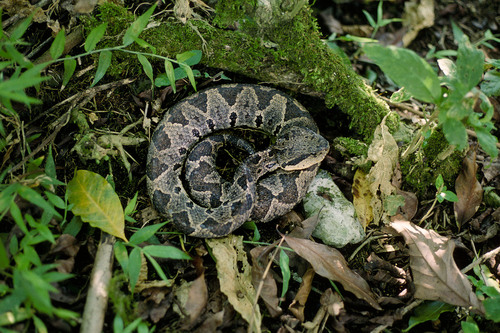 Mexican Jumping Pit ViperMetlapilcoatlus nummifer
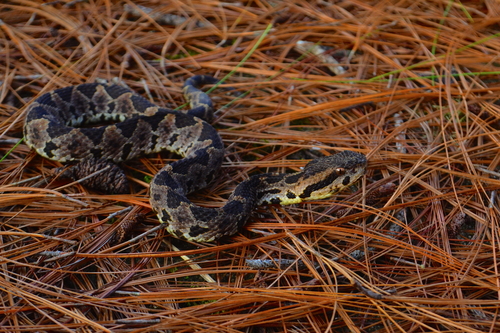 Olmecan Pit ViperMetlapilcoatlus olmec
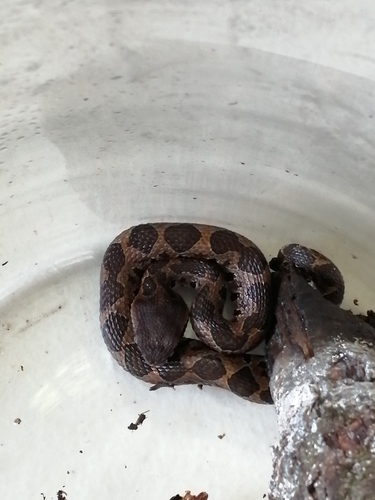 Guatemalan Jumping PitviperMetlapilcoatlus occiduus
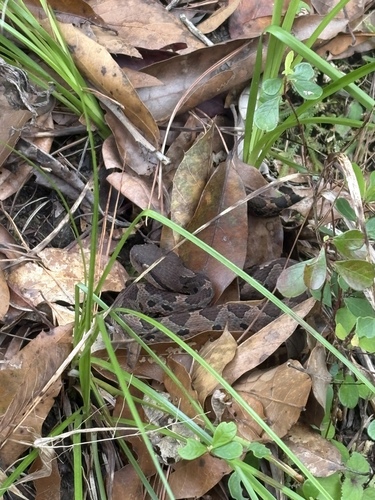 Metlapilcoatlus borealisMetlapilcoatlus borealis
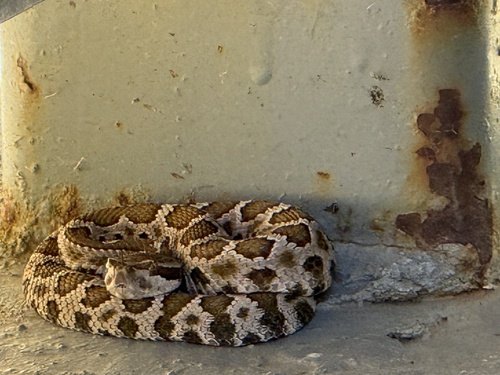 Western RattlesnakeCrotalus oreganus
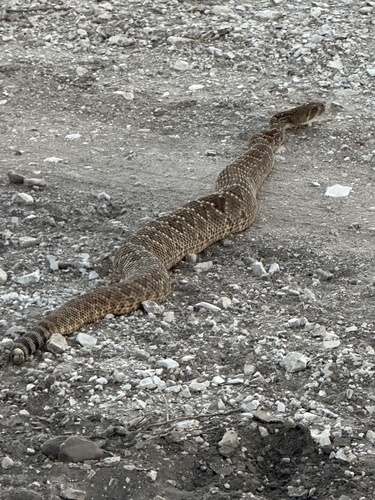 Western Diamond-backed RattlesnakeCrotalus atrox
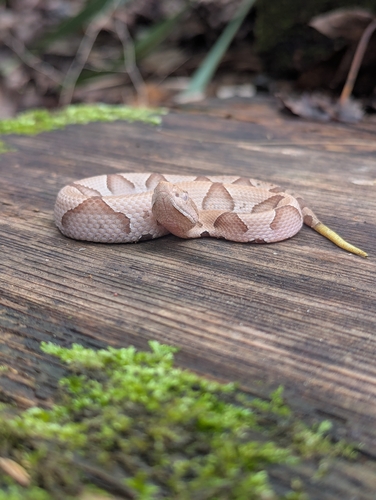 Eastern CopperheadAgkistrodon contortrix
Classification
How scientists group this snake, from the broadest category down to the exact species. Each step narrows to its closest relatives.
- OrderThe broad group of scaled reptiles: all snakes and lizards
- Squamata
- FamilyA group of related snakes that share key traits
- Viperidae
- GenusA close-knit group of very similar species
- Metlapilcoatlus
- SpeciesThis exact snake, named in the two-part scientific name
- Metlapilcoatlus indomitus
Keep learning
- Are Snakes Dangerous? The Real Risk, in PerspectiveMost snakes are harmless and avoid people. Here is the honest picture of snakebite risk worldwide and how to lower your own.
- Snakebite First Aid: What to Do (and What Never to Do)A clear, CDC-based guide to snakebite first aid: the steps that help, the popular myths that hurt, and how to tell a serious bite from a minor one.
- Venomous vs Nonvenomous: How to Tell the DifferenceThe folk rules for telling venomous snakes apart, where each one fails, and why location-based identification beats guessing by sight.
- What to Do If You Find a SnakeFound a snake at home or on a trail? Here is how to stay calm, give it space, identify it safely, and know when to call a professional.
Distribution from GBIF & iNaturalist. Venom status per CDC. Background: Wikipedia. Informational only. Never handle a snake to identify it.