
Genus · Viperidae
Types of vipers
6 species make up the genus Metlapilcoatlus, the snakes commonly called vipers. All of them are venomous.
About jumping pit vipers
Stout, short-tailed Central American pit vipers famous for the forceful, lunging strike that earned them the name jumping vipers.
Metlapilcoatlus is a genus of pit vipers in the family Viperidae, the group that includes rattlesnakes, lanceheads, and other true vipers. The genus was named in 2019 to hold a set of species that had long been placed in the genus Atropoides. The name comes from the Nahuatl word for a grinding-stone, a nod to the heavy, blunt build of these snakes. Roughly half a dozen species are currently recognized, all of them found in Mexico and Central America.
These are heavy-bodied, relatively short snakes with broad triangular heads, keeled scales that give the body a rough texture, and notably short tails. Their muted brown, tan, and gray patterning, often arranged in dark blotches or chevrons, blends into leaf litter on the forest floor. Like all pit vipers they have a heat-sensing pit between the eye and nostril on each side of the head, which they use to detect warm-blooded prey. The common name jumping pit viper refers to the way these snakes can throw the front of the body forward when striking, sometimes lifting clear of the ground.
Members of this genus live mainly in wet and humid forests, including lowland rainforest and cooler mid-elevation cloud forest, across southern Mexico, Guatemala, Honduras, and neighboring countries. They are largely terrestrial and tend to stay among leaf litter, logs, and undergrowth rather than climbing. Because they rely on camouflage and hold still rather than fleeing, they can be easy to step near without noticing, which is the main way people encounter them.
These are venomous snakes and should be treated as dangerous. Their venom can cause significant local tissue damage, pain, and swelling, and bites are a genuine medical emergency. Never attempt to handle, catch, or move a wild jumping pit viper, and do not rely on the assumption that a strike cannot reach you. If a bite occurs, keep the person calm and still, do not cut, suck, or apply a tourniquet, and seek professional medical care immediately. In the United States contact Poison Control at 1-800-222-1222 or call local emergency services; in other regions contact local emergency services right away.
Ecologically, jumping pit vipers are ambush predators that wait motionless for prey to pass, feeding mainly on small mammals such as rodents along with frogs and lizards. Like many New World pit vipers they give live birth rather than laying eggs. Despite their reputation, they are not aggressive toward people and bite defensively when threatened or accidentally disturbed, so the practical safety rule is simple: give them distance and leave them alone.
Metlapilcoatlus belongs to the Viperidae family (Vipers & pit vipers). Heavy-bodied venomous snakes with long, hinged, hollow fangs. Broad, triangular head distinct from a narrow neck, heavy body, and (usually) vertical, cat-like pupils. Pit vipers also have a heat-sensing pit; true vipers do not.
Danger: Every viper is venomous, and the family includes some of the world's most medically important snakes. Venom is typically hemotoxic, causing pain, swelling, tissue damage, and bleeding. Treat any viper bite as a medical emergency.
All species (6)
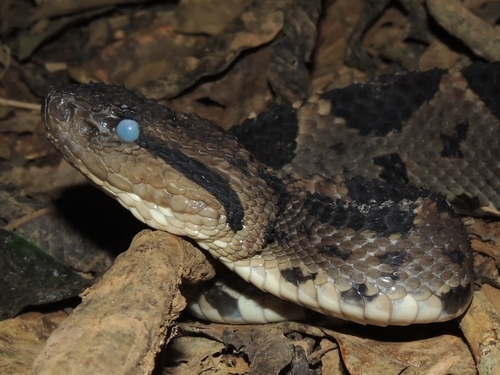 Central American Jumping Pit ViperMetlapilcoatlus mexicanusVenomous
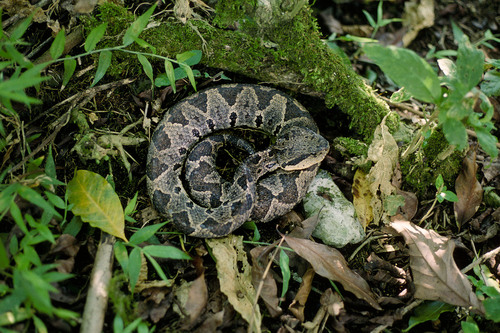 Mexican Jumping Pit ViperMetlapilcoatlus nummiferVenomous
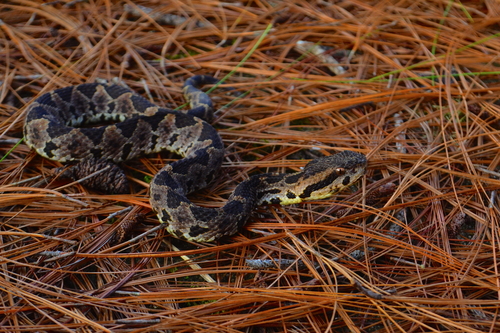 Olmecan Pit ViperMetlapilcoatlus olmecVenomous
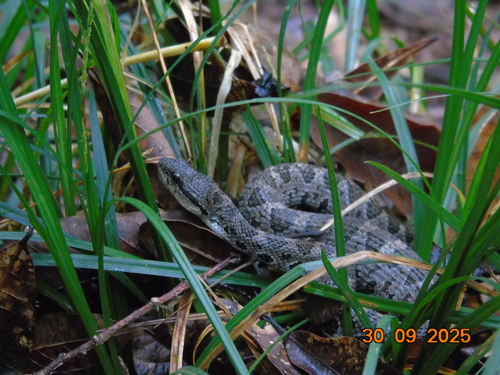 Honduras Jumping Pit ViperMetlapilcoatlus indomitusVenomous
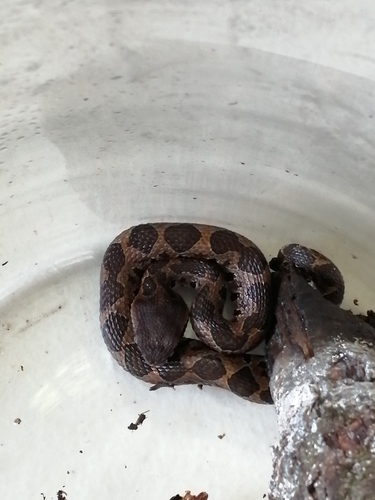 Guatemalan Jumping PitviperMetlapilcoatlus occiduusVenomous
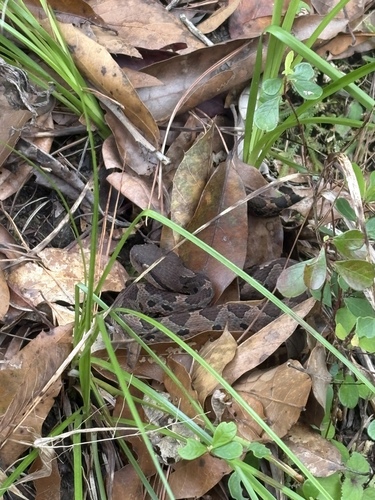 Metlapilcoatlus borealisVenomous
Keep learning
- Venomous vs Nonvenomous: How to Tell the DifferenceThe folk rules for telling venomous snakes apart, where each one fails, and why location-based identification beats guessing by sight.
- Are Snakes Dangerous? The Real Risk, in PerspectiveMost snakes are harmless and avoid people. Here is the honest picture of snakebite risk worldwide and how to lower your own.
- Snake Venom Explained: How It Works and WhyWhat snake venom actually is, why it evolved, the main venom types, fang delivery, how antivenom works, and why ranking the most venomous snake is hard.
- How Snakes Move, Hunt, and EatHow snakes move without legs, hunt as ambushers or active foragers, kill by constriction or venom, and swallow prey wider than their head.