
Viperidae
Habu
VenomousProtobothrops flavoviridis
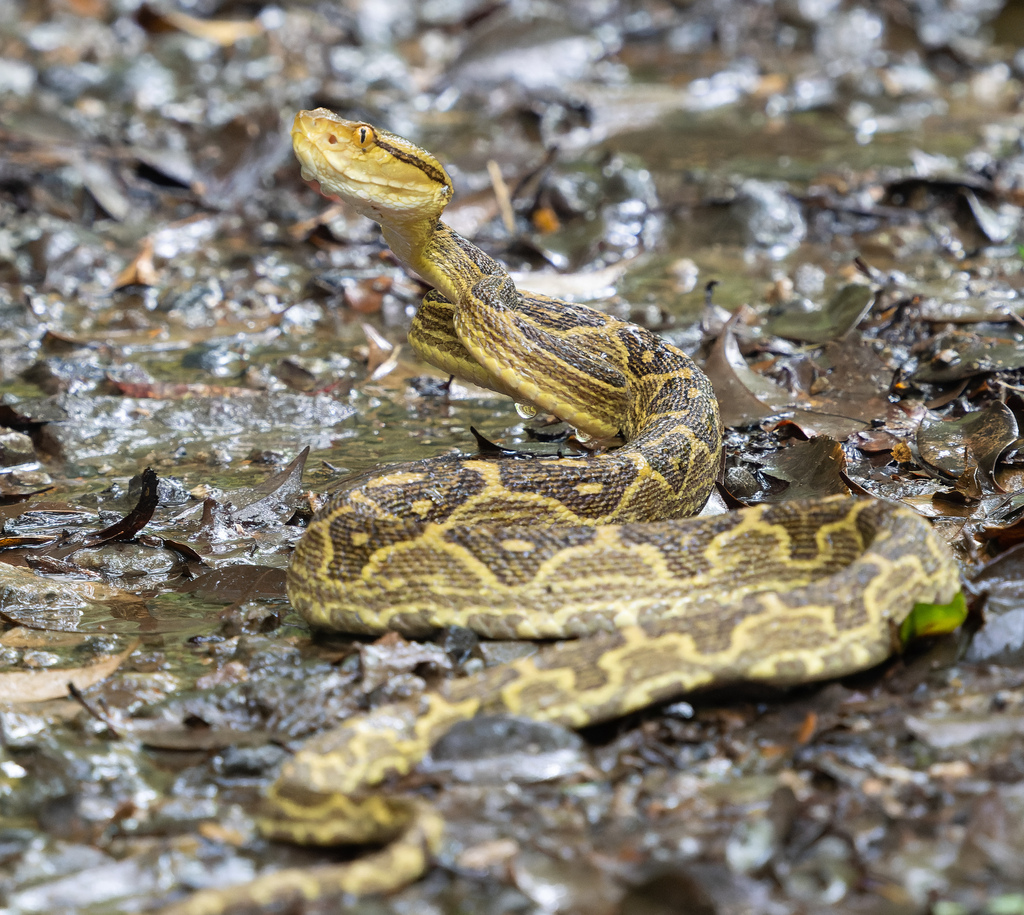
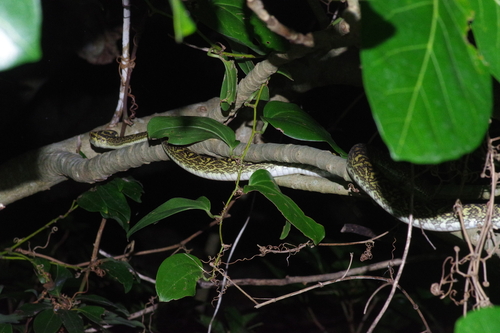
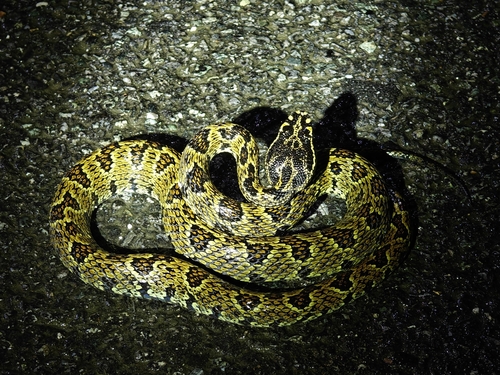
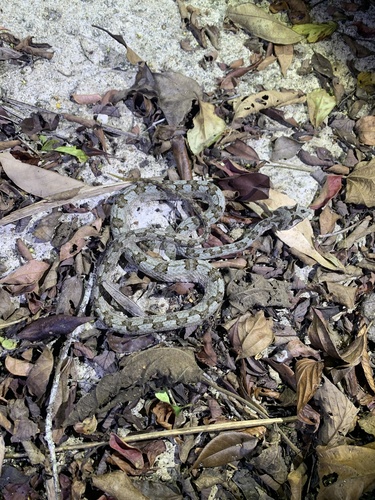
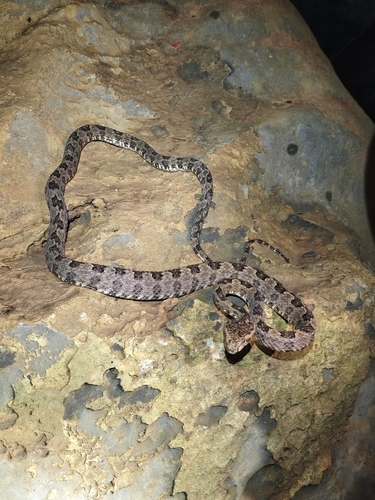
2 photographs of the Habu. © Simon Colenutt.
The Habu (Protobothrops flavoviridis) is a venomous snake in the Viperidae family, recorded in 1 country.
If you are bitten
This is a venomous snake. Treat any bite as a medical emergency: stay calm, keep the bitten limb still and roughly level with the heart, remove rings and tight clothing, and get to emergency care immediately. Do not apply a tourniquet, cut the wound, apply ice, or try to suck out venom. Call your local emergency number or poison center.
- Family
- Viperidae
- Danger
- high
About the Habu
Protobothrops flavoviridis, also known commonly as the Okinawa habu is a species of pit viper, a venomous snake in the subfamily Crotalinae of the family Viperidae. The species is endemic to the Ryukyu Islands of Japan. No subspecies are recognized as being valid. Local common names include habu and Kume Shima habu. The term "habu" in Okinawa Prefecture can also refer to the Sakishima habu (Protobothrops elegans) alternately called the elegant pit viper.
Description
Growing to an average total length (tail included) of 4–5 feet (120–150 cm), with a maximum of 7.9 feet (240 cm), Protobothrops flavoviridis is the largest member of its genus. It is slenderly built and gracefully proportioned with a large head. The crown of the head is covered with small scales. P. flavoviridis has a light olive or brown ground color, overlaid with elongated dark green or brownish blotches. The blotches have yellow edges, sometimes contain yellow spots, and frequently fuse to produce wavy stripes. The belly is whitish with dark coloring along the edges.
Geographic distribution and habitat
The Okinawa habu is restricted to the Japanese Ryukyu Islands, including Okinawa and the Amami Islands. The type locality is "Amakarima Island (one of the Loo-Choo group)" (= Keramashima, Ryukyu Islands). It is common on the larger volcanic islands, but not present on the smaller coral islands.
The species is often reported from the transition zone between palm forest and cultivated fields. It may also be found on rock walls and in old tombs and caves.
Ecology
The species Protobothrops flavoviridis is terrestrial and mostly nocturnal. It often enters homes and other structures in search of rats and mice. Bold and irritable, it can strike quickly and has a long reach.
Unlike most pit vipers, the habu is oviparous and lays eggs, rather than bearing live young. Mating takes place in early spring and up to 18 eggs are laid in mid-summer. The hatchlings, which emerge after an incubation period of 5–6 weeks, are 25 cm (10 in) in length and look the same as the adults.
To reduce the population of P. flavoviridis on the island of Okinawa, the small Indian mongoose (Herpestes javanicus), was introduced in 1910. Although the effects of this introduction have not been studied, in other such cases, the negative effects on species of native birds, mammals, and herpetofauna have been a source of concern for wildlife managers.
Venom
The incidence of snakebite in the Amami Islands is two per 1,000 people, which is considered very high. The venom of this species is of high toxicity, containing cytotoxin and hemorrhagin components, yet the fatality rate is less than 1%. A bite from a habu snake can cause nausea, vomiting, hypotension, and possibly death. In some cases, victims reported the loss of motor function in hands and legs following treatment. If a bite victim receives medical care promptly, bites are not life-threatening. However, 6–8% do suffer permanent disability.
Adapted from Wikipedia, available under CC BY-SA.
Local and regional names
The Habu is known by these names across the regions where it lives:
- Chinese
- 波布, 黃綠龜殼花
- Danish
- Gulgrøn Habu
- German
- Habu-Schlange, Habuschlange, Okinawa-Habu
- Hungarian
- Okinavai bambuszvipera
- Japanese
- ハブ, ハブ(波布)、ホンハブ(本波布)
- Korean
- 반시뱀
- Polish
- trwożnica habu
- Ukrainian
- Протоботропс жовто-зелений
Frequently asked: Habu
- Is the Habu venomous?
- Yes. The Habu (Protobothrops flavoviridis) is venomous and belongs to the Viperidae family (viper). Its bite is considered high risk to people. Treat any bite as a medical emergency.
- Is the Habu poisonous?
- Snakes are venomous, not poisonous. "Poisonous" means harmful to eat or touch; "venomous" means injecting toxins through a bite. The Habu is venomous, delivering venom through a bite.
- Is the Habu dangerous?
- This is a venomous snake. Treat any bite as a medical emergency: stay calm, keep the bitten limb still and roughly level with the heart, remove rings and tight clothing, and get to emergency care immediately. Do not apply a tourniquet, cut the wound, apply ice, or try to suck out venom. Call your local emergency number or poison center.
- Where does the Habu live?
- The Habu has verified records in 1 country, including Japan. See the distribution section below for its full range.
If you are bitten by the Habu
Do
- Get away from the snake and stay calm. Most bites worsen when people panic or try again to handle the snake.
- Call 911 or Poison Control (1-800-222-1222) right away. Antivenom works best when given early.
- Note the time of the bite and, from a safe distance, the snake's color and pattern, a phone photo is enough. Do not chase it.
- Keep the bitten limb still and at roughly heart level. Sit or lie down and limit movement.
- Remove rings, watches, and tight clothing near the bite before swelling starts.
- Gently wash the bite with soap and water and cover it with a clean, dry dressing.
Do not
- Do not cut the wound or try to suck out the venom.
- Do not apply a tourniquet or ice.
- Do not drink alcohol or caffeine.
- Do not take aspirin or ibuprofen, they can worsen bleeding. Acetaminophen is safer for pain.
- Do not try to catch or kill the snake. A dead snake can still bite by reflex.
First-aid guidance adapted from the U.S. Centers for Disease Control and Prevention (CDC NIOSH), Venomous Snakes. Educational only; always follow the instructions of emergency responders.
Where it is found
More Viperidae snakes
 Brown spotted pitviperProtobothrops mucrosquamatus
 Elegant pitviperProtobothrops elegans
 Jerdon's PitviperProtobothrops jerdonii
 Fi-si-pan Horned Pit ViperProtobothrops cornutus
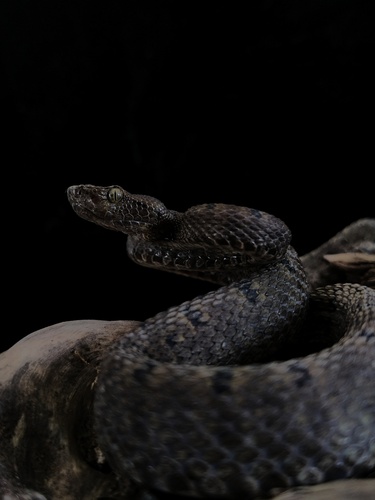 Mao-lan pitviperProtobothrops maolanensis
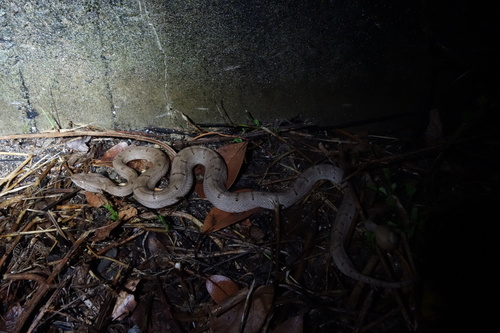 Tokara HabuProtobothrops tokarensis
 Mang Mountain PitviperProtobothrops mangshanensis
 Three horned-scaled pitviperProtobothrops sieversorum
Classification
How scientists group this snake, from the broadest category down to the exact species. Each step narrows to its closest relatives.
- OrderThe broad group of scaled reptiles: all snakes and lizards
- Squamata
- FamilyA group of related snakes that share key traits
- Viperidae
- GenusA close-knit group of very similar species
- Protobothrops
- SpeciesThis exact snake, named in the two-part scientific name
- Protobothrops flavoviridis
Keep learning
- Are Snakes Dangerous? The Real Risk, in PerspectiveMost snakes are harmless and avoid people. Here is the honest picture of snakebite risk worldwide and how to lower your own.
- Snakebite First Aid: What to Do (and What Never to Do)A clear, CDC-based guide to snakebite first aid: the steps that help, the popular myths that hurt, and how to tell a serious bite from a minor one.
- Venomous vs Nonvenomous: How to Tell the DifferenceThe folk rules for telling venomous snakes apart, where each one fails, and why location-based identification beats guessing by sight.
- What to Do If You Find a SnakeFound a snake at home or on a trail? Here is how to stay calm, give it space, identify it safely, and know when to call a professional.
Distribution from GBIF & iNaturalist. Venom status per CDC. Background: Wikipedia. Informational only. Never handle a snake to identify it.