
Genus · Viperidae
Types of pitvipers
10+ species make up the genus Protobothrops, the snakes commonly called pitvipers. All of them are venomous.
About Asian lance-headed pitvipers (habus)
Protobothrops is a genus of medium to large Asian pitvipers whose members include the medically important habu.
Protobothrops is a genus in the family Viperidae, within the pitviper subfamily Crotalinae. Like all pitvipers, its members carry a heat-sensing pit organ on each side of the head, set between the eye and the nostril. This pit detects infrared radiation and lets the snake locate and strike warm prey in darkness. The triangular head, distinct from the narrow neck, and the vertical (cat-like) pupils are the classic pitviper signals, and Protobothrops shows them clearly. Our database holds 10+ species in this genus.
The genus is Asian. Its species range across southern and eastern Asia, including parts of China, the Himalayan region, mainland Southeast Asia, Taiwan, and the Ryukyu Islands of Japan. They occupy a variety of habitats from forested hills and mountain slopes to rocky areas, stream edges, and ground near rural settlements and farmland. Several species favor cooler upland forest, while others, including the habu of the Ryukyus, are well known for turning up around human dwellings and field margins where rodent prey is plentiful.
In general terms, you recognize a Protobothrops by the combination of pitviper traits and a long, somewhat slender to robust body with a long tail relative to many other vipers. The head is broad and arrow or lance shaped, the neck is clearly narrower, the pupils are vertical slits, and the heat pits sit on the face. Color and pattern vary by species and often include browns, greens, grays, and olive tones with darker blotches, bands, or zigzag markings that break up the outline against leaf litter and rock. Members of this genus are sometimes called lance-headed pitvipers, and the best known species are the habus.
These are venomous pitvipers, and some species are medically significant. The habu and several relatives are responsible for serious snakebites within their range, and their venom can cause severe pain, swelling, tissue damage, and bleeding complications. Treat any Protobothrops as dangerous. Do not handle, corner, or attempt to capture a wild one. If a bite occurs, keep the person calm and still, keep the bitten limb at or below heart level, remove rings and tight items, and get to emergency medical care immediately for assessment and possible antivenom. In the United States call Poison Control at 1-800-222-1222, and elsewhere contact local emergency services. Do not cut, suck, apply a tourniquet, or use ice.
Ecologically, Protobothrops are ambush predators that feed largely on small mammals such as rodents, along with birds, frogs, and lizards depending on the species and life stage. They are most active in the warmer months and many are nocturnal or active around dusk, when their heat-sensing pits give them an edge. Reproduction varies within the group, with documented egg-laying species among them, and females of some species are known to attend their clutches. By preying heavily on rodents, these snakes play a useful role in controlling pest populations in the forests and farmlands where they live.
Protobothrops belongs to the Viperidae family (Vipers & pit vipers). Heavy-bodied venomous snakes with long, hinged, hollow fangs. Broad, triangular head distinct from a narrow neck, heavy body, and (usually) vertical, cat-like pupils. Pit vipers also have a heat-sensing pit; true vipers do not.
Danger: Every viper is venomous, and the family includes some of the world's most medically important snakes. Venom is typically hemotoxic, causing pain, swelling, tissue damage, and bleeding. Treat any viper bite as a medical emergency.
All species (16)
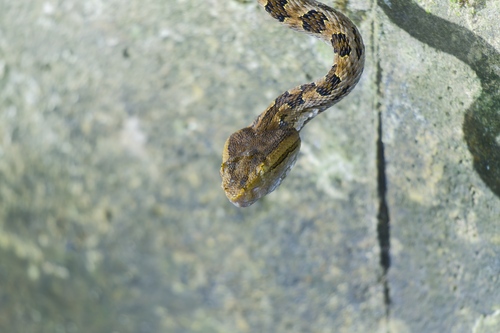 Brown spotted pitviperProtobothrops mucrosquamatusVenomous
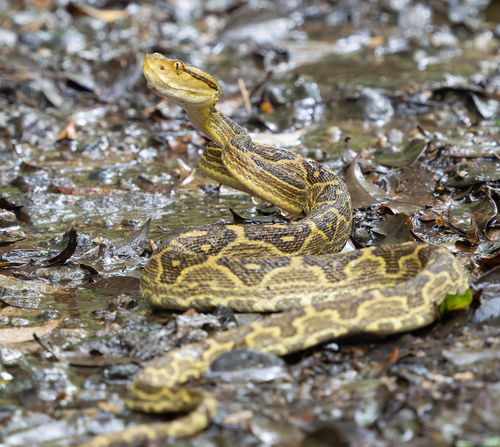 HabuProtobothrops flavoviridisVenomous
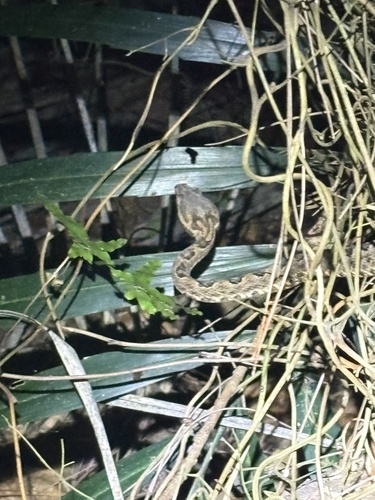 Elegant pitviperProtobothrops elegansVenomous
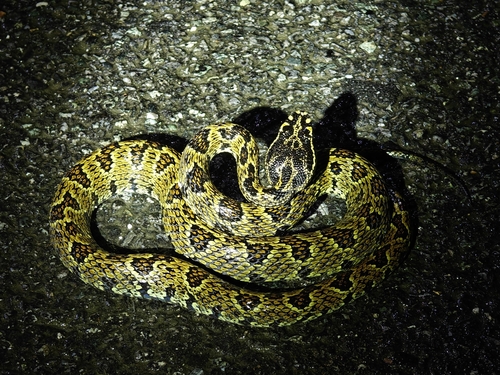 Jerdon's PitviperProtobothrops jerdoniiVenomous
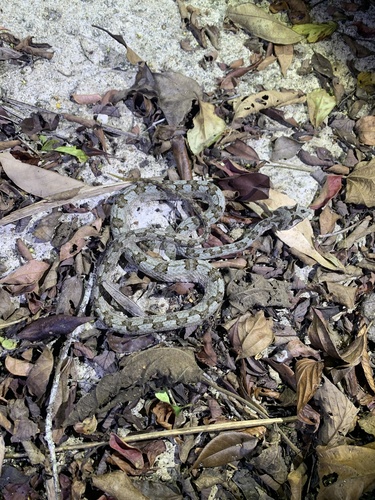 Fi-si-pan Horned Pit ViperProtobothrops cornutusVenomous
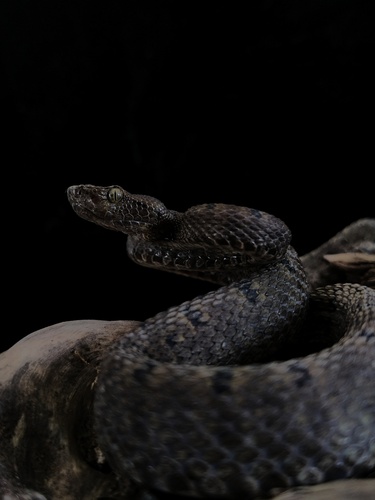 Mao-lan pitviperProtobothrops maolanensisVenomous
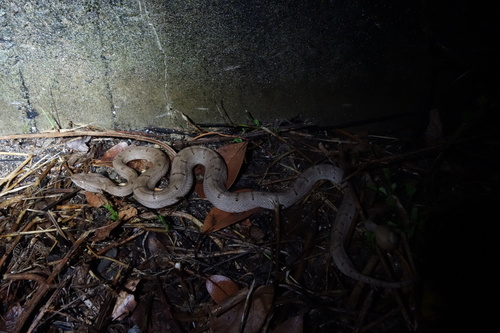 Tokara HabuProtobothrops tokarensisVenomous
 Mang Mountain PitviperProtobothrops mangshanensisVenomous
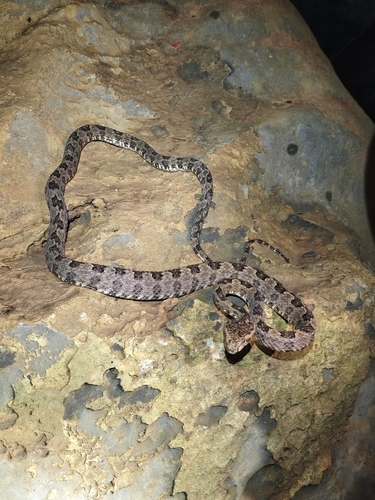 Three horned-scaled pitviperProtobothrops sieversorumVenomous
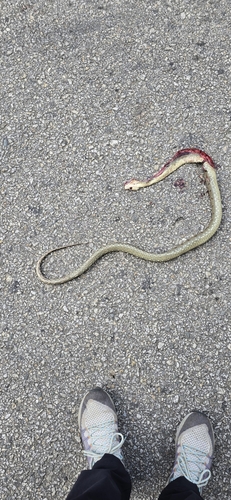 Himalayan PitviperProtobothrops himalayanusVenomous
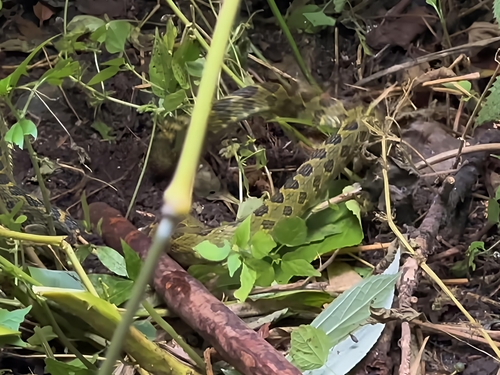 Kaulback's Lance-headed PitviperProtobothrops kaulbackiVenomous
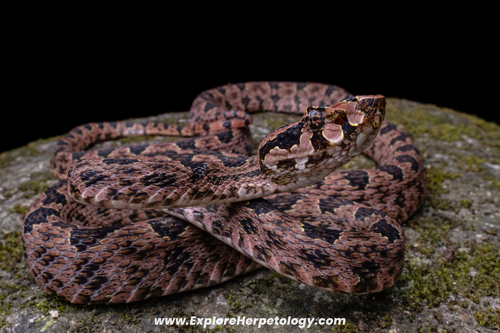 Omkoi Lance-headed Pit ViperProtobothrops kelomohyVenomous
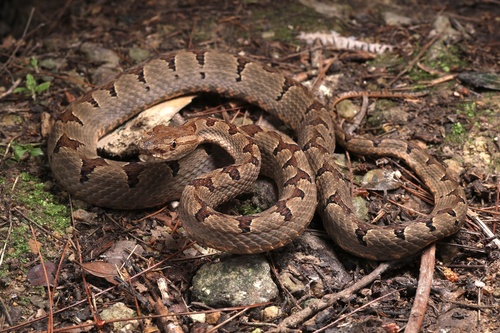 Protobothrops dabieshanensisVenomous
 Trungkhanh PitviperProtobothrops trungkhanhensisVenomous
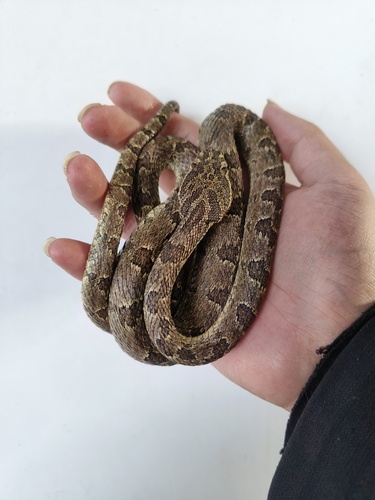 Sichuan LanceheadProtobothrops xiangchengensisVenomous
 Vang Vieng lance-headed pit viperProtobothrops flavirostrisVenomous
Keep learning
- Venomous vs Nonvenomous: How to Tell the DifferenceThe folk rules for telling venomous snakes apart, where each one fails, and why location-based identification beats guessing by sight.
- Are Snakes Dangerous? The Real Risk, in PerspectiveMost snakes are harmless and avoid people. Here is the honest picture of snakebite risk worldwide and how to lower your own.
- Snake Venom Explained: How It Works and WhyWhat snake venom actually is, why it evolved, the main venom types, fang delivery, how antivenom works, and why ranking the most venomous snake is hard.
- How Snakes Move, Hunt, and EatHow snakes move without legs, hunt as ambushers or active foragers, kill by constriction or venom, and swallow prey wider than their head.