
Colubridae
Atractus zgap
HarmlessThis species has no widely used English common name.
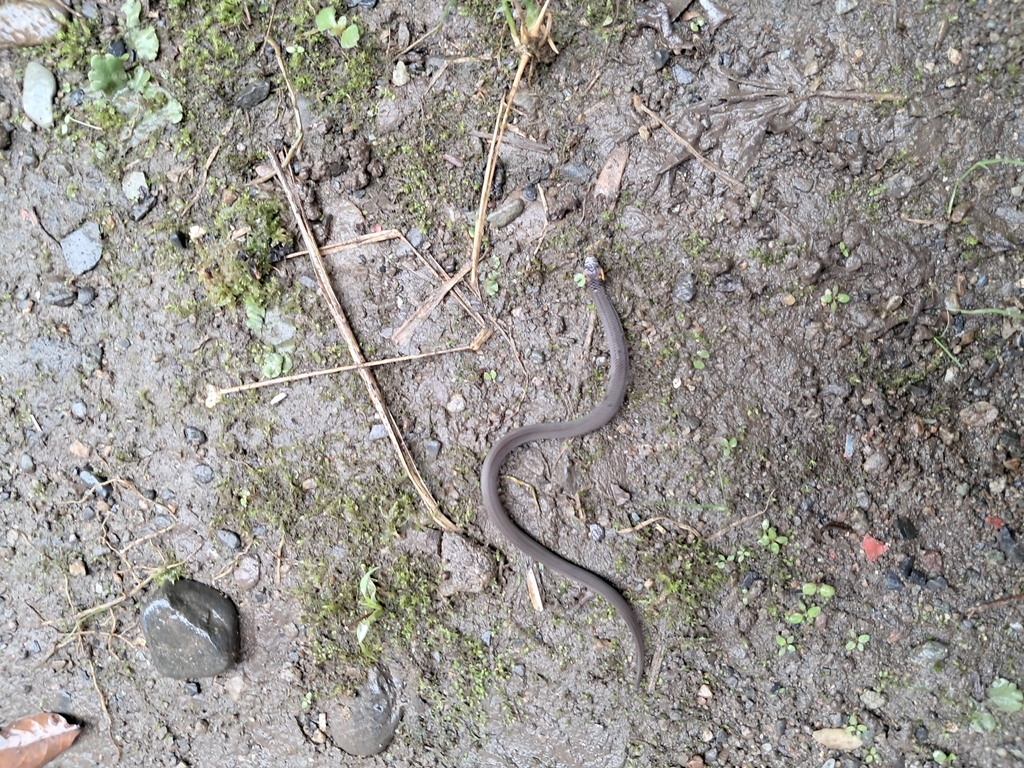
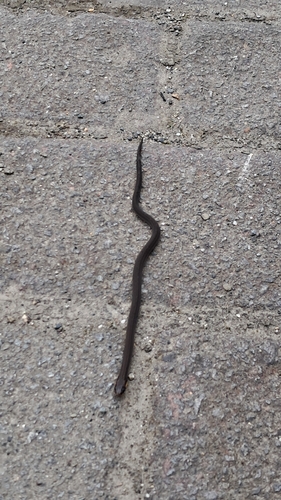
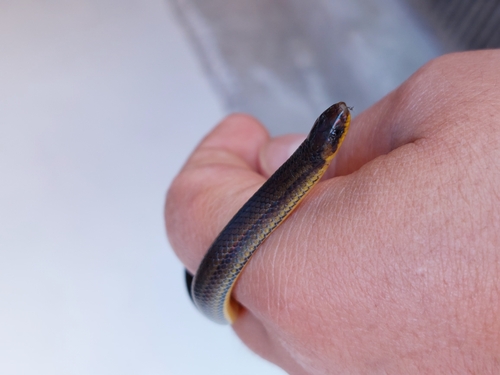
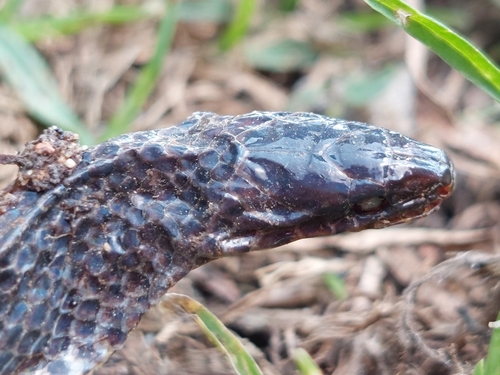
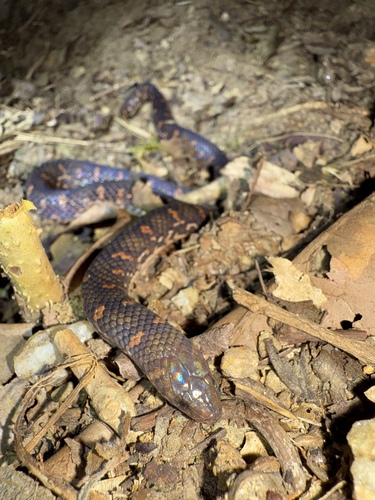
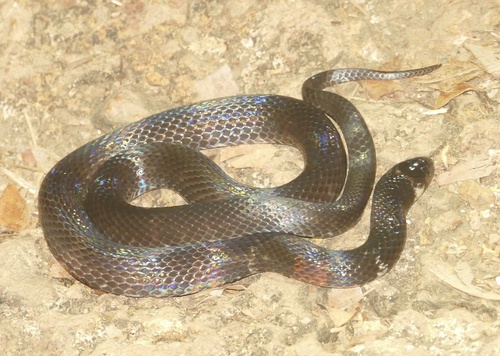
3 photographs of the Atractus zgap. (c) Diego Piñán Egas, some rights reserved (CC BY-NC).
Atractus zgap is a non-venomous snake in the Colubridae family, recorded in 1 country.
- Family
- Colubridae
About the Atractus zgap
Atractus zgap is a species of snake in the family Colubridae. The species can be found in Ecuador.
Taxonomy
The species was described as Atractus zgap and assigned to the genus Atractus, following the morphological and phylogenetic criteria established by Jay Savage (1960).
The specific epithet zgap is a noun in apposition and honors the Zoological Society for the Conservation of Species and Populations (ZGAP), which supports conservation efforts for poorly known and highly endangered species. ZGAP funded the fieldwork that led to the discovery of this species.
Description
Atractus zgap is a small snake with smooth dorsal scales arranged in 17 rows. It has two postocular scales, a loreal scale about twice as long as high, and a 1+2 temporal arrangement. The species has seven supralabial scales (third and fourth contacting the eye), seven infralabial scales (first three contacting the chin shields), and seven maxillary teeth. It also has two to three preventral scales and three gular scales.
Females have 173–177 ventral scales and 25–27 subcaudal scales; one uncollected male was reported with 31 subcaudals. The anal scale is single. The dorsal coloration is brown with faint dark longitudinal lines, while the venter is yellow with fine brown stippling. The holotype is an adult female measuring 376 mm in snout–vent length and 37 mm in tail length.
Distribution and habitat
Atractus zgap is known from five localities in the Río Quijos valley, in Napo Province, northeastern Ecuador. These sites are located on the Amazonian slope of the Andes, at elevations between 1460 and 1703 metres above sea level. The species occurs in a narrow elevational band within humid montane forest and surrounding agricultural landscapes.
Individuals have primarily been found during the day, buried in soft soil, under rocks, or among vegetation in plantations, rural gardens, and areas adjacent to remnant forest. At night, some have been observed crossing roads. Specimens have also been encountered during warm, humid conditions following rain. These observations suggest a mainly fossorial lifestyle with occasional surface activity under favorable environmental conditions.
Conservation
The species is proposed to be classified as endangered under IUCN Red List criteria B2a and B2b (i, iii), based on its restricted extent of occurrence (estimated at less than 500 km²), fragmented habitat, and continuing decline in forest cover and habitat quality. The Río Quijos valley, where the species occurs, has a long history of land use and deforestation, beginning before European colonization and intensifying in recent decades due to cattle farming and agriculture. Although A. zgap has been recorded in the Bosque Protector La Cascada, it has not yet been documented in larger protected areas nearby, such as Cayambe Coca National Park and Sumaco Napo-Galeras National Park.
Adapted from Wikipedia, available under CC BY-SA.
Frequently asked: Atractus zgap
- Is the Atractus zgap venomous?
- No. The Atractus zgap is non-venomous and is not considered dangerous to humans. Like most snakes, it will retreat rather than bite when given the chance.
- Is the Atractus zgap poisonous?
- Snakes are venomous, not poisonous. "Poisonous" means harmful to eat or touch; "venomous" means injecting toxins through a bite. The Atractus zgap is neither poisonous nor venomous.
- Is the Atractus zgap dangerous?
- The Atractus zgap is not dangerous to humans. It has no medically significant venom and bites only defensively if cornered or handled.
- Where does the Atractus zgap live?
- The Atractus zgap has verified records in 1 country, including Ecuador. See the distribution section below for its full range.
Where it is found
More Colubridae snakes
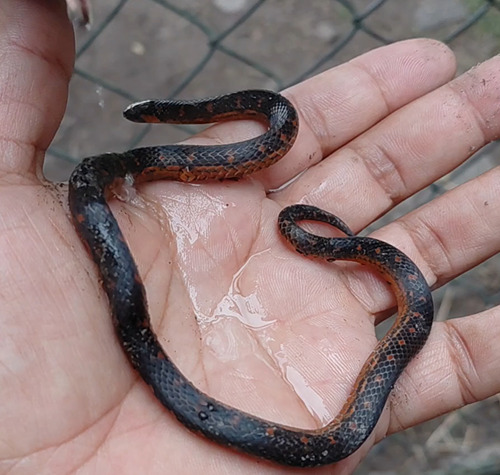 Thickhead Ground SnakeAtractus crassicaudatus
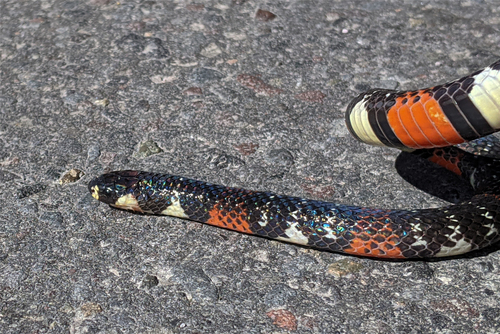 Black Ground SnakeAtractus elaps
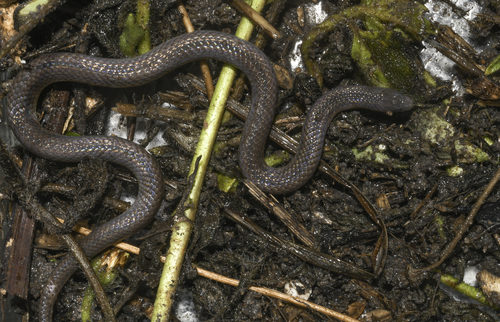 Three-lined Ground SnakeAtractus trilineatus
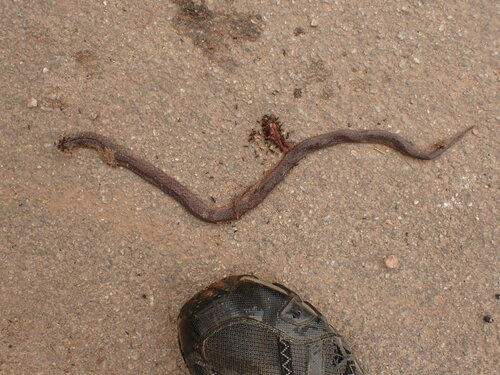 Atractus pantostictusAtractus pantostictus
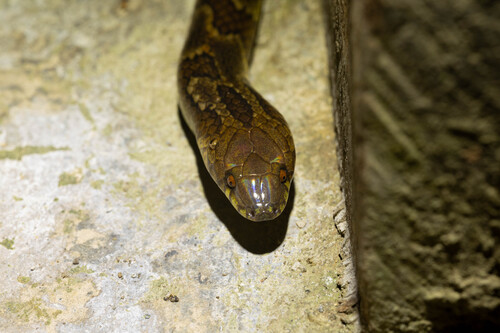 Big Ground SnakeAtractus major
 Lasalle's Ground SnakeAtractus lasallei
 St. Marta's Ground SnakeAtractus sanctaemartae
 Boie's Ground SnakeAtractus badius
Classification
How scientists group this snake, from the broadest category down to the exact species. Each step narrows to its closest relatives.
- OrderThe broad group of scaled reptiles: all snakes and lizards
- Squamata
- FamilyA group of related snakes that share key traits
- Colubridae
- GenusA close-knit group of very similar species
- Atractus
- SpeciesThis exact snake, named in the two-part scientific name
- Atractus zgap
Keep learning
- What to Do If You Find a SnakeFound a snake at home or on a trail? Here is how to stay calm, give it space, identify it safely, and know when to call a professional.
- Venomous vs Nonvenomous: How to Tell the DifferenceThe folk rules for telling venomous snakes apart, where each one fails, and why location-based identification beats guessing by sight.
- What Is a Snake? Anatomy and the BasicsA clear overview of what makes a snake a snake: limbless body plan, anatomy, evolution from lizards, species diversity, and why they are ectothermic.
- How to Keep Snakes Out of Your Yard and HomeA practical guide to keeping snakes out of your yard and home using habitat changes that work, plus what to skip and what to do if one shows up.
Distribution from GBIF & iNaturalist. Venom status per CDC. Background: Wikipedia. Informational only. Never handle a snake to identify it.