
Genus · Atractaspididae
Types of quill-snouted snakes
3 species make up the genus Xenocalamus, the snakes commonly called quill-snouted snakes. None are considered dangerous to humans.
About quill-snouted snakes
Slim, burrowing African snakes with a hardened, pointed snout built for tunneling through sandy soil.
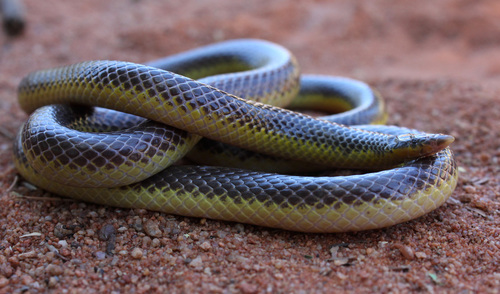
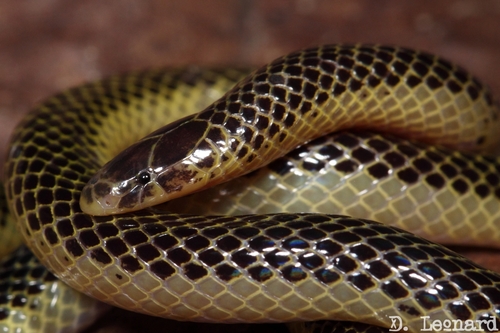
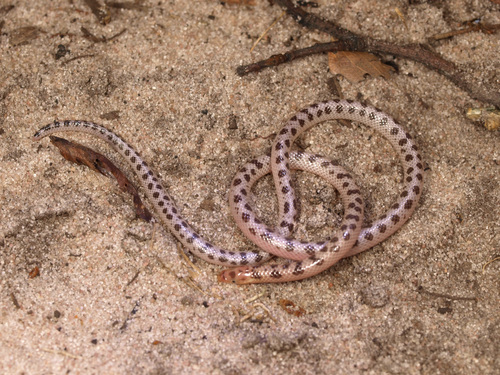
Xenocalamus is a small genus of African snakes in the family Atractaspididae, the same family that includes the stiletto snakes and other African burrowing species. The members are known in plain language as quill-snouted snakes, a name that comes from the distinctly pointed, reinforced snout that gives the head a quill-like or wedge shape. Our database holds three species in this genus, including the Slender Quill-snouted Snake, the Transvaal Quill-snouted Snake, and the Elongate Quill-snouted Snake.
These snakes are found in sub-Saharan Africa, with a center of diversity in southern Africa. They are fossorial, meaning they live almost entirely underground or beneath surface cover. Typical habitat is loose, sandy or sandy-loam soil in savanna and grassland, the kind of ground that is easy for a slender snake to push through. Because they spend their lives below the surface, people rarely encounter them, and most sightings happen after heavy rain, when ground is disturbed, or at night.
Members are recognized in general terms by a very thin, elongate, cylindrical body, smooth scales, small eyes, and that characteristic hardened, pointed snout used to burrow. Coloration is usually plain and unpatterned, often in shades of purplish brown, gray, or with paler underparts, suiting a life spent out of sight. The head is barely distinct from the neck, a body plan typical of dedicated burrowers.
Snakes in the family Atractaspididae are rear-fanged or front-fanged venomous species, and venom details for the obscure burrowing genera like Xenocalamus are not well documented. The honest framing is to treat any quill-snouted snake as a wild venomous-family snake of unknown risk rather than as a harmless animal. Do not handle a wild snake you cannot positively identify. If a bite occurs, or if there is any uncertainty, seek emergency medical care immediately and contact US Poison Control at 1-800-222-1222 or your local emergency services. Do not rely on home first aid.
Ecologically, quill-snouted snakes are specialist feeders, preying largely on other elongate burrowing reptiles such as amphisbaenians (worm lizards) and other small fossorial squamates that they hunt underground. They are egg-laying snakes. Their behavior is secretive and non-aggressive toward people simply because they are so rarely above ground, which is why they pose little practical risk to the average person who is not digging them up or handling them.
Xenocalamus belongs to the Atractaspididae family (Stiletto snakes (burrowing asps)). Burrowing venomous snakes that stab sideways, and cannot be safely held. Small, glossy, uniformly dark, with tiny eyes and a blunt head no wider than the neck. The side-stabbing strike is unique.
Danger: Venomous. Bites cause intense local pain and tissue damage; most are not life-threatening but require medical care. Never attempt to pick one up.
All species (3)
Keep learning
- What Is a Snake? Anatomy and the BasicsA clear overview of what makes a snake a snake: limbless body plan, anatomy, evolution from lizards, species diversity, and why they are ectothermic.
- How Snakes Move, Hunt, and EatHow snakes move without legs, hunt as ambushers or active foragers, kill by constriction or venom, and swallow prey wider than their head.
- What Do Snakes Eat?All snakes are carnivores. Learn what snakes eat, how diet changes with size and age, how often they feed, and how they hunt and swallow prey.
- Venomous vs Nonvenomous: How to Tell the DifferenceThe folk rules for telling venomous snakes apart, where each one fails, and why location-based identification beats guessing by sight.