
Elapidae
Sinomicrurus iwasakii
VenomousThis species has no widely used English common name.
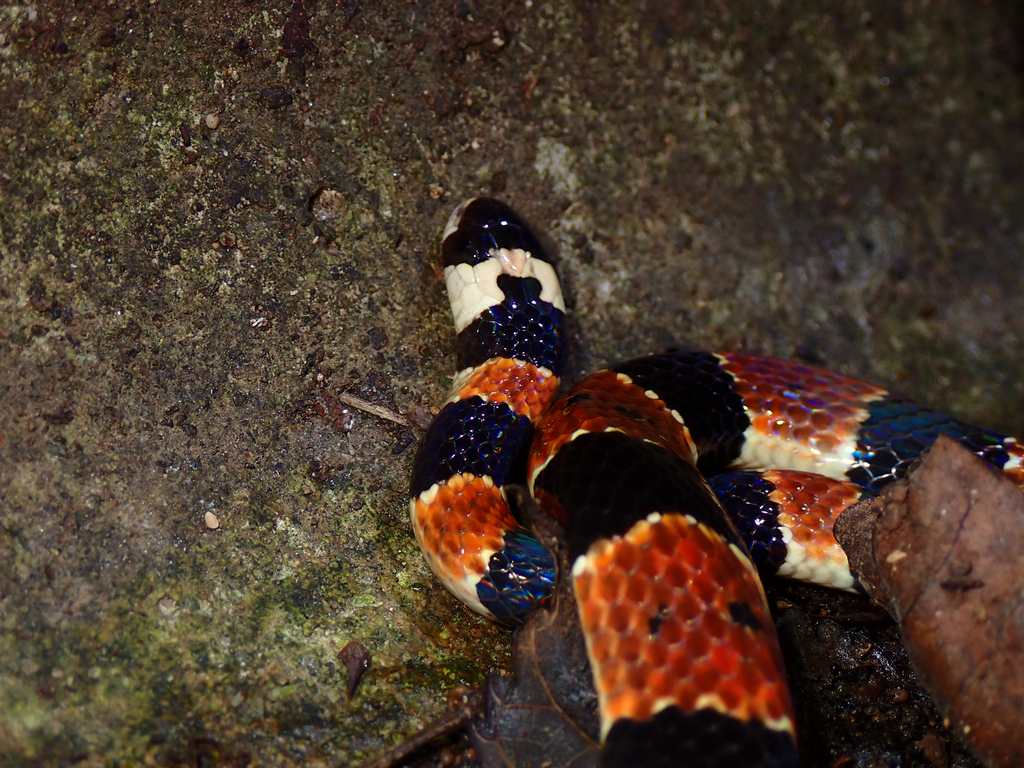
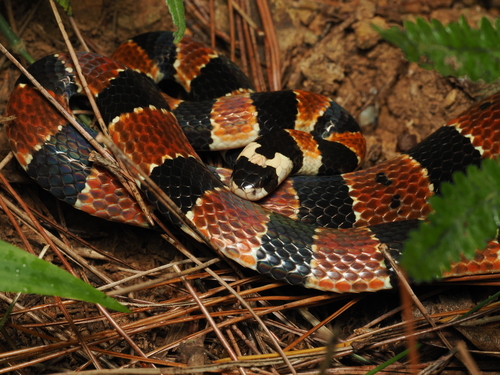
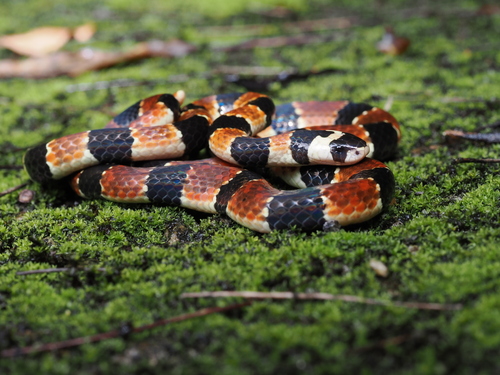
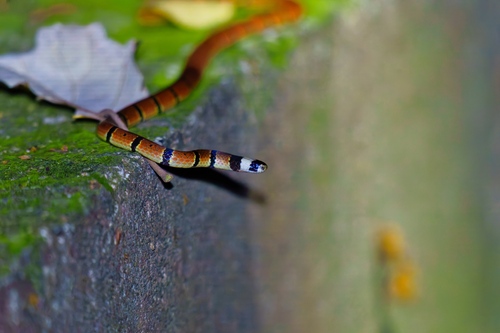
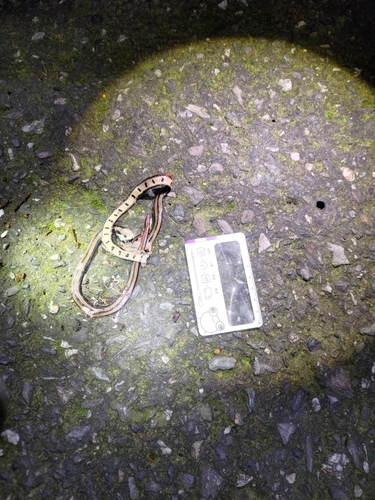
3 photographs of the Sinomicrurus iwasakii. (c) miyama, some rights reserved (CC BY-NC).
Sinomicrurus iwasakii is a venomous snake in the Elapidae family.
If you are bitten
This is a venomous snake. Treat any bite as a medical emergency: stay calm, keep the bitten limb still and roughly level with the heart, remove rings and tight clothing, and get to emergency care immediately. Do not apply a tourniquet, cut the wound, apply ice, or try to suck out venom. Call your local emergency number or poison center.
- Family
- Elapidae
- Danger
- high
About the Sinomicrurus iwasakii
Sinomicrurus iwasakii, the Iwasaki's temperate Asian coralsnake, is a rare species of coral snake from the Ishigaki and Iriomote islands of the Yaeyama Group, Ryukyu Archipelago, Japan. S. iwasakii belongs to the family Elapidae which also includes cobras and sea snakes.
The International Union for the Conservation of Nature (IUCN) Red List does not include S. iwasakii as a species despite species status as of 2021. Other similar Sinomicrurus species are listed as "Unknown" conservation status.
Taxonomy
Sinomicrurus iwasakii was originally described as Calliophis iwasakii by Maki in 1935. It was long thought to be a subspecies of S. macclellandii but was revalidated as a species in 2021 by Smart, Ingrasci and colleagues.
Sinomicrurus iwasakii is part of the "banded" clade shown in Figure 3 of Smart et al. and is most closely related to S. swinhoei from Taiwan. Phylogenetic analysis shows that these two form a distinct and strongly supported lineage, with a posterior probability of 1.00, indicating a high level of confidence in their shared ancestry. This relationship is consistent across both the traditional tree and the Bayesian cloudogram, where the two species cluster tightly together. Their close genetic connection suggests a recent common ancestor and highlights a likely biogeographic link between the Ryukyu Islands and Taiwan, potentially shaped by historical dispersal or land bridge events.
Etymology
The genus Sinomicrurus is derived from the Chinese word sino, meaning "China", and from the Greek mikros, meaning "small", and oura, meaning "tail".
The species is named after Takuji Iwasaki (1869-1937), the chief meteorologist and honorary citizen in Ishigaki-jima. Takuji made major contributions to biology, especially through his work identifying new species. A Japanese article refers to him as, a pioneer in the study of the southern islands.
He identified and named several insects, and raised butterflies such as the Oogomadara (Idea leuconoe), also known as the rice paper or paper kite butterfly, and the Konoha Cho, observing their behavior closely. The Oogomadara is originally from Southeast Asia and is well known for being displayed in butterfly houses.
In herpetology, aside from Iwasaki's coral snake, the Iwasaki Sedaka Hebi (Pareas iwasakii) was named in his honor. Along with his butterflies he raised venomous snakes like the Sakishima habu (Protobothrops elegans) and developed methods for handling them safely.
Common names include Iwasaki's temperate Asian coralsnake, Iwasaki's Korallenotter (German), and in Japanese Iwasaki-monbeni-hebi.
Biology
Description
Sinomicrurus iwasakii is a small species of snake, with most adults measuring between 23 and 33 cm (9 to 13 in) long. Females are usually a little bigger than males. The largest individuals recorded were around 33.5 cm (13.2 in), but snakes this size are rare. On average, males are about 27.2 cm (10.7 in) long, and females about 28 cm (11 in). These snakes are also very light, typically weighing less than 100 grams (3.5 oz).
Adapted from Wikipedia, available under CC BY-SA.
Frequently asked: Sinomicrurus iwasakii
- Is the Sinomicrurus iwasakii venomous?
- Yes. The Sinomicrurus iwasakii is venomous and belongs to the Elapidae family (cobra, mamba, coral or sea snake). Its bite is considered high risk to people. Treat any bite as a medical emergency.
- Is the Sinomicrurus iwasakii poisonous?
- Snakes are venomous, not poisonous. "Poisonous" means harmful to eat or touch; "venomous" means injecting toxins through a bite. The Sinomicrurus iwasakii is venomous, delivering venom through a bite.
- Is the Sinomicrurus iwasakii dangerous?
- This is a venomous snake. Treat any bite as a medical emergency: stay calm, keep the bitten limb still and roughly level with the heart, remove rings and tight clothing, and get to emergency care immediately. Do not apply a tourniquet, cut the wound, apply ice, or try to suck out venom. Call your local emergency number or poison center.
- What does the Sinomicrurus iwasakii eat?
- It is reported to feed on small snakes, but information on its food habits are quite limited. There is one recorded instance where the tail of a Sakishima green snake (Cyclophiops herminae) was found in feces of S. iwasakii.
If you are bitten by the Sinomicrurus iwasakii
Do
- Get away from the snake and stay calm. Most bites worsen when people panic or try again to handle the snake.
- Call 911 or Poison Control (1-800-222-1222) right away. Antivenom works best when given early.
- Note the time of the bite and, from a safe distance, the snake's color and pattern, a phone photo is enough. Do not chase it.
- Keep the bitten limb still and at roughly heart level. Sit or lie down and limit movement.
- Remove rings, watches, and tight clothing near the bite before swelling starts.
- Gently wash the bite with soap and water and cover it with a clean, dry dressing.
Do not
- Do not cut the wound or try to suck out the venom.
- Do not apply a tourniquet or ice.
- Do not drink alcohol or caffeine.
- Do not take aspirin or ibuprofen, they can worsen bleeding. Acetaminophen is safer for pain.
- Do not try to catch or kill the snake. A dead snake can still bite by reflex.
First-aid guidance adapted from the U.S. Centers for Disease Control and Prevention (CDC NIOSH), Venomous Snakes. Educational only; always follow the instructions of emergency responders.
More Elapidae snakes
 Sinomicrurus annularisSinomicrurus annularis
 Swinhoe's Temperate Asian CoralsnakeSinomicrurus swinhoei
 Taiwan Coral SnakeSinomicrurus sauteri
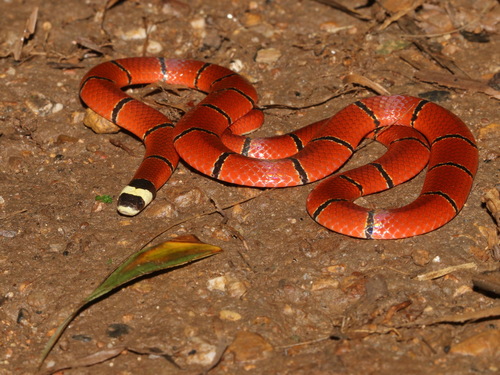 MacClelland’s Coral SnakeSinomicrurus macclellandi
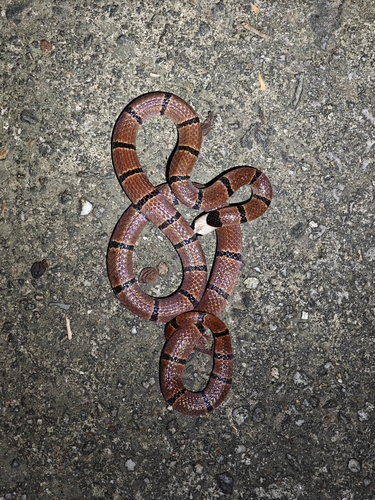 Guangxi Coral SnakeSinomicrurus peinani
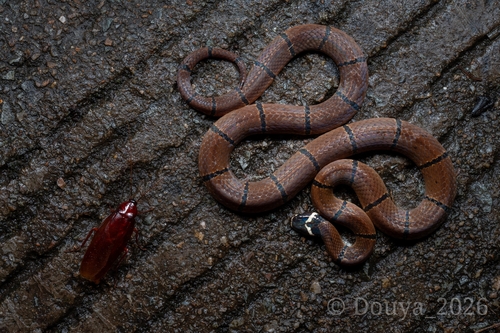 Kellogg's Coral SnakeSinomicrurus kelloggi
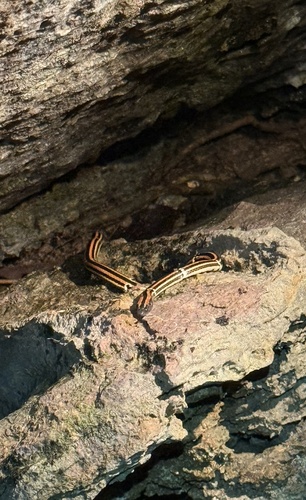 Hai Coral SnakeSinomicrurus boettgeri
 Japanese Coral SnakeSinomicrurus japonicus
Classification
How scientists group this snake, from the broadest category down to the exact species. Each step narrows to its closest relatives.
- OrderThe broad group of scaled reptiles: all snakes and lizards
- Squamata
- FamilyA group of related snakes that share key traits
- Elapidae
- GenusA close-knit group of very similar species
- Sinomicrurus
- SpeciesThis exact snake, named in the two-part scientific name
- Sinomicrurus iwasakii
Keep learning
- Are Snakes Dangerous? The Real Risk, in PerspectiveMost snakes are harmless and avoid people. Here is the honest picture of snakebite risk worldwide and how to lower your own.
- Snakebite First Aid: What to Do (and What Never to Do)A clear, CDC-based guide to snakebite first aid: the steps that help, the popular myths that hurt, and how to tell a serious bite from a minor one.
- Venomous vs Nonvenomous: How to Tell the DifferenceThe folk rules for telling venomous snakes apart, where each one fails, and why location-based identification beats guessing by sight.
- What to Do If You Find a SnakeFound a snake at home or on a trail? Here is how to stay calm, give it space, identify it safely, and know when to call a professional.
Distribution from GBIF & iNaturalist. Venom status per CDC. Background: Wikipedia. Informational only. Never handle a snake to identify it.