
Genus · Elapidae
Types of coral snakes
10 species make up the genus Sinomicrurus, the snakes commonly called coral snakes. All of them are venomous.
About Asian coralsnakes
Small, secretive East Asian elapids whose slim bodies and banded patterns mark them as relatives of the cobras and kraits.
Sinomicrurus is a genus of Asian coralsnakes in the family Elapidae, the front-fanged family that also includes cobras, kraits, mambas, sea snakes, and the coralsnakes of the Americas. The genus was split off from the closely related Asian coralsnake genus Calliophis, and its members share the defining elapid trait of fixed, hollow fangs set at the front of the upper jaw that inject venom through a forward bite. Our database lists 10 species, including Swinhoe's Temperate Asian Coralsnake, the Taiwan Coral Snake, MacClelland's Coral Snake, and the Guangxi Coral Snake.
These are small, slender, secretive snakes built for life close to the ground. Most are modest in length, with smooth, glossy scales, a narrow head barely set off from the neck, and small eyes suited to a hidden life in leaf litter, loose soil, and the damp floor of forests and wooded hills. Many species wear bold banding or contrasting markings, often with dark crossbands on a paler body and bright coloring on the head or tail. Because patterns vary between species and can resemble harmless snakes, color alone is never a reliable way to judge any individual animal.
Sinomicrurus snakes are venomous front-fanged elapids, not rear-fanged or harmless. They are shy and reclusive rather than aggressive, and bites on people are uncommon because the snakes are easy to overlook and quick to hide. Even so, these are true elapids whose venom can be medically significant, and the genus should be treated with respect. Never handle a wild venomous snake, and never assume a coralsnake-patterned animal is safe. If a bite occurs, treat it as a medical emergency, keep the person calm and still, and seek care immediately by calling local emergency services or, in the US, Poison Control at 1-800-222-1222.
Ecologically, these are specialist hunters of the forest floor. Like many Asian coralsnakes, they feed heavily on other small, elongate animals, especially other snakes and snakelike reptiles, which they pursue through burrows, leaf litter, and ground cover. They are largely nocturnal or active at dawn and dusk, spending daylight hidden underground or beneath logs and debris. As is typical for the group, the known species lay eggs, producing small clutches, though detailed life history remains undocumented for several of the rarer forms.
Much of what is firmly established about Sinomicrurus comes from family-level elapid biology and from the better-studied species such as the Taiwan Coral Snake; several members are seldom seen and only thinly described. What is reliable is the core picture: small, secretive, ground-dwelling East Asian elapids with fixed front fangs and venom that warrants caution. They are far more a quiet part of the forest floor than a threat to people who leave them alone.
Sinomicrurus belongs to the Elapidae family (Cobras, mambas, coral & sea snakes). Front-fanged venomous snakes, many with potent neurotoxic venom. Usually slender with a head barely wider than the neck and fixed front fangs (not the folding fangs of vipers). Coral snakes are boldly ringed; sea snakes have a flattened, paddle-like tail.
Danger: All elapids are venomous and the family is responsible for a large share of fatal snakebites worldwide. Many are shy, but bites can be life-threatening. Treat any bite as a medical emergency.
All species (10)
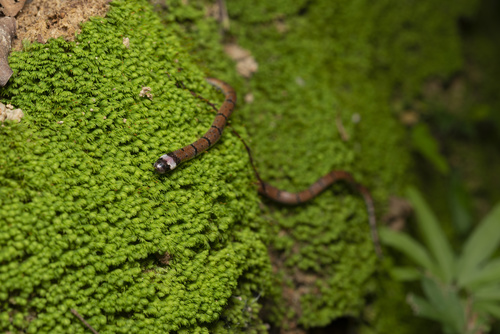 Sinomicrurus annularisVenomous
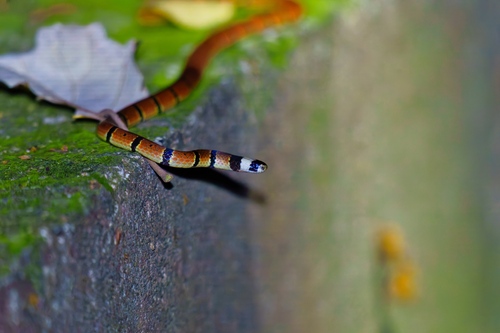 Swinhoe's Temperate Asian CoralsnakeSinomicrurus swinhoeiVenomous
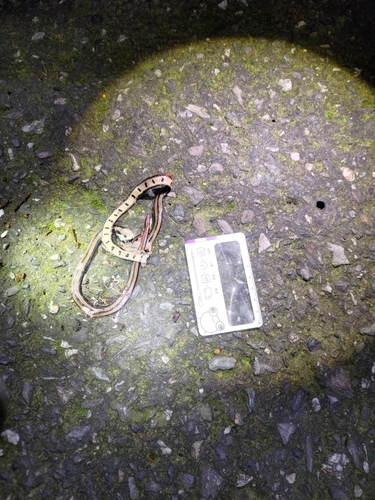 Taiwan Coral SnakeSinomicrurus sauteriVenomous
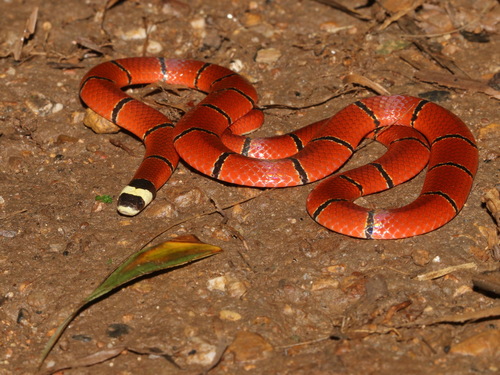 MacClelland’s Coral SnakeSinomicrurus macclellandiVenomous
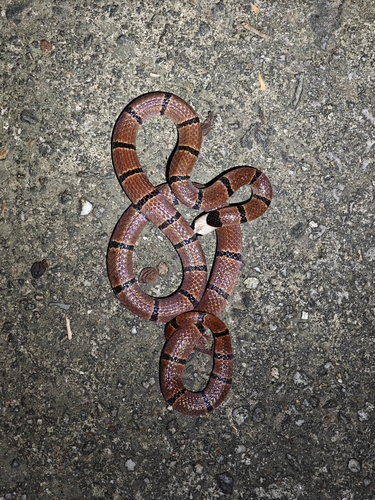 Guangxi Coral SnakeSinomicrurus peinaniVenomous
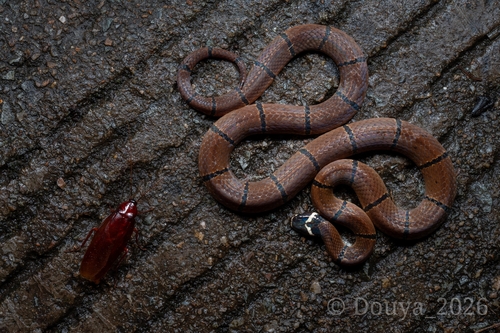 Kellogg's Coral SnakeSinomicrurus kelloggiVenomous
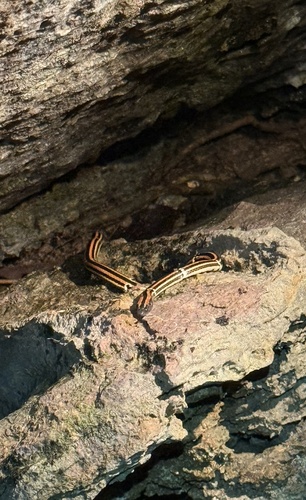 Hai Coral SnakeSinomicrurus boettgeriVenomous
 Japanese Coral SnakeSinomicrurus japonicusVenomous
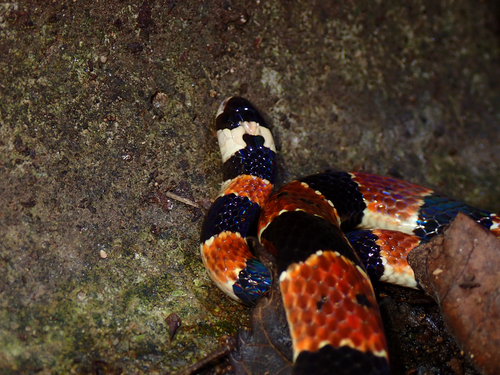 Sinomicrurus iwasakiiVenomous
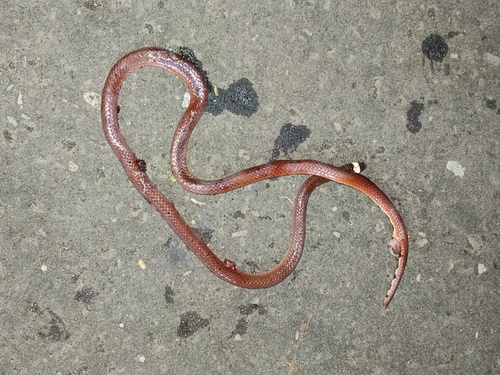 Gore's coral snakeSinomicrurus goreiVenomous
Keep learning
- Venomous vs Nonvenomous: How to Tell the DifferenceThe folk rules for telling venomous snakes apart, where each one fails, and why location-based identification beats guessing by sight.
- Are Snakes Dangerous? The Real Risk, in PerspectiveMost snakes are harmless and avoid people. Here is the honest picture of snakebite risk worldwide and how to lower your own.
- Snake Venom Explained: How It Works and WhyWhat snake venom actually is, why it evolved, the main venom types, fang delivery, how antivenom works, and why ranking the most venomous snake is hard.
- How Snakes Move, Hunt, and EatHow snakes move without legs, hunt as ambushers or active foragers, kill by constriction or venom, and swallow prey wider than their head.