
Colubridae
Ringed Kukri Snake
HarmlessOligodon annulifer
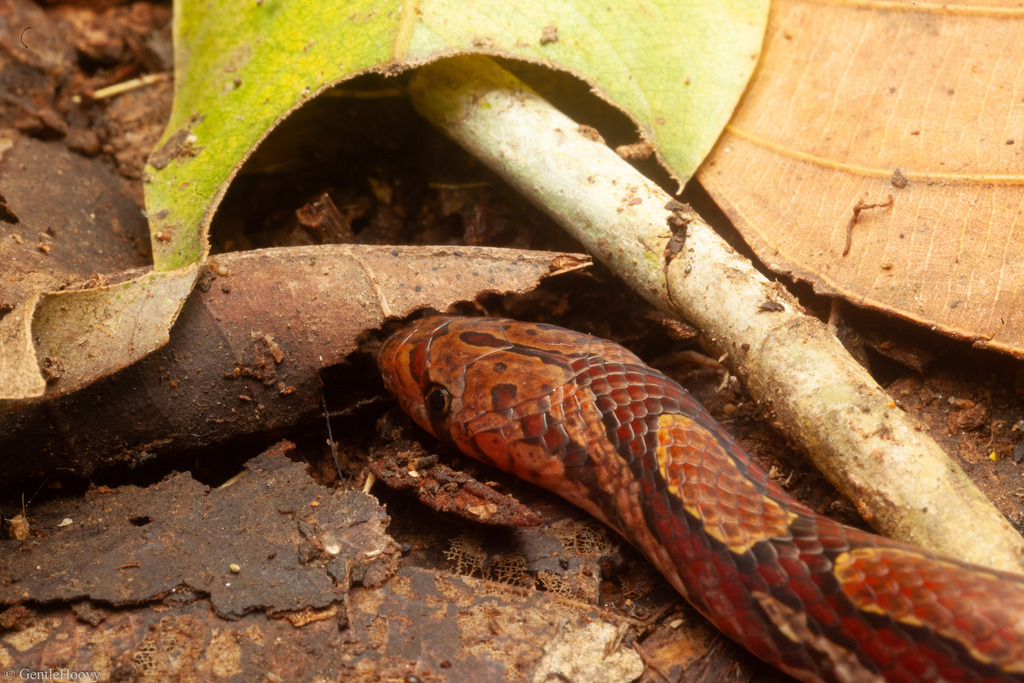
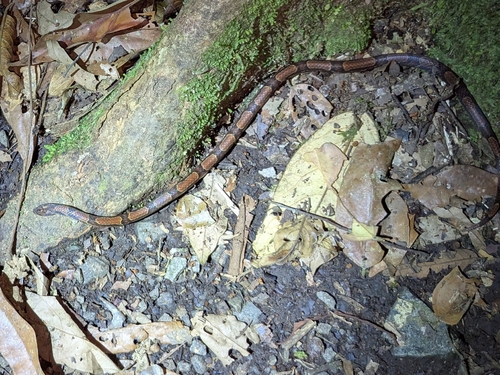
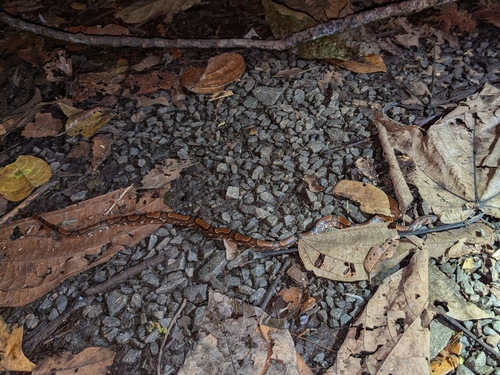
3 photographs of the Ringed Kukri Snake. (c) GentleHoovy, some rights reserved (CC BY-NC).
The Ringed Kukri Snake (Oligodon annulifer) is a non-venomous snake in the Colubridae family, recorded in 2 countries.
- Family
- Colubridae
About the Ringed Kukri Snake
Oligodon annulifer, also known as the ringed kukri snake, is a colubrid snake endemic to the island of Borneo.
Taxonomy
O. annulifer has a poorly known classification. A number of other species were originally listed as subspecies of it. A 1999 paper suggested that O. annulifer, which at that point was only known from four juvenile specimens, was actually only a juvenile of a different Oligodon species. However, a 2010 paper confirmed the existence of O. annulifer as a distinct species, based on the recent capture of an adult specimen. The species name annulifer derives from the Latin word anus which means "ring," and the word fero, which means "carry." Oligodon annulifer is a member of the genus Oligodon, a genus common throughout central and tropical Asia. The genus belongs to the snake family Colubridae, the largest snake family, with member species being found on every continent except Antarctica.
Description
The species is brown on the back, with black rings that contained oval yellowish-brown spots. A specimen described in 1893 had 26 such rings. The sides of the snake are black, with yellowish lines, and the head is also yellowish brown. It has a dark bar across the forehead, and a dark inverted Y shape above the nape of the neck. The underside of the snake is white, with small black dots. The 1893 specimen, which was a young snake, was 16 centimeters long.
Habitat and ecology
Oligodon annulifer is oviparous, or egg-laying. The species is known to eat the eggs of other reptiles, and it has teeth which are adapted for this purpose; they are sharply edged, to slit eggs easily. It primarily lives in lowland rainforest, and it is a terrestrial, or ground-dwelling, species.
Distribution
O. annulifer is found on the island of Borneo, where it is thought to be endemic. Specimens have been caught at five different locations across the island, including at Bukit-Baka National Park in Indonesia and the Ulu Temburong National Park in Brunei. It is not thought to be very abundant. It has been observed at up to 100 meters above sea level.
Oligodon annulifer has been described from five scattered locations in Borneo, including from inside two protected areas. This broad distribution has led to the IUCN classifying it as a species of "least concern." The habitat that it occupies, lowland rainforest, is under threat from human activity, specifically agricultural activity for the production of palm oil. However, the effect of this activity, which also includes logging and mining, on the snake is not known.
Adapted from Wikipedia, available under CC BY-SA.
Frequently asked: Ringed Kukri Snake
- Is the Ringed Kukri Snake venomous?
- No. The Ringed Kukri Snake (Oligodon annulifer) is non-venomous and is not considered dangerous to humans. Like most snakes, it will retreat rather than bite when given the chance.
- Is the Ringed Kukri Snake poisonous?
- Snakes are venomous, not poisonous. "Poisonous" means harmful to eat or touch; "venomous" means injecting toxins through a bite. The Ringed Kukri Snake is neither poisonous nor venomous.
- Is the Ringed Kukri Snake dangerous?
- The Ringed Kukri Snake is not dangerous to humans. It has no medically significant venom and bites only defensively if cornered or handled.
- Where does the Ringed Kukri Snake live?
- The Ringed Kukri Snake has verified records in 2 countries, including Malaysia, Indonesia. See the distribution section below for its full range.
Where it is found
More Colubridae snakes
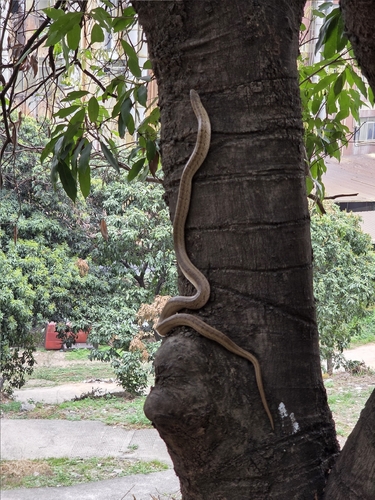 Taiwan Kukri SnakeOligodon formosanus
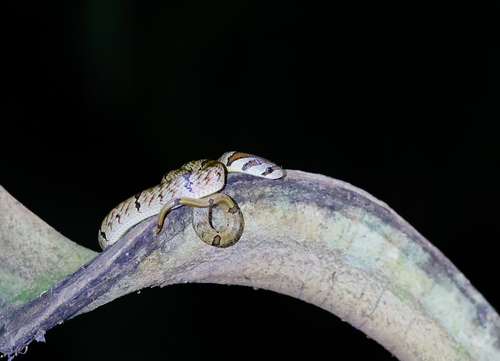 Small-banded Kukri SnakeOligodon fasciolatus
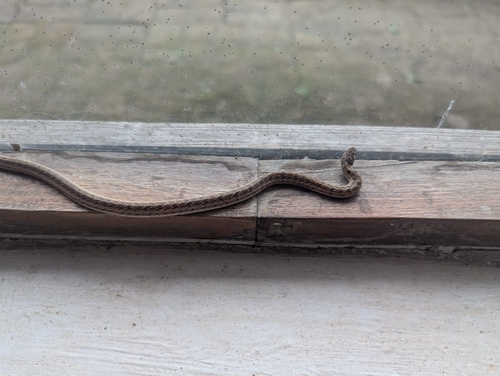 Streaked Kukri SnakeOligodon taeniolatus
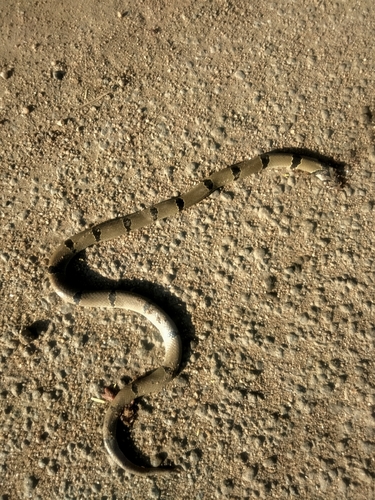 Banded kukri snakeOligodon arnensis
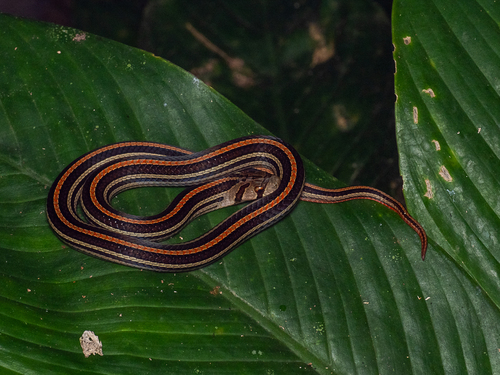 Eight-striped Kukri SnakeOligodon octolineatus
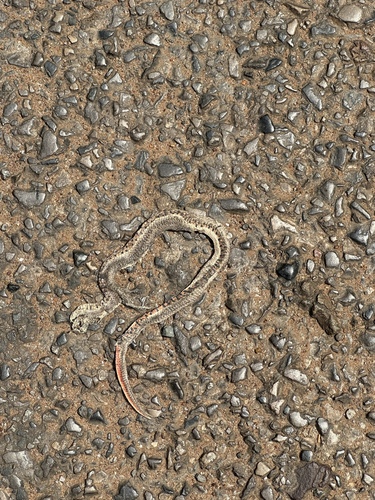 Striped Kukri SnakeOligodon taeniatus
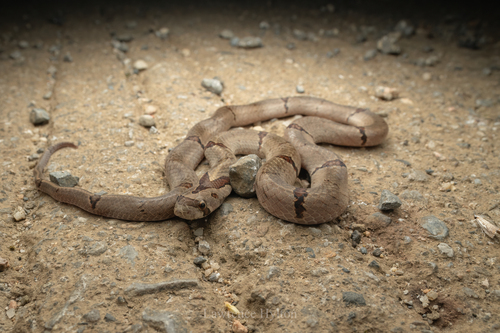 Chinese Kukri SnakeOligodon chinensis
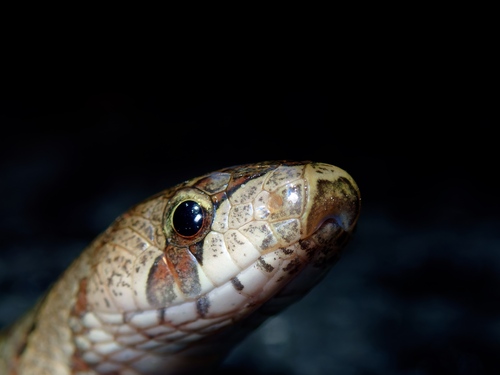 Brown Kukri SnakeOligodon purpurascens
Classification
How scientists group this snake, from the broadest category down to the exact species. Each step narrows to its closest relatives.
- OrderThe broad group of scaled reptiles: all snakes and lizards
- Squamata
- FamilyA group of related snakes that share key traits
- Colubridae
- GenusA close-knit group of very similar species
- Oligodon
- SpeciesThis exact snake, named in the two-part scientific name
- Oligodon annulifer
Keep learning
- What to Do If You Find a SnakeFound a snake at home or on a trail? Here is how to stay calm, give it space, identify it safely, and know when to call a professional.
- Venomous vs Nonvenomous: How to Tell the DifferenceThe folk rules for telling venomous snakes apart, where each one fails, and why location-based identification beats guessing by sight.
- What Is a Snake? Anatomy and the BasicsA clear overview of what makes a snake a snake: limbless body plan, anatomy, evolution from lizards, species diversity, and why they are ectothermic.
- How to Keep Snakes Out of Your Yard and HomeA practical guide to keeping snakes out of your yard and home using habitat changes that work, plus what to skip and what to do if one shows up.
Distribution from GBIF & iNaturalist. Venom status per CDC. Background: Wikipedia. Informational only. Never handle a snake to identify it.