
Uropeltidae
Nilgiri Uropeltis
HarmlessUropeltis ocellata
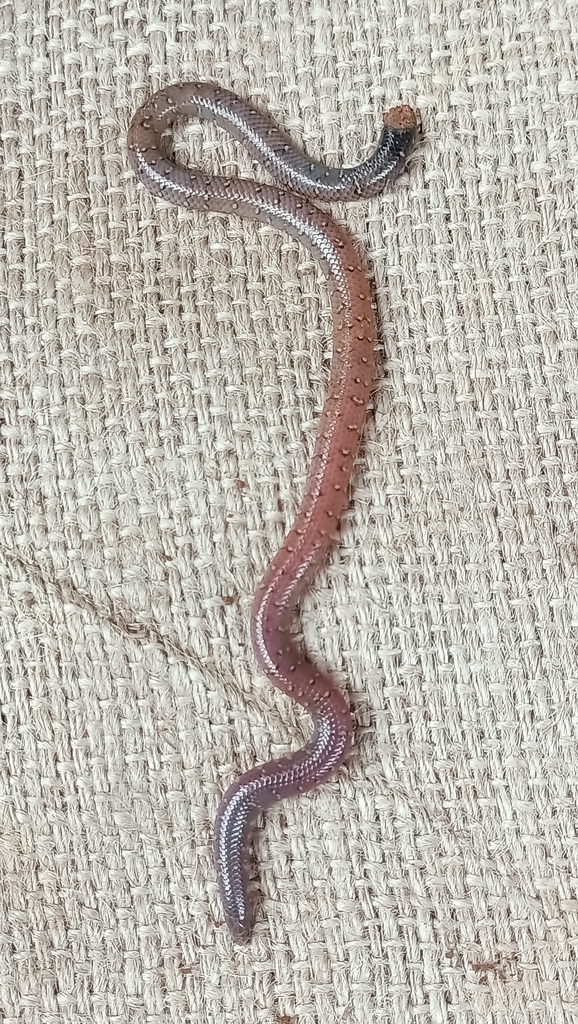
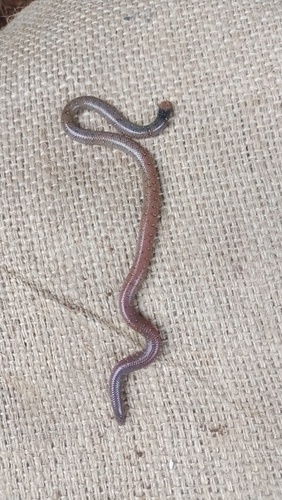
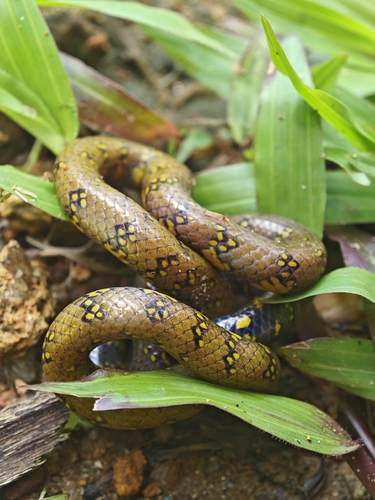
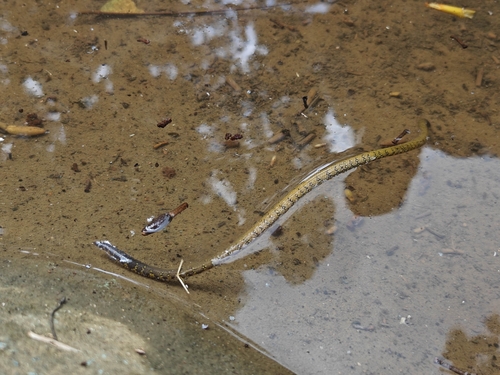
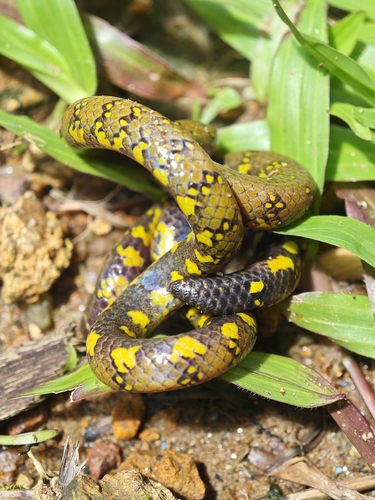
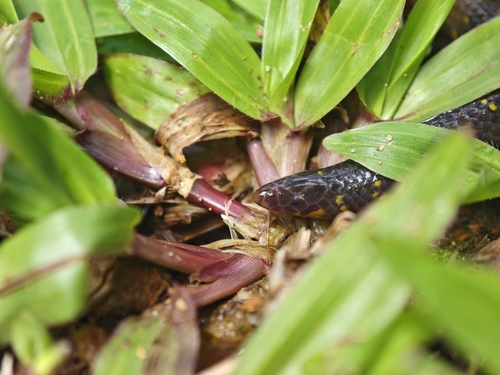
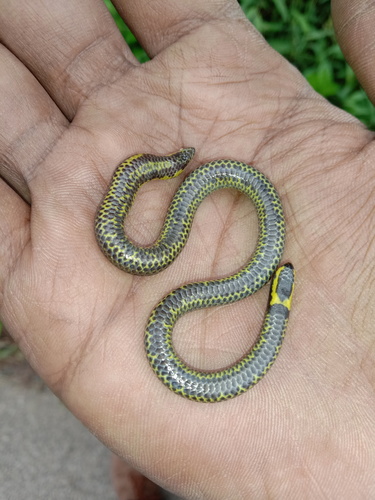
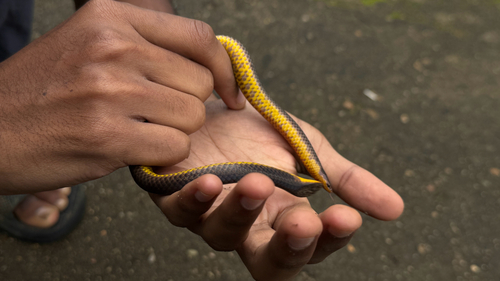
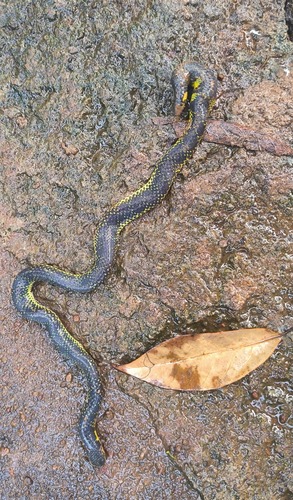
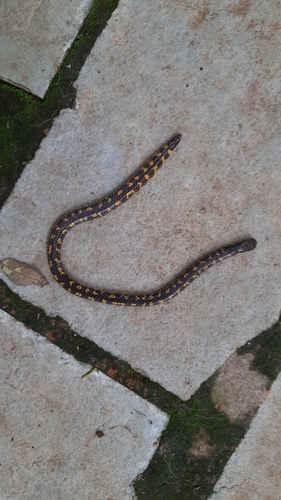
6 photographs of the Nilgiri Uropeltis. © sumathiprakash.
The Nilgiri Uropeltis (Uropeltis ocellata) is a non-venomous snake in the Uropeltidae family, recorded in 1 country.
- Family
- Uropeltidae
About the Nilgiri Uropeltis
Common names: ocellated earth snake, ocellated shieldtail, Nilgiri uropeltis.
Uropeltis ocellata is a species of non-venomous shieldtail snake in the family Uropeltidae. The species is indigenous to southern India. There are no subspecies that are recognized as being valid.
Description
The following description of U. ocellata is from Beddome, 1864: "rostral pointed and much produced; nasal scutella meeting behind the rostral, and separating it from the [pre]frontals; eye very small, obscure, in [the] front of [the] ocular shield; other shields and labials as in the genus; scales round the neck in 18 rows, round the trunk in 17; caudal disk not very clearly defined; scales 2-5-keeled; terminal shield entire, or slightly 2-3-pronged; abdominals 199; subcaudals 8 or 10 pairs, some generally entire. Total length 14.5 inches (37 cm). Colour of the body of the male yellowish, becoming gradually brown near the head and tail, of the female dull brownish, of the young dark purplish brown; all banded with transverse rows of four or five black-edged white or yellow spots (like eyes), generally rather irregularly placed. Sides of the belly with transverse, very irregular shaped, yellow or white blotches, rarely meeting over the abdominals, and forming a transverse band."
Rostral about ¼ the length of the shielded part of the head. Portion of the rostral visible from above longer than its distance from the frontal. Frontal usually longer than broad. Eye very small, its diameter slightly less than ⅓ the length of the ocular shield. Diameter of body 30 to 46 times in the total length. Ventrals about two times as large as the contiguous scales. Tail rounded or slightly flattened. The longest specimen measured by Boulenger was 50 cm (19+5⁄8 in) in total length.
Geographic range
U. ocellata is found in southern India in the Western Ghats: south of the Goa Gap, Anaimalai, Cardamom (southern Kerala), Munnar Hills, Nilgiri Hills and Trivandrum. The type locality given is "at Walaghat on the western slopes of the Neilgherries in the dense forests at an elevation of 3,500 feet" (1,067 m).
Habitat
The preferred natural habitat of U. ocellata is forest, at altitudes of 600–2,000 m (2,000–6,600 ft).
Behaviour
U. ocellata is terrestrial and fossorial.
Diet
U. ocellata preys predominately upon earthworms.
Reproduction
U. ocellata is ovoviviparous. Adult females have been observed to be gravid in July.
Adapted from Wikipedia, available under CC BY-SA.
Frequently asked: Nilgiri Uropeltis
- Is the Nilgiri Uropeltis venomous?
- No. The Nilgiri Uropeltis (Uropeltis ocellata) is non-venomous and is not considered dangerous to humans. Like most snakes, it will retreat rather than bite when given the chance.
- Is the Nilgiri Uropeltis poisonous?
- Snakes are venomous, not poisonous. "Poisonous" means harmful to eat or touch; "venomous" means injecting toxins through a bite. The Nilgiri Uropeltis is neither poisonous nor venomous.
- Is the Nilgiri Uropeltis dangerous?
- The Nilgiri Uropeltis is not dangerous to humans. It has no medically significant venom and bites only defensively if cornered or handled.
- Where does the Nilgiri Uropeltis live?
- The Nilgiri Uropeltis has verified records in 1 country, including India. See the distribution section below for its full range.
- What does the Nilgiri Uropeltis eat?
- U. ocellata preys predominately upon earthworms.
Where it is found
More Uropeltidae snakes
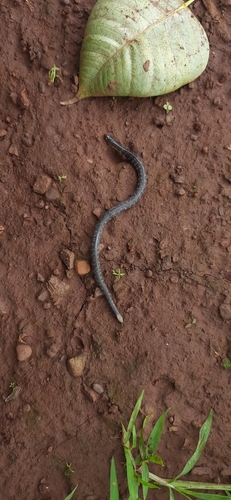 Bombay Earth SnakeUropeltis macrolepis
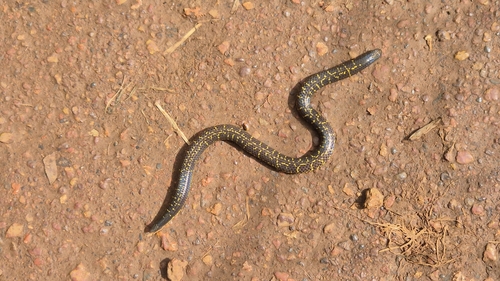 Phipson's ShieldtailUropeltis phipsonii
 Elliot's Earth SnakeUropeltis ellioti
 Kerala ShieldtailUropeltis ceylanica
 Boulenger's Earth SnakeUropeltis myhendrae
 Shevaroy Hills earth snakeUropeltis shorttii
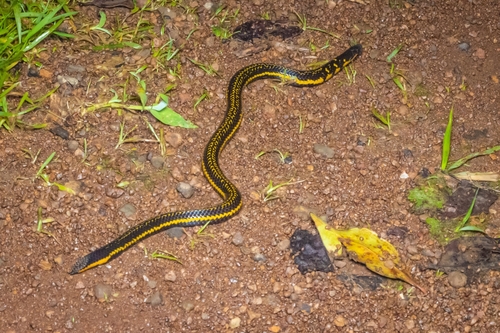 Bicatenate UropeltisUropeltis bicatenata
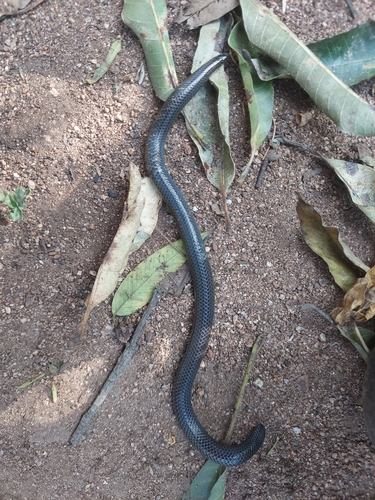 Uropeltis jerdoniUropeltis jerdoni
Classification
How scientists group this snake, from the broadest category down to the exact species. Each step narrows to its closest relatives.
- OrderThe broad group of scaled reptiles: all snakes and lizards
- Squamata
- FamilyA group of related snakes that share key traits
- Uropeltidae
- GenusA close-knit group of very similar species
- Uropeltis
- SpeciesThis exact snake, named in the two-part scientific name
- Uropeltis ocellata
Keep learning
- What to Do If You Find a SnakeFound a snake at home or on a trail? Here is how to stay calm, give it space, identify it safely, and know when to call a professional.
- Venomous vs Nonvenomous: How to Tell the DifferenceThe folk rules for telling venomous snakes apart, where each one fails, and why location-based identification beats guessing by sight.
- What Is a Snake? Anatomy and the BasicsA clear overview of what makes a snake a snake: limbless body plan, anatomy, evolution from lizards, species diversity, and why they are ectothermic.
- How to Keep Snakes Out of Your Yard and HomeA practical guide to keeping snakes out of your yard and home using habitat changes that work, plus what to skip and what to do if one shows up.
Distribution from GBIF & iNaturalist. Venom status per CDC. Background: Wikipedia. Informational only. Never handle a snake to identify it.