
Genus · Uropeltidae
Types of earth snakes
10+ species make up the genus Uropeltis, the snakes commonly called earth snakes. None are considered dangerous to humans.
About shieldtail snakes (earth snakes)
Burrowing snakes of South Asia named for the odd, hardened shield at the tip of the tail.
Uropeltis is a genus in the family Uropeltidae, a family of small, dedicated burrowing snakes whose name means shieldtail. Members are commonly called shieldtail snakes or earth snakes. The genus holds many recognized species, including the Bombay Earth Snake, Phipson's Shieldtail, Elliot's Earth Snake, and the Nilgiri Uropeltis. Because these snakes live almost entirely underground and many species look alike, the group is taxonomically challenging and species are best separated by close examination of scales rather than by color.
These snakes are found in southern India and Sri Lanka, where most species are tied to hill forests, the slopes of the Western Ghats, and other moist, well-vegetated uplands. They favor damp soil, leaf litter, root mats, and decaying logs, and they are fossorial, meaning they spend their lives buried. They are rarely seen in the open and usually turn up only when people dig in soil, move stones, or clear debris, or after heavy rain pushes them toward the surface.
Members are best recognized as small, smooth, cylindrical snakes with a short body, a small, pointed head that is barely distinct from the neck, and tiny eyes, all adaptations for pushing through soil. The defining feature is the tail, which ends in a roughened, often disc-like or keeled shield of hardened scales thought to help anchor the snake or plug its burrow. Many species are dark above with iridescent scales and carry bright yellow, orange, or red markings on the underside or flanks. Identifying a given species generally requires counting scales rather than relying on color.
Uropeltis shieldtails are harmless to people. They are not front-fanged venomous snakes, they are not rear-fanged in any medically significant way, and they pose no venom threat through a bite. Their small mouths and secretive, inoffensive nature make encounters very low risk, and they are not considered dangerous. As with any wild animal, the responsible practice is to observe rather than handle, leave the snake undisturbed, and avoid picking up snakes you cannot confidently identify. If anyone is ever bitten by an unidentified snake and there is any doubt, treat it as a medical matter and contact emergency services or, in the United States, Poison Control at 1-800-222-1222.
Ecologically, shieldtails are specialized predators of soft-bodied soil prey, feeding largely on earthworms and other small invertebrates they encounter while tunneling through soil and litter. Unlike many small burrowing snakes, uropeltids give live birth, producing small litters rather than laying eggs. Their behavior is shy and retiring; when uncovered they typically try to burrow away, hide their head, or present the blunt tail shield rather than confront a threat, which is part of why they remain so poorly observed despite being locally common in suitable hill habitat.
Uropeltis belongs to the Uropeltidae family (Shield-tailed snakes). Burrowing snakes with a bizarre, roughened tail tip. Small, glossy, cylindrical, with tiny eyes and a distinctive truncated or rough tail tip.
Danger: Harmless. No venom.
All species (18)
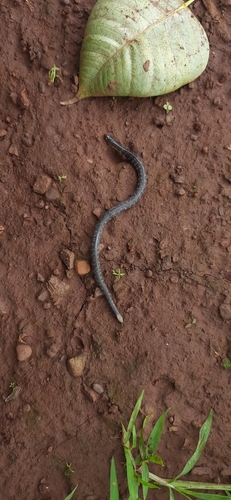 Bombay Earth SnakeUropeltis macrolepisHarmless
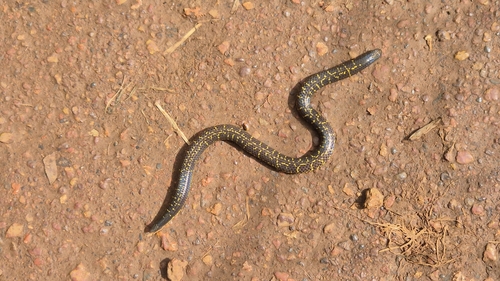 Phipson's ShieldtailUropeltis phipsoniiHarmless
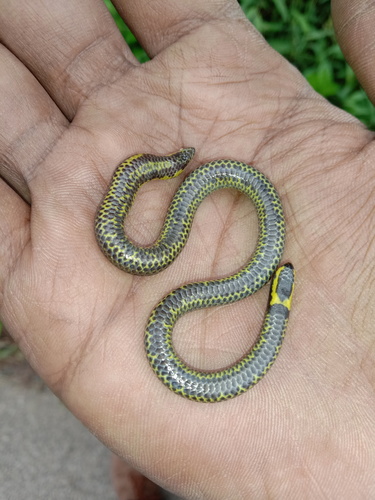 Elliot's Earth SnakeUropeltis elliotiHarmless
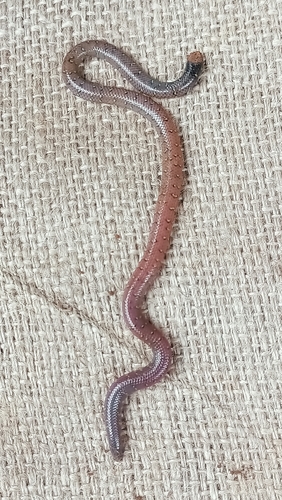 Nilgiri UropeltisUropeltis ocellataHarmless
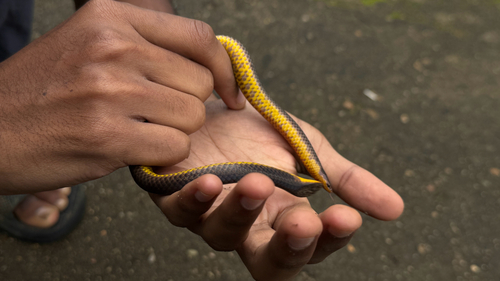 Kerala ShieldtailUropeltis ceylanicaHarmless
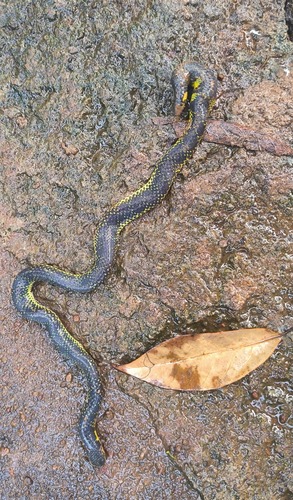 Boulenger's Earth SnakeUropeltis myhendraeHarmless
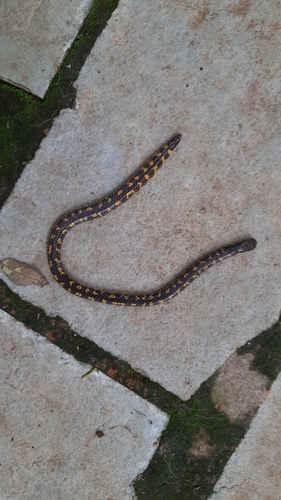 Shevaroy Hills earth snakeUropeltis shorttiiHarmless
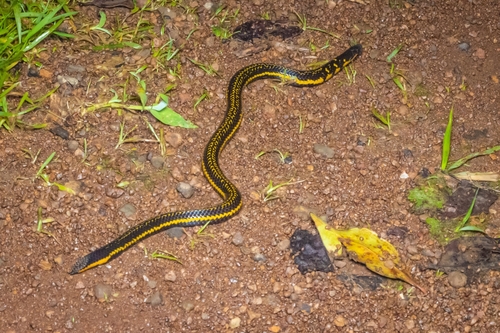 Bicatenate UropeltisUropeltis bicatenataHarmless
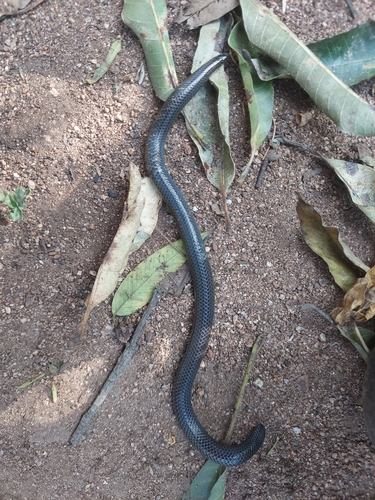 Uropeltis jerdoniHarmless
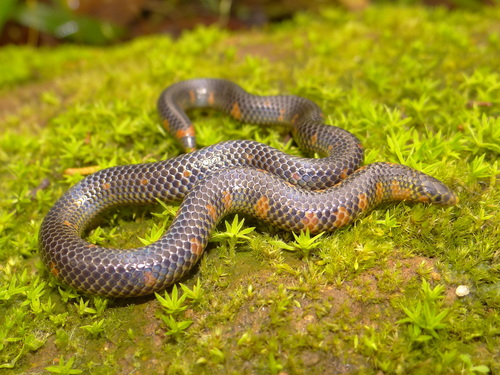 Spotted Earth SnakeUropeltis maculataHarmless
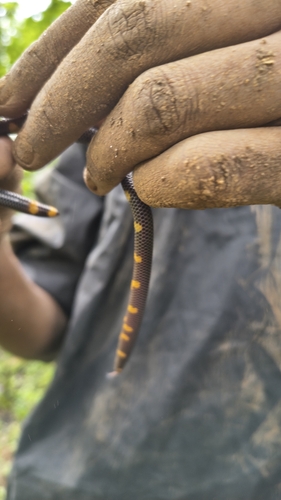 Tailspot UropeltisUropeltis caudomaculataHarmless
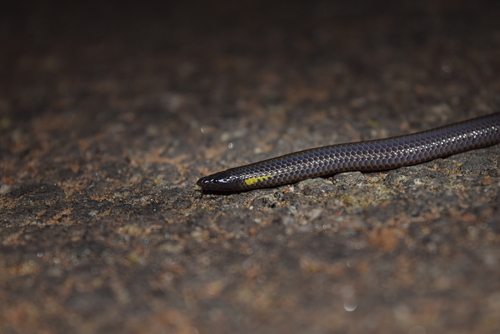 Bhupathy’s shieldtailUropeltis bhupathyiHarmless
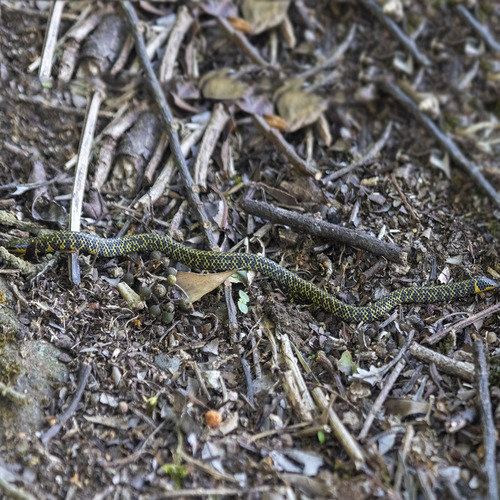 Madurai ShieldtailUropeltis madurensisHarmless
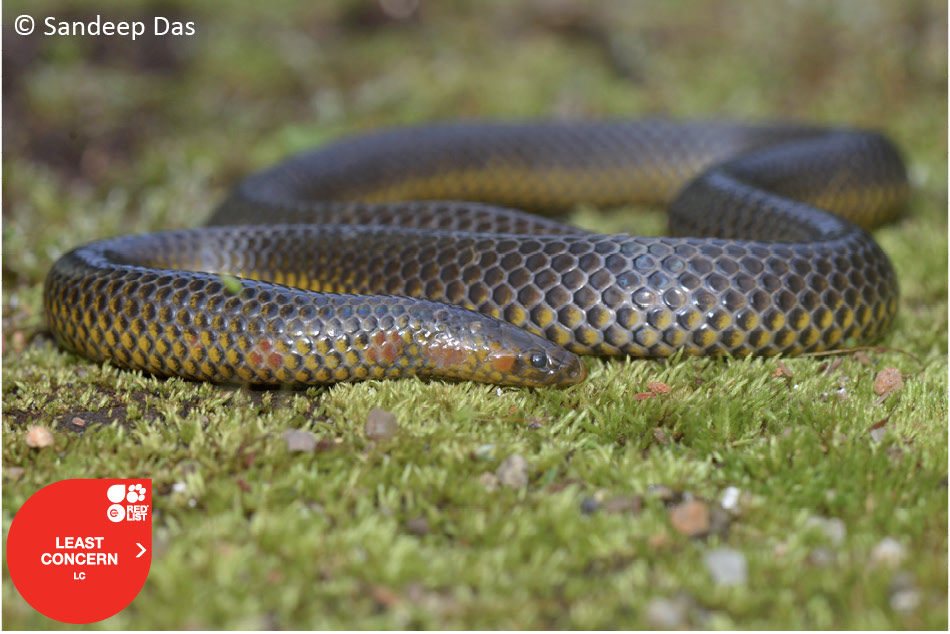 Red-spotted ShieldtailUropeltis rubromaculataHarmless
 Indian Earth SnakeUropeltis pulneyensisHarmless
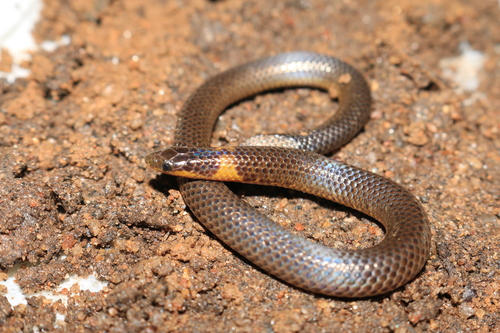 Gunther's ShieldtailUropeltis arcticepsHarmless
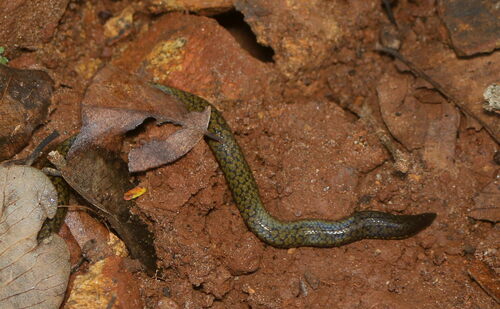 Sirumalai Hills Earth SnakeUropeltis dindigalensisHarmless
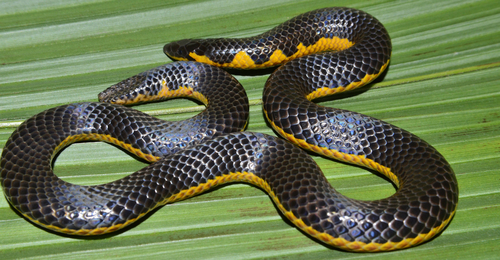 Red-lined Earth SnakeUropeltis rubrolineataHarmless
Keep learning
- What Is a Snake? Anatomy and the BasicsA clear overview of what makes a snake a snake: limbless body plan, anatomy, evolution from lizards, species diversity, and why they are ectothermic.
- How Snakes Move, Hunt, and EatHow snakes move without legs, hunt as ambushers or active foragers, kill by constriction or venom, and swallow prey wider than their head.
- What Do Snakes Eat?All snakes are carnivores. Learn what snakes eat, how diet changes with size and age, how often they feed, and how they hunt and swallow prey.
- Venomous vs Nonvenomous: How to Tell the DifferenceThe folk rules for telling venomous snakes apart, where each one fails, and why location-based identification beats guessing by sight.