
Colubridae
Loranca's Earth Snake
HarmlessGeophis lorancai
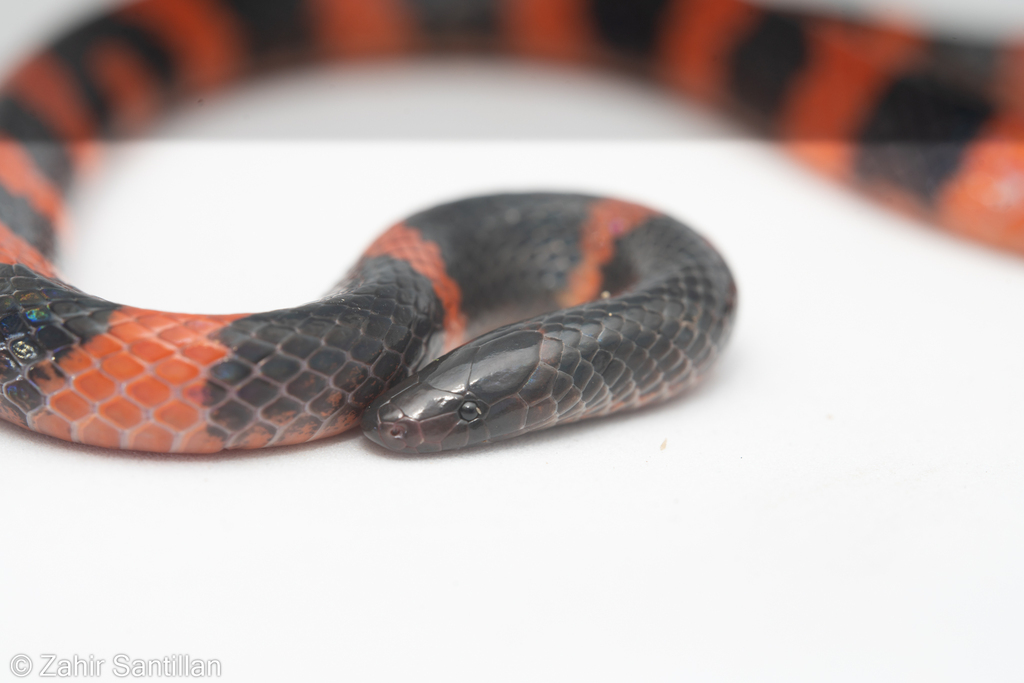
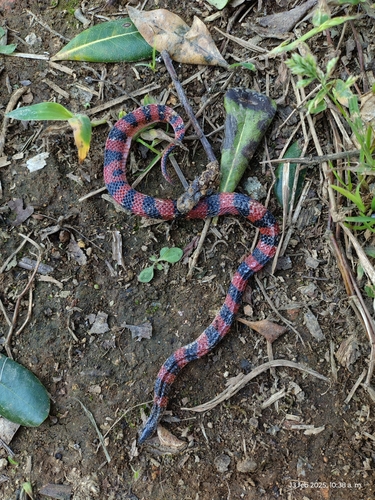
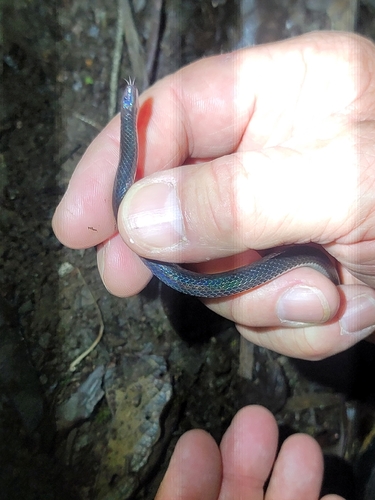
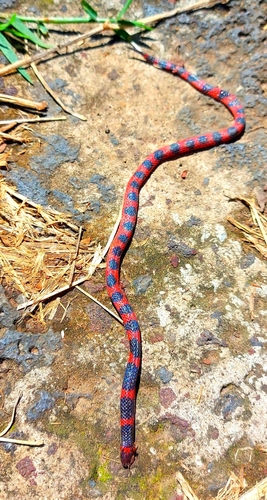
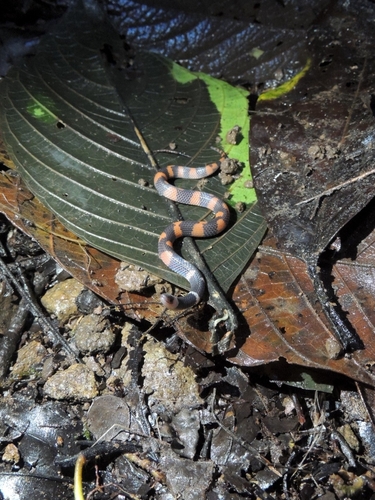
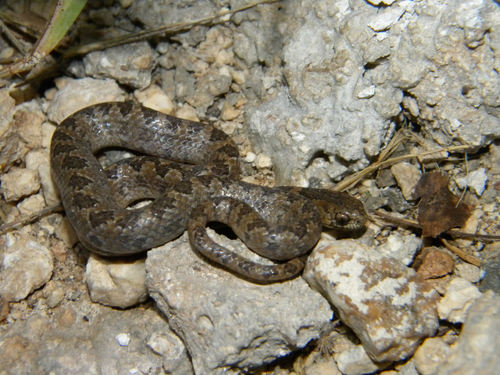
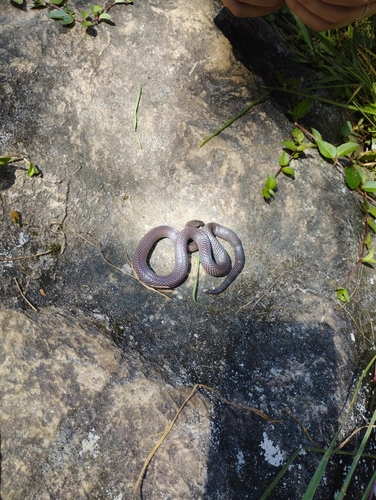
3 photographs of the Loranca's Earth Snake. (c) zahir santillan, some rights reserved (CC BY-NC).
The Loranca's Earth Snake (Geophis lorancai) is a non-venomous snake in the Colubridae family, recorded in 1 country.
- Family
- Colubridae
About the Loranca's Earth Snake
Geophis lorancai is a snake of the colubrid family. It was formally described in 2016 and is named after Miguel Ángel de la Torre Loranca, the biologist who collected much of the type series based on which the species was described. The top and sides of the head and the anterior portion of the body are black. The rest of the body are tail are reddish-orange with saddle- and Y-shaped black transverse marks. The underside of the head is pale grey and that of the body and tail is almost spotless reddish-orange. A Mexican endemic, it is only known from the Sierra de Zongolica of west-central Veracruz and the Sierra de Quimixtlán in adjacent extreme east-central Puebla. It inhabits cloud forests at elevations of 1,210–1,700 m (3,970–5,580 ft).
Taxonomy
Geophis lorancai was formally described in 2016 based on an adult male specimen collected from the Instituto Tecnológico Superior de Zongolica in the municipality of Los Reyes in the state of Veracruz, Mexico. The species is named after Miguel Ángel de la Torre Loranca, a biologist who collected much of the type series based on which the species was described.
Description
The top and sides of the head and the anterior portion of the body are black. The remainder of the body, past roughly the twelfth middorsal scale, is reddish-orange with black transverse marks. There are 13–20 black transverse marks on the body, most of which are saddle-shaped. A minority of the marks are Y-shaped. There are reddish-orange rings between adjacent saddles. The tail also has 4–10 black transverse marks. The underside of the head is pale grey and that of the body and tail is almost spotless reddish-orange. The tail surface is increasingly dark posteriorly.
Distribution and habitat
Geophis lorancai is only known from the Sierra de Zongolica of west-central Veracruz and the Sierra de Quimixtlán in adjacent extreme east-central Puebla. These mountains have irregular terrain with numerous hills, ascents and descents, and streams. The predominant vegetation is cloud forest and pine-oak associations. The present snake has only been recorded from leaf litter and under fallen logs in cloud forests at elevations of 1,210–1,700 m (3,970–5,580 ft).
Adapted from Wikipedia, available under CC BY-SA.
Frequently asked: Loranca's Earth Snake
- Is the Loranca's Earth Snake venomous?
- No. The Loranca's Earth Snake (Geophis lorancai) is non-venomous and is not considered dangerous to humans. Like most snakes, it will retreat rather than bite when given the chance.
- Is the Loranca's Earth Snake poisonous?
- Snakes are venomous, not poisonous. "Poisonous" means harmful to eat or touch; "venomous" means injecting toxins through a bite. The Loranca's Earth Snake is neither poisonous nor venomous.
- Is the Loranca's Earth Snake dangerous?
- The Loranca's Earth Snake is not dangerous to humans. It has no medically significant venom and bites only defensively if cornered or handled.
- Where does the Loranca's Earth Snake live?
- The Loranca's Earth Snake has verified records in 1 country, including Mexico. See the distribution section below for its full range.
Where it is found
More Colubridae snakes
 Terrestrial Snail SuckerGeophis sartorii
 Hoffmann's Earth SnakeGeophis hoffmanni
 Coral Earth SnakeGeophis semidoliatus
 Gray Earth SnakeGeophis brachycephalus
 Pygmy Snail SuckerGeophis sanniolus
 Potosí Earth SnakeGeophis latifrontalis
 Highland Earth SnakeGeophis mutitorques
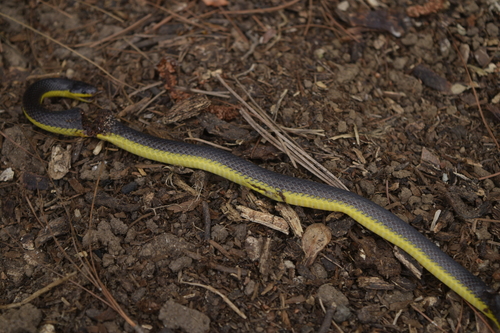 Rosebelly Earth SnakeGeophis rhodogaster
Classification
How scientists group this snake, from the broadest category down to the exact species. Each step narrows to its closest relatives.
- OrderThe broad group of scaled reptiles: all snakes and lizards
- Squamata
- FamilyA group of related snakes that share key traits
- Colubridae
- GenusA close-knit group of very similar species
- Geophis
- SpeciesThis exact snake, named in the two-part scientific name
- Geophis lorancai
Keep learning
- What to Do If You Find a SnakeFound a snake at home or on a trail? Here is how to stay calm, give it space, identify it safely, and know when to call a professional.
- Venomous vs Nonvenomous: How to Tell the DifferenceThe folk rules for telling venomous snakes apart, where each one fails, and why location-based identification beats guessing by sight.
- What Is a Snake? Anatomy and the BasicsA clear overview of what makes a snake a snake: limbless body plan, anatomy, evolution from lizards, species diversity, and why they are ectothermic.
- How to Keep Snakes Out of Your Yard and HomeA practical guide to keeping snakes out of your yard and home using habitat changes that work, plus what to skip and what to do if one shows up.
Distribution from GBIF & iNaturalist. Venom status per CDC. Background: Wikipedia. Informational only. Never handle a snake to identify it.