
Viperidae
Godman's Montane Pit Viper
VenomousCerrophidion godmani
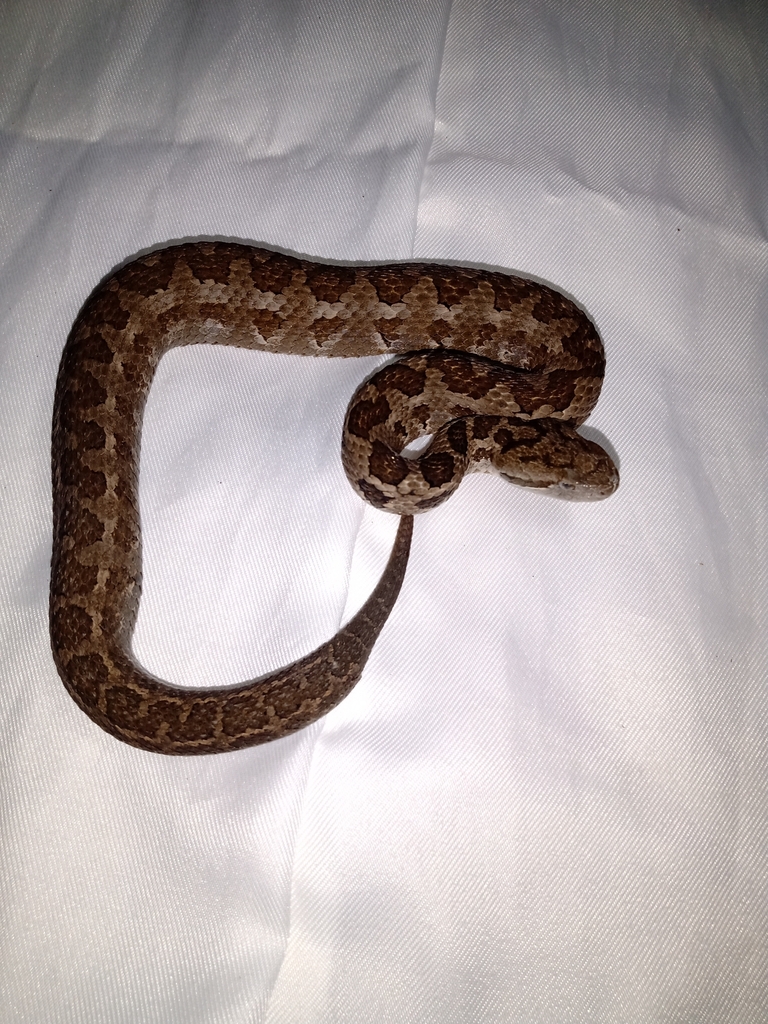
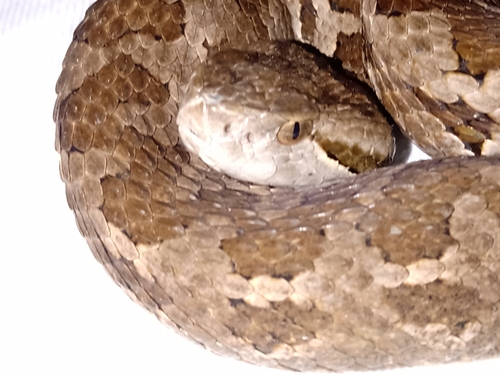
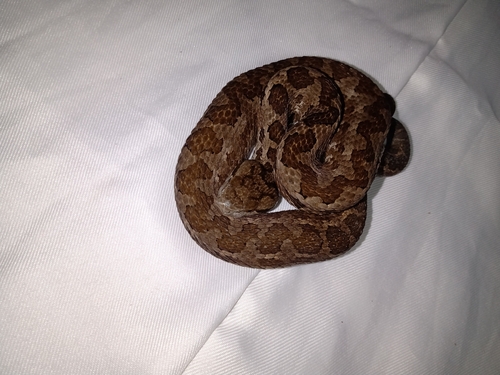
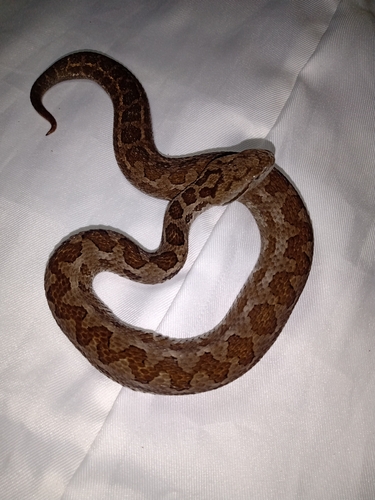
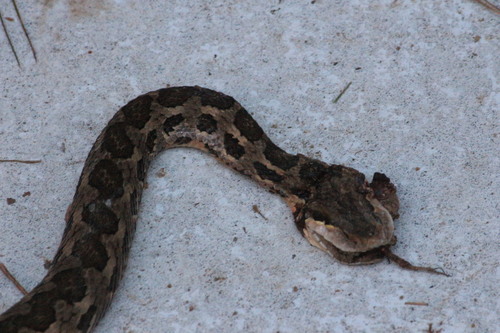
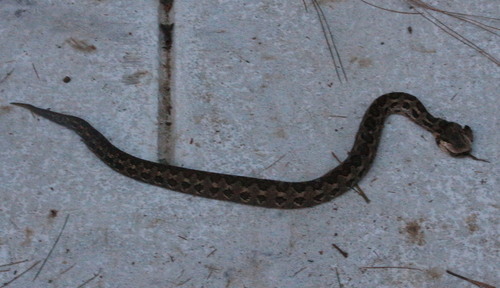
6 photographs of the Godman's Montane Pit Viper. © Fernando del cid.
The Godman's Montane Pit Viper (Cerrophidion godmani) is a venomous snake in the Viperidae family.
If you are bitten
This is a venomous snake. Treat any bite as a medical emergency: stay calm, keep the bitten limb still and roughly level with the heart, remove rings and tight clothing, and get to emergency care immediately. Do not apply a tourniquet, cut the wound, apply ice, or try to suck out venom. Call your local emergency number or poison center.
- Family
- Viperidae
- Danger
- high
About the Godman's Montane Pit Viper
Cerrophidion godmani is a venomous pit viper species native to southern Mexico and Guatemala. No subspecies are recognized as being valid. It is also known commonly as Godman's montane pit viper or Godman's pit viper.
Etymology
The specific name, godmani, is in honor of English zoologist Frederick DuCane Godman.
Description
Terrestrial and moderately stout, adults of C. godmani are usually less than 55 cm (21.5 in) in total length (including tail), but sometimes grow to more than 75 cm (30 in). The tail is non-prehensile and short. The dorsal scales are in 21 rows at midbody.
Geographic range
C. godmani is found in Mexico, in the Mexican states of Chiapas and southeastern Oaxaca, and in Guatemala. Populations from south of Guatemala are assigned to a new species, Cerrophidion sasai. The type locality for C. godmani given by Günther in 1863 is "near Dueñas and on other parts of the tableland of Guatemala".
Habitat
The preferred natural habitats of C. godmani are forest and grassland, at altitudes of 1,400–3,491 m (4,593–11,453 ft).
Behavior
C. godmani is terrestrial, and it is both diurnal and nocturnal.
Diet
Adults of C. godmani prey predominately upon small mammals, and will occasionally eat amphibians, reptiles, and birds. Juveniles eat mostly arthropods.
Reproduction
C. godmani is ovoviviparous.
Adapted from Wikipedia, available under CC BY-SA.
Local and regional names
The Godman's Montane Pit Viper is known by these names across the regions where it lives:
- Chinese
- 葛氏山蝮
- Danish
- Guatemalansk Bjerghugorm
- Dutch
- Godman's groefkopadder
- German
- Godman-Berggrubenotter
- Spanish
- Nauyaca centroamericana de montaña, Nauyaca de montaña de Godman, Nauyaca del Frio, Nauyaca-de montaña de Godman
Frequently asked: Godman's Montane Pit Viper
- Is the Godman's Montane Pit Viper venomous?
- Yes. The Godman's Montane Pit Viper (Cerrophidion godmani) is venomous and belongs to the Viperidae family (viper). Its bite is considered high risk to people. Treat any bite as a medical emergency.
- Is the Godman's Montane Pit Viper poisonous?
- Snakes are venomous, not poisonous. "Poisonous" means harmful to eat or touch; "venomous" means injecting toxins through a bite. The Godman's Montane Pit Viper is venomous, delivering venom through a bite.
- Is the Godman's Montane Pit Viper dangerous?
- This is a venomous snake. Treat any bite as a medical emergency: stay calm, keep the bitten limb still and roughly level with the heart, remove rings and tight clothing, and get to emergency care immediately. Do not apply a tourniquet, cut the wound, apply ice, or try to suck out venom. Call your local emergency number or poison center.
- What does the Godman's Montane Pit Viper eat?
- Adults of C. godmani prey predominately upon small mammals, and will occasionally eat amphibians, reptiles, and birds. Juveniles eat mostly arthropods.
- Why is it called the Godman's Montane Pit Viper?
- The specific name, godmani, is in honor of English zoologist Frederick DuCane Godman.
If you are bitten by the Godman's Montane Pit Viper
Do
- Get away from the snake and stay calm. Most bites worsen when people panic or try again to handle the snake.
- Call 911 or Poison Control (1-800-222-1222) right away. Antivenom works best when given early.
- Note the time of the bite and, from a safe distance, the snake's color and pattern, a phone photo is enough. Do not chase it.
- Keep the bitten limb still and at roughly heart level. Sit or lie down and limit movement.
- Remove rings, watches, and tight clothing near the bite before swelling starts.
- Gently wash the bite with soap and water and cover it with a clean, dry dressing.
Do not
- Do not cut the wound or try to suck out the venom.
- Do not apply a tourniquet or ice.
- Do not drink alcohol or caffeine.
- Do not take aspirin or ibuprofen, they can worsen bleeding. Acetaminophen is safer for pain.
- Do not try to catch or kill the snake. A dead snake can still bite by reflex.
First-aid guidance adapted from the U.S. Centers for Disease Control and Prevention (CDC NIOSH), Venomous Snakes. Educational only; always follow the instructions of emergency responders.
More Viperidae snakes
 Wilson's Montane PitviperCerrophidion wilsoni
 Costa Rica Montane PitviperCerrophidion sasai
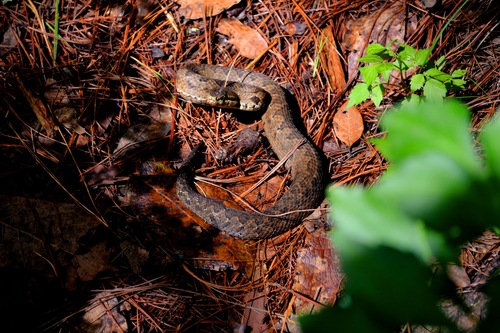 Tzotzil Montane Pit ViperCerrophidion tzotzilorum
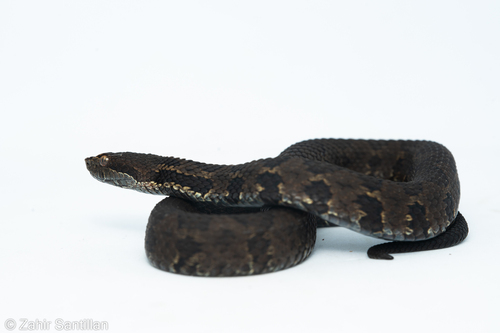 Cerrophidion petlalcalensisCerrophidion petlalcalensis
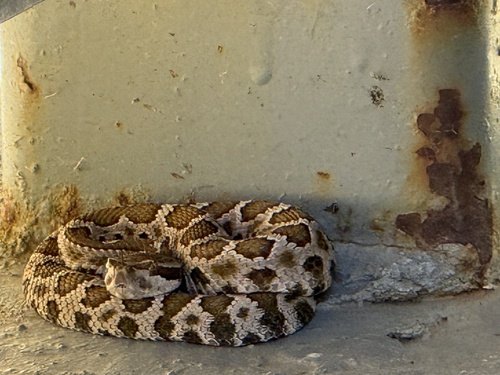 Western RattlesnakeCrotalus oreganus
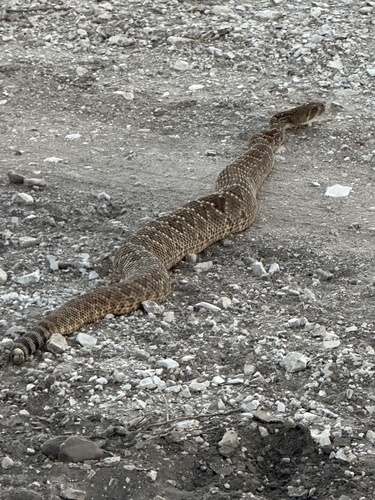 Western Diamond-backed RattlesnakeCrotalus atrox
 Eastern CopperheadAgkistrodon contortrix
 Northern CottonmouthAgkistrodon piscivorus
Classification
How scientists group this snake, from the broadest category down to the exact species. Each step narrows to its closest relatives.
- OrderThe broad group of scaled reptiles: all snakes and lizards
- Squamata
- FamilyA group of related snakes that share key traits
- Viperidae
- GenusA close-knit group of very similar species
- Cerrophidion
- SpeciesThis exact snake, named in the two-part scientific name
- Cerrophidion godmani
Keep learning
- Are Snakes Dangerous? The Real Risk, in PerspectiveMost snakes are harmless and avoid people. Here is the honest picture of snakebite risk worldwide and how to lower your own.
- Snakebite First Aid: What to Do (and What Never to Do)A clear, CDC-based guide to snakebite first aid: the steps that help, the popular myths that hurt, and how to tell a serious bite from a minor one.
- Venomous vs Nonvenomous: How to Tell the DifferenceThe folk rules for telling venomous snakes apart, where each one fails, and why location-based identification beats guessing by sight.
- What to Do If You Find a SnakeFound a snake at home or on a trail? Here is how to stay calm, give it space, identify it safely, and know when to call a professional.
Distribution from GBIF & iNaturalist. Venom status per CDC. Background: Wikipedia. Informational only. Never handle a snake to identify it.