
Small burrowing snake
Florida Crowned Snake
HarmlessTantilla relicta
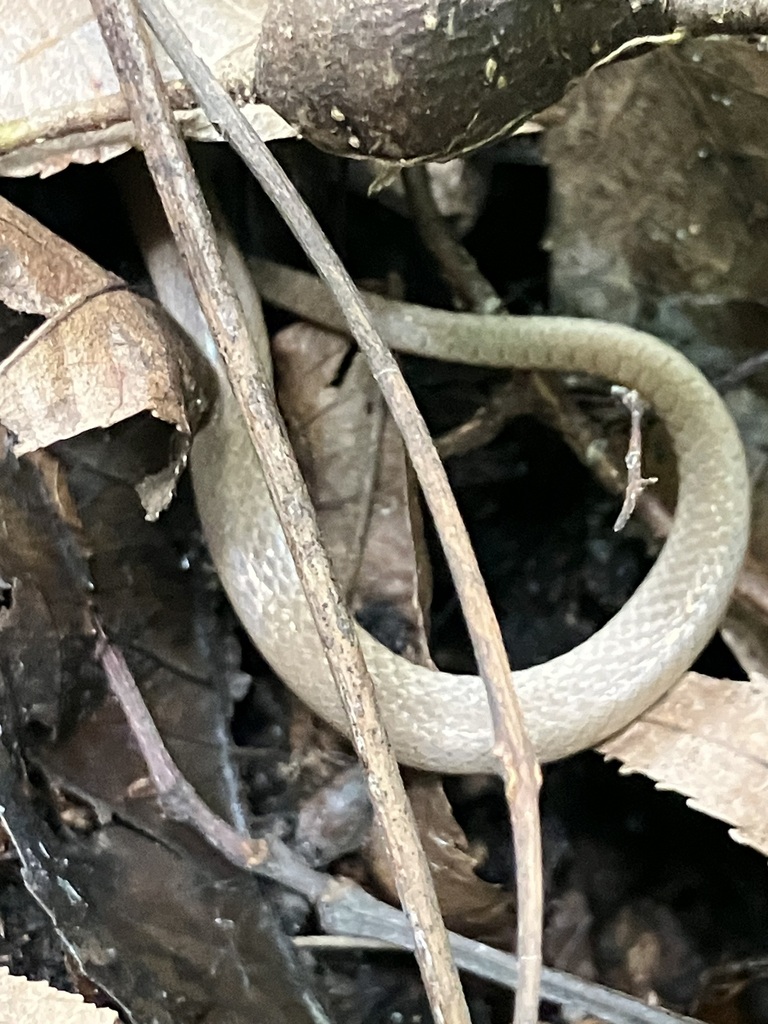
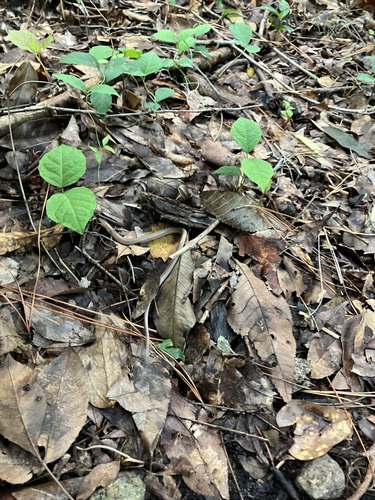
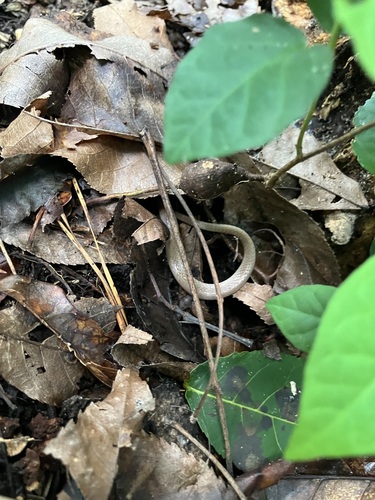
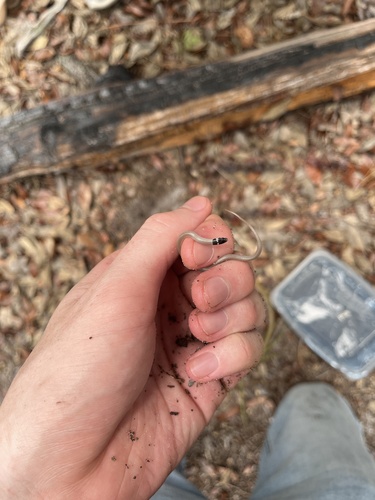
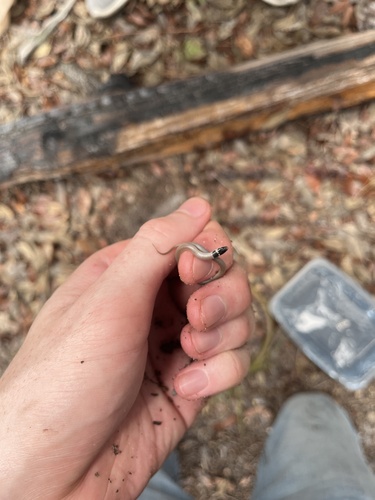
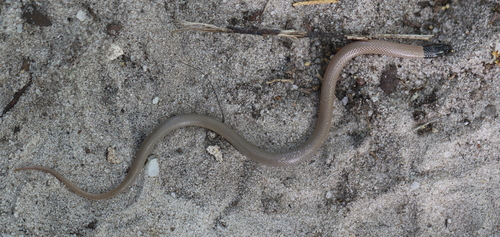
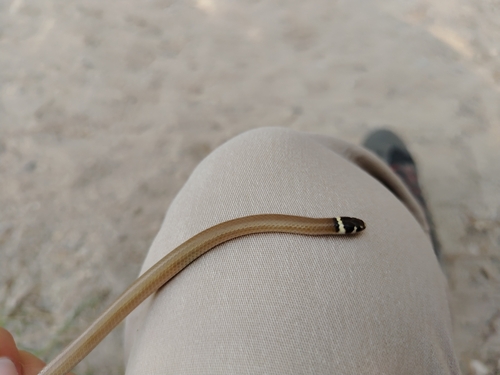
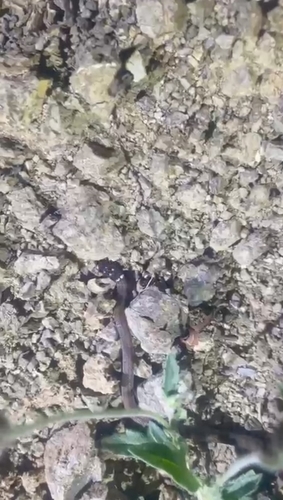
6 photographs of the Florida Crowned Snake. © mikoikoi.
The Florida Crowned Snake (Tantilla relicta) is a non-venomous snake in the Colubridae family, recorded in 1 country.
- Also called
- Small burrowing snake
- Family
- Colubridae
- Size
- Tiny, 6–12 in.
- Habitat
- Under rocks, logs, and leaf litter across many habitats.
- Behavior
- Secretive, burrowing insect- and centipede-eaters; almost never seen above ground.
- Identify
- Tiny and slender, plain brown or tan, often with a darker head cap.
About the Florida Crowned Snake
The Florida crowned snake (Tantilla relicta) is a species of snake in the subfamily Colubrinae of the family Colubridae. The species is native to peninsular Florida and extreme southern Georgia. It is a small, slender, snake that is rarely seen, and is most often associated with sandy habitats. There are three recognized subspecies.
Description
The Florida crowned snake is a small, slender snake. Adults are usually 7–9 inches (17–22 cm) in total length (tail included). Dorsally, the snake is tan, light brown or reddish brown in color. It has a brown-black head, chin, and parts of the neck. Some individuals have a pattern on the head of a pale band. The band marking may be absent in individuals from north-central Florida. It can also have a dark neck band. The underside can be white, pink or whitish-yellow. The maximum recorded total length (tail included) of the species is 24 cm (9.5 in). The nose may be cream-tan in color in populations found along the Atlantic Coast.
Natural habitat
The Florida crowned snake is commonly found in north and central Florida, and in sandy habitat areas of the Gulf coast. The species is seen rarely in the southernmost border area of Georgia. It is most often associated with sandy habitats, including Florida sand pine scrub, pine flatwoods and pine hammocks.
Behavior and diet
The Florida crowned snake is most active in the warmest months of the year. During the winter, it spends the majority of its time burrowed in loose, sandy soils, including mounds created by burrowing animals. It also will hide under rocks or organic litter. It is rarely seen out in the open. It has been observed occupying pocket gopher and gopher tortoise burrows. Diet includes worms, snails, spiders, centipedes, and insects and their larvae. The snake has been observed eating beetle larvae. The populations found primarily in Florida have very large rear teeth that possibly direct venom into their prey. The species is harmless to humans.
Reproduction
Very little is known about the reproduction of the Florida crowned snake. The species lays elongated eggs. It is believed that its reproduction is probably similar to other species in the genus Tantilla. It is assumed that a sexually mature female lays its eggs from late spring to August.
Predators and defense
The Florida crowned snake is eaten by a large variety of predators which have the ability to find and apprehend the snake underground. The snake will not bite when it is picked up by humans. This species is the primary prey item for the rare short-tailed snake (Lampropeltis extenuata).
Taxonomy and etymology
Three subspecies of Tantilla relicta are recognized as being valid, including the nominotypical subspecies. The subspecific name, neilli, is in honor of American herpetologist Wilfred T. Neill.
Adapted from Wikipedia, available under CC BY-SA.
Frequently asked: Florida Crowned Snake
- Is the Florida Crowned Snake venomous?
- No. The Florida Crowned Snake (Tantilla relicta) is non-venomous and is not considered dangerous to humans. Like most snakes, it will retreat rather than bite when given the chance.
- Is the Florida Crowned Snake poisonous?
- Snakes are venomous, not poisonous. "Poisonous" means harmful to eat or touch; "venomous" means injecting toxins through a bite. The Florida Crowned Snake is neither poisonous nor venomous.
- Is the Florida Crowned Snake dangerous?
- The Florida Crowned Snake is not dangerous to humans. It has no medically significant venom and bites only defensively if cornered or handled.
- Where does the Florida Crowned Snake live?
- The Florida Crowned Snake has verified records in 1 country, including United States of America. See the distribution section below for its full range.
- How do I identify the Florida Crowned Snake?
- Tiny and slender, plain brown or tan, often with a darker head cap.
- How big does the Florida Crowned Snake get?
- Tiny, 6–12 in.
- What does the Florida Crowned Snake eat?
- The Florida crowned snake is most active in the warmest months of the year. During the winter, it spends the majority of its time burrowed in loose, sandy soils, including mounds created by burrowing animals. It also will hide under rocks or organic litter. It is rarely seen out in the open. It has been observed occupying pocket gopher and gopher tortoise burrows. Diet includes worms, snails, spiders, centipedes, and insects and their larvae. The snake has been observed eating beetle larvae.
- Why is it called the Florida Crowned Snake?
- Three subspecies of Tantilla relicta are recognized as being valid, including the nominotypical subspecies. The subspecific name, neilli, is in honor of American herpetologist Wilfred T. Neill. Tantilla relicta neilli Telford, 1966 Tantilla relicta pamlica Telford, 1966 Tantilla relicta relicta Telford, 1966
Where it is found
More Colubridae snakes
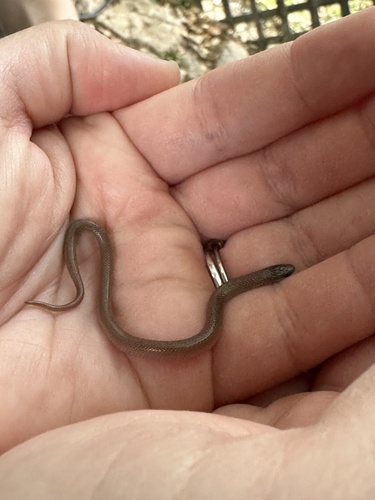 Flat-headed SnakeTantilla gracilis
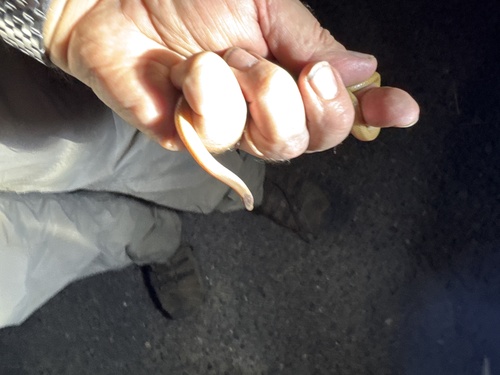 Plains Black-headed SnakeTantilla nigriceps
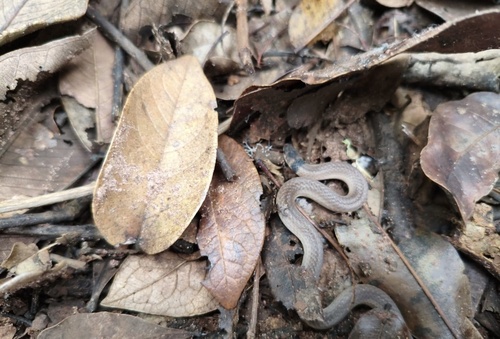 Black-headed SnakeTantilla melanocephala
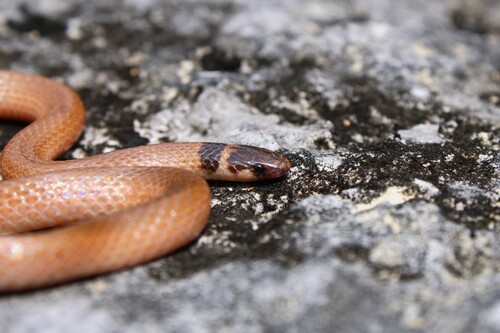 Southeastern Crowned SnakeTantilla coronata
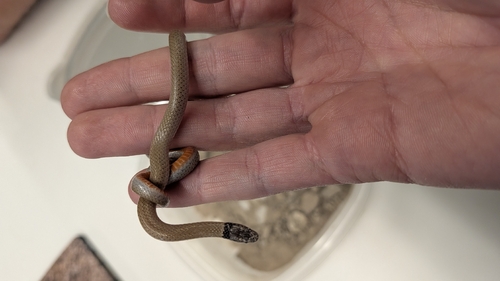 Southwestern Blackhead SnakeTantilla hobartsmithi
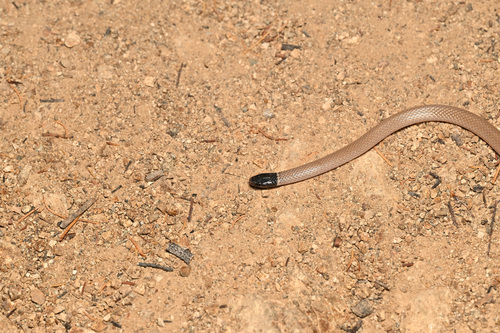 Western Black-headed SnakeTantilla planiceps
 Bocourt's Black-headed SnakeTantilla bocourti
 Black-necked Centipede SnakeTantilla armillata
Classification
How scientists group this snake, from the broadest category down to the exact species. Each step narrows to its closest relatives.
- OrderThe broad group of scaled reptiles: all snakes and lizards
- Squamata
- FamilyA group of related snakes that share key traits
- Colubridae
- GenusA close-knit group of very similar species
- Tantilla
- SpeciesThis exact snake, named in the two-part scientific name
- Tantilla relicta
Keep learning
- What to Do If You Find a SnakeFound a snake at home or on a trail? Here is how to stay calm, give it space, identify it safely, and know when to call a professional.
- Venomous vs Nonvenomous: How to Tell the DifferenceThe folk rules for telling venomous snakes apart, where each one fails, and why location-based identification beats guessing by sight.
- What Is a Snake? Anatomy and the BasicsA clear overview of what makes a snake a snake: limbless body plan, anatomy, evolution from lizards, species diversity, and why they are ectothermic.
- How to Keep Snakes Out of Your Yard and HomeA practical guide to keeping snakes out of your yard and home using habitat changes that work, plus what to skip and what to do if one shows up.
Distribution from GBIF & iNaturalist. Venom status per CDC. Background: Wikipedia. Informational only. Never handle a snake to identify it.