
Genus · Colubridae
Types of centipede snakes
50+ species make up the genus Tantilla, the snakes commonly called centipede snakes. None are considered dangerous to humans.
About Black-headed and crowned snakes
Tantilla are small, secretive burrowers best known for the dark cap or collar many of them wear behind a pale neck.
Tantilla is a large genus of small snakes in the family Colubridae, the same sprawling family that holds most of the world's harmless snakes. The genus is centered on the Americas, with members ranging from the southern and central United States through Mexico and Central America into parts of South America. Our database holds 50+ species, which makes Tantilla one of the more diverse genera in the family. Common names for the group include black-headed snakes, crowned snakes, and centipede snakes.
These are diminutive animals. Most species are slender and under 30 to 40 centimeters in total length, with some among the smallest snakes in their range. The body is usually plain tan, brown, gray, or reddish above with a paler belly. The signature mark is on the head: many species have a dark cap, crown, or collar set against a lighter neck band, which is where names like Flat-headed Snake, Black-headed Snake, Plains Black-headed Snake, and Southeastern Crowned Snake come from. The head is small and barely distinct from the neck, an adaptation to a life spent pushing through soil and leaf litter.
Tantilla are fossorial and cryptic, meaning they spend most of their lives underground or hidden beneath rocks, logs, bark, and debris. They are rarely seen in the open and are most often found by people who turn over cover objects. Because of this lifestyle they are easy to overlook and many species are poorly studied, so precise details for individual species are limited. When describing any particular species, rely on what is genuinely documented rather than assuming traits from a relative.
Their diet is specialized toward small invertebrates. They feed heavily on centipedes, insect larvae, and other soft-bodied arthropods, which is the source of the name centipede snake. Tantilla are rear-fanged: they have enlarged grooved teeth at the back of the upper jaw and a mild venom (a Duvernoy's secretion) used to subdue these small prey. This venom is adapted to invertebrates and is not considered medically significant to people, and these snakes are small, secretive, and not inclined to bite. Even so, this is a wild snake and the safe choice is to leave it alone rather than handle it. If anyone is ever bitten by a wild snake and there is concern, do not attempt home first aid; contact US Poison Control at 1-800-222-1222 or local emergency services.
Reproduction in Tantilla is egg-laying (oviparous), with females typically producing small clutches of just one to a few eggs, fitting their small body size. They are secretive and non-aggressive by temperament. For people, the main thing to know is that encountering one usually means a healthy environment with abundant cover and invertebrate prey, and the right response is to observe and let it return to hiding.
Tantilla belongs to the Colubridae family (Colubrids). The largest snake family, and the one most snakes you meet belong to. Typically round pupils, a head only slightly wider than the neck, and no heat-sensing facial pit or rattle. Scales may be smooth and glossy or keeled and matte depending on the species.
Danger: Almost all colubrids are harmless. A small number are rear-fanged with medically significant venom, the boomslang and the twig (vine) snakes of Africa being the dangerous exceptions. Most colubrids will flee or bluff rather than bite.
All species (50)
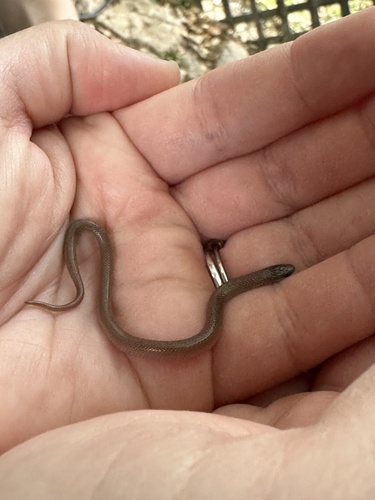 Flat-headed SnakeTantilla gracilisHarmless
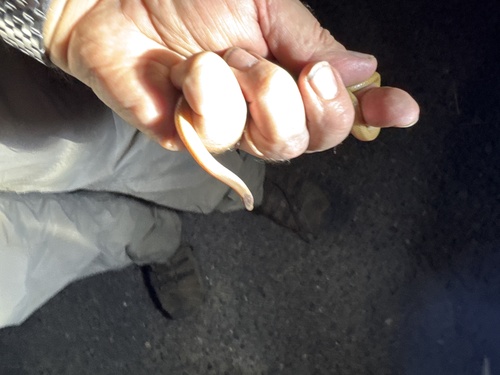 Plains Black-headed SnakeTantilla nigricepsHarmless
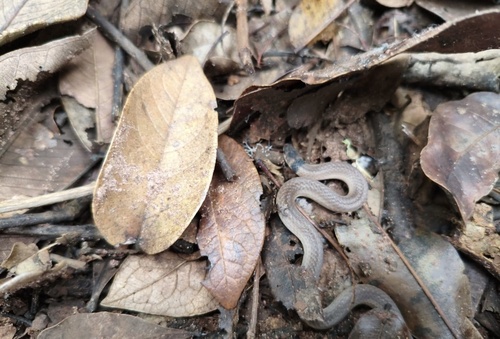 Black-headed SnakeTantilla melanocephalaHarmless
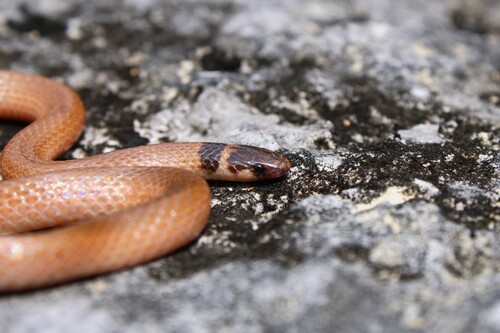 Southeastern Crowned SnakeTantilla coronataHarmless
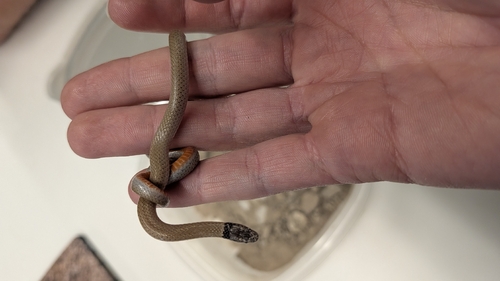 Southwestern Blackhead SnakeTantilla hobartsmithiHarmless
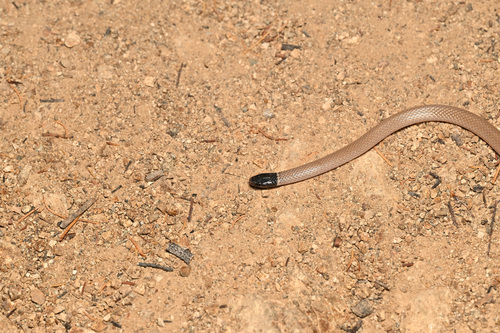 Western Black-headed SnakeTantilla planicepsHarmless
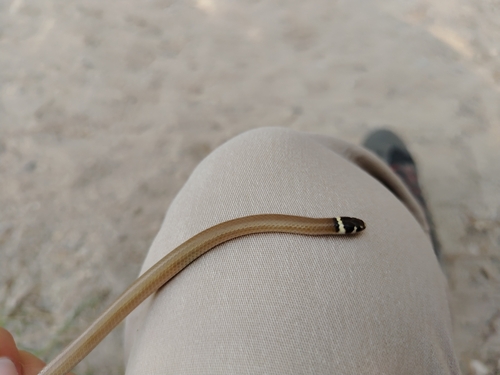 Bocourt's Black-headed SnakeTantilla bocourtiHarmless
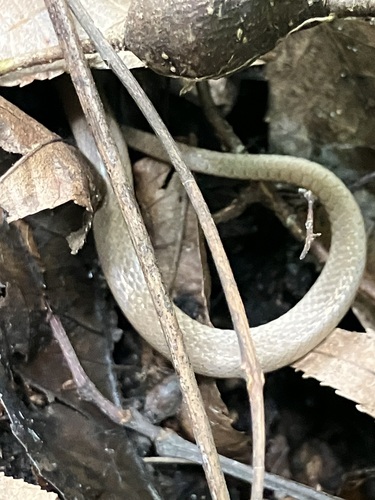 Florida Crowned SnakeTantilla relictaHarmless
 Black-necked Centipede SnakeTantilla armillataHarmless
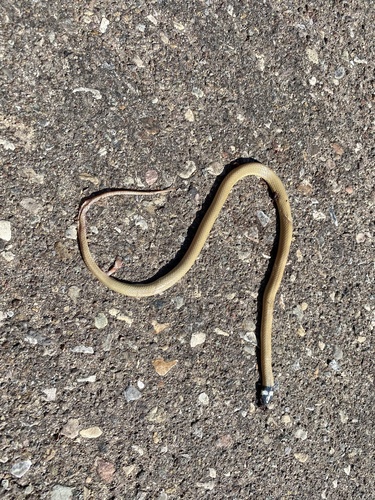 Big Bend Blackhead SnakeTantilla cucullataHarmless
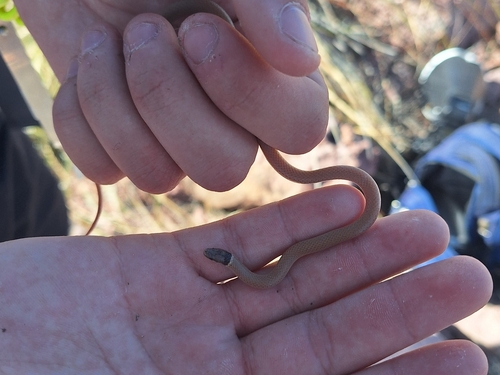 Yaqui Black-headed SnakeTantilla yaquiaHarmless
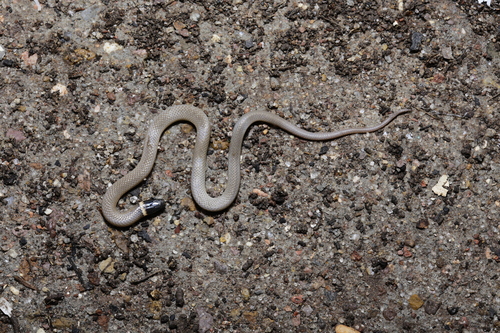 Chihuahuan Black-headed SnakeTantilla wilcoxiHarmless
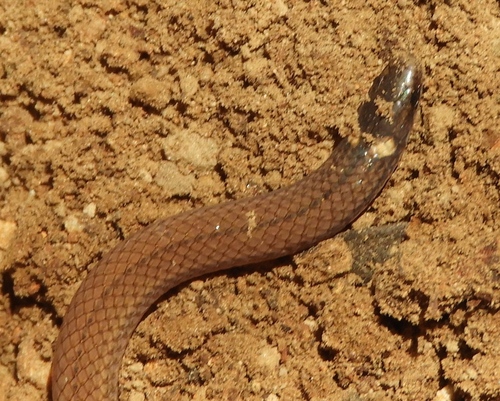 Pacific Coast Centipede SnakeTantilla calamarinaHarmless
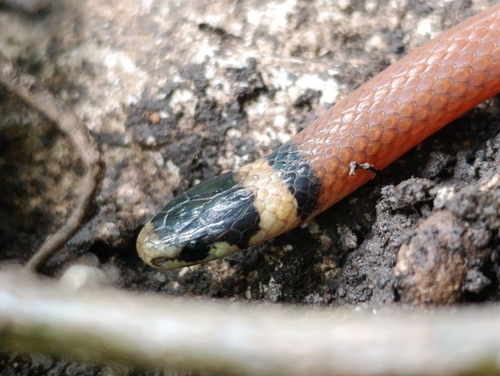 Red Black-headed SnakeTantilla rubraHarmless
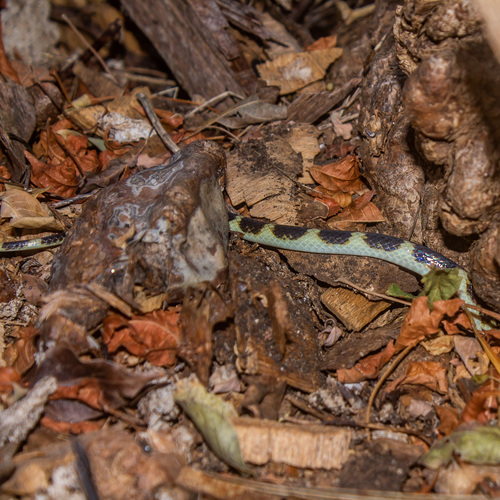 Ringed Centipede SnakeTantilla semicinctaHarmless
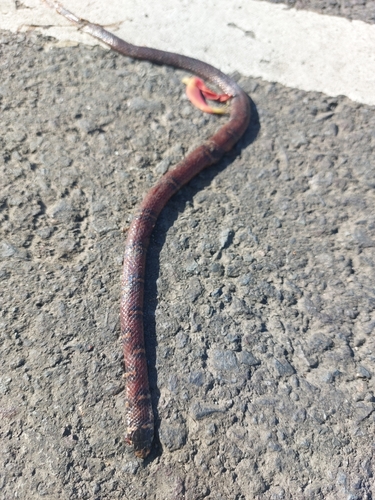 Banded Centipede SnakeTantilla supracinctaHarmless
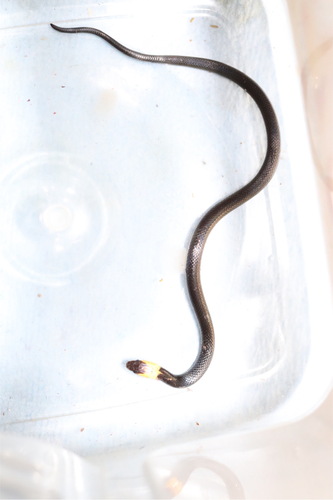 Blackbelly Centipede SnakeTantilla moestaHarmless
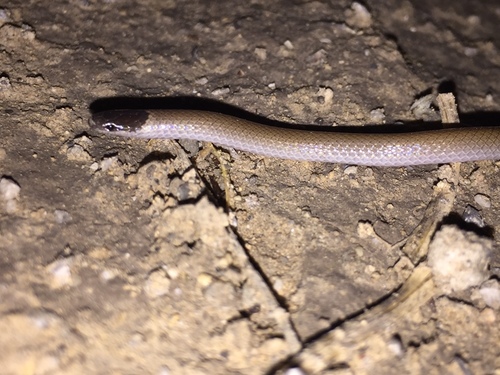 Mexican Black-headed SnakeTantilla atricepsHarmless
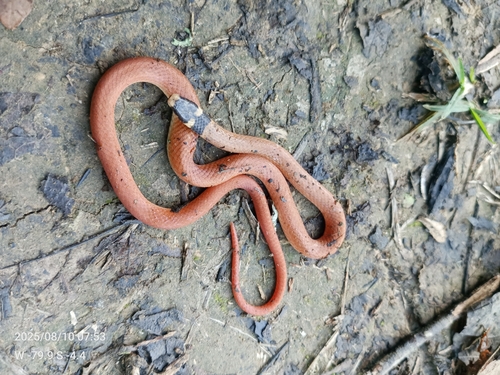 Capistrata Centipede SnakeTantilla capistrataHarmless
 Tantilla boipirangaHarmless
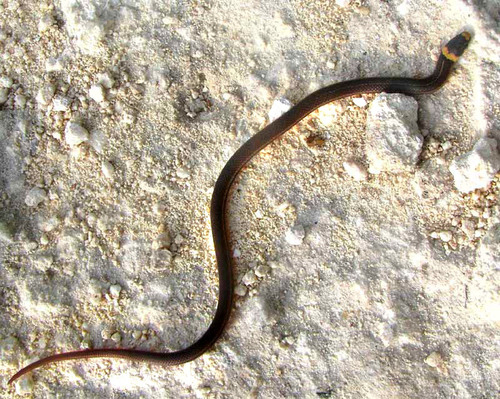 Peten Centipede SnakeTantilla cuniculatorHarmless
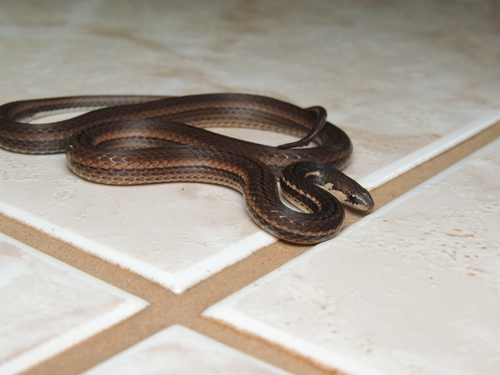 Striped Crowned SnakeTantilla ruficepsHarmless
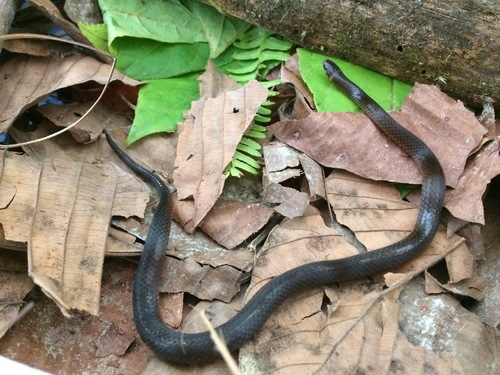 Red Earth Centipede SnakeTantilla schistosaHarmless
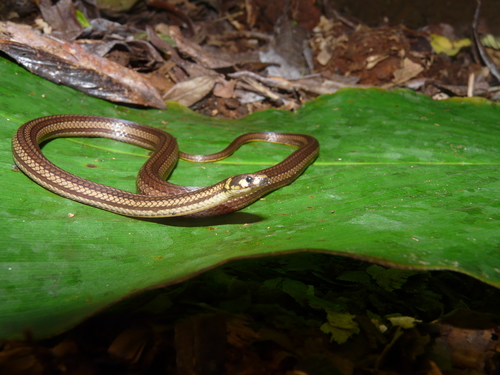 Litter SnakeTantilla reticulataHarmless
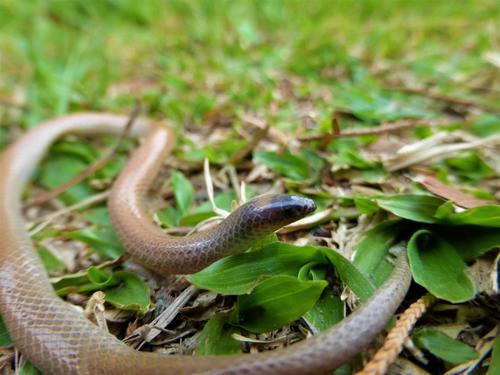 Hallowell's Centipede SnakeTantilla vermiformisHarmless
 Deppe's Centipede SnakeTantilla deppeiHarmless
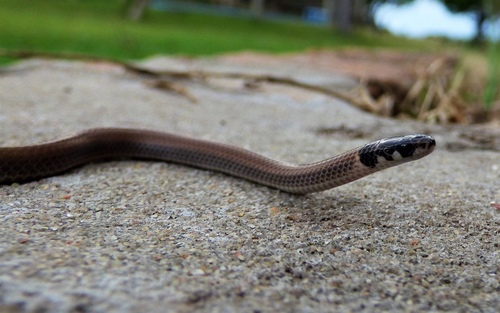 Tantilla selmaeHarmless
 Boulenger's Centipede SnakeTantilla alticolaHarmless
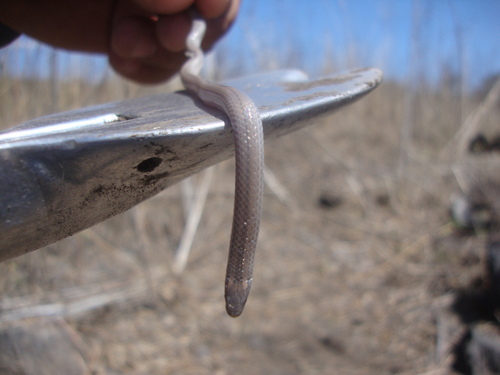 Tantilla ceborucaHarmless
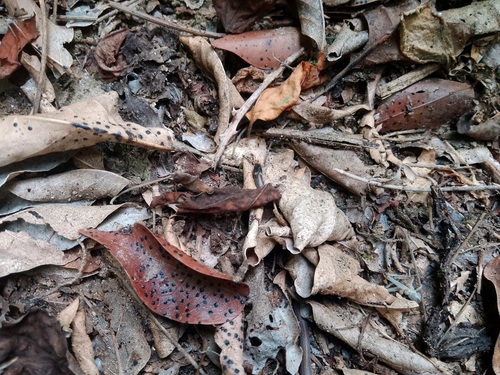 Striped Centipede SnakeTantilla striataHarmless
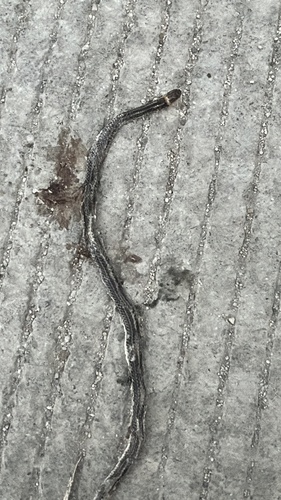 Peten Centipede SnakeTantilla hendersoniHarmless
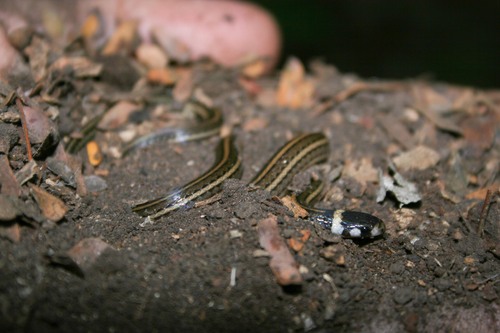 Central American Centipede SnakeTantilla taeniataHarmless
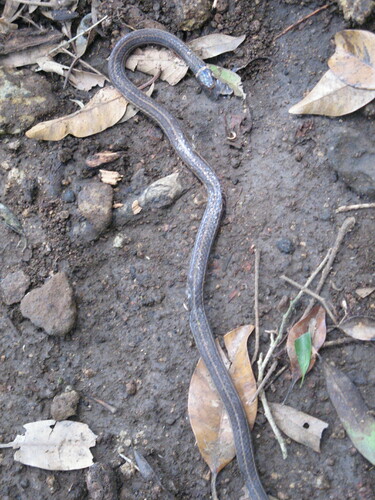 Mertens' Centipede SnakeTantilla brevicaudaHarmless
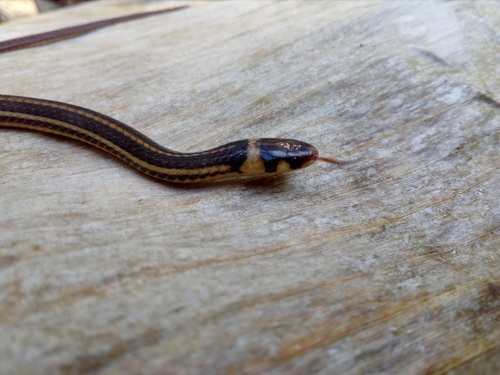 Tantilla excelsaHarmless
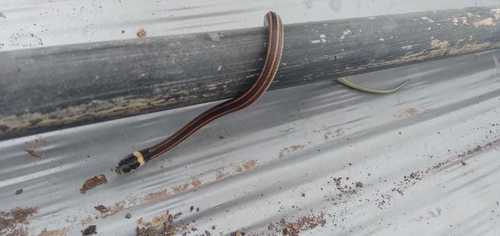 Tantilla gotteiHarmless
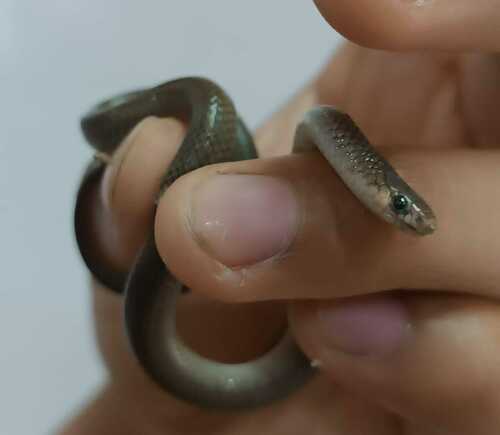 Peters' Black-headed SnakeTantilla petersiHarmless
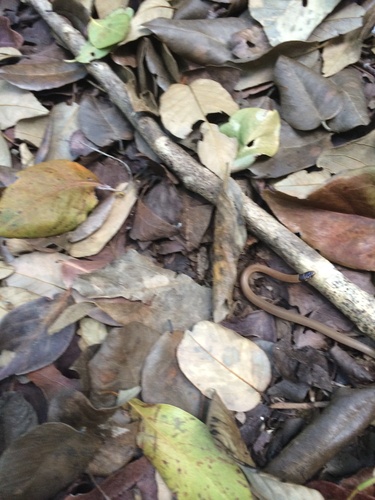 Rim Rock Crowned SnakeTantilla ooliticaHarmless
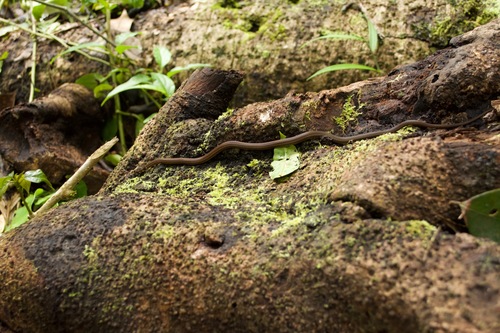 Chucantí Centipede SnakeTantilla berguidoiHarmless
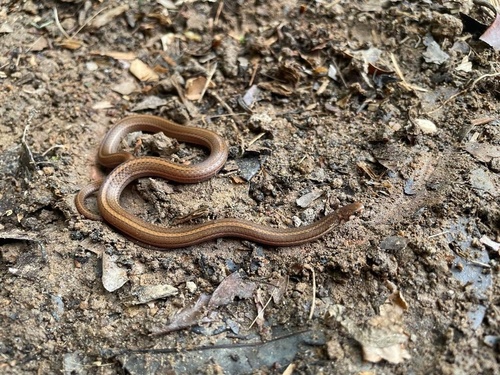 Three-banded Centipede SnakeTantilla tritaeniataHarmless
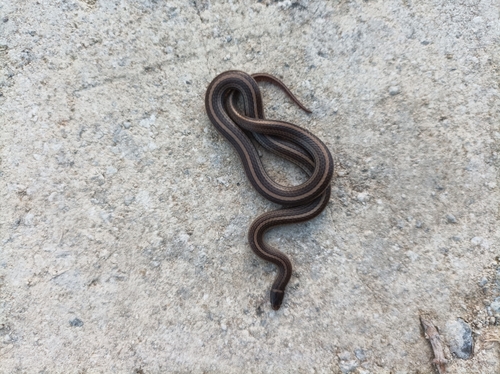 Yellow-lined Centipede SnakeTantilla flavilineataHarmless
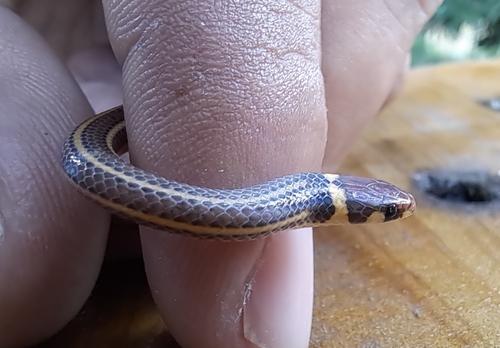 Central Guatemalan Centipede SnakeTantilla impensaHarmless
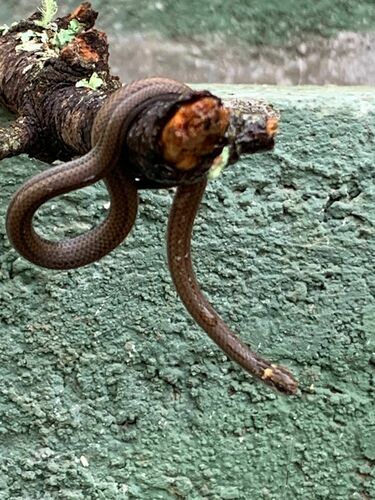 Michoacán Centipede SnakeTantilla cascadaeHarmless
 Mountain Centipede SnakeTantilla insulamontanaHarmless
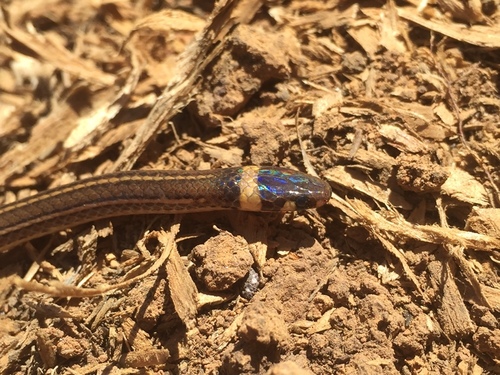 Tantilla stenigrammiHarmless
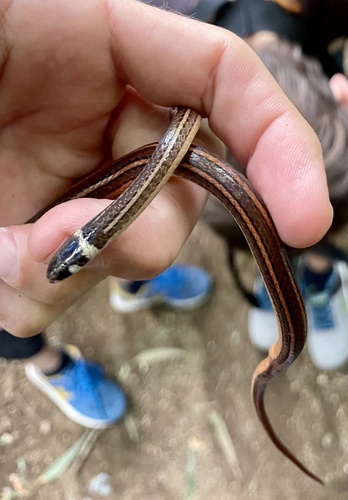 Volcanic Highland Centipede SnakeTantilla vulcaniHarmless
- No photoOaxacan Centipede SnakeTantilla oaxacaeHarmless
- No photoMena's Centipede SnakeTantilla lempiraHarmless
- No photoTantilla miyataiHarmless
- No photoTantilla sertulaHarmless
- No photoTexiguat Centipede SnakeTantilla olympiaHarmless
Keep learning
- What Is a Snake? Anatomy and the BasicsA clear overview of what makes a snake a snake: limbless body plan, anatomy, evolution from lizards, species diversity, and why they are ectothermic.
- How Snakes Move, Hunt, and EatHow snakes move without legs, hunt as ambushers or active foragers, kill by constriction or venom, and swallow prey wider than their head.
- What Do Snakes Eat?All snakes are carnivores. Learn what snakes eat, how diet changes with size and age, how often they feed, and how they hunt and swallow prey.
- Venomous vs Nonvenomous: How to Tell the DifferenceThe folk rules for telling venomous snakes apart, where each one fails, and why location-based identification beats guessing by sight.