
Colubridae
Coastal Mock Viper
HarmlessDryophylax nattereri
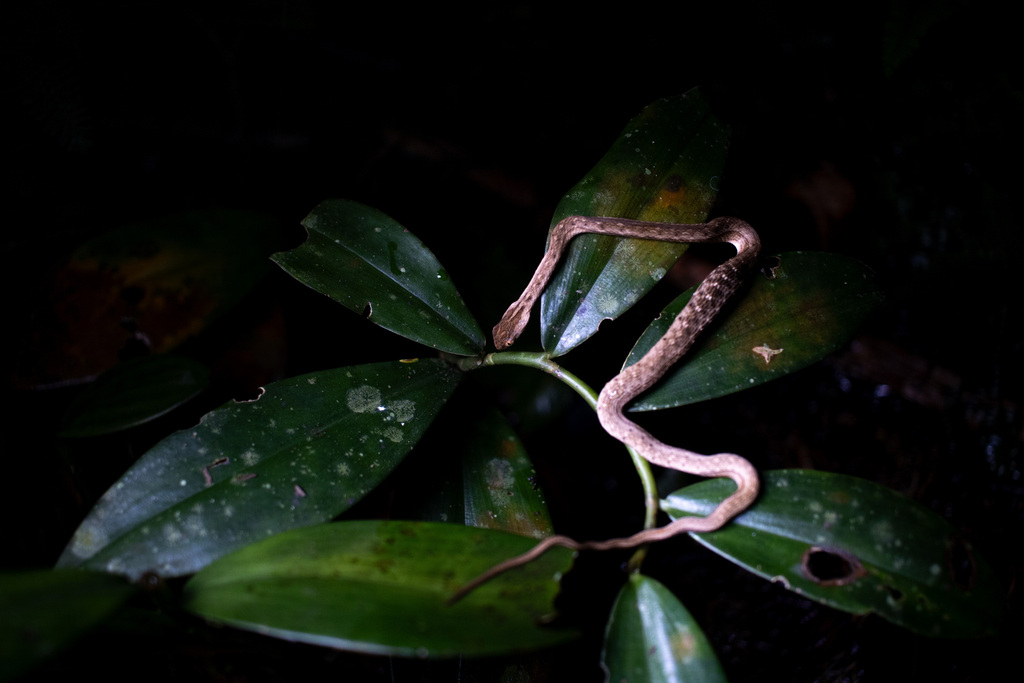
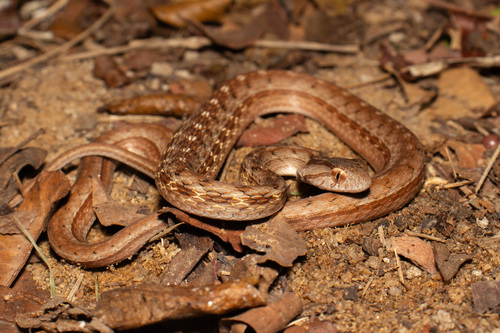
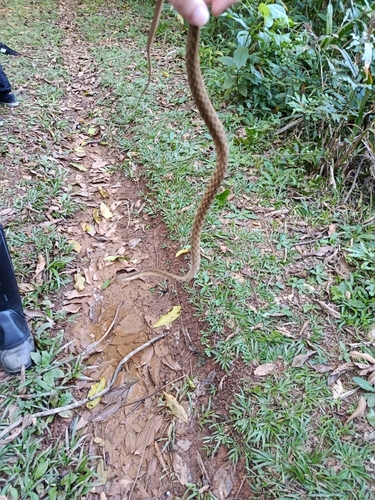
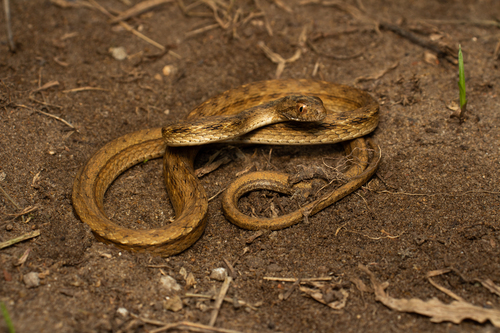
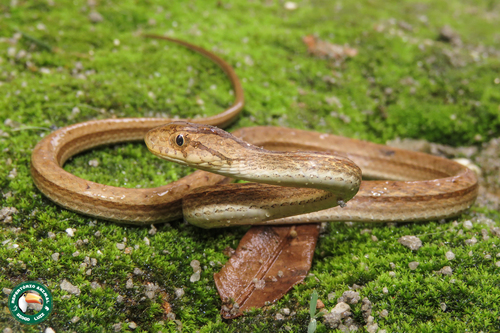
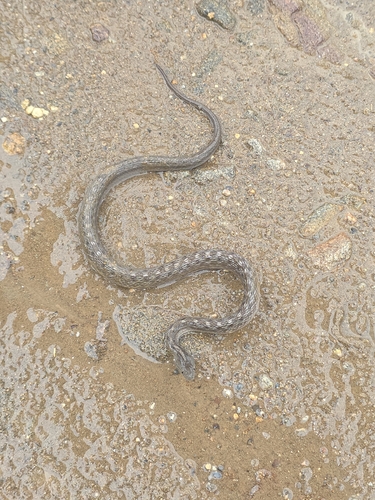
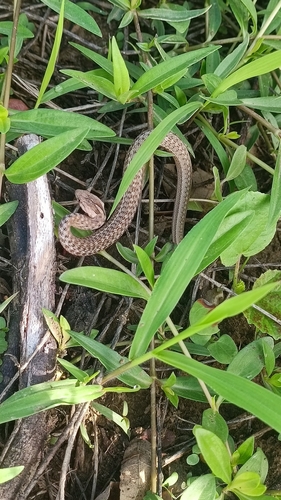
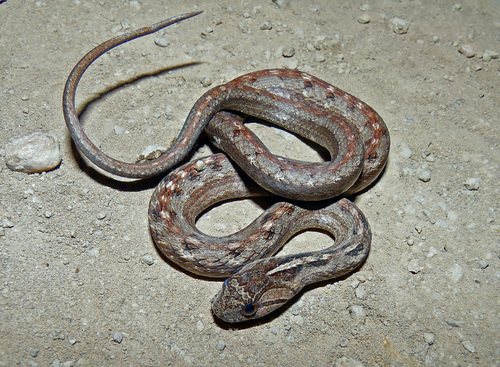
4 photographs of the Coastal Mock Viper. (c) Henrique Nogueira, some rights reserved (CC BY).
The Coastal Mock Viper (Dryophylax nattereri) is a non-venomous snake in the Colubridae family.
- Family
- Colubridae
About the Coastal Mock Viper
Dryophylax nattereri, the Amazon coastal house snake or northern coastal house snake, is a species of snake in the family Colubridae.
Etymology
Common names include Amazon Coastal House Snake (pallidus), Northern Coastal House Snake (strigilis). In Portuguese, Cobra-Corre-Campo, Cobra-do-Mato, Corre-Campo, Corredeira, Jararaca-Falsa, Jararaquinha and Ubicorá f, are the common names for this species.
The name is synonymous with Coluber nattereri, Thermodynastes nattereri, Thermodynastes cf. nattereri and Thermodynastes pallidus.
Description
These snakes contain a pattern of 19-19-15 on dorsal scales. These scales are slightly keeled and smooth. They typically have one apical pit, one preocular scale and two postocular scales. Their hemipenis is marginally bilobed with spiculate and papillate short lobes and calyces. There is a distinct conchal process of the prefrontal bone, and the medial maxillary process of the ectopterygoid can be twice as long as the lateral maxillary process. The articulation of the maxilla- ectopterygoid aligns with the palatinopterygoid articulation.
Habitat and behavior
The distribution od D. marahuaquensis is several countries in South America. It can be found in Guyana, Suriname, French Guiana, Brazil (Amapa, Bahia, Pernambuco, Paraíba, Minas Gerais), Peru, Venezuela (specifically Cojedes), Colombia, Bolivia, and Ecuador. (Kornacker 1999)
Life cycle
The species exhibit a viviparous mode of reproduction.
Adapted from Wikipedia, available under CC BY-SA.
Frequently asked: Coastal Mock Viper
- Is the Coastal Mock Viper venomous?
- No. The Coastal Mock Viper (Dryophylax nattereri) is non-venomous and is not considered dangerous to humans. Like most snakes, it will retreat rather than bite when given the chance.
- Is the Coastal Mock Viper poisonous?
- Snakes are venomous, not poisonous. "Poisonous" means harmful to eat or touch; "venomous" means injecting toxins through a bite. The Coastal Mock Viper is neither poisonous nor venomous.
- Is the Coastal Mock Viper dangerous?
- The Coastal Mock Viper is not dangerous to humans. It has no medically significant venom and bites only defensively if cornered or handled.
- Why is it called the Coastal Mock Viper?
- Common names include Amazon Coastal House Snake (pallidus), Northern Coastal House Snake (strigilis). In Portuguese, Cobra-Corre-Campo, Cobra-do-Mato, Corre-Campo, Corredeira, Jararaca-Falsa, Jararaquinha and Ubicorá f, are the common names for this species. The name is synonymous with Coluber nattereri, Thermodynastes nattereri, Thermodynastes cf. nattereri and Thermodynastes pallidus.
More Colubridae snakes
 Keeled Sepia SnakeDryophylax hypoconia
 Petrolina Mock ViperDryophylax phoenix
 Gambote Mock ViperDryophylax gambotensis
 Chaco Sepia SnakeDryophylax chaquensis
 Paraguana Mock ViperDryophylax paraguanae
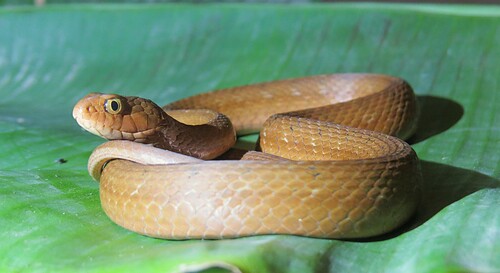 Jararaca Mock ViperDryophylax almae
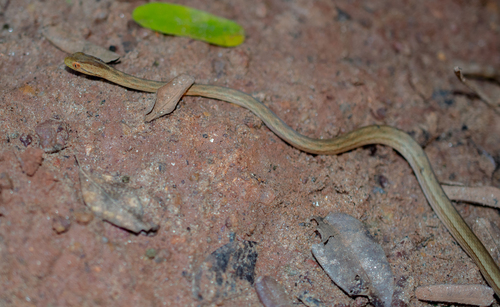 Double-lined Water SnakeDryophylax ramonriveroi
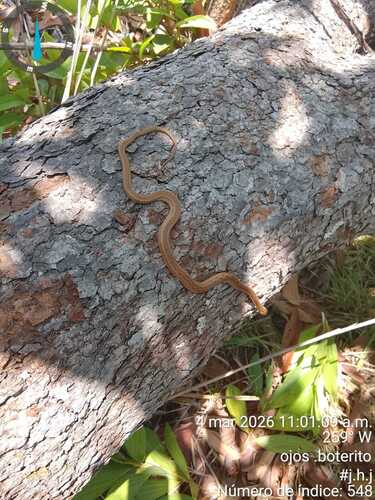 Apure Mock ViperDryophylax dixoni
Classification
How scientists group this snake, from the broadest category down to the exact species. Each step narrows to its closest relatives.
- OrderThe broad group of scaled reptiles: all snakes and lizards
- Squamata
- FamilyA group of related snakes that share key traits
- Colubridae
- GenusA close-knit group of very similar species
- Dryophylax
- SpeciesThis exact snake, named in the two-part scientific name
- Dryophylax nattereri
Keep learning
- What to Do If You Find a SnakeFound a snake at home or on a trail? Here is how to stay calm, give it space, identify it safely, and know when to call a professional.
- Venomous vs Nonvenomous: How to Tell the DifferenceThe folk rules for telling venomous snakes apart, where each one fails, and why location-based identification beats guessing by sight.
- What Is a Snake? Anatomy and the BasicsA clear overview of what makes a snake a snake: limbless body plan, anatomy, evolution from lizards, species diversity, and why they are ectothermic.
- How to Keep Snakes Out of Your Yard and HomeA practical guide to keeping snakes out of your yard and home using habitat changes that work, plus what to skip and what to do if one shows up.
Distribution from GBIF & iNaturalist. Venom status per CDC. Background: Wikipedia. Informational only. Never handle a snake to identify it.