
Pareidae
Boulenger's Slug Snake
HarmlessPareas boulengeri
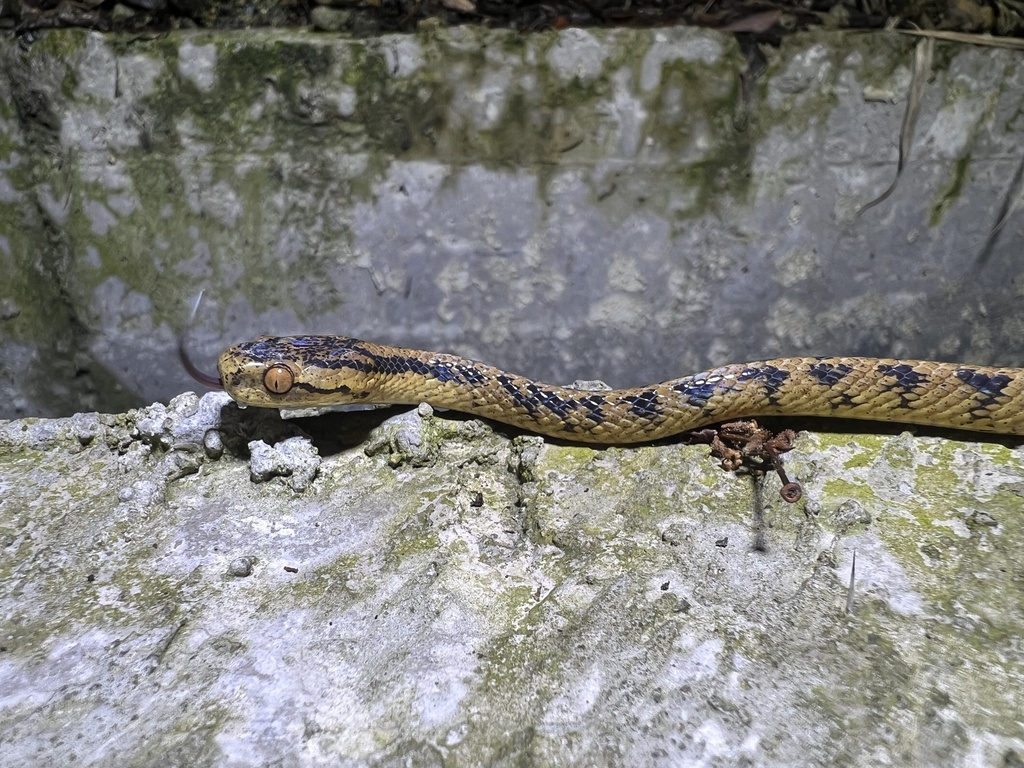
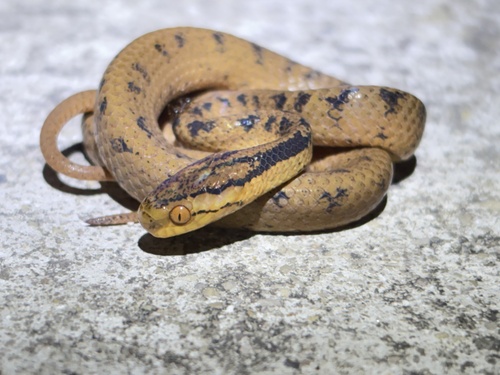
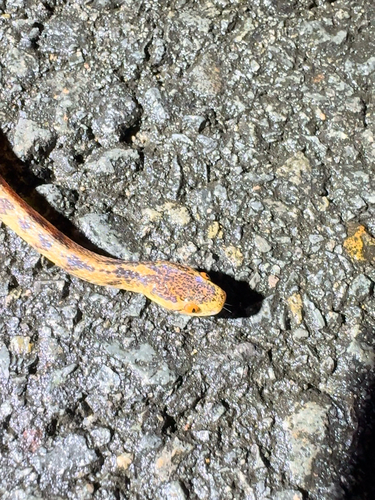
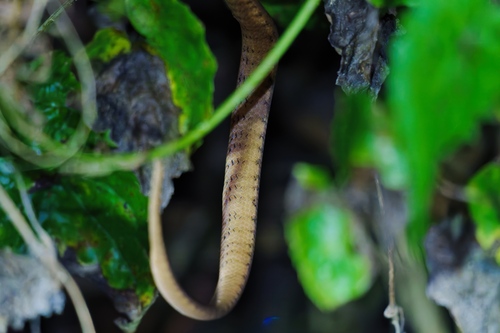
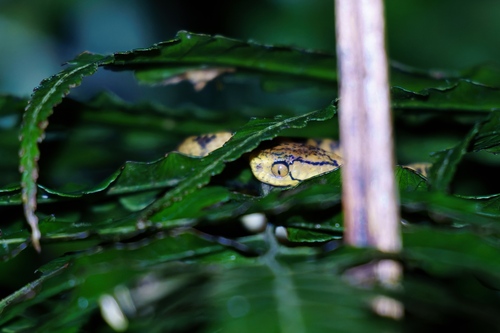
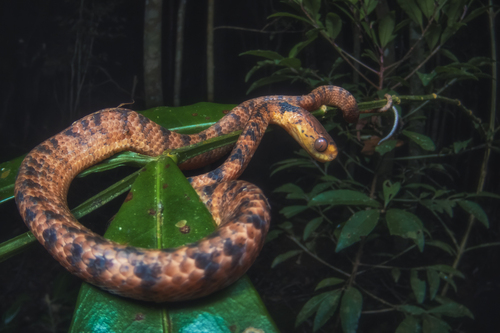
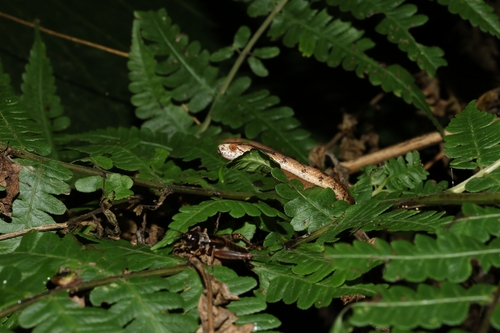
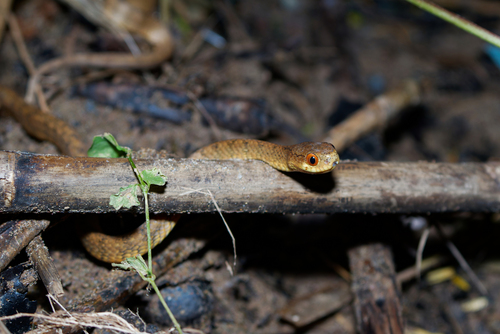
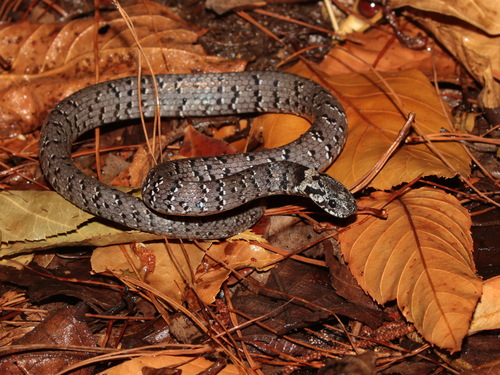
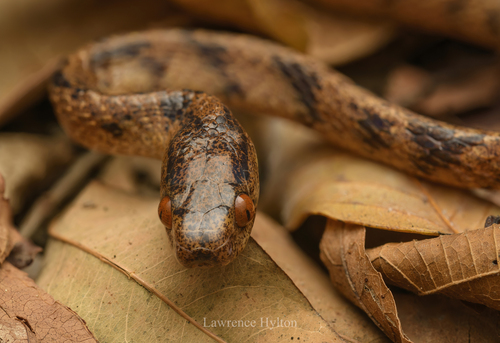
3 photographs of the Boulenger's Slug Snake. (c) taoyao_xiaokaikai, some rights reserved (CC BY-NC).
The Boulenger's Slug Snake (Pareas boulengeri) is a non-venomous snake in the Pareidae family, recorded in 1 country.
- Family
- Pareidae
About the Boulenger's Slug Snake
Pareas boulengeri, also known as Boulenger's slug snake, is a species of non-venomous snake native to southern China.
Description
Pareas boulengeri has a very light brown upper body with minimal countershading. A narrow, dark brown, intermittently broken line runs from the posterior edge of the eye to the corner of the mouth. Two wider, frequently breaking dorsal lines run from the subocular scale, along the side of the parietal scales and to the head and neck where it loses definition, fading into irregular dots that may broaden across the sides and disappear toward the latter half of the body. These dots are tightly grouped on the cephalic scales. Juveniles' spots are much clearer.
Pareas boulengeri lay 5-7 eggs at a time, which likely need roughly 6.5 weeks to incubate before hatching, based on others of its genus.
Behaviour
Pareas boulengeri is a nocturnal, mostly arboreal snake that feeds exclusively on snails and slugs. As such, they are known to forage agricultural lands late at night for roaming gastropods.
Distribution
Pareas boulengeri is endemic to China, where it is widespread but rare due to its low population density, though there is very little fragmentation. Being mostly arboreal, P. boulengeri prefers montane forests 1,360 to 313 metres above sea level.
Etymology
Its species is named after the Belgian-British zoologist George Albert Boulenger.
Adapted from Wikipedia, available under CC BY-SA.
Frequently asked: Boulenger's Slug Snake
- Is the Boulenger's Slug Snake venomous?
- No. The Boulenger's Slug Snake (Pareas boulengeri) is non-venomous and is not considered dangerous to humans. Like most snakes, it will retreat rather than bite when given the chance.
- Is the Boulenger's Slug Snake poisonous?
- Snakes are venomous, not poisonous. "Poisonous" means harmful to eat or touch; "venomous" means injecting toxins through a bite. The Boulenger's Slug Snake is neither poisonous nor venomous.
- Is the Boulenger's Slug Snake dangerous?
- The Boulenger's Slug Snake is not dangerous to humans. It has no medically significant venom and bites only defensively if cornered or handled.
- Where does the Boulenger's Slug Snake live?
- The Boulenger's Slug Snake has verified records in 1 country, including China. See the distribution section below for its full range.
- Why is it called the Boulenger's Slug Snake?
- Its species is named after the Belgian-British zoologist George Albert Boulenger.
Where it is found
More Pareidae snakes
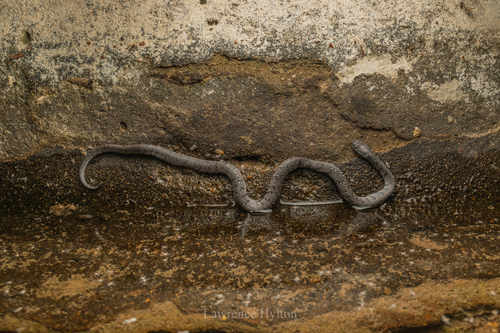
Classification
How scientists group this snake, from the broadest category down to the exact species. Each step narrows to its closest relatives.
Keep learning
- What to Do If You Find a SnakeFound a snake at home or on a trail? Here is how to stay calm, give it space, identify it safely, and know when to call a professional.
- Venomous vs Nonvenomous: How to Tell the DifferenceThe folk rules for telling venomous snakes apart, where each one fails, and why location-based identification beats guessing by sight.
- What Is a Snake? Anatomy and the BasicsA clear overview of what makes a snake a snake: limbless body plan, anatomy, evolution from lizards, species diversity, and why they are ectothermic.
- How to Keep Snakes Out of Your Yard and HomeA practical guide to keeping snakes out of your yard and home using habitat changes that work, plus what to skip and what to do if one shows up.
Distribution from GBIF & iNaturalist. Venom status per CDC. Background: Wikipedia. Informational only. Never handle a snake to identify it.